Tula Skincare 24-7 Moisture Hydrating Day & Night Cream Versus Etude House Soon Jung 2x Barrier Intensive Cream
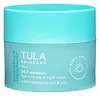
This barrier-repair moisturizer is formulated around Squalane and Bifida Ferment Lysate to strengthen the skin barrier and hydrate skin.
This barrier-repair moisturizer is formulated around Panthenol and Madecassoside to strengthen the skin barrier and hydrate skin.


What's inside
What's inside
 Key Ingredients
Benefits
Concerns
Ingredients Side-by-side
Water
Skin ConditioningButylene Glycol
Humectant

Ethylhexyl Palmitate
Emollient




Squalane
Emollient
Glycerin
Humectant
Cetyl Alcohol
Emollient

Caprylic/Capric Triglyceride
Masking
Dimethicone
Emollient
Hydrogenated Vegetable Oil
Emollient
Glyceryl Stearate
Emollient
PEG-100 Stearate
Surfactant
Bifida Ferment Lysate
Skin Conditioning

Lactose
HumectantLactis Proteinum
Skin ConditioningYogurt Extract
Skin ConditioningHydrolyzed Rice Protein
Skin ConditioningCichorium Intybus Root Extract
MaskingVaccinium Angustifolium Fruit Extract
Skin Protecting
Vegetable Oil
Skin Conditioning
Camelina Sativa Seed Oil
Skin Conditioning
Camellia Sinensis Leaf Extract
Antimicrobial



Curcuma Longa Root Extract
Antioxidant
Tocopheryl Acetate
Antioxidant
Ascorbyl Palmitate
Antioxidant
Carthamus Tinctorius Seed Oil
Masking
Olea Europaea Fruit Oil
Masking
Pyrus Malus Fruit Extract
Skin Conditioning
Citrullus Lanatus Fruit Extract
Skin Conditioning
Lens Esculenta Fruit Extract
Skin ConditioningSodium Lactate
Buffering
Sodium PCA
Humectant
Carbomer
Emulsion StabilisingSodium Hydroxide
BufferingPentylene Glycol
Skin Conditioning
Caprylyl Glycol
Emollient
Bulnesia Sarmientoi Wood Oil
Masking
Citrus Limon Fruit Oil
Astringent
Citrus Aurantium Dulcis Oil
Masking
Juniperus Mexicana Oil
Masking
Cananga Odorata Flower Oil
Masking


Ethylhexylglycerin
Skin ConditioningStearyl Alcohol
Emollient
Disodium EDTA
ChelatingCitric Acid
Buffering
Sorbic Acid
Preservative
Phenethyl Alcohol
MaskingSodium Benzoate
Masking
Potassium Sorbate
Preservative
Phenoxyethanol
Preservative
Parfum
Masking
Alpha-Isomethyl Ionone
Perfuming
Butylphenyl Methylpropional
Perfuming
Linalool
Perfuming
Hexyl Cinnamal
Perfuming
Water, Butylene Glycol, Ethylhexyl Palmitate, Squalane, Glycerin, Cetyl Alcohol, Caprylic/Capric Triglyceride, Dimethicone, Hydrogenated Vegetable Oil, Glyceryl Stearate, PEG-100 Stearate, Bifida Ferment Lysate, Lactose, Lactis Proteinum, Yogurt Extract, Hydrolyzed Rice Protein, Cichorium Intybus Root Extract, Vaccinium Angustifolium Fruit Extract, Vegetable Oil, Camelina Sativa Seed Oil, Camellia Sinensis Leaf Extract, Curcuma Longa Root Extract, Tocopheryl Acetate, Ascorbyl Palmitate, Carthamus Tinctorius Seed Oil, Olea Europaea Fruit Oil, Pyrus Malus Fruit Extract, Citrullus Lanatus Fruit Extract, Lens Esculenta Fruit Extract, Sodium Lactate, Sodium PCA, Carbomer, Sodium Hydroxide, Pentylene Glycol, Caprylyl Glycol, Bulnesia Sarmientoi Wood Oil, Citrus Limon Fruit Oil, Citrus Aurantium Dulcis Oil, Juniperus Mexicana Oil, Cananga Odorata Flower Oil, Ethylhexylglycerin, Stearyl Alcohol, Disodium EDTA, Citric Acid, Sorbic Acid, Phenethyl Alcohol, Sodium Benzoate, Potassium Sorbate, Phenoxyethanol, Parfum, Alpha-Isomethyl Ionone, Butylphenyl Methylpropional, Linalool, Hexyl Cinnamal
Water
Skin ConditioningPropanediol
Solvent
Pentaerythrityl Tetraethylhexanoate
Emollient
Caprylic/Capric Triglyceride
Masking
Helianthus Annuus Seed Oil
Emollient
Polyglyceryl-3 Methylglucose Distearate
Emulsifying
Hydrogenated Vegetable Oil
Emollient
Cetearyl Alcohol
Emollient
Panthenol
Skin Conditioning
1,2-Hexanediol
Skin Conditioning
Carbomer
Emulsion StabilisingXanthan Gum
EmulsifyingGlyceryl Caprylate
EmollientTromethamine
BufferingEthylhexylglycerin
Skin ConditioningDisodium EDTA
ChelatingMadecassoside
Antioxidant
Lecithin
Emollient
Butylene Glycol
Humectant
Tocopherol
Antioxidant
Camellia Sinensis Leaf Extract
Antimicrobial
Water, Propanediol, Pentaerythrityl Tetraethylhexanoate, Caprylic/Capric Triglyceride, Helianthus Annuus Seed Oil, Polyglyceryl-3 Methylglucose Distearate, Hydrogenated Vegetable Oil, Cetearyl Alcohol, Panthenol, 1,2-Hexanediol, Carbomer, Xanthan Gum, Glyceryl Caprylate, Tromethamine, Ethylhexylglycerin, Disodium EDTA, Madecassoside, Lecithin, Butylene Glycol, Tocopherol, Camellia Sinensis Leaf Extract
Reviews
Ingredients Explained
These ingredients are found in both products.
Ingredients higher up in an ingredient list are typically present in a larger amount.
Butylene Glycol (or BG) is used within cosmetic products for a few different reasons:
Overall, Butylene Glycol is a safe and well-rounded ingredient that works well with other ingredients.
Though this ingredient works well with most skin types, some people with sensitive skin may experience a reaction such as allergic rashes, closed comedones, or itchiness.
Learn more about Butylene GlycolCamellia Sinensis Leaf Extract (tea extract) is one of the most well-researched plant extracts in skincare with an impressive resume.
Black tea, green tea, and oolong tea are all harvested from the Camellia Sinensis plant.
Studies show green tea extract and its catechins (like epigallocatechin gallate (EGCG)) help your skin cells product energy more efficiently and reducing the number of free-radicals that can damage your skin from the inside.
In lab-grown skin models, this translated to younger, healthier, and stronger skin.
There's also good sun protection data; researchers saw less DNA damage and redness on human skin when green tea was applied before UVB exposure. And the more they applied, the better the protection.
Needless to say, this ingredient shouldn't replace your sunscreen. But it is a great supportive ingredient that you can already find in many sunscreens and antioxidant serums.
A 2009 study found a 2% green tea lotion was effective for mild-to-moderate acne thanks to its anti-inflammatory and mild antimicrobial activity.
The quality of the extract matters a lot here:
Good extracts contain 50-90% catechins while lower quality ones are mostly there for marketing. We recommend reaching out to the brand if you have questions about the quality or source of their ingredients.
Human Repeated Insult Patch Testing showed no irritation or sensitization at use concentrations (0.86% in leave-on products and up to 30% as leaf water).
Learn more about Camellia Sinensis Leaf ExtractCaprylic/Capric Triglyceride (aka MCT Oil) is a lightweight emollient, solvent, and texture enhancer. It is considered a skin-softener by helping to prevent moisture loss.
Though it behaves like an oil, it is not technically one due to its chemical composition. One perk of this ingredient is that it is very stable, resistant to oxidation, and unlikely to go rancid.
In practice, that translates to a long shelf life and a consistently elegant skin feel.
While there is an assumption Caprylic Triglyceride can clog pores due to it being derived from coconut oil, there is no research supporting this. Just patch test if you have concerns.
Fractionated coconut oil and MCT Oil are both listed as Caprylic/Capric Triglyceride according to INCI. This is because INCI names are based on the ingredient’s final chemical composition and not its marketing name or source.
This ingredient is treated as the gold standard fungal acne safe oil. Even though it is coconut derived, the problematic lauric acid is stripped out.
This leaves just caprylic (C8) and capric (C10) acid. These chain lengths actually trend antifungal; a 2020 study found caprylic acid was enough to disrupt Malassezia furfur cell membrane, with a caprylic acid derivative damaging membrane structures at concentrations as low as 0.2%.
Learn more about Caprylic/Capric TriglycerideCarbomer is a synthetic thickening and gelling agent. It's basically the ingredient that gives a lot of serums, gels, creams, and sunscreens their smooth, non-sticky texture.
Although legally permitted at very high levels, carbomers are normally used at concentrations below 1%.
It also needs to be neutralized to actually thicken, and because it is a large molecule, it doesn't really penetrate the skin barrier.
Allergy-wise, the risk is very low. Clinical studies show carbomers have low potential for skin irritation/sensitization even at concentrations up to 100%.
A 2024 UK study patch-tested 1,302 patients and found true allergy to the parent group of carbomer to be rare with no confirmed relevant reactions.
Learn more about CarbomerDisodium EDTA is a chelating agent. It grabs onto and deactivates metal ions that sneak into your products from water, packaging, or air.
This ingredient mainly works behind the scenes and helps with:
On top of that, this ingredient can counteract the effects of hard water by binding to the minerals in it.
One thing worth knowing is that Disodium EDTA has been shown to be a mild penetration enhancer. It can help other ingredients absorb into skin more effectively which can be a double-edged sword (great for actives, but can also make the active too strong if you have sensitive skin).
Clinical patch testing showed no significant skin irritation at typical use concentrations and minimal dermal absorption.
You'll most likely see this ingredient near the end of an ingredient list. It's typically found in concentrations less than 1%.
Learn more about Disodium EDTAEthylhexylglycerin is created from glycerin. It is a multitasker ingredient that:
The CIR Expert Panel found minimal skin absorption or sensitization of any kind in a safety assessment. Though this ingredient is considered well-tolerated, a small number of cases of allergic dermatitis have been published since 2002. Just be sure to patch test if you are unsure.
Industry-reported use ranges from 8% in rinse-off products and 2% in leave-on formulations.
Learn more about EthylhexylglycerinHydrogenated Vegetable Oil isn't a single oil. It's the labeling name for a blend of plant-derived oils that can include canola, rapeseed, safflower, sunflower, sesame, palm, palm kernel, cotton, soybean, olive, and more.
Hydrogenation is the processing step that reduces or removes the unsaturated bonds in the fatty acids to make the oil more resistant to oxidative and thermal damage.
In cosmetics, it acts as a skin conditioner, occlusive, and emollient that give products a rich body.
Concentrations are reported from 0.0004% to 60% with leave-on products going as high as 60% and rinse-off products staying at 8% or below.
The Cosmetic Ingredient Review has concluded this ingredient to be safe as used in cosmetics.
This ingredient does have a comedogenic rating of 3, but this doesn't mean a formula with this ingredient will clog pores. Human testing has proved that any finished product with this ingredient won't automatically make you break out; it really comes down to concentration, formula, and your skin.
Since this ingredient is a triglyceride built mostly from C16 and C18 fatty acids, this ingredient may not be fungal acne safe as that falls into the range the Malassezia yeast can metabolize.
Allergy-wise, the proteins responsible for plant food allergies are taken out of the refined oil. This is why reactions to refined oils are rare even from highly allergenic sources like peanut. Well-designed studies have also shown refined peanut oil is safely tolerated by the vast majority of peanut-allergic people.
However, the issue is with unrefined oils; be sure to reach out to the manufacturer if you have a plant food allergy about the type of oil used in their products.
The other catch for this INCI name is that it doesn't tell you which plants are in the blend so you would need to ask the brand.
Learn more about Hydrogenated Vegetable OilWater. It's the most common cosmetic ingredient of all. You'll usually see it at the top of ingredient lists, meaning that it makes up the largest part of the product.
So why is it so popular? Water most often acts as a solvent - this means that it helps dissolve other ingredients into the formulation.
You'll also recognize water as that liquid we all need to stay alive. If you see this, drink a glass of water. Remember to stay hydrated!
Learn more about Water

