This hybrid sunscreen covers the full UV range and blocks ~98% of UVB at SPF 40.
This hybrid sunscreen covers the full UV range and blocks ~98% of UVB at SPF 50.

What's inside
What's inside
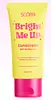 Key Ingredients
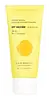
Benefits
Concerns
Ingredients Side-by-side
Water
Skin ConditioningEthylhexyl Methoxycinnamate
UV Absorber


Cyclopentasiloxane
Emollient
Niacinamide
Smoothing











Bis-Ethylhexyloxyphenol Methoxyphenyl Triazine
UV Absorber
Diethylamino Hydroxybenzoyl Hexyl Benzoate
UV Filter
Cetearyl Alcohol
Emollient






Ethylhexyl Triazone
UV Absorber
Sodium Acrylate/Sodium Acryloyldimethyl Taurate Copolymer
Emulsion StabilisingTitanium Dioxide
Cosmetic Colorant
Methylene Bis-Benzotriazolyl Tetramethylbutylphenol
UV Filter
Acrylates/C10-30 Alkyl Acrylate Crosspolymer
Emulsion StabilisingTetrasodium EDTA
ChelatingStearyl Stearate
Emollient
PEG-40 Stearate
Emulsifying
Ceteareth-20
Cleansing
Decyl Glucoside
Cleansing
Centella Asiatica Extract
Cleansing
Butyloctyl Salicylate
Skin Conditioning
Tea-Isostearate
Cleansing1,2-Hexanediol
Skin Conditioning
Isopropyl Titanium Triisostearate/Triethoxycaprylylsilane Crosspolymer
SurfactantPolysorbate 60
Emulsifying
Sorbityl Silanediol
EmollientAluminum Hydroxide
EmollientPropylene Glycol
Humectant
BHT
Antioxidant
Xanthan Gum
EmulsifyingPhenoxyethanol
Preservative
Water, Ethylhexyl Methoxycinnamate, Cyclopentasiloxane, Niacinamide, Bis-Ethylhexyloxyphenol Methoxyphenyl Triazine, Diethylamino Hydroxybenzoyl Hexyl Benzoate, Cetearyl Alcohol, Ethylhexyl Triazone, Sodium Acrylate/Sodium Acryloyldimethyl Taurate Copolymer, Titanium Dioxide, Methylene Bis-Benzotriazolyl Tetramethylbutylphenol, Acrylates/C10-30 Alkyl Acrylate Crosspolymer, Tetrasodium EDTA, Stearyl Stearate, PEG-40 Stearate, Ceteareth-20, Decyl Glucoside, Centella Asiatica Extract, Butyloctyl Salicylate, Tea-Isostearate, 1,2-Hexanediol, Isopropyl Titanium Triisostearate/Triethoxycaprylylsilane Crosspolymer, Polysorbate 60, Sorbityl Silanediol, Aluminum Hydroxide, Propylene Glycol, BHT, Xanthan Gum, Phenoxyethanol
Water
Skin ConditioningEthylhexyl Methoxycinnamate
UV Absorber
Octocrylene
UV Absorber
Glycerin
Humectant
Methyl Methacrylate Crosspolymer
Xanthan Gum
EmulsifyingTocopheryl Acetate
Antioxidant
PEG-40
HumectantPropylene Glycol
Humectant
Butyl Methoxydibenzoylmethane
UV Absorber
Hydrogenated Castor Oil
Emollient
Propanediol
Solvent
PEG-40 Stearate
Emulsifying
Zinc Oxide
Cosmetic Colorant
Steareth-2
EmulsifyingSteareth-21
CleansingPEG-7 Glyceryl Cocoate
Emulsifying
Centella Asiatica Extract
Cleansing
Pentylene Glycol
Skin Conditioning
Polygonum Cuspidatum Root Extract
Antioxidant
Scutellaria Baicalensis Root Extract
Astringent
Sodium Hyaluronate
Humectant
Camellia Sinensis Leaf Extract
Antimicrobial
Glycyrrhiza Glabra Root Extract
Bleaching
Ceramide NP
Skin Conditioning
Chamomilla Recutita Flower Extract
Masking
Rosmarinus Officinalis Leaf Extract
AntimicrobialPotassium Hyaluronate
Skin ConditioningSodium Hyaluronate Crosspolymer
Humectant
Sodium Acetylated Hyaluronate
Humectant
Hydroxypropyltrimonium Hyaluronate
Hydrolyzed Hyaluronic Acid
Humectant
Hyaluronic Acid
Humectant
Hydrolyzed Sodium Hyaluronate
Skin Conditioning
Hydrogen Dimethicone
PEG-10 Dimethicone
Skin Conditioning
PEG-Crosspolymer
Dimethicone
Emollient
Polyacrylate-1 Crosspolymer
Isohexadecane
EmollientOrange Roughy Oil
Skin Conditioning
Ethylhexylglycerin
Skin ConditioningCetearyl Methicone
Skin Conditioning
Cyclopentasiloxane
Emollient
Citric Acid
Buffering
Water, Ethylhexyl Methoxycinnamate, Octocrylene, Glycerin, Methyl Methacrylate Crosspolymer, Xanthan Gum, Tocopheryl Acetate, PEG-40, Propylene Glycol, Butyl Methoxydibenzoylmethane, Hydrogenated Castor Oil, Propanediol, PEG-40 Stearate, Zinc Oxide, Steareth-2, Steareth-21, PEG-7 Glyceryl Cocoate, Centella Asiatica Extract, Pentylene Glycol, Polygonum Cuspidatum Root Extract, Scutellaria Baicalensis Root Extract, Sodium Hyaluronate, Camellia Sinensis Leaf Extract, Glycyrrhiza Glabra Root Extract, Ceramide NP, Chamomilla Recutita Flower Extract, Rosmarinus Officinalis Leaf Extract, Potassium Hyaluronate, Sodium Hyaluronate Crosspolymer, Sodium Acetylated Hyaluronate, Hydroxypropyltrimonium Hyaluronate, Hydrolyzed Hyaluronic Acid, Hyaluronic Acid, Hydrolyzed Sodium Hyaluronate, Hydrogen Dimethicone, PEG-10 Dimethicone, PEG-Crosspolymer, Dimethicone, Polyacrylate-1 Crosspolymer, Isohexadecane, Orange Roughy Oil, Ethylhexylglycerin, Cetearyl Methicone, Cyclopentasiloxane, Citric Acid
Reviews
Ingredients Explained
These ingredients are found in both products.
Ingredients higher up in an ingredient list are typically present in a larger amount.
Centella Asiatica Extract (Centella) is one of the most researched botanical extracts in skincare with decades of studies backing its effects on inflammation, collagen, and the skin barrier.
That research keeps pointing back to the same four triterpenoid saponins: Asiaticoside, Madecassoside, Asiatic Acid, and Madecassic Acid.
These compounds allow centella to dial back inflammation, encourage the skin to build and hold onto collagen, support the barrier and hydration, and bring solid antioxidant activity to protect against signs of aging.
Centella also carries a nice supporting cast of Vitamin A, vitamin C, several B vitamins, and amino acids. Put it all together and you get an ingredient that soothes, hydrates, and protects, all at once.
Most of centella's magic comes from the four big compounds (Asiaticoside, Madecassoside, Asiatic Acid, and Madecassic Acid). These are the actives doing the heavy lifting in almost every centella study.
Here is the short version of what they do in the skin:
So it is not just soothing for the sake of soothing. Centella calms the skin AND helps it rebuild.
Just FYI, not all centella on an ingredient list is the same. What you are getting actually depends on the extract:
Fun fact on the ratios: the leaves tend to be richest in Madecassoside and Asiaticoside, and lower in the two acids. The exact amounts shift with where the plant is grown and how it is processed. This means purity really does vary brand to brand.
Centella is one of the most easygoing actives out there.
It layers well with basically everything: niacinamide, hyaluronic acid, peptides, and vitamin C, and also pairs nicely with stronger actives like retinoids and exfoliating acids where it can help take the edge off irritation.
On the safety side, centella and its triterpenes are classified as weak sensitizers, meaning allergic reactions are possible but uncommon.
Patch tests at 1% and 5% came back negative in test panels, and creams at typical use levels did not cause allergic reactions across large groups of people.
But as with any new active, a patch test is still a smart move for very reactive skin.
Centella is widely used because it is effective at low percentages. For context, human safety testing found no meaningful irritation from creams containing centella extract at everyday use levels (the tested amounts were well under 1%).
The irritancy threshold in animal testing was also above 30% (so real-world formulas sit far below anything concerning).
In collagen lab studies, higher concentrations drove more collagen synthesis, so serums built around centella tend to feature it more prominently.
Bottom line: you will find centella working nicely anywhere from a fraction of a percent up to hero-ingredient levels depending on whether it is a supporting soother or the main event.
Fun fact: Centella has been used as a medicine and in food for many centuries. As a medicine, it is used to treat burns, scratches, and wounds.
Learn more about Centella Asiatica ExtractCyclopentasiloxane (D5) is a lightweight silicone that mostly acts as an emollient and solvent in cosmetics. Its the reason your products feel silky, fast-spreading, and non-greasy.
Since D5 is volatile, it does its thing and then evaporates off the skin quickly.
The safety profile of this ingredient is reassuring; the US CIR Expert Panel concluded D5 is safe as used in cosmetics and Health Canada concluded that D5 is not harmful to human health or the environment as currently used in cosmetics
There's a study that people mention about D5 in a rat study showing tumors. This study is related to long-term inhalation of high D5 levels.
Regulatory bodies have judged this study to be not applicable in topical skincare since skin absorption of D5 is very low and we're not really inhaling huge amounts of D5.
The only restriction for this ingredient is environmental. The European Chemicals Agency (ECHA) restricted D5 in wash-off cosmetics at or above 0.1% due to their persistence in water.
Learn more about CyclopentasiloxaneThis ingredient is also known as Octinoxate and is one of the oldest and most widely used chemical UV filters in skincare.
It has a simple job: soap up UVB radiation (290-320 nm), the wavelengths responsible for sunburn and a big chunk of long-term sun damage.
In formulas, it's always paired with a separate UVA filter because octinoxate solely protects skin from UVB.
Because it's an oil-soluble liquid, it's easy to blend into the oil phase of lotions/creams and gives a cosmetically elegant feel.
The one quirk about formulating this ingredient is photostability; the molecule slowly changes shape into a less effective version when sunlight hits it. So the longer you're in the sun, the weaker its protection gets. The drop can be more than 30% in some formulas.
It also doesn't play nice with Avobenzone (the common UVA filter) since avobenzone destabilizes octinoxate and the two degrade each other. But don't worry: brands have solved this issue by adding photostabilizers like Tinosorb S to prevent degradation and keep SPF stable under heavy UV exposure.
The maximum allowed level is 10% in the EU and Australia, 7.5% in the US and Canada, and 20% in Japan.
The Cosmetic Ingredient Review Panel has concluded this ingredient to be safe in cosmetics up to 10%.
One last thing worth knowing for context:
Octinoxate has been the subject of ongoing review in Europe where the Scientific Committee on Consumer Safety's (SCCS) 2025 final opinion is that this ingredient is an endocrine-active substance.
Lab and animal studies suggest it can act a bit like a hormone in the body (mildly mimicking estrogen and slightly blocking male hormones). It's important to know this hasn't really been shown to happen in everyday human use.
This ingredient is also banned in Hawaii over coral reef concerns.
Learn more about Ethylhexyl MethoxycinnamatePEG-40 Stearate is a nonionic emulsifier and surfactant made from stearic acid.
It's water-soluble and good at coaxing oil + water to mix to keep everything stable.
The CIR Expert Panel has repeatedly concluded this ingredient to be safe at current cosmetic use levels with minimal skin/eye irritation when tested at 100%.
Your skincare also won't be containing 100% of this ingredient: the supplier recommends using 1-5% in a formula.
Broader reviews back this up: PEGs and their fatty-acid esters produce little or no skin/eye irritation, don't readily penetract intact skin, and rarely cause sensitization.
Because this ingredient is a PEG ester of stearic acid, it may not be fungal acne, or Malassezia, safe. Stearic acid (C18) sits in the C11-24 "edible window" that Malassezia lipases can cleave and metabolize.
Learn more about PEG-40 StearatePropylene Glycol is a synthetic, colorless, odorless liquid that has been a staple in cosmetics for decades. It is a skin conditioning agent, humectant, and solvent.
As a humectant, it draw water to the skin to reduce flaking and restore suppleness. It's also a solvent that helps dissolve other actives and keeps formulas stable across temperature changes.
The CIR Expert Panel has confirmed this ingredient to be nontoxic and clinical studies show no sensitization at cosmetic use concentrations.
True allergic reactions are quite rare: a 15-year retrospective study of 6,751 patients found only 0.31% had a positive reaction (and less than half were considered clinically relevant).
It seemed that when sensitization does occur, it's most commonly linked to topical medication (like corticosteroids) and not cosmetics. Allergic contact dermatitis also appears largely limited to individuals with underlying skin conditions.
Overall, propylene glycol is a well-studied ingredient that most people can tolerate without issue.
Learn more about Propylene GlycolWater. It's the most common cosmetic ingredient of all. You'll usually see it at the top of ingredient lists, meaning that it makes up the largest part of the product.
So why is it so popular? Water most often acts as a solvent - this means that it helps dissolve other ingredients into the formulation.
You'll also recognize water as that liquid we all need to stay alive. If you see this, drink a glass of water. Remember to stay hydrated!
Learn more about WaterXanthan gum is used as a stabilizer and thickener within cosmetic products. It helps give products a sticky, thick feeling - preventing them from being too runny.
On the technical side of things, xanthan gum is a polysaccharide - a combination consisting of multiple sugar molecules bonded together.
Xanthan gum is a pretty common and great ingredient. It is a natural, non-toxic, non-irritating ingredient that is also commonly used in food products.
Learn more about Xanthan Gum

