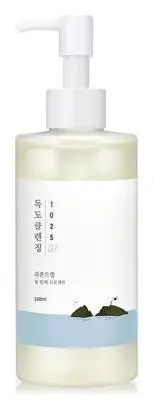
What's inside
What's inside
 Key Ingredients
Benefits
Concerns
Ingredients Side-by-side
Ethylhexyl Stearate
Emollient


Isopropyl Myristate
Emollient
Sorbeth-30 Tetraoleate
Emulsifying
Water
Skin ConditioningDiisostearyl Malate
EmollientTocopherol
Antioxidant







Simmondsia Chinensis Seed Oil
Emollient

Helianthus Annuus Seed Oil
Emollient
Macadamia Ternifolia Seed Oil
Emollient
Prunus Amygdalus Dulcis Oil
Skin Conditioning
Persea Gratissima Oil
Skin Conditioning
Olea Europaea Fruit Oil
Masking
Allantoin
Skin Conditioning
Panthenol
Skin Conditioning
Coptis Japonica Root Extract
Skin ConditioningCentella Asiatica Extract
Cleansing
Portulaca Oleracea Extract
Skin Conditioning
Camellia Sinensis Leaf Extract
Antimicrobial

Saponaria Officinalis Leaf Extract
AntimicrobialMelaleuca Alternifolia Leaf Extract
Perfuming
Sodium Hyaluronate
Humectant
Butylene Glycol
Humectant
1,2-Hexanediol
Skin Conditioning
Pentylene Glycol
Skin Conditioning
Caprylyl Glycol
Emollient
Glycerin
Humectant
Ethylhexyl Stearate, Isopropyl Myristate, Sorbeth-30 Tetraoleate, Water, Diisostearyl Malate, Tocopherol, Simmondsia Chinensis Seed Oil, Helianthus Annuus Seed Oil, Macadamia Ternifolia Seed Oil, Prunus Amygdalus Dulcis Oil, Persea Gratissima Oil, Olea Europaea Fruit Oil, Allantoin, Panthenol, Coptis Japonica Root Extract, Centella Asiatica Extract, Portulaca Oleracea Extract, Camellia Sinensis Leaf Extract, Saponaria Officinalis Leaf Extract, Melaleuca Alternifolia Leaf Extract, Sodium Hyaluronate, Butylene Glycol, 1,2-Hexanediol, Pentylene Glycol, Caprylyl Glycol, Glycerin
Ethylhexyl Palmitate
Emollient
C12-20 Isoparaffin
Emollient
Paraffinum Liquidum
Emollient
PEG-20 Glyceryl Triisostearate
Emollient
Isopropyl Myristate
Emollient
Ethylhexyl Stearate
Emollient
Water
Skin ConditioningButylene Glycol
Humectant
Sorbeth-30 Tetraoleate
Emulsifying
Cetyl Ethylhexanoate
EmollientSimmondsia Chinensis Seed Oil
Emollient
Camellia Japonica Seed Oil
Emollient
Centella Asiatica Extract
Cleansing
Asiaticoside
Antioxidant
Madecassic Acid
Skin Conditioning
Asiatic Acid
Skin Conditioning
Rosmarinus Officinalis Leaf Extract
AntimicrobialChamomilla Recutita Flower Extract
Masking
Polygonum Cuspidatum Root Extract
Antioxidant
Scutellaria Baicalensis Root Extract
Astringent
Camellia Sinensis Leaf Extract
Antimicrobial
Glycyrrhiza Glabra Root Extract
Bleaching
Ceramide NP
Skin Conditioning
Ceramide As
Skin Conditioning
Ceramide Ns
Skin Conditioning
Ceramide Ng
Skin Conditioning
Ceramide AP
Skin Conditioning
Ceramide EOP
Skin Conditioning
Caprylic/Capric Triglyceride
Masking
Hydrogenated Lecithin
Emulsifying
Parfum
Masking


Glycerin
Humectant
Phenoxyethanol
Preservative
Caprylyl Glycol
Emollient
Ethylhexylglycerin
Skin ConditioningEthylhexyl Palmitate, C12-20 Isoparaffin, Paraffinum Liquidum, PEG-20 Glyceryl Triisostearate, Isopropyl Myristate, Ethylhexyl Stearate, Water, Butylene Glycol, Sorbeth-30 Tetraoleate, Cetyl Ethylhexanoate, Simmondsia Chinensis Seed Oil, Camellia Japonica Seed Oil, Centella Asiatica Extract, Asiaticoside, Madecassic Acid, Asiatic Acid, Rosmarinus Officinalis Leaf Extract, Chamomilla Recutita Flower Extract, Polygonum Cuspidatum Root Extract, Scutellaria Baicalensis Root Extract, Camellia Sinensis Leaf Extract, Glycyrrhiza Glabra Root Extract, Ceramide NP, Ceramide As, Ceramide Ns, Ceramide Ng, Ceramide AP, Ceramide EOP, Caprylic/Capric Triglyceride, Hydrogenated Lecithin, Parfum, Glycerin, Phenoxyethanol, Caprylyl Glycol, Ethylhexylglycerin
Reviews
Ingredients Explained
These ingredients are found in both products.
Ingredients higher up in an ingredient list are typically present in a larger amount.
Butylene Glycol (or BG) is used within cosmetic products for a few different reasons:
Overall, Butylene Glycol is a safe and well-rounded ingredient that works well with other ingredients.
Though this ingredient works well with most skin types, some people with sensitive skin may experience a reaction such as allergic rashes, closed comedones, or itchiness.
Learn more about Butylene GlycolCamellia Sinensis Leaf Extract (tea extract) is one of the most well-researched plant extracts in skincare with an impressive resume.
Black tea, green tea, and oolong tea are all harvested from the Camellia Sinensis plant.
Studies show green tea extract and its catechins (like epigallocatechin gallate (EGCG)) help your skin cells product energy more efficiently and reducing the number of free-radicals that can damage your skin from the inside.
In lab-grown skin models, this translated to younger, healthier, and stronger skin.
There's also good sun protection data; researchers saw less DNA damage and redness on human skin when green tea was applied before UVB exposure. And the more they applied, the better the protection.
Needless to say, this ingredient shouldn't replace your sunscreen. But it is a great supportive ingredient that you can already find in many sunscreens and antioxidant serums.
A 2009 study found a 2% green tea lotion was effective for mild-to-moderate acne thanks to its anti-inflammatory and mild antimicrobial activity.
The quality of the extract matters a lot here:
Good extracts contain 50-90% catechins while lower quality ones are mostly there for marketing. We recommend reaching out to the brand if you have questions about the quality or source of their ingredients.
Human Repeated Insult Patch Testing showed no irritation or sensitization at use concentrations (0.86% in leave-on products and up to 30% as leaf water).
Learn more about Camellia Sinensis Leaf ExtractCaprylyl Glycol is a humectant, skin conditioner, emollient, and preservative booster derived from either caprylic acid or synthetically created.
Typical use levels vary from 0.3-1% as a preservative booster and go up to 2% to condition skin.
Because it is not a free-fatty acid, this ingredient is fungal acne safe (there's nothing for Malassezia to feed on).
Learn more about Caprylyl GlycolCentella Asiatica Extract (Centella) is derived from an herb native to Southeast Asia. It is famous for its anti-inflammatory and soothing properties.
Centella is rich in antioxidants and amino acids, such as Madecassic Acid and Asiaticoside.
Studies show the compounds in centella help with:
The combination of all these properties makes centella effective at soothing, hydrating, and protecting the skin.
Other great components of centella include Vitamin A, vitamin C, several B vitamins, and Asiatic Acid.
Fun fact: Centella has been used as a medicine and in food for many centuries. As a medicine, it is used to treat burns, scratches, and wounds.
Learn more about Centella Asiatica ExtractEthylhexyl Stearate mainly acts as an emollient that helps hydate skin. It can also be used to reduce the greasiness of oils in a formula.
Because this ingredient contains a C18 fatty acid chain, it may not be Malassezia/fungal acne safe. This is because the Malassezia yeast potentially feeds on C11-C24 fatty acids.
This ingredient is an ester of 2-ethylhexyl alcohol and stearic acid.
Learn more about Ethylhexyl StearateGlycerin (or glycerol) is a compound naturally found in your skin. It's a powerhouse humectant that pulls water into the stratum corneum.
Topically, glycerin does several things at once:
Your skin makes glycerin on its own (mostly from sebaceous oil breakdown) and shuttles it to your outermost layer of skin, or your epidermis, via aquaporin-3.
Aquaporin-3 is a transporter that is essential for normal skin hydration, elasticity, and repair. Interestingly, mice lacking in AQP3 have dry and less elastic skin that can be fully corrected with glycerin.
This ingredient is non-irritating, plays well with almost every ingredient, and works across all skin types. Typical use is anywhere between 3-10% but can go up to 79% in some leave-on products.
Just know very high concentrations (>40%) can feel tacky in low humidity.
Glycerin is the name for this ingredient in American English. British English uses Glycerol/Glycerine.
Learn more about GlycerinIsopropyl Myristate is an ester made by combining isopropyl alcohol with myristic acid.
It is primarily an emollient and penetration enhancer that gives products a lightweight, silky feel without the heaviness of oils.
This ingredient is generally considered non-toxic, non-irritating, and has low absorption potential.
You might have heard that this ingredient clogs pores. This reputation comes from the older rabbit ear studies which are more sensitive than human skin to clogging.
Dermatologist Dr. Zoe Draelos has also confirmed in a peer-reviewed paper that products containing comedogenic ingredients are not necessarily comedogenic themselves.
A small subset of people (~2%) may experience contact sensitivity so patch testing is a reasonable idea if you have reactive skin.
Since this ingredient is an ester of myristic acid (a C14 fatty acid), it falls within the carbon chain range that is known to feed Malassezia. This ingredient may not be fungal acne safe.
Learn more about Isopropyl MyristateJojoba oil is one of the most well-studied plant-derived ingredients in cosmetics. It is an emollient with a special structure.
Because it is made up of 97-98% wax esters, it closely mirrors the linear monoesters found in human sebum. This makes it skin compatible, non-greasy, and lightweight.
Unlike other plant oils, jojoba wax doesn't easily penetrate skin. It mostly works in the uppermost layers as an emollient. This just means it forms a light barrier on the skin to help retain moisture.
Formulations with jojoba esters up to 90% reduced transepidermal water loss (TEWL) and increased barrier recovery by 81% (outperforming bisabolol at 47%).
Besides barrier support, the science also suggests jojoba to have anti-inflammatory effects and potential applications for skin infections, aging, and wound healing.
Fun fact: Indigenous cultures have used jojoba as a moisturizer and to help treat burns for centuries.
Fungal acne: The Malassezia yeast is known to metabolize fatty acids in the C11-24 range and jojoba's dominant fatty acid components fall into this range. This ingredient may not be fungal acne safe.
Learn more about Simmondsia Chinensis Seed OilSorbeth-30 Tetraoleate is a surfactant and emulsifier.
This ingredient is a tetraester from oleic acid and polyethylene glycol ether of sorbitol.
As an emulsifier, it helps ingredients such as oil and water mix together. This allows the dirt and oils in your skin to be washed away.
One study found pumpkin oil containing Sorbeth-30 Tetraoleate helped hydrate the skin and did not cause any irritation.
Learn more about Sorbeth-30 TetraoleateWater. It's the most common cosmetic ingredient of all. You'll usually see it at the top of ingredient lists, meaning that it makes up the largest part of the product.
So why is it so popular? Water most often acts as a solvent - this means that it helps dissolve other ingredients into the formulation.
You'll also recognize water as that liquid we all need to stay alive. If you see this, drink a glass of water. Remember to stay hydrated!
Learn more about Water