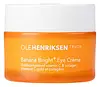
This brightening eye moisturizer is formulated around 3-O-Ethyl Ascorbic Acid and Simmondsia Chinensis Seed Oil to brighten dull-looking skin and hydrate skin.
This brightening eye moisturizer is formulated around Niacinamide and 3-O-Ethyl Ascorbic Acid to brighten dull-looking skin and fade the look of dark spots.


What's inside
What's inside
 Key Ingredients
Benefits
Concerns
Ingredients Side-by-side
Water
Skin ConditioningSimmondsia Chinensis Seed Oil
Emollient





Butyrospermum Parkii Butter
Skin Conditioning


Isododecane
EmollientCoconut Alkanes
Emollient
3-O-Ethyl Ascorbic Acid
Skin Conditioning




Cetearyl Alcohol
Emollient
Glycerin
Humectant
C18-38 Alkyl Hydroxystearoyl Stearate
EmollientDilinoleic Acid/Propanediol Copolymer
EmollientPolymethylsilsesquioxane

Cocoyl Proline
Skin Conditioning
Dimethicone Crosspolymer
Emulsion Stabilising
Pentaerythrityl Tetraisostearate
Emollient
Tetrahexyldecyl Ascorbate
Antioxidant
Ascorbic Acid
Antioxidant

Gold
Cosmetic ColorantGlutathione
Citrus Nobilis Fruit Extract
MaskingCitrus Paradisi Peel Extract
Perfuming
Glucosyl Hesperidin
HumectantTocopherol
Antioxidant
Tamarindus Indica Seed Polysaccharide
Skin ConditioningPoncirus Trifoliata Fruit Extract
Skin ConditioningMorus Alba Root Extract
BleachingLinoleic Acid
Cleansing
Linolenic Acid
Cleansing
Jojoba Esters
Emollient
Caprylyl Glycol
Emollient
Coco-Caprylate/Caprate
Emollient
Propanediol
Solvent
Polyglyceryl-3 Cocoate
Emulsifying
Polyglyceryl-4 Caprate
EmulsifyingPolyglyceryl-6 Caprylate
EmulsifyingPolyglyceryl-6 Ricinoleate
Emulsifying
Hdi/Trimethylol Hexyllactone Crosspolymer
Polyacrylate-13
Butylene Glycol
Humectant
Polyglyceryl-3 Stearate
Emulsifying
Polysorbate 20
Emulsifying
Sodium Citrate
BufferingPolyisobutene
Beheneth-5
EmulsifyingAcrylates/C10-30 Alkyl Acrylate Crosspolymer
Emulsion StabilisingBehenyl Alcohol
Emollient
Sodium Hydroxide
BufferingSorbic Acid
Preservative
Sorbitan Isostearate
Emulsifying
Citric Acid
Buffering
Hydrolyzed Vegetable Protein
Skin ConditioningStearic Acid
Cleansing
Palmitic Acid
Emollient
Oleic Acid
Emollient
Sorbitol
Humectant
Silica
Abrasive

Sodium Benzoate
Masking
1,2-Hexanediol
Skin Conditioning
Xanthan Gum
EmulsifyingPhenoxyethanol
Preservative
Leuconostoc/Radish Root Ferment Filtrate
Antimicrobial
Mica
Cosmetic ColorantTitanium Dioxide
Cosmetic Colorant

CI 77891
Cosmetic ColorantCI 77491
Cosmetic ColorantWater, Simmondsia Chinensis Seed Oil, Butyrospermum Parkii Butter, Isododecane, Coconut Alkanes, 3-O-Ethyl Ascorbic Acid, Cetearyl Alcohol, Glycerin, C18-38 Alkyl Hydroxystearoyl Stearate, Dilinoleic Acid/Propanediol Copolymer, Polymethylsilsesquioxane, Cocoyl Proline, Dimethicone Crosspolymer, Pentaerythrityl Tetraisostearate, Tetrahexyldecyl Ascorbate, Ascorbic Acid, Gold, Glutathione, Citrus Nobilis Fruit Extract, Citrus Paradisi Peel Extract, Glucosyl Hesperidin, Tocopherol, Tamarindus Indica Seed Polysaccharide, Poncirus Trifoliata Fruit Extract, Morus Alba Root Extract, Linoleic Acid, Linolenic Acid, Jojoba Esters, Caprylyl Glycol, Coco-Caprylate/Caprate, Propanediol, Polyglyceryl-3 Cocoate, Polyglyceryl-4 Caprate, Polyglyceryl-6 Caprylate, Polyglyceryl-6 Ricinoleate, Hdi/Trimethylol Hexyllactone Crosspolymer, Polyacrylate-13, Butylene Glycol, Polyglyceryl-3 Stearate, Polysorbate 20, Sodium Citrate, Polyisobutene, Beheneth-5, Acrylates/C10-30 Alkyl Acrylate Crosspolymer, Behenyl Alcohol, Sodium Hydroxide, Sorbic Acid, Sorbitan Isostearate, Citric Acid, Hydrolyzed Vegetable Protein, Stearic Acid, Palmitic Acid, Oleic Acid, Sorbitol, Silica, Sodium Benzoate, 1,2-Hexanediol, Xanthan Gum, Phenoxyethanol, Leuconostoc/Radish Root Ferment Filtrate, Mica, Titanium Dioxide, CI 77891, CI 77491
Water
Skin ConditioningGlycerin
Humectant
Butylene Glycol
Humectant
Niacinamide
Smoothing

Diethoxyethyl Succinate
Solvent3-O-Ethyl Ascorbic Acid
Skin Conditioning
Ammonium Acryloyldimethyltaurate/Vp Copolymer
1,2-Hexanediol
Skin Conditioning
Trehalose
Humectant
Betaine
Humectant
CI 77891
Cosmetic ColorantCitrus Unshiu Fruit Water
Skin ConditioningCitric Acid
Buffering
Propanediol
Solvent
Glyceryl Polymethacrylate
Mica
Cosmetic ColorantHydroxyethyl Acrylate/Sodium Acryloyldimethyl Taurate Copolymer
Emulsion StabilisingEthylhexylglycerin
Skin ConditioningSilica
Abrasive
Xanthan Gum
EmulsifyingDextrin
AbsorbentCarthamus Tinctorius Flower Extract
Skin ConditioningCitrus Sphaerocarpa Peel Extract
Sodium Citrate
BufferingSodium Metaphosphate
BufferingCI 77491
Cosmetic ColorantSorbitan Isostearate
Emulsifying
Citrus Unshiu Peel Extract
MaskingTin Oxide
Abrasive
Cyclodextrin
AbsorbentProtease
Exfoliating
Caprylyl Glycol
Emollient
Acetyl Heptapeptide-4
Humectant
Hexapeptide-9
Skin Conditioning
Acetyl Hexapeptide-8
Humectant
Sodium Hydroxide
BufferingAcetyl Octapeptide-3
Humectant
Acetyl Tetrapeptide-2
Skin Conditioning
Water, Glycerin, Butylene Glycol, Niacinamide, Diethoxyethyl Succinate, 3-O-Ethyl Ascorbic Acid, Ammonium Acryloyldimethyltaurate/Vp Copolymer, 1,2-Hexanediol, Trehalose, Betaine, CI 77891, Citrus Unshiu Fruit Water, Citric Acid, Propanediol, Glyceryl Polymethacrylate, Mica, Hydroxyethyl Acrylate/Sodium Acryloyldimethyl Taurate Copolymer, Ethylhexylglycerin, Silica, Xanthan Gum, Dextrin, Carthamus Tinctorius Flower Extract, Citrus Sphaerocarpa Peel Extract, Sodium Citrate, Sodium Metaphosphate, CI 77491, Sorbitan Isostearate, Citrus Unshiu Peel Extract, Tin Oxide, Cyclodextrin, Protease, Caprylyl Glycol, Acetyl Heptapeptide-4, Hexapeptide-9, Acetyl Hexapeptide-8, Sodium Hydroxide, Acetyl Octapeptide-3, Acetyl Tetrapeptide-2
Reviews
Ingredients Explained
These ingredients are found in both products.
Ingredients higher up in an ingredient list are typically present in a larger amount.
1,2-Hexanediol is a synthetic liquid and another multi-functional powerhouse.
It is a:
- Humectant, drawing moisture into the skin
- Emollient, helping to soften skin
- Solvent, dispersing and stabilizing formulas
- Preservative booster, enhancing the antimicrobial activity of other preservatives
3-O-Ethyl Ascorbic Acid is one of the most popular "stable" vitamin C derivatives in skincare.
Plain ascorbic acid is fantastic but notoriously fragile; it browns, oxidizes, and loses potency fast. So attaching an ethyl group to the third carbon of the molecule gives it some cool perks:
In a formula, it does the 3 classic vitamin C jobs: it acts as an antioxidant, helps brighten skin tone by inhibiting tyrosinase, and supports collagen.
The evidence is reasonably solid for a cosmetic ingredient; Liao and colleagues (2018) showed it's significantly more stable than ascorbic acid while still being effective.
A 2021 study by Zerbinati and colleagues tested a serum with 30% 3-O-ethyl-l-ascorbic acid and 1% lactic acid significantly increased collagen production, reduced UVB-induced DNA damage, and decreased melanin on a reconstructed pigmented skin model.
Typical real world usage sits around 0.5-5% (and 1-2% is common for daily serums).
Amounts up to 30% have been shown to be non-irritating on human skin samples, but two isolated cases reported allergic contact dermatitis so a patch test is sensible if you have reactive skin.
Learn more about 3-O-Ethyl Ascorbic AcidButylene Glycol (or BG) is used within cosmetic products for a few different reasons:
Overall, Butylene Glycol is a safe and well-rounded ingredient that works well with other ingredients.
Though this ingredient works well with most skin types, some people with sensitive skin may experience a reaction such as allergic rashes, closed comedones, or itchiness.
Learn more about Butylene GlycolCaprylyl Glycol is a humectant, skin conditioner, emollient, and preservative booster derived from either caprylic acid or synthetically created.
Typical use levels vary from 0.3-1% as a preservative booster and go up to 2% to condition skin.
Because it is not a free-fatty acid, this ingredient is fungal acne safe (there's nothing for Malassezia to feed on).
Learn more about Caprylyl GlycolCi 77491 is also hydrated iron III oxide. It's sole purpose is to give a red/pink hue to products.
Iron III oxides are classified as inorganic chemicals for coloring.
Synthetically created Ci 77491 is considered safer than those naturally found. This is because the synthetically created version may contain less impurities. Iron oxides are generally non-toxic and non-allergenic.
Learn more about CI 77491Ci 77891 is a white pigment from Titanium dioxide. It is naturally found in minerals such as rutile and ilmenite.
It's main function is to add a white color to cosmetics. It can also be mixed with other colors to create different shades.
Ci 77891 is commonly found in sunscreens due to its ability to block UV rays.
Learn more about CI 77891Citric Acid is an alpha hydroxy acid (AHA) naturally found in citrus fruits like oranges, lemons, and limes.
Like other AHAs, citric acid can exfoliate skin by breaking down the bonds that hold dead skin cells together. This helps reveal smoother and brighter skin underneath.
However, this exfoliating effect only happens at high concentrations (20%) which can be hard to find in cosmetic products.
Due to this, citric acid is usually included in small amounts as a pH adjuster. This helps keep products slightly more acidic and compatible with skin's natural pH.
In skincare formulas, citric acid can:
While it can provide some skin benefits, research shows lactic acid and glycolic acid are generally more effective and less irritating exfoliants.
Most citric acid used in skincare today is made by fermenting sugars (usually from molasses). This synthetic version is identical to the natural citrus form but easier to stabilize and use in formulations.
Rosacea skin has a lower threshold for acids generally, with 62.5% of rosacea subjects in one study reacting to lactic acid in a sting test. This is why we mark citric acid as a potential rosacea trigger.
However, this ingredient shows up as a pH adjuster or chelator at roughly 0.1-1% in many products. These low levels are unlikely to be an issue for rosacea skin and becomes a potential trigger at exfoliating concentrations (20%). Because everybody's skin is unique, we recommend a patch test if you are unsure.
Learn more about Citric AcidGlycerin (or glycerol) is a compound naturally found in your skin. It's a powerhouse humectant that pulls water into the stratum corneum.
Topically, glycerin does several things at once:
Your skin makes glycerin on its own (mostly from sebaceous oil breakdown) and shuttles it to your outermost layer of skin, or your epidermis, via aquaporin-3.
Aquaporin-3 is a transporter that is essential for normal skin hydration, elasticity, and repair. Interestingly, mice lacking in AQP3 have dry and less elastic skin that can be fully corrected with glycerin.
This ingredient is non-irritating, plays well with almost every ingredient, and works across all skin types. Typical use is anywhere between 3-10% but can go up to 79% in some leave-on products.
Just know very high concentrations (>40%) can feel tacky in low humidity.
Glycerin is the name for this ingredient in American English. British English uses Glycerol/Glycerine.
Learn more about GlycerinMica is a naturally occurring mineral used to add shimmer and color in cosmetics. It can also help improve the texture of a product or give it an opaque, white/silver color.
Serecite is the name for very fine but ragged grains of mica.
This ingredient is often coated with metal oxides like titanium dioxide. Trace amounts of heavy metals may be found in mica, but these metals are not harmful in our personal products.
Mica has been used since prehistoric times throughout the world. Ancient Egyptian, Indian, Greek, Roman, Aztec, and Chinese civilizations have used mica.
Learn more about MicaPropanediol is an all-star ingredient. It softens, hydrates, and smooths the skin.
It’s often used to:
Propanediol is not likely to cause sensitivity and considered safe to use. It is derived from corn or petroleum with a clear color and no scent.
Learn more about PropanediolSilica, also known as silicon dioxide, is a naturally occurring mineral. It is used as a fine, spherical, and porous powder in cosmetics.
Though it has exfoliant properties, the function of silica varies depending on the product.
The unique structure of silica enhances the spreadability and adds smoothness, making it a great texture enhancer.
It is also used as an active carrier, emulsifier, and mattifier due to its ability to absorb excess oil.
In some products, tiny microneedles called spicules are made from silica or hydrolyzed sponge. When you rub them in, they lightly polish away dead skin layers and enhance the penetration of active ingredients.
Learn more about SilicaSodium Citrate is the sodium salts of citric acid. In skincare, it is used to alter pH levels and acts as a preservative.
Its main functions are to maintain the pH of a product and neutralize metal ions.
The acidity of our skin is maintained by our glands and skin biome; normal pH level of skin is slightly acidic (~4.75-5.5).
Being slightly acidic allows our skin to create an "acid mantle". This acid mantle is a thin barrier that protects our skin from bacteria and contaminants.
Learn more about Sodium CitrateSodium Hydroxide is also known as lye or caustic soda. It is used to adjust the pH of products; many ingredients require a specific pH to be effective.
In small amounts, sodium hydroxide is considered safe to use. However, large amounts may cause chemical burns due to its high alkaline.
Your skin has a natural pH and acid mantle. This acid mantle helps prevent harmful bacteria from breaking through. The acid mantle also helps keep your skin hydrated.
"Alkaline" refers to a high pH level. A low pH level would be considered acidic.
Learn more about Sodium HydroxideSorbitan Isostearate is an emulsifer. It is created from isostearic acid and sorbitol.
As an emulsifier, it keeps the water and oil ingredients from separating. This keeps formulas stable and smooth.
In a 24 hour occlusive patch test on 56 subjects, 10% sorbitan isostearate was completely non-irritating. Most formulas use less than 10%.
Because it's a fatty acid ester, it may not be fungal acne safe since the Malassezia yeast can utilize it as a nutrient source.
Learn more about Sorbitan IsostearateWater. It's the most common cosmetic ingredient of all. You'll usually see it at the top of ingredient lists, meaning that it makes up the largest part of the product.
So why is it so popular? Water most often acts as a solvent - this means that it helps dissolve other ingredients into the formulation.
You'll also recognize water as that liquid we all need to stay alive. If you see this, drink a glass of water. Remember to stay hydrated!
Learn more about WaterXanthan gum is used as a stabilizer and thickener within cosmetic products. It helps give products a sticky, thick feeling - preventing them from being too runny.
On the technical side of things, xanthan gum is a polysaccharide - a combination consisting of multiple sugar molecules bonded together.
Xanthan gum is a pretty common and great ingredient. It is a natural, non-toxic, non-irritating ingredient that is also commonly used in food products.
Learn more about Xanthan Gum

