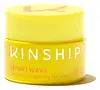
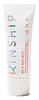
Kinship Brightwave Energizing + Brightening Eye Cream Versus Kinship Self Reflect Probiotic Moisturizing Sunscreen Zinc Oxide SPF 32
This brightening eye moisturizer is formulated around Avena Sativa Kernel Oil and Tetrahexyldecyl Ascorbate to brighten dull-looking skin and hydrate skin.
This mineral sunscreen covers the full UV range and blocks ~97% of UVB at SPF 32.

What's inside
What's inside
 Key Ingredients
Benefits
Concerns
Ingredients Side-by-side
Water
Skin ConditioningCetyl Alcohol
Emollient



Glycerin
Humectant


Potassium Cetyl Phosphate
EmulsifyingAvena Sativa Kernel Oil
Skin Conditioning


Simmondsia Chinensis Seed Oil
Emollient
Astrocaryum Tucuma Seed Butter
Emollient
C12-15 Alkyl Benzoate
AntimicrobialCapryloyl Glycerin/Sebacic Acid Copolymer
Skin ConditioningDiheptyl Succinate
EmollientTetrahexyldecyl Ascorbate
Antioxidant




Squalene
Emollient
Hippophae Rhamnoides Oil
Emollient
Jania Rubens Extract
Skin Conditioning

Lactobacillus Ferment
Skin Conditioning
Inonotus Obliquus Extract
Skin ConditioningMoringa Oleifera Seed Oil
Emollient
Arachidyl Alcohol
Emollient
Behenyl Alcohol
Emollient
Arachidyl Glucoside
EmulsifyingJojoba Oil/Macadamia Seed Oil Esters
Skin Conditioning
Phytosteryl Macadamiate
Skin Conditioning
Phytosterols
Skin Conditioning
Tocopherol
Antioxidant


Benzyl Alcohol
Perfuming





Sodium Carrageenan
Emulsion StabilisingBentonite
Absorbent
Olive Oil Decyl Esters
Hydrated Silica
Abrasive
Citric Acid
Buffering
Lactic Acid
Buffering
Chlorella Vulgaris Extract
Skin ConditioningSea Salt
Abrasive
Eclipta Prostrata Extract
Skin Conditioning
Melia Azadirachta Leaf Extract
Skin ConditioningSodium Phytate
ChelatingDehydroacetic Acid
Preservative
Potassium Sorbate
Preservative
Phenoxyethanol
Preservative
Ethylhexylglycerin
Skin ConditioningWater, Cetyl Alcohol, Glycerin, Potassium Cetyl Phosphate, Avena Sativa Kernel Oil, Simmondsia Chinensis Seed Oil, Astrocaryum Tucuma Seed Butter, C12-15 Alkyl Benzoate, Capryloyl Glycerin/Sebacic Acid Copolymer, Diheptyl Succinate, Tetrahexyldecyl Ascorbate, Squalene, Hippophae Rhamnoides Oil, Jania Rubens Extract, Lactobacillus Ferment, Inonotus Obliquus Extract, Moringa Oleifera Seed Oil, Arachidyl Alcohol, Behenyl Alcohol, Arachidyl Glucoside, Jojoba Oil/Macadamia Seed Oil Esters, Phytosteryl Macadamiate, Phytosterols, Tocopherol, Benzyl Alcohol, Sodium Carrageenan, Bentonite, Olive Oil Decyl Esters, Hydrated Silica, Citric Acid, Lactic Acid, Chlorella Vulgaris Extract, Sea Salt, Eclipta Prostrata Extract, Melia Azadirachta Leaf Extract, Sodium Phytate, Dehydroacetic Acid, Potassium Sorbate, Phenoxyethanol, Ethylhexylglycerin
Zinc Oxide
Cosmetic Colorant

Caprylic/Capric Triglyceride
Masking
Coconut Alkanes
Emollient
Cetearyl Alcohol
Emollient
Glycerin
Humectant
Aloe Barbadensis Leaf Juice
Skin Conditioning
Pyrus Malus Fruit Extract
Skin Conditioning
Coco-Glucoside
Cleansing
Lactobacillus Ferment
Skin Conditioning
Rubus Idaeus Seed Oil
Emollient
Cocos Nucifera Oil
Masking
Curcuma Longa Rhizome Oil
Skin Conditioning
Butyrospermum Parkii Nut Extract
Emollient
Hydrolyzed Jojoba Esters
Skin Conditioning
Tocopherol
Antioxidant
Dipotassium Glycyrrhizate
Humectant
Vanilla Planifolia Fruit Extract
Skin Conditioning
Glycyrrhiza Glabra Root Extract
Bleaching
Butylene Glycol
Humectant
Isostearic Acid
Cleansing
Lecithin
Emollient
Polyglyceryl-3 Polyricinoleate
Emulsifying
Polyhydroxystearic Acid
Emulsifying
Coco-Caprylate/Caprate
Emollient
Caprylyl/Capryl Glucoside
CleansingSclerotium Gum
Emulsion StabilisingCetearyl Glucoside
Emulsifying
Ethylhexylglycerin
Skin ConditioningXanthan Gum
EmulsifyingOctyldodecanol
Emollient
Tapioca Starch
Citric Acid
Buffering
Sorbitan Oleate
Emulsifying
Phenoxyethanol
Preservative
Sodium Benzoate
Masking
Potassium Sorbate
Preservative
Zinc Oxide, Caprylic/Capric Triglyceride, Coconut Alkanes, Cetearyl Alcohol, Glycerin, Aloe Barbadensis Leaf Juice, Pyrus Malus Fruit Extract, Coco-Glucoside, Lactobacillus Ferment, Rubus Idaeus Seed Oil, Cocos Nucifera Oil, Curcuma Longa Rhizome Oil, Butyrospermum Parkii Nut Extract, Hydrolyzed Jojoba Esters, Tocopherol, Dipotassium Glycyrrhizate, Vanilla Planifolia Fruit Extract, Glycyrrhiza Glabra Root Extract, Butylene Glycol, Isostearic Acid, Lecithin, Polyglyceryl-3 Polyricinoleate, Polyhydroxystearic Acid, Coco-Caprylate/Caprate, Caprylyl/Capryl Glucoside, Sclerotium Gum, Cetearyl Glucoside, Ethylhexylglycerin, Xanthan Gum, Octyldodecanol, Tapioca Starch, Citric Acid, Sorbitan Oleate, Phenoxyethanol, Sodium Benzoate, Potassium Sorbate
Reviews
Alternatives
Ingredients Explained
These ingredients are found in both products.
Ingredients higher up in an ingredient list are typically present in a larger amount.
Citric Acid is an alpha hydroxy acid (AHA) naturally found in citrus fruits like oranges, lemons, and limes.
Like other AHAs, citric acid can exfoliate skin by breaking down the bonds that hold dead skin cells together. This helps reveal smoother and brighter skin underneath.
However, this exfoliating effect only happens at high concentrations (20%) which can be hard to find in cosmetic products.
Due to this, citric acid is usually included in small amounts as a pH adjuster. This helps keep products slightly more acidic and compatible with skin's natural pH.
In skincare formulas, citric acid can:
While it can provide some skin benefits, research shows lactic acid and glycolic acid are generally more effective and less irritating exfoliants.
Most citric acid used in skincare today is made by fermenting sugars (usually from molasses). This synthetic version is identical to the natural citrus form but easier to stabilize and use in formulations.
Rosacea skin has a lower threshold for acids generally, with 62.5% of rosacea subjects in one study reacting to lactic acid in a sting test. This is why we mark citric acid as a potential rosacea trigger.
However, this ingredient shows up as a pH adjuster or chelator at roughly 0.1-1% in many products. These low levels are unlikely to be an issue for rosacea skin and becomes a potential trigger at exfoliating concentrations (20%). Because everybody's skin is unique, we recommend a patch test if you are unsure.
Learn more about Citric AcidEthylhexylglycerin is created from glycerin. It is a multitasker ingredient that:
The CIR Expert Panel found minimal skin absorption or sensitization of any kind in a safety assessment. Though this ingredient is considered well-tolerated, a small number of cases of allergic dermatitis have been published since 2002. Just be sure to patch test if you are unsure.
Industry-reported use ranges from 8% in rinse-off products and 2% in leave-on formulations.
Learn more about EthylhexylglycerinGlycerin (or glycerol) is a compound naturally found in your skin. It's a powerhouse humectant that pulls water into the stratum corneum.
Topically, glycerin does several things at once:
Your skin makes glycerin on its own (mostly from sebaceous oil breakdown) and shuttles it to your outermost layer of skin, or your epidermis, via aquaporin-3.
Aquaporin-3 is a transporter that is essential for normal skin hydration, elasticity, and repair. Interestingly, mice lacking in AQP3 have dry and less elastic skin that can be fully corrected with glycerin.
This ingredient is non-irritating, plays well with almost every ingredient, and works across all skin types. Typical use is anywhere between 3-10% but can go up to 79% in some leave-on products.
Just know very high concentrations (>40%) can feel tacky in low humidity.
Glycerin is the name for this ingredient in American English. British English uses Glycerol/Glycerine.
Learn more about GlycerinThis ingredient is made when the Lactobacillus bacteria (the same kind that makes yogurt and kimchi) are allowed to ferment a nutrient medium.
As it ferments, it collects lactic acid, peptides, enzymes, and other bioactive metabolites to provide:
A 2023 review noted that probiotic fermentation ingredients like this one can enhance antioxidant capacity, reduce UV-induced oxidative damage, and support barrier function.
One clinical study from the same year showed a Lactobacillus ferment lysate significantly reduced transepidermal water loss and improved skin hydration.
Another review highlighted that topical Lactobacillus-based preparations can improve ceramide levels in the stratum corneum, support barrier integrity, and even help reduce S. aureus colonization in atopic dermatitis.
Why is this so cool?
Basically, your skin's outer layer works as a brick wall; skin cells are bricks and ceramides are the mortar holding it together. Moisture escapes, irritants get in, and your skin gets dry and reactive when ceramide levels drop. On top of that, "bad" skin bacteria S. aureus loves to move in when your barrier is weak to make inflammation and irritation worse.
So Lactobacillus ferment is basically patching the wall and evicting the troublemaker when it boosts ceramide production and help keep S. aureus in check.
On top of all this, it also acts as a mild antimicrobial preservative booster.
Just so you know, most studies focus on specific strains or the lysate form rather than this generic "Lactobacillus Ferment", so results can vary.
Though it's a promising ingredient, it doesn't have decades of robust clinical data behind it just yet.
Lactobacillus Ferment is generally considered safe for fungal-acne prone skin. The key thing to understand is that it comes from bacteria, not yeast or fungus.
Yeast-derived ferments (like galactomyces) have been shown to activate a protein that's linked to Malassezia-related skin issues whereas lactobacillus doesn't have that problem.
Its byproducts also don't contain the types of fatty acids (C11-24 chain lengths) that Malassezia feeds on.
Learn more about Lactobacillus FermentPhenoxyethanol is one of the most widely used preservatives in skincare (and for good reason!).
It has a large spectrum of antimicrobial activity and especially effective bacteria, yeast, and mold while only having a weak effect on your skin's natural microbiome.
On a cellular level, it disrupts the cell membranes of microbes by poking holes that make the cell leak. This shuts down the chemical reactions the microbe needs to make energy so it can no longer survive.
Another perk of this ingredient is that it stays functional across a wide pH range (3-10).
You'll often see it paired with boosters like Ethylhexylglycerin; one study showed that a 1:9 ratio of Ethylhexylglycerin to Phenoxyethanol damages bacterial membranes as effectively as doubling the Phenoxyethanol concentration on its own.
Typical use concentrations range from 0.3-1% depending on the formula, and this ingredient is capped at 1% int the EU.
Safety-wise, the fear mongering does not hold up to the evidence. The EU's Scientific Committee on Consumer Safety and FDA consider it safe as a preservative at up to 1%, including for children of all ages.
Adverse systemic effects only showed up in animal studies at exposures roughly 200x higher than what people get from cosmetics. And despite its very widespread use, this ingredient is a rare sensitizer and allergic reactions are uncommon.
Learn more about PhenoxyethanolPotassium Sorbate is a preservative used to prevent yeast and mold in products. It is commonly found in both cosmetic and food products.
This ingredient comes from potassium salt derived from sorbic acid. Sorbic acid is a natural antibiotic and effective against fungus.
Both potassium sorbate and sorbic acid can be found in baked goods, cheeses, dried meats, dried fruit, ice cream, pickles, wine, yogurt, and more.
You'll often find this ingredient used with other preservatives.
Learn more about Potassium SorbateTocopherol is a fat-soluble antioxidant known as Vitamin E.
You'll find this ingredient in the vast majority of skincare (for good reason). It works to neutralize free radicals, or unstable molecules generated by UV exposure, pollution, and other environmental stressors, before they can cause oxidative damage to your skin cells.
Topically applied tocopherol has been shown to protect against UV damage by ramping up the skin's own natural defense enzymes.
It also acts as a skin conditioning agent; some studies show that regular topical use can improve the skin's water-binding capacity over 2-4 weeks.
This ingredient is especially loved for being a team player. When combined with Vitamin C, the photoprotective effect of both ingredients roughly doubles and the combo also helps reduce UV-induced DNA damage.
This ingredient has some brightening potential but it's more of a prevention ingredient than spot-fader. Cell studies show it can slow down melanin production but it's worth noting that it's not the most powerful brightener out there.
In formulations, it also serves as a stabilizer that helps protect other oxidation-prone ingredients from degrading.
Concentrations usually range from 0.1-1% in most leave-on products.
Learn more about Tocopherol

