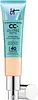
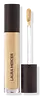
IT Cosmetics CC+ Cream Oil-Free Matte with SPF 40 Versus Laura Mercier Flawless Fusion Ultra Longwear Concealer


What's inside
What's inside
 Key Ingredients
Benefits
Concerns
Ingredients Side-by-side
Water
Skin ConditioningDimethicone
Emollient

Butylene Glycol Dicaprylate/Dicaprate
EmollientButylene Glycol
Humectant

Titanium Dioxide
Cosmetic Colorant

Zinc Oxide
Cosmetic Colorant
Cyclopentasiloxane
Emollient
Dimethicone/Vinyl Dimethicone Crosspolymer
Skin Conditioning
Butyloctyl Salicylate
Skin Conditioning
Cetyl PEG/PPG-10/1 Dimethicone
Emulsifying
Snail Secretion Filtrate
Skin Conditioning


Sodium Chloride
MaskingBis-Diglyceryl Polyacyladipate-2
Emollient

Aluminum Hydroxide
EmollientStearic Acid
Cleansing
Disteardimonium Hectorite
StabilisingSorbitan Isostearate
Emulsifying
Polyglyceryl-4 Isostearate
Emulsifying
Hexyl Laurate
Emollient
Triethyl Citrate
Masking

Triethoxycaprylylsilane
Ethyl Hexanediol
SolventSodium Benzoate
Masking
Potassium Sorbate
Preservative
Polymethylsilsesquioxane
Tocopheryl Acetate
Antioxidant


Phenoxyethanol
Preservative
Disodium EDTA
ChelatingCanadian Colloidal Clay
Skin ConditioningMoroccan Lava Clay
Abrasive
Avena Sativa Kernel Extract
Abrasive
Glycerin
Humectant
Niacinamide
Smoothing





Curcuma Longa Root Extract
Antioxidant
Sulfur
Antiseborrhoeic


Cholesterol
Emollient
Hydrolyzed Collagen
Emollient
Anthemis Nobilis Flower Water
Masking
Persea Gratissima Fruit Extract
EmollientMaltodextrin
Absorbent
1,2-Hexanediol
Skin Conditioning
Vitis Vinifera Seed Extract
Antimicrobial
Camellia Sinensis Leaf Extract
Antimicrobial
Salix Alba Bark Extract
Astringent
Magnolia Kobus Bark Extract
Skin ConditioningChrysanthemum Indicum Flower Extract
Skin Conditioning
Pentaerythrityl Tetra-Di-T-Butyl Hydroxyhydrocinnamate
Antioxidant
Glycine Soja Sprout Extract
EmollientSerica Extract
Skin ConditioningSilk Extract
Skin ConditioningHydrolyzed Silk
Humectant
Aloe Barbadensis Leaf Extract
Emollient
Citric Acid
Buffering
Olea Europaea Leaf Extract
Perfuming
Artemisia Princeps Leaf Extract
Skin ConditioningCinnamomum Cassia Bark Extract
Masking
Pueraria Lobata Root Extract
HumectantDiospyros Kaki Leaf Extract
Skin Protecting
Morus Alba Fruit Extract
Antioxidant
Steareth-20
CleansingMelaleuca Alternifolia Flower/Leaf/Stem Extract
Skin ConditioningPunica Granatum Fruit Juice
MaskingCharcoal Powder
Abrasive
Lactobacillus/Honeysuckle Flower/Licorice Root/Morus Alba Root/Pueraria Lobata Root/Schisandra Chinensis Fruit/Scutellaria Baicalensis Root/Sophora Japonica Flower Extract Ferment Filtrate
Skin ConditioningEthylhexylglycerin
Skin ConditioningChlorhexidine Digluconate
Antimicrobial
N-Hydroxysuccinimide
Skin ConditioningSodium Citrate
BufferingPalmitoyl Tripeptide-1
Skin Conditioning
Hydrolyzed Hyaluronic Acid
Humectant
Chrysin
Skin ConditioningPalmitoyl Tetrapeptide-7
Skin Conditioning
Biotin
AntiseborrhoeicCI 77891
Cosmetic ColorantCI 77491
Cosmetic ColorantCI 77492
Cosmetic ColorantCI 77499
Cosmetic ColorantWater, Dimethicone, Butylene Glycol Dicaprylate/Dicaprate, Butylene Glycol, Titanium Dioxide, Zinc Oxide, Cyclopentasiloxane, Dimethicone/Vinyl Dimethicone Crosspolymer, Butyloctyl Salicylate, Cetyl PEG/PPG-10/1 Dimethicone, Snail Secretion Filtrate, Sodium Chloride, Bis-Diglyceryl Polyacyladipate-2, Aluminum Hydroxide, Stearic Acid, Disteardimonium Hectorite, Sorbitan Isostearate, Polyglyceryl-4 Isostearate, Hexyl Laurate, Triethyl Citrate, Triethoxycaprylylsilane, Ethyl Hexanediol, Sodium Benzoate, Potassium Sorbate, Polymethylsilsesquioxane, Tocopheryl Acetate, Phenoxyethanol, Disodium EDTA, Canadian Colloidal Clay, Moroccan Lava Clay, Avena Sativa Kernel Extract, Glycerin, Niacinamide, Curcuma Longa Root Extract, Sulfur, Cholesterol, Hydrolyzed Collagen, Anthemis Nobilis Flower Water, Persea Gratissima Fruit Extract, Maltodextrin, 1,2-Hexanediol, Vitis Vinifera Seed Extract, Camellia Sinensis Leaf Extract, Salix Alba Bark Extract, Magnolia Kobus Bark Extract, Chrysanthemum Indicum Flower Extract, Pentaerythrityl Tetra-Di-T-Butyl Hydroxyhydrocinnamate, Glycine Soja Sprout Extract, Serica Extract, Silk Extract, Hydrolyzed Silk, Aloe Barbadensis Leaf Extract, Citric Acid, Olea Europaea Leaf Extract, Artemisia Princeps Leaf Extract, Cinnamomum Cassia Bark Extract, Pueraria Lobata Root Extract, Diospyros Kaki Leaf Extract, Morus Alba Fruit Extract, Steareth-20, Melaleuca Alternifolia Flower/Leaf/Stem Extract, Punica Granatum Fruit Juice, Charcoal Powder, Lactobacillus/Honeysuckle Flower/Licorice Root/Morus Alba Root/Pueraria Lobata Root/Schisandra Chinensis Fruit/Scutellaria Baicalensis Root/Sophora Japonica Flower Extract Ferment Filtrate, Ethylhexylglycerin, Chlorhexidine Digluconate, N-Hydroxysuccinimide, Sodium Citrate, Palmitoyl Tripeptide-1, Hydrolyzed Hyaluronic Acid, Chrysin, Palmitoyl Tetrapeptide-7, Biotin, CI 77891, CI 77491, CI 77492, CI 77499
Water
Skin ConditioningCyclopentasiloxane
Emollient
Dodecane
Emollient
Glycerin
Humectant
Cetyl PEG/PPG-10/1 Dimethicone
Emulsifying
Butylene Glycol
Humectant
Heptyl Undecylenate
EmollientPhenyl Trimethicone
Skin Conditioning
Hydrogendimethylsiloxysilicate
Neopentyl Glycol Diheptanoate
EmollientBis-PEG/PPG-14/14 Dimethicone
Emollient
Silica
Abrasive
Quaternium-90 Bentonite
Acrylates/C12-22 Alkyl Methacrylate Copolymer
Tribehenin
Emollient
Boron Nitride
Absorbent
Polyglyceryl-3 Diisostearate
Emulsifying
Lecithin
Emollient
Pentylene Glycol
Skin Conditioning
Disodium Stearoyl Glutamate
CleansingDimethicone/Vinyl Dimethicone Crosspolymer
Skin Conditioning
Ascorbyl Glucoside
Antioxidant
Magnesium Sulfate
Laureth-7
EmulsifyingPropylene Carbonate
SolventAluminum Dimyristate
Emulsion StabilisingTriethoxycaprylylsilane
Serica
HumectantTrisodium EDTA
ChelatingPhenoxyethanol
Preservative
Caprylyl Glycol
Emollient
Chlorphenesin
Antimicrobial
Mica
Cosmetic ColorantCI 77891
Cosmetic ColorantCI 77491
Cosmetic ColorantCI 77492
Cosmetic ColorantCI 77499
Cosmetic ColorantWater, Cyclopentasiloxane, Dodecane, Glycerin, Cetyl PEG/PPG-10/1 Dimethicone, Butylene Glycol, Heptyl Undecylenate, Phenyl Trimethicone, Hydrogendimethylsiloxysilicate, Neopentyl Glycol Diheptanoate, Bis-PEG/PPG-14/14 Dimethicone, Silica, Quaternium-90 Bentonite, Acrylates/C12-22 Alkyl Methacrylate Copolymer, Tribehenin, Boron Nitride, Polyglyceryl-3 Diisostearate, Lecithin, Pentylene Glycol, Disodium Stearoyl Glutamate, Dimethicone/Vinyl Dimethicone Crosspolymer, Ascorbyl Glucoside, Magnesium Sulfate, Laureth-7, Propylene Carbonate, Aluminum Dimyristate, Triethoxycaprylylsilane, Serica, Trisodium EDTA, Phenoxyethanol, Caprylyl Glycol, Chlorphenesin, Mica, CI 77891, CI 77491, CI 77492, CI 77499
Ingredients Explained
These ingredients are found in both products.
Ingredients higher up in an ingredient list are typically present in a larger amount.
Butylene Glycol (or BG) is used within cosmetic products for a few different reasons:
Overall, Butylene Glycol is a safe and well-rounded ingredient that works well with other ingredients.
Though this ingredient works well with most skin types, some people with sensitive skin may experience a reaction such as allergic rashes, closed comedones, or itchiness.
Learn more about Butylene GlycolThis ingredient is a silicone-based emulsifer that helps the water and oil phases play nicely together.
It's pretty effective because one end of the molecule loves oil and the other one loves water.
Besides holding formulas together, it also leaves a silky and lightweight feel on skin without the greasiness. A manufacturer also claims it can help with the controlled release of active ingredients.
The CIR Expert Panel found this ingredient to not be sensitizing in concentrations up to 15% in human maximazation testing and dimethicone-based compounds were not comedogenic.
It has a high molecular weight well above 1,000 g/mol which means it limits meaningful skin penetration.
A 2019 study specifically tested this ingredient and found no observable Malassezia growth in its presence.
Learn more about Cetyl PEG/PPG-10/1 DimethiconeCi 77491 is also hydrated iron III oxide. It's sole purpose is to give a red/pink hue to products.
Iron III oxides are classified as inorganic chemicals for coloring.
Synthetically created Ci 77491 is considered safer than those naturally found. This is because the synthetically created version may contain less impurities. Iron oxides are generally non-toxic and non-allergenic.
Learn more about CI 77491CI 77492 is also hydrated iron III oxide. It's sole purpose is to give a yellow hue to products.
Iron III oxides are classified as inorganic chemicals for coloring.
Synthetically created CI 77492 is considered safer than those naturally found. This is because the synthetically created version may contain less impurities. Iron oxides are generally non-toxic and non-allergenic.
Learn more about CI 77492Ci 77499 is also hydrated iron III oxide. It is created from mixing red and black iron oxides. This helps give shades of darkness to a product.
Iron III oxides are classified as inorganic chemicals for coloring.
Ci 77891 is a white pigment from Titanium dioxide. It is naturally found in minerals such as rutile and ilmenite.
It's main function is to add a white color to cosmetics. It can also be mixed with other colors to create different shades.
Ci 77891 is commonly found in sunscreens due to its ability to block UV rays.
Learn more about CI 77891Cyclopentasiloxane (D5) is a lightweight silicone that mostly acts as an emollient and solvent in cosmetics. Its the reason your products feel silky, fast-spreading, and non-greasy.
Since D5 is volatile, it does its thing and then evaporates off the skin quickly.
The safety profile of this ingredient is reassuring; the US CIR Expert Panel concluded D5 is safe as used in cosmetics and Health Canada concluded that D5 is not harmful to human health or the environment as currently used in cosmetics
There's a study that people mention about D5 in a rat study showing tumors. This study is related to long-term inhalation of high D5 levels.
Regulatory bodies have judged this study to be not applicable in topical skincare since skin absorption of D5 is very low and we're not really inhaling huge amounts of D5.
The only restriction for this ingredient is environmental. The European Chemicals Agency (ECHA) restricted D5 in wash-off cosmetics at or above 0.1% due to their persistence in water.
Learn more about CyclopentasiloxaneThis ingredient is a silicone elastomer that works as a texture enhancer, adds a silky slip, and also helps absorb excess oil.
Because it's a large macromolecule that's insoluble in water and chemically inert, it's not expected to penetrate or be absorbed into skin.
Human patch tests with a facial lotion containing 1% of this ingredient found no sensitization.
Learn more about Dimethicone/Vinyl Dimethicone CrosspolymerGlycerin (or glycerol) is a compound naturally found in your skin. It's a powerhouse humectant that pulls water into the stratum corneum.
Topically, glycerin does several things at once:
Your skin makes glycerin on its own (mostly from sebaceous oil breakdown) and shuttles it to your outermost layer of skin, or your epidermis, via aquaporin-3.
Aquaporin-3 is a transporter that is essential for normal skin hydration, elasticity, and repair. Interestingly, mice lacking in AQP3 have dry and less elastic skin that can be fully corrected with glycerin.
This ingredient is non-irritating, plays well with almost every ingredient, and works across all skin types. Typical use is anywhere between 3-10% but can go up to 79% in some leave-on products.
Just know very high concentrations (>40%) can feel tacky in low humidity.
Glycerin is the name for this ingredient in American English. British English uses Glycerol/Glycerine.
Learn more about GlycerinPhenoxyethanol is one of the most widely used preservatives in skincare (and for good reason!).
It has a large spectrum of antimicrobial activity and especially effective bacteria, yeast, and mold while only having a weak effect on your skin's natural microbiome.
On a cellular level, it disrupts the cell membranes of microbes by poking holes that make the cell leak. This shuts down the chemical reactions the microbe needs to make energy so it can no longer survive.
Another perk of this ingredient is that it stays functional across a wide pH range (3-10).
You'll often see it paired with boosters like Ethylhexylglycerin; one study showed that a 1:9 ratio of Ethylhexylglycerin to Phenoxyethanol damages bacterial membranes as effectively as doubling the Phenoxyethanol concentration on its own.
Typical use concentrations range from 0.3-1% depending on the formula, and this ingredient is capped at 1% int the EU.
Safety-wise, the fear mongering does not hold up to the evidence. The EU's Scientific Committee on Consumer Safety and FDA consider it safe as a preservative at up to 1%, including for children of all ages.
Adverse systemic effects only showed up in animal studies at exposures roughly 200x higher than what people get from cosmetics. And despite its very widespread use, this ingredient is a rare sensitizer and allergic reactions are uncommon.
Learn more about PhenoxyethanolTriethoxycaprylylsilane is a silicon-based surface modifier that makes sunscreens feel silky and makeup stay put.
Its main job is to coat mineral particles like titanium dioxide, zinc oxide, and color pigments in a thin, oily layer so they spread smoothly, don't clump, and stick to skin better.
This ingredient is typically used at low levels (up to 2.5% in eyeshadow and 1% in lipstick).
Learn more about TriethoxycaprylylsilaneWater. It's the most common cosmetic ingredient of all. You'll usually see it at the top of ingredient lists, meaning that it makes up the largest part of the product.
So why is it so popular? Water most often acts as a solvent - this means that it helps dissolve other ingredients into the formulation.
You'll also recognize water as that liquid we all need to stay alive. If you see this, drink a glass of water. Remember to stay hydrated!
Learn more about Water

