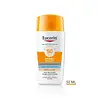
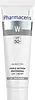
Eucerin Sun Hydro Fluid Tinted Sunscreen SPF50+ Versus Pharmaceris Triple Action Skin Lightening Day Cream SPF 50+
This chemical sunscreen covers the full UV range and blocks ~98% of UVB at SPF 50.
This brightening treatment is formulated around Ascorbyl Tetraisopalmitate and Niacinamide to fade the look of dark spots and brighten dull-looking skin.


What's inside
What's inside
 Key Ingredients
Benefits
Concerns
Ingredients Side-by-side
Water
Skin ConditioningAlcohol Denat.
Antimicrobial




CI 77891
Cosmetic ColorantButyl Methoxydibenzoylmethane
UV Absorber
Bis-Ethylhexyloxyphenol Methoxyphenyl Triazine
UV Absorber
Ethylhexyl Triazone
UV Absorber
Dibutyl Adipate
EmollientDipropylene Glycol Dibenzoate
EmollientButylene Glycol Dicaprylate/Dicaprate
EmollientPhenylbenzimidazole Sulfonic Acid
UV Absorber
Glycerin
Humectant


Polyglyceryl-6 Stearate
Emollient
Diethylamino Hydroxybenzoyl Hexyl Benzoate
UV Filter
Silica
Abrasive


Silica Dimethyl Silylate
EmollientTapioca Starch
Glycyrrhiza Inflata Root Extract
Skin Conditioning
Glycyrrhetinic Acid
Skin Conditioning
Sodium Hyaluronate
Humectant

Arginine Hcl
Skin ConditioningSodium PCA
Humectant
Sodium Lactate
Buffering
Cetearyl Alcohol
Emollient



Glyceryl Stearate
Emollient
Copernicia Cerifera Cera
Emollient
Polyglyceryl-6 Behenate
Emulsion Stabilising
Xanthan Gum
EmulsifyingCarrageenan
Sodium Hydroxide
BufferingTrisodium Ethylenediamine Disuccinate
ChelatingEthylhexylglycerin
Skin ConditioningPhenoxyethanol
Preservative
Alumina
Abrasive
Parfum
Masking

CI 77492
Cosmetic ColorantCI 77491
Cosmetic ColorantCI 77499
Cosmetic ColorantWater, Alcohol Denat., CI 77891, Butyl Methoxydibenzoylmethane, Bis-Ethylhexyloxyphenol Methoxyphenyl Triazine, Ethylhexyl Triazone, Dibutyl Adipate, Dipropylene Glycol Dibenzoate, Butylene Glycol Dicaprylate/Dicaprate, Phenylbenzimidazole Sulfonic Acid, Glycerin, Polyglyceryl-6 Stearate, Diethylamino Hydroxybenzoyl Hexyl Benzoate, Silica, Silica Dimethyl Silylate, Tapioca Starch, Glycyrrhiza Inflata Root Extract, Glycyrrhetinic Acid, Sodium Hyaluronate, Arginine Hcl, Sodium PCA, Sodium Lactate, Cetearyl Alcohol, Glyceryl Stearate, Copernicia Cerifera Cera, Polyglyceryl-6 Behenate, Xanthan Gum, Carrageenan, Sodium Hydroxide, Trisodium Ethylenediamine Disuccinate, Ethylhexylglycerin, Phenoxyethanol, Alumina, Parfum, CI 77492, CI 77491, CI 77499
Water
Skin ConditioningEthylhexyl Methoxycinnamate
UV Absorber
Glycerin
Humectant
Octocrylene
UV Absorber
Butylene Glycol
Humectant
Propylene Glycol
Humectant
Cetyl Alcohol
Emollient
Dimethicone
Emollient
Potassium Cetyl Phosphate
EmulsifyingTitanium Dioxide
Cosmetic Colorant
Paraffinum Liquidum
Emollient
Butyl Methoxydibenzoylmethane
UV Absorber
1,2-Hexanediol
Skin Conditioning
Butyrospermum Parkii Butter
Skin Conditioning
C12-15 Alkyl Benzoate
AntimicrobialEthylhexyl Triazone
UV Absorber
Tocopheryl Acetate
Antioxidant


Ascorbyl Tetraisopalmitate
Antioxidant

Niacinamide
Smoothing


Allantoin
Skin Conditioning
Rumex Occidentalis Extract
Skin ConditioningNonapeptide-1
Skin Conditioning
BHA
Antioxidant
Simethicone
Emollient
Methylene Bis-Benzotriazolyl Tetramethylbutylphenol
UV Filter
Acrylates/C10-30 Alkyl Acrylate Crosspolymer
Emulsion StabilisingTriethanolamine
BufferingXanthan Gum
EmulsifyingAlumina
Abrasive
Decyl Glucoside
Cleansing
Stearic Acid
Cleansing
Palmitic Acid
Emollient
Dextran
Diazolidinyl Urea
Preservative
Phenoxyethanol
Preservative
Parfum
Masking
Water, Ethylhexyl Methoxycinnamate, Glycerin, Octocrylene, Butylene Glycol, Propylene Glycol, Cetyl Alcohol, Dimethicone, Potassium Cetyl Phosphate, Titanium Dioxide, Paraffinum Liquidum, Butyl Methoxydibenzoylmethane, 1,2-Hexanediol, Butyrospermum Parkii Butter, C12-15 Alkyl Benzoate, Ethylhexyl Triazone, Tocopheryl Acetate, Ascorbyl Tetraisopalmitate, Niacinamide, Allantoin, Rumex Occidentalis Extract, Nonapeptide-1, BHA, Simethicone, Methylene Bis-Benzotriazolyl Tetramethylbutylphenol, Acrylates/C10-30 Alkyl Acrylate Crosspolymer, Triethanolamine, Xanthan Gum, Alumina, Decyl Glucoside, Stearic Acid, Palmitic Acid, Dextran, Diazolidinyl Urea, Phenoxyethanol, Parfum
Ingredients Explained
These ingredients are found in both products.
Ingredients higher up in an ingredient list are typically present in a larger amount.
Alumina (aka aluminum oxide) is an inorganic mineral powder refined from bauxite that works as a quiet workhorse in a formula.
It shows up often as an abrasive, absorbent, anticaking, bulking, and viscosity-controlling agent.
One of its most common jobs is acting as a pigment carrier and dispersant.
Alumina platelets are often blended with inorganic sunscreens like Titanium Dioxide (or with colorants) and then coated with a silicone such as Triethoxycaprylylsilane so the pigment spreads evenly and smoothly.
In makeup, it can also double as a light-diffusing powder or oil absorber to keep formulas from looking greasy.
The Cosmetic Ingredient Review Expert Panel has concluded alumina to be safe in present practices of use and concentration.
They note it's a stable, oxidized compound and scientific research has failed to establish links to health issues.
Concentrations vary depending on the product:
Learn more about AluminaAlso known as Avobenzone, this ingredient is an oil-soluble used to absorb the full spectrum of UVA rays (peak 357 nm).
It's one of the most effective UVA filters available but has a major caveat of photostability: avobenzone is susceptible to photodegradation.
This means it can lose efficacy when exposed to sunlight without the help of a stabilizing agent.
Studies show antioxidants (like vitamin E or vitamin C) and some UV filters (like octocrylene and Tinosorb S) can meaningfully improve its stability in a formulation.
The maximum allowable concentration according to regulation is 3% in the US + Canada, and 5% in the EU, Australia, China, Korea, and ASEAN countries.
It has a well-support safety profile: a comprehensive 2025 review found minimal toxicity with no evidence of carcinogenicity.
Overall, avobenzone is a safe and regulated ingredient used in sunscreen for over 40 years.
Learn more about Butyl MethoxydibenzoylmethaneEthylhexyl Triazone (aka Octyl Triazone) is an oil-soluble organic UVB filter. It has peak absorption around 314 nm, right in the middle of the UVB range.
This ingredient is described as one of the most effective UVB filters available and small concentrations are enough to deliver a high SPF thanks to its strong UV absorbing power.
Formulators love it for its stability; its ability to filter UV stays practically unchanged even under intense radiation and it can also help boost the photostability of less stable filters like avobenzone.
It's also a great pick for water resistant products because it's insoluble in water and has a good affinity for keratin.
Because it's a big, heavy molecule, the European Scientific Committee has found to to have very low dermal penetration and negative results for allergenicity.
In vitro testing also showed a low absorption rate and clean results on irritation.
Typical use levels are 1-5% with 5% being the maximum in the EU, Japan, and other markets that allow it. However, this ingredient is not approved yet in the US or Canada.
Learn more about Ethylhexyl TriazoneGlycerin (or glycerol) is a compound naturally found in your skin. It's a powerhouse humectant that pulls water into the stratum corneum.
Topically, glycerin does several things at once:
Your skin makes glycerin on its own (mostly from sebaceous oil breakdown) and shuttles it to your outermost layer of skin, or your epidermis, via aquaporin-3.
Aquaporin-3 is a transporter that is essential for normal skin hydration, elasticity, and repair. Interestingly, mice lacking in AQP3 have dry and less elastic skin that can be fully corrected with glycerin.
This ingredient is non-irritating, plays well with almost every ingredient, and works across all skin types. Typical use is anywhere between 3-10% but can go up to 79% in some leave-on products.
Just know very high concentrations (>40%) can feel tacky in low humidity.
Glycerin is the name for this ingredient in American English. British English uses Glycerol/Glycerine.
Learn more about GlycerinParfum is a catch-all term for an ingredient or more that is used to give a scent to products.
Also called "fragrance", this ingredient can be a blend of hundreds of chemicals or plant oils. This means every product with "fragrance" or "parfum" in the ingredients list is a different mixture.
For instance, Habanolide is a proprietary trade name for a specific aroma chemical. When used as a fragrance ingredient in cosmetics, most aroma chemicals fall under the broad labeling category of “FRAGRANCE” or “PARFUM” according to EU and US regulations.
The term 'parfum' or 'fragrance' is not regulated in many countries. In many cases, it is up to the brand to define this term.
For instance, many brands choose to label themselves as "fragrance-free" because they are not using synthetic fragrances. However, their products may still contain ingredients such as essential oils that are considered a fragrance by INCI standards.
One example is Calendula flower extract. Calendula is an essential oil that still imparts a scent or 'fragrance'.
Depending on the blend, the ingredients in the mixture can cause allergies and sensitivities on the skin. Some ingredients that are known EU allergens include linalool and citronellol.
Parfum can also be used to mask or cover an unpleasant scent.
The bottom line is: not all fragrances/parfum/ingredients are created equally. If you are worried about fragrances, we recommend taking a closer look at an ingredient. And of course, we always recommend speaking with a professional.
Learn more about ParfumPhenoxyethanol is one of the most widely used preservatives in skincare (and for good reason!).
It has a large spectrum of antimicrobial activity and especially effective bacteria, yeast, and mold while only having a weak effect on your skin's natural microbiome.
On a cellular level, it disrupts the cell membranes of microbes by poking holes that make the cell leak. This shuts down the chemical reactions the microbe needs to make energy so it can no longer survive.
Another perk of this ingredient is that it stays functional across a wide pH range (3-10).
You'll often see it paired with boosters like Ethylhexylglycerin; one study showed that a 1:9 ratio of Ethylhexylglycerin to Phenoxyethanol damages bacterial membranes as effectively as doubling the Phenoxyethanol concentration on its own.
Typical use concentrations range from 0.3-1% depending on the formula, and this ingredient is capped at 1% int the EU.
Safety-wise, the fear mongering does not hold up to the evidence. The EU's Scientific Committee on Consumer Safety and FDA consider it safe as a preservative at up to 1%, including for children of all ages.
Adverse systemic effects only showed up in animal studies at exposures roughly 200x higher than what people get from cosmetics. And despite its very widespread use, this ingredient is a rare sensitizer and allergic reactions are uncommon.
Learn more about PhenoxyethanolWater. It's the most common cosmetic ingredient of all. You'll usually see it at the top of ingredient lists, meaning that it makes up the largest part of the product.
So why is it so popular? Water most often acts as a solvent - this means that it helps dissolve other ingredients into the formulation.
You'll also recognize water as that liquid we all need to stay alive. If you see this, drink a glass of water. Remember to stay hydrated!
Learn more about WaterXanthan gum is used as a stabilizer and thickener within cosmetic products. It helps give products a sticky, thick feeling - preventing them from being too runny.
On the technical side of things, xanthan gum is a polysaccharide - a combination consisting of multiple sugar molecules bonded together.
Xanthan gum is a pretty common and great ingredient. It is a natural, non-toxic, non-irritating ingredient that is also commonly used in food products.
Learn more about Xanthan Gum

