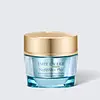
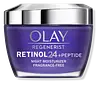
Estée Lauder NightWear Plus Moisturizer Anti-Oxidant Night Detox Creme Versus Olay Regenerist Retinol 24 + Peptide Night Moisturizer
This barrier-repair night moisturizer is formulated around Squalane and Ethylbisiminomethylguaiacol Manganese Chloride to strengthen the skin barrier and hydrate skin.
This anti-aging night moisturizer is formulated around Retinol and Niacinamide to soften the look of wrinkles and refine skin texture.

What's inside
What's inside
 Key Ingredients
Benefits
Concerns
Ingredients Side-by-side
Water
Skin ConditioningDimethicone
Emollient

Glycerin
Humectant

Polysorbate 60
Emulsifying

Butyrospermum Parkii Butter
Skin Conditioning


Hydrogenated Polydecene
EmollientPropanediol
Solvent
Squalane
Emollient
Sorbitan Stearate
Emulsifying
Cetyl Palmitate
Emollient
Tridecyl Stearate
Emollient
Laminaria Saccharina Extract
Skin Protecting
Laminaria Ochroleuca Extract
Skin Conditioning

Gentiana Lutea Root Extract
Skin ConditioningHydrolyzed Rice Bran Extract
Skin ConditioningCitrus Reticulata Peel Extract
Skin ConditioningPsidium Guajava Fruit Extract
AstringentHydrolyzed Rice Extract
Skin Conditioning
Citrus Limon Fruit Extract
Masking
Fumaria Officinalis Flower/Leaf/Stem Extract
Skin ConditioningTriticum Vulgare Germ Extract
Skin ConditioningHordeum Vulgare Extract
EmollientPolygonum Cuspidatum Root Extract
Antioxidant
Thermus Thermophillus Ferment
Skin ConditioningCoffea Arabica Seed Extract
Masking
Vitis Vinifera Seed Extract
Antimicrobial
Saccharomyces Lysate Extract
Humectant
Limonium Vulgare Flower/Leaf/Stem Extract
Skin ConditioningEthylbisiminomethylguaiacol Manganese Chloride
Antioxidant
Palmitoyl Hydroxypropyltrimonium Amylopectin/Glycerin Crosspolymer
Skin ConditioningArtemia Extract
Skin ConditioningCholesterol
Emollient
Algae Extract
Emollient
Linoleic Acid
Cleansing
Dimethiconol
Emollient
Isohexadecane
EmollientSodium Hyaluronate
Humectant
Lecithin
Emollient
Tridecyl Trimellitate
EmollientLauryl Alcohol
Emollient
Glycyrrhetinic Acid
Skin Conditioning
Trehalose
Humectant
Sucrose
Humectant
Ergothioneine
Antioxidant
Acrylates/C10-30 Alkyl Acrylate Crosspolymer
Emulsion StabilisingDipentaerythrityl Hexacaprylate/Hexacaprate
EmulsifyingAcetyl Glucosamine
Skin Conditioning
Ethylhexylglycerin
Skin ConditioningButylene Glycol
Humectant
Glyceryl Stearate
Emollient
Behenyl Alcohol
Emollient
Caffeine
Skin Conditioning
Palmitic Acid
Emollient
Sodium PCA
Humectant
Stearic Acid
Cleansing
Urea
Buffering

Caprylic/Capric Triglyceride
Masking
Acrylamide/Sodium Acryloyldimethyltaurate Copolymer
Emulsion StabilisingTocopheryl Acetate
Antioxidant
Tetrahexyldecyl Ascorbate
Antioxidant

Cetyl Alcohol
Emollient
Myristyl Alcohol
Emollient
Polyquaternium-51
Skin Conditioning
Citric Acid
Buffering
Sodium Hydroxide
BufferingPolysorbate 80
Emulsifying
Sodium Benzoate
Masking
Fumaric Acid
BufferingCyclodextrin
AbsorbentParfum
Masking

Disodium EDTA
BHT
Antioxidant
Phenoxyethanol
Preservative
Chlorphenesin
Antimicrobial
Linalool
Perfuming
Butylphenyl Methylpropional
Perfuming
Hydroxyisohexyl 3-Cyclohexene Carboxaldehyde
Masking
Benzyl Salicylate
Perfuming
CI 42090
Cosmetic ColorantCI 19140
Cosmetic ColorantWater, Dimethicone, Glycerin, Polysorbate 60, Butyrospermum Parkii Butter, Hydrogenated Polydecene, Propanediol, Squalane, Sorbitan Stearate, Cetyl Palmitate, Tridecyl Stearate, Laminaria Saccharina Extract, Laminaria Ochroleuca Extract, Gentiana Lutea Root Extract, Hydrolyzed Rice Bran Extract, Citrus Reticulata Peel Extract, Psidium Guajava Fruit Extract, Hydrolyzed Rice Extract, Citrus Limon Fruit Extract, Fumaria Officinalis Flower/Leaf/Stem Extract, Triticum Vulgare Germ Extract, Hordeum Vulgare Extract, Polygonum Cuspidatum Root Extract, Thermus Thermophillus Ferment, Coffea Arabica Seed Extract, Vitis Vinifera Seed Extract, Saccharomyces Lysate Extract, Limonium Vulgare Flower/Leaf/Stem Extract, Ethylbisiminomethylguaiacol Manganese Chloride, Palmitoyl Hydroxypropyltrimonium Amylopectin/Glycerin Crosspolymer, Artemia Extract, Cholesterol, Algae Extract, Linoleic Acid, Dimethiconol, Isohexadecane, Sodium Hyaluronate, Lecithin, Tridecyl Trimellitate, Lauryl Alcohol, Glycyrrhetinic Acid, Trehalose, Sucrose, Ergothioneine, Acrylates/C10-30 Alkyl Acrylate Crosspolymer, Dipentaerythrityl Hexacaprylate/Hexacaprate, Acetyl Glucosamine, Ethylhexylglycerin, Butylene Glycol, Glyceryl Stearate, Behenyl Alcohol, Caffeine, Palmitic Acid, Sodium PCA, Stearic Acid, Urea, Caprylic/Capric Triglyceride, Acrylamide/Sodium Acryloyldimethyltaurate Copolymer, Tocopheryl Acetate, Tetrahexyldecyl Ascorbate, Cetyl Alcohol, Myristyl Alcohol, Polyquaternium-51, Citric Acid, Sodium Hydroxide, Polysorbate 80, Sodium Benzoate, Fumaric Acid, Cyclodextrin, Parfum, Disodium EDTA, BHT, Phenoxyethanol, Chlorphenesin, Linalool, Butylphenyl Methylpropional, Hydroxyisohexyl 3-Cyclohexene Carboxaldehyde, Benzyl Salicylate, CI 42090, CI 19140
Water
Skin ConditioningDimethicone
Emollient
Glycerin
Humectant
Tapioca Starch
Dimethicone Crosspolymer
Emulsion Stabilising
Retinol
Skin Conditioning


Retinyl Propionate
Skin Conditioning
Niacinamide
Smoothing
Palmitoyl Pentapeptide-4
Skin Conditioning
Polyacrylamide
C13-14 Isoparaffin
Emollient
DMDM Hydantoin
Preservative
Polysorbate 20
Emulsifying
Laureth-4
Emulsifying
Acrylates/C10-30 Alkyl Acrylate Crosspolymer
Emulsion StabilisingLaureth-7
EmulsifyingDimethiconol
Emollient
Polymethylsilsesquioxane
Aminomethyl Propanol
BufferingTitanium Dioxide
Cosmetic Colorant

Disodium EDTA
Iodopropynyl Butylcarbamate
Preservative
Caprylic/Capric Triglyceride
Masking
Water, Dimethicone, Glycerin, Tapioca Starch, Dimethicone Crosspolymer, Retinol, Retinyl Propionate, Niacinamide, Palmitoyl Pentapeptide-4, Polyacrylamide, C13-14 Isoparaffin, DMDM Hydantoin, Polysorbate 20, Laureth-4, Acrylates/C10-30 Alkyl Acrylate Crosspolymer, Laureth-7, Dimethiconol, Polymethylsilsesquioxane, Aminomethyl Propanol, Titanium Dioxide, Disodium EDTA, Iodopropynyl Butylcarbamate, Caprylic/Capric Triglyceride
Reviews
Ingredients Explained
These ingredients are found in both products.
Ingredients higher up in an ingredient list are typically present in a larger amount.
Acrylates/C10-30 Alkyl Acrylate Crosspolymer is a synthetic polymer. It is used to thicken, emulsify, and improve the texture of products.
As an emulsifier, it helps stabilize oil-in-water emulsions to give products an elegant feel when applied.
It can also form a thin protective film on skin. One study found that a formula using this polymer helped slow down how quickly other ingredients (like DEET) were absorbed through skin.
A 2024 study of over 1,300 patients confirmed that sensitization to this ingredient is rare. It is also non-mutagenic and has a clean track record.
Learn more about Acrylates/C10-30 Alkyl Acrylate CrosspolymerCaprylic/Capric Triglyceride (aka MCT Oil) is a lightweight emollient, solvent, and texture enhancer. It is considered a skin-softener by helping to prevent moisture loss.
Though it behaves like an oil, it is not technically one due to its chemical composition. One perk of this ingredient is that it is very stable, resistant to oxidation, and unlikely to go rancid.
In practice, that translates to a long shelf life and a consistently elegant skin feel.
While there is an assumption Caprylic Triglyceride can clog pores due to it being derived from coconut oil, there is no research supporting this. Just patch test if you have concerns.
Fractionated coconut oil and MCT Oil are both listed as Caprylic/Capric Triglyceride according to INCI. This is because INCI names are based on the ingredient’s final chemical composition and not its marketing name or source.
This ingredient is treated as the gold standard fungal acne safe oil. Even though it is coconut derived, the problematic lauric acid is stripped out.
This leaves just caprylic (C8) and capric (C10) acid. These chain lengths actually trend antifungal; a 2020 study found caprylic acid was enough to disrupt Malassezia furfur cell membrane, with a caprylic acid derivative damaging membrane structures at concentrations as low as 0.2%.
Learn more about Caprylic/Capric TriglycerideDimethicone is a type of synthetic silicone created from natural materials such as quartz. It is also known as polydimethylsiloxane.
What it does:
Dimethicone comes in different viscosities:
Depending on the viscosity, dimethicone has different properties.
Ingredients lists don't always show which type is used, so we recommend reaching out to the brand if you have questions about the viscosity.
This ingredient is unlikely to cause irritation because it does not get absorbed into skin. However, people with silicone allergies should be careful about using this ingredient.
Note: Dimethicone may contribute to pilling. This is because it is not oil or water soluble, so pilling may occur when layered with products. When mixed with heavy oils in a formula, the outcome is also quite greasy.
Learn more about DimethiconeDimethiconol is a silicone that resembles the popular dimethicone. Like other silicones, it is an emollient. Emollients create a thin film on skin to prevent moisture from escaping.
This ingredient helps to create a silky texture and improve spreadability. Due to its high molecular weight and thickness, it is often combined with cyclopentasiloxane.
Disodium EDTA is a chelating agent. It grabs onto and deactivates metal ions that sneak into your products from water, packaging, or air.
This ingredient mainly works behind the scenes and helps with:
On top of that, this ingredient can counteract the effects of hard water by binding to the minerals in it.
One thing worth knowing is that Disodium EDTA has been shown to be a mild penetration enhancer. It can help other ingredients absorb into skin more effectively which can be a double-edged sword (great for actives, but can also make the active too strong if you have sensitive skin).
Clinical patch testing showed no significant skin irritation at typical use concentrations and minimal dermal absorption.
You'll most likely see this ingredient near the end of an ingredient list. It's typically found in concentrations less than 1%.
Learn more about Disodium EDTAGlycerin (or glycerol) is a compound naturally found in your skin. It's a powerhouse humectant that pulls water into the stratum corneum.
Topically, glycerin does several things at once:
Your skin makes glycerin on its own (mostly from sebaceous oil breakdown) and shuttles it to your outermost layer of skin, or your epidermis, via aquaporin-3.
Aquaporin-3 is a transporter that is essential for normal skin hydration, elasticity, and repair. Interestingly, mice lacking in AQP3 have dry and less elastic skin that can be fully corrected with glycerin.
This ingredient is non-irritating, plays well with almost every ingredient, and works across all skin types. Typical use is anywhere between 3-10% but can go up to 79% in some leave-on products.
Just know very high concentrations (>40%) can feel tacky in low humidity.
Glycerin is the name for this ingredient in American English. British English uses Glycerol/Glycerine.
Learn more about GlycerinWater. It's the most common cosmetic ingredient of all. You'll usually see it at the top of ingredient lists, meaning that it makes up the largest part of the product.
So why is it so popular? Water most often acts as a solvent - this means that it helps dissolve other ingredients into the formulation.
You'll also recognize water as that liquid we all need to stay alive. If you see this, drink a glass of water. Remember to stay hydrated!
Learn more about Water

