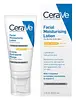
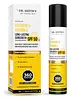
CeraVe AM Facial Moisturizing Lotion With SPF 50 Versus Dr. Sheth's Ceramide & Vitamin C Long Lasting Sunscreen SPF 50
This barrier-repair day moisturizer is formulated around Niacinamide and Ceramide NP to strengthen the skin barrier and hydrate skin.
This hybrid sunscreen covers the full UV range and blocks ~98% of UVB at SPF 50.


What's inside
What's inside
 Key Ingredients
Benefits
Concerns
Ingredients Side-by-side
Water
Skin ConditioningGlycerin
Humectant


Isopropyl Palmitate
Emollient




Bis-Ethylhexyloxyphenol Methoxyphenyl Triazine
UV Absorber
Ethylhexyl Salicylate
UV Absorber
Niacinamide
Smoothing









Pentylene Glycol
Skin Conditioning
Butyl Methoxydibenzoylmethane
UV Absorber
Ethylhexyl Triazone
UV Absorber
Propanediol
Solvent
Zea Mays Starch
Absorbent
Potassium Cetyl Phosphate
EmulsifyingDiisopropyl Sebacate
EmollientOryza Sativa Cera
Skin ConditioningOryza Sativa Bran Wax
Skin Conditioning
Stearic Acid
Cleansing
Ceramide NP
Skin Conditioning
Ceramide AP
Skin Conditioning
Ceramide EOP
Skin Conditioning
Carbomer
Emulsion StabilisingGlyceryl Stearate
Emollient
Cetearyl Alcohol
Emollient

Triethanolamine
BufferingBehentrimonium Methosulfate
SurfactantTriethyl Citrate
Masking

Sodium Hyaluronate
Humectant
Sodium Polyacrylate
Absorbent
Sodium Lauroyl Lactylate
EmulsifyingMyristic Acid
Cleansing
Cholesterol
Emollient
Palmitic Acid
Emollient
Tocopherol
Antioxidant

Caprylyl Glycol
Emollient
Citric Acid
Buffering
Trisodium Ethylenediamine Disuccinate
ChelatingXanthan Gum
EmulsifyingPhytosphingosine
Skin Conditioning
Acrylates/C10-30 Alkyl Acrylate Crosspolymer
Emulsion StabilisingButyrospermum Parkii Butter
Skin Conditioning
Benzoic Acid
Masking
PEG-100 Stearate
Surfactant
Water, Glycerin, Isopropyl Palmitate, Bis-Ethylhexyloxyphenol Methoxyphenyl Triazine, Ethylhexyl Salicylate, Niacinamide, Pentylene Glycol, Butyl Methoxydibenzoylmethane, Ethylhexyl Triazone, Propanediol, Zea Mays Starch, Potassium Cetyl Phosphate, Diisopropyl Sebacate, Oryza Sativa Cera, Oryza Sativa Bran Wax, Stearic Acid, Ceramide NP, Ceramide AP, Ceramide EOP, Carbomer, Glyceryl Stearate, Cetearyl Alcohol, Triethanolamine, Behentrimonium Methosulfate, Triethyl Citrate, Sodium Hyaluronate, Sodium Polyacrylate, Sodium Lauroyl Lactylate, Myristic Acid, Cholesterol, Palmitic Acid, Tocopherol, Caprylyl Glycol, Citric Acid, Trisodium Ethylenediamine Disuccinate, Xanthan Gum, Phytosphingosine, Acrylates/C10-30 Alkyl Acrylate Crosspolymer, Butyrospermum Parkii Butter, Benzoic Acid, PEG-100 Stearate
Water
Skin ConditioningCyclopentasiloxane
Emollient
Ethylhexyl Methoxycinnamate
UV Absorber
Titanium Dioxide
Cosmetic Colorant
Diethylhexyl Butamido Triazone
UV Absorber
Cetyl PEG/PPG-10/1 Dimethicone
Emulsifying
Aluminum Chlorohydrate
AstringentDimethicone/Vinyl Dimethicone Crosspolymer
Skin Conditioning
Zinc Oxide
Cosmetic Colorant
Coco-Caprylate/Caprate
Emollient
Polyglyceryl-3 Polyricinoleate
Emulsifying
Isostearic Acid
Cleansing
Isododecane
EmollientDisteardimonium Hectorite
StabilisingPropylene Carbonate
SolventBis-Ethylhexyloxyphenol Methoxyphenyl Triazine
UV Absorber
Physalis Angulata Extract
Skin ProtectingCaprylic/Capric Triglyceride
Masking
3-O-Ethyl Ascorbic Acid
Skin Conditioning
Polymethylsilsesquioxane
Hyaluronic Acid
Humectant
Laminaria Digitata Extract
Skin Protecting
Cetyl-Pg Hydroxyethyl Palmitamide
Skin ConditioningCeramide EOP
Skin Conditioning
Ceramide Ns
Skin Conditioning
Ceramide NP
Skin Conditioning
Ceramide As
Skin Conditioning
Ceramide AP
Skin Conditioning
Butylene Glycol
Humectant
Tocopherol
Antioxidant
Sodium Benzoate
Masking
Phenoxyethanol
Preservative
Water, Cyclopentasiloxane, Ethylhexyl Methoxycinnamate, Titanium Dioxide, Diethylhexyl Butamido Triazone, Cetyl PEG/PPG-10/1 Dimethicone, Aluminum Chlorohydrate, Dimethicone/Vinyl Dimethicone Crosspolymer, Zinc Oxide, Coco-Caprylate/Caprate, Polyglyceryl-3 Polyricinoleate, Isostearic Acid, Isododecane, Disteardimonium Hectorite, Propylene Carbonate, Bis-Ethylhexyloxyphenol Methoxyphenyl Triazine, Physalis Angulata Extract, Caprylic/Capric Triglyceride, 3-O-Ethyl Ascorbic Acid, Polymethylsilsesquioxane, Hyaluronic Acid, Laminaria Digitata Extract, Cetyl-Pg Hydroxyethyl Palmitamide, Ceramide EOP, Ceramide Ns, Ceramide NP, Ceramide As, Ceramide AP, Butylene Glycol, Tocopherol, Sodium Benzoate, Phenoxyethanol
Reviews
Ingredients Explained
These ingredients are found in both products.
Ingredients higher up in an ingredient list are typically present in a larger amount.
This ingredient is better known as bemotrizinol or Tinosorb S and is one of the best broad-spectrum UV filters in modern sunscreen.
It works by absorbing UV light across a whole range (280-400 nm) with peaks around 310 nm (UVB) and 340-345 nm (UVA). This means it covers UVB plus the deeper UVA wavelengths that drive photoaging and pigmentation.
Another pro?
It's exceptionally photostable, barely degrades in sunlight, and acts as a "bodyguard" for less stable filters.
That's why you'll see it paired with avobenzone or octinoxate; this team up ensures they keep working through sun exposure.
Safety reviews have been reassuring across the board. This ingredient shows low absorption through the skin, rarely irritates, and lab studies found it doesn't act like a hormone in the body (a concern that's been raised about some older sunscreen filters).
On maximum concentrations:
In 2026, the US F.D.A finally added it as an OTC sunscreen ingredient at concentrations up to 6% for adults / children 6 months and older
Learn more about Bis-Ethylhexyloxyphenol Methoxyphenyl TriazineCeramide AP is is a skin-identical lipid that mimics what your skin already makes naturally. Ceramides help maintain epidermal integrity and barrier function.
You'll often see this ingredient paired with other ceramides (like ceramide NP), cholesterol, or fatty acids because this combination best mimics the natural lipid mix your skin already has.
The skin's ability to produce ceramides gets disrupted in skin conditions like eczema. This in turn weakens the skin barrier and applying ceramides topically has been shown to replenish what's been lost to restore barrier function.
Most of the studies with Ceramide AP test it as part of a multi-ceramide complex; studies reinforce ceramide AP's role in rebalancing ceramides in skin and improving skin hydration.
Learn more about Ceramide APCeramide EOP is formally known as Ceramide 1.
It is naturally found in skin and part of the intercellular "mortar" holding everything together in your outermost layer.
EOP stands for a linked Ester fatty acid, a linked Omega hydroxy fatty acid, and the Phytosphingosine base.
What makes Ceramide EOP special is its ultra-long fatty acid chain; this unique structure allows it to bridge the lipid layers in your skin barrier to prevent water loss (something no other ceramide can do).
Low levels of Ceramide EOP have been found in people with eczema and psoriasis.
Using it together with other ceramides, cholesterol, and linoleic acid have been shown to meaningfully improve hydration and reduce water loss.
In one clinical study, a regimen using Ceramide EOP, NP, and AP led to significant symptom improvements in patients with eczema, psoriasis, and dry skin in just 4 weeks.
You'll usually see concentrations between 0.1-0.5% in formulations. Overall, this is a well-tolerated and safe ingredient for cosmetic use.
Learn more about Ceramide EOPCeramide NP (formerly known as Ceramide 3) is one of the skin's naturally occurring lipids.
Since ceramides are the major lipid components of the skin, they are crucial for maintaining skin barrier and hydration. Ceramide NP most closely mirrors the dominant kind in human skin amongst ceramide subtypes.
This ceramide works by slotting into gaps within the stratum corneum's lipid matrix to limit trans-epidermal water loss (TEWL) and shield the skin against external irritants.
A study with 312 patients found that using a ceramide-containing routine for 4 weeks reduced the severity of atopic dermatitis by over 61%.
Another clinical study in subjects aged 60 and older found that a ceramide body wash and moisturizer improved skin dryness and itchy skin in 15 days.
Overall, ceramides are considered non-irritating and safety tests have found little to no observable adverse effects from using this ingredient.
Ceramide NP is usually sourced from plants (like soybean or rice bran), or produced synthetically.
Learn more about Ceramide NPTocopherol is a fat-soluble antioxidant known as Vitamin E.
You'll find this ingredient in the vast majority of skincare (for good reason). It works to neutralize free radicals, or unstable molecules generated by UV exposure, pollution, and other environmental stressors, before they can cause oxidative damage to your skin cells.
Topically applied tocopherol has been shown to protect against UV damage by ramping up the skin's own natural defense enzymes.
It also acts as a skin conditioning agent; some studies show that regular topical use can improve the skin's water-binding capacity over 2-4 weeks.
This ingredient is especially loved for being a team player. When combined with Vitamin C, the photoprotective effect of both ingredients roughly doubles and the combo also helps reduce UV-induced DNA damage.
This ingredient has some brightening potential but it's more of a prevention ingredient than spot-fader. Cell studies show it can slow down melanin production but it's worth noting that it's not the most powerful brightener out there.
In formulations, it also serves as a stabilizer that helps protect other oxidation-prone ingredients from degrading.
Concentrations usually range from 0.1-1% in most leave-on products.
Learn more about TocopherolWater. It's the most common cosmetic ingredient of all. You'll usually see it at the top of ingredient lists, meaning that it makes up the largest part of the product.
So why is it so popular? Water most often acts as a solvent - this means that it helps dissolve other ingredients into the formulation.
You'll also recognize water as that liquid we all need to stay alive. If you see this, drink a glass of water. Remember to stay hydrated!
Learn more about Water

