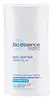
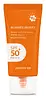
Bio Essence Bio-Water Hydrating Sunscreen SPF 50+ PA++ Versus Papa Recipe Bombee Moist Sun Essence SPF 50+ PA+++
This hybrid sunscreen covers the full UV range and blocks ~98% of UVB at SPF 50.
This hybrid sunscreen covers the full UV range and blocks ~98% of UVB at SPF 50.


What's inside
What's inside
 Key Ingredients
Benefits
Concerns
Ingredients Side-by-side
Water
Skin ConditioningCyclopentasiloxane
Emollient
Alcohol Denat.
Antimicrobial




Titanium Dioxide
Cosmetic Colorant

Ethylhexyl Methoxycinnamate
UV Absorber
Butyl Methoxydibenzoylmethane
UV Absorber
Benzophenone-3
UV Absorber
Butylene Glycol
Humectant

Phospholipids
Skin Conditioning
C12-15 Alkyl Benzoate
AntimicrobialStearic Acid
Cleansing

Aluminum Hydroxide
EmollientPolyhydroxystearic Acid
Emulsifying
Aluminum Stearate
Cosmetic ColorantPropanediol
Solvent
Sodium Acrylate/Sodium Acryloyldimethyl Taurate Copolymer
Emulsion StabilisingIsohexadecane
EmollientPolysorbate 80
Emulsifying
Sodium Hyaluronate
Humectant


Citrus Grandis Fruit Extract
Astringent
Ethylhexylglycerin
Skin ConditioningPPG-26-Buteth-26
Skin ConditioningPEG-40 Hydrogenated Castor Oil
Emulsifying
Carbomer
Emulsion StabilisingTranexamic Acid
Astringent



Niacinamide
Smoothing





Euglena Gracilis Extract
Skin ConditioningGlycerin
Humectant
Tocopherol
Antioxidant

Triethanolamine
BufferingParfum
Masking
Allantoin
Skin Conditioning
Disodium EDTA
ChelatingWater, Cyclopentasiloxane, Alcohol Denat., Titanium Dioxide, Ethylhexyl Methoxycinnamate, Butyl Methoxydibenzoylmethane, Benzophenone-3, Butylene Glycol, Phospholipids, C12-15 Alkyl Benzoate, Stearic Acid, Aluminum Hydroxide, Polyhydroxystearic Acid, Aluminum Stearate, Propanediol, Sodium Acrylate/Sodium Acryloyldimethyl Taurate Copolymer, Isohexadecane, Polysorbate 80, Sodium Hyaluronate, Citrus Grandis Fruit Extract, Ethylhexylglycerin, PPG-26-Buteth-26, PEG-40 Hydrogenated Castor Oil, Carbomer, Tranexamic Acid, Niacinamide, Euglena Gracilis Extract, Glycerin, Tocopherol, Triethanolamine, Parfum, Allantoin, Disodium EDTA
Water
Skin ConditioningEthylhexyl Methoxycinnamate
UV Absorber
Alcohol
Antimicrobial
Homosalate
Skin Conditioning
Ethylhexyl Salicylate
UV Absorber
Pentylene Glycol
Skin Conditioning
Bis-Ethylhexyloxyphenol Methoxyphenyl Triazine
UV Absorber
Caprylyl Methicone
Skin Conditioning
Titanium Dioxide
Cosmetic Colorant
1,2-Hexanediol
Skin Conditioning
Glycerin
Humectant
Ethylhexyl Triazone
UV Absorber
Isononyl Isononanoate
EmollientHoney Extract
Humectant
Propolis Extract
Skin Conditioning
Royal Jelly Extract
Skin Conditioning
Lavandula Angustifolia Flower Extract
Cleansing
Centaurea Cyanus Flower Extract
Astringent
Viola Tricolor Extract
EmollientCaprylyl Glycol
Emollient
Carthamus Tinctorius Flower Extract
Skin ConditioningNelumbo Nucifera Flower Extract
Skin ConditioningCamellia Japonica Flower Extract
EmollientRosa Damascena Flower Extract
Masking
Pancratium Maritimum Extract
BleachingSophora Japonica Fruit Extract
Skin ConditioningPolyglyceryl-3 Methylglucose Distearate
Emulsifying
Lauryl Methacrylate/Glycol Dimethacrylate Crosspolymer
Cyclopentasiloxane
Emollient
Ammonium Acryloyldimethyltaurate/Vp Copolymer
Sodium Acrylate/Sodium Acryloyldimethyl Taurate Copolymer
Emulsion StabilisingAluminum Hydroxide
EmollientStearic Acid
Cleansing
Isohexadecane
EmollientDimethicone/Vinyl Dimethicone Crosspolymer
Skin Conditioning
Tocopheryl Acetate
Antioxidant
Allantoin
Skin Conditioning
Sorbitan Isostearate
Emulsifying
Citrus Limon Peel Oil
Masking
Ethylhexylglycerin
Skin ConditioningPolysorbate 80
Emulsifying
Xanthan Gum
EmulsifyingSorbitan Oleate
Emulsifying
Sodium Hyaluronate
Humectant
Butylene Glycol
Humectant
Ethyl Hexanediol
SolventCitral
Perfuming
Limonene
Perfuming
Water, Ethylhexyl Methoxycinnamate, Alcohol, Homosalate, Ethylhexyl Salicylate, Pentylene Glycol, Bis-Ethylhexyloxyphenol Methoxyphenyl Triazine, Caprylyl Methicone, Titanium Dioxide, 1,2-Hexanediol, Glycerin, Ethylhexyl Triazone, Isononyl Isononanoate, Honey Extract, Propolis Extract, Royal Jelly Extract, Lavandula Angustifolia Flower Extract, Centaurea Cyanus Flower Extract, Viola Tricolor Extract, Caprylyl Glycol, Carthamus Tinctorius Flower Extract, Nelumbo Nucifera Flower Extract, Camellia Japonica Flower Extract, Rosa Damascena Flower Extract, Pancratium Maritimum Extract, Sophora Japonica Fruit Extract, Polyglyceryl-3 Methylglucose Distearate, Lauryl Methacrylate/Glycol Dimethacrylate Crosspolymer, Cyclopentasiloxane, Ammonium Acryloyldimethyltaurate/Vp Copolymer, Sodium Acrylate/Sodium Acryloyldimethyl Taurate Copolymer, Aluminum Hydroxide, Stearic Acid, Isohexadecane, Dimethicone/Vinyl Dimethicone Crosspolymer, Tocopheryl Acetate, Allantoin, Sorbitan Isostearate, Citrus Limon Peel Oil, Ethylhexylglycerin, Polysorbate 80, Xanthan Gum, Sorbitan Oleate, Sodium Hyaluronate, Butylene Glycol, Ethyl Hexanediol, Citral, Limonene
Reviews
Ingredients Explained
These ingredients are found in both products.
Ingredients higher up in an ingredient list are typically present in a larger amount.
Allantoin is a soothing ingredient known for its protective and moisturizing properties; it's basically a quiet workhorse ingredient you can find in a huge range of cosmetics.
Though it can be derived from the comfrey plant, allantoin is produced synthetically for cosmetic products to ensure purity.
Research shows it can encourage your skin cells to turn over and renew by stimulating keratinocyte and fibroblast proliferation.
It also has mild keratolytic properties to help loosen and shed dead skin cells without being harsh.
Studies also suggest allantoin can help calm inflammation by dialing down some of the chemical signals your skin sends out when it is irritated.
This ingredient is typically used in the 0.1-0.5% range, and the FDA recognizes it as a skin protectant in OTC products up to 2%.
Overall, allantoin is a wonderful addition to most routines; it is stable across a wide pH range (~4-8), works well with other ingredients, and is considered non-sensitizing/non-irritating.
Fun fact: Allantoin is naturally occurring in comfrey root, beets, chamomile, and wheat sprouts. Our bodies even produce it as a byproduct of uric acid metabolism.
Learn more about AllantoinAluminum Hydroxide is a form of aluminum. It can be naturally found in nature as the mineral gibbsite. In cosmetics, Aluminum Hydroxide is used as a colorant, pH adjuster, and absorbent.
As a colorant, Aluminum Hydroxide may add opacity, or reduce the transparency. Aluminum hydroxide is contains both basic and acidic properties.
According to manufacturers, this ingredient is an emollient and humectant. This means it helps hydrate the skin.
In medicine, this ingredient is used to help relieve heartburn and help heal ulcers.
There is currently no credible scientific evidence linking aluminum hydroxide in cosmetics to increased cancer risk.
Major health organizations allow the use of aluminum hydroxide in personal care products and have not flagged it as a carcinogenic risk at typical usage levels.
Learn more about Aluminum HydroxideButylene Glycol (or BG) is used within cosmetic products for a few different reasons:
Overall, Butylene Glycol is a safe and well-rounded ingredient that works well with other ingredients.
Though this ingredient works well with most skin types, some people with sensitive skin may experience a reaction such as allergic rashes, closed comedones, or itchiness.
Learn more about Butylene GlycolCyclopentasiloxane (D5) is a lightweight silicone that mostly acts as an emollient and solvent in cosmetics. Its the reason your products feel silky, fast-spreading, and non-greasy.
Since D5 is volatile, it does its thing and then evaporates off the skin quickly.
The safety profile of this ingredient is reassuring; the US CIR Expert Panel concluded D5 is safe as used in cosmetics and Health Canada concluded that D5 is not harmful to human health or the environment as currently used in cosmetics
There's a study that people mention about D5 in a rat study showing tumors. This study is related to long-term inhalation of high D5 levels.
Regulatory bodies have judged this study to be not applicable in topical skincare since skin absorption of D5 is very low and we're not really inhaling huge amounts of D5.
The only restriction for this ingredient is environmental. The European Chemicals Agency (ECHA) restricted D5 in wash-off cosmetics at or above 0.1% due to their persistence in water.
Learn more about CyclopentasiloxaneThis ingredient is also known as Octinoxate and is one of the oldest and most widely used chemical UV filters in skincare.
It has a simple job: soap up UVB radiation (290-320 nm), the wavelengths responsible for sunburn and a big chunk of long-term sun damage.
In formulas, it's always paired with a separate UVA filter because octinoxate solely protects skin from UVB.
Because it's an oil-soluble liquid, it's easy to blend into the oil phase of lotions/creams and gives a cosmetically elegant feel.
The one quirk about formulating this ingredient is photostability; the molecule slowly changes shape into a less effective version when sunlight hits it. So the longer you're in the sun, the weaker its protection gets. The drop can be more than 30% in some formulas.
It also doesn't play nice with Avobenzone (the common UVA filter) since avobenzone destabilizes octinoxate and the two degrade each other. But don't worry: brands have solved this issue by adding photostabilizers like Tinosorb S to prevent degradation and keep SPF stable under heavy UV exposure.
The maximum allowed level is 10% in the EU and Australia, 7.5% in the US and Canada, and 20% in Japan.
The Cosmetic Ingredient Review Panel has concluded this ingredient to be safe in cosmetics up to 10%.
One last thing worth knowing for context:
Octinoxate has been the subject of ongoing review in Europe where the Scientific Committee on Consumer Safety's (SCCS) 2025 final opinion is that this ingredient is an endocrine-active substance.
Lab and animal studies suggest it can act a bit like a hormone in the body (mildly mimicking estrogen and slightly blocking male hormones). It's important to know this hasn't really been shown to happen in everyday human use.
This ingredient is also banned in Hawaii over coral reef concerns.
Learn more about Ethylhexyl MethoxycinnamateEthylhexylglycerin is created from glycerin. It is a multitasker ingredient that:
The CIR Expert Panel found minimal skin absorption or sensitization of any kind in a safety assessment. Though this ingredient is considered well-tolerated, a small number of cases of allergic dermatitis have been published since 2002. Just be sure to patch test if you are unsure.
Industry-reported use ranges from 8% in rinse-off products and 2% in leave-on formulations.
Learn more about EthylhexylglycerinGlycerin (or glycerol) is a compound naturally found in your skin. It's a powerhouse humectant that pulls water into the stratum corneum.
Topically, glycerin does several things at once:
Your skin makes glycerin on its own (mostly from sebaceous oil breakdown) and shuttles it to your outermost layer of skin, or your epidermis, via aquaporin-3.
Aquaporin-3 is a transporter that is essential for normal skin hydration, elasticity, and repair. Interestingly, mice lacking in AQP3 have dry and less elastic skin that can be fully corrected with glycerin.
This ingredient is non-irritating, plays well with almost every ingredient, and works across all skin types. Typical use is anywhere between 3-10% but can go up to 79% in some leave-on products.
Just know very high concentrations (>40%) can feel tacky in low humidity.
Glycerin is the name for this ingredient in American English. British English uses Glycerol/Glycerine.
Learn more about GlycerinIsohexadecane is added to enhance texture, emulsify, and to help cleanse. It is an isoparrafin. It is a component of petrolatum.
Due to its large size, Isohexadecane is not absorbed by the skin. Instead, it sits on top and acts as an emollient. Emollients help keep your skin soft and smooth by trapping moisture within.
Isohexadecane is often used in products designed to help oily skin. It is lightweight and non-greasy while helping to moisturize. When mixed with silicones, it gives a product a silky feel.
Learn more about IsohexadecanePolysorbate 80 is a synthetic surfactant and emulsifier derived from sorbitol and oleic acid.
It reduces the surface tension between oil and water phases to help them stay mixed and stable in a formulation. In other words, it prevents your formulas from separating into an oily mess.
The CIR Expert Panel has evaluated the scientific data and found this ingredient to be safe, non-irritating, and non-sensitizing at concentrations up to 5% (it's even approved by the FDA as an OTC eye drop ingredient).
Learn more about Polysorbate 80This long ingredient is a copolymer of sodium acrylate and sodium acryloyldimethyl taurate monomers.
It is used to help stabilize other ingredients and create a thicker gel-like texture.
Emulsifiers prevent oils and waters from separating.
Learn more about Sodium Acrylate/Sodium Acryloyldimethyl Taurate CopolymerSodium Hyaluronate is the salt form of hyaluronic acid. It is a long sugar chain that is naturally found in your skin, joints, and connective tissue that maintains hydration and elasticity.
In skincare, it works as a humectant. It pulls water from the environment and deeper layers of skin and binds it to the surface.
Interestingly, the size of the molecule affects its behavior:
Some clinical evidence links low molecular weight versions to improved wrinkle depth, elasticity, anti-inflammatory effects, and barrier repair.
Many serums use a blend of both weights so you can get surface hydration plus longer-lasting and deeper effects.
You'll typically see concentrations between 0.1-2% for this ingredient.
Learn more about Sodium HyaluronateStearic Acid is a fatty acid that is already found in your skin. It's one of the free fatty acids that works alongside ceramides and cholesterols to maintain your barrier.
In cosmetics, it is a multitasker:
Safety-wise, the CIR Expert Panel has concluded it to be safe in cosmetics when formulated to be non-irritating and non-sensitizing.
Free stearic acid is a C18 fatty acid that the Malassezia yeast can substrate, so this ingredient may not be fungal acne safe.
This ingredient does have a comedogenic rating of 2-3, but this doesn't mean a formula with this ingredient will clog pores.
Human testing has proved that any finished product with this ingredient won't automatically make you break out; it really comes down to concentration, formula, and your skin.
Learn more about Stearic AcidTitanium Dioxide (TD) is a mineral UV filter widely used in sunscreens and cosmetics.
It's one of only two UV filters officially classified as "mineral" by regulatory agencies (the other being Zinc Oxide).
A really common myth is that mineral filters work by reflecting UV light off your skin like tiny mirrors.
They don't only do that; modern research shows TD protects mostly by absorbing UV radiation, the same way chemical filters do.
When researchers measured this, reflection accounted for only about 4-5% of the protection (and less than SPF 2 on its own). The other ~95% comes from absorption: the UV photons hit the particle and their energy gets soaked up by its semiconductor band gap rather than bouncing off.
So "reflects vs. absorbs" was never really the right way to split mineral from chemical filters.
TD gives broad-spectrum protection that's strongest in the UVB and UVA-2 range and weaker in the UVA-1 range. Its UVA protection isn't quite as strong as Zinc Oxide's which is why you'll often see the two paired together.
Together, they make a solid broad-spectrum system.
TD is a great pick for sensitive, acne-prone, or redness-prone skin because it's non-irritating and chemically inert. Regulatory reviews classify it as a non-sensitizer and mild-to-non-irritant.
It's also unlikely to cause the "eye sting" some chemical filters are known for.
The main trade-off is cosmetic; TD can leave a white cast and has a thicker texture. This is why mineral sunscreens are often less cosmetically elegant than chemical or hybrid formulas (and harder to shade-match on deeper skin tones).
Formulators often use micronized or nano-sized TD to cut down on white case and improve spreadability. Smaller particles scatter less visible light so the formula looks less chalky while still filtering UV.
TD is almost always bundled with coatings like Alumina, Silica, Stearic Acid, or Dimethicone. These coatings do two important jobs:
TD can be used at up to 25% in a finished sunscreen; this is the regulatory ceiling in both the US and the EU.
In practice, the amount in any given product varies a lot depending on the target SPF and whether it's paired with other UV filters.
TD is one of the most heavily vetted sunscreen ingredients out there. It is approved as a UV filter in all major markets worldwide, including the US, EU, UK, Japan, Korea, China, Australia, and Canada.
The safety evidence is solid. There was an old worry that nano particles might absorb through skin into the body but multiple studies (including on damaged, sunburned, and UV-irradiated skin) have shown that TD stays on the surface and the layer of dead skin cells on top of everything else.
There's also no evidence of carcinogenicity, mutagenicity, or reproductive toxicity from dermal exposure of this ingredient.
For those who have seen the headline about a 2022 EU ban on TD, that was on TD as a food additive (a complete separate use from topical sunscreen).
There are ongoing questions about how nano-TD might affect marine ecosystems. As of now, there has been no conclusive evidence that any form of TD (or any other sunscreen filter) harms coral reefs or marine life.
The science is still developing and it's a space worth watching rather than packing over.
However, several destinations have reef-safety sunscreen rules that restrict certain chemical filters and steer visitors toward mineral, non-nano options. If you're traveling somewhere with these rules, a non-nano mineral sunscreen is the safe bet.
Learn more about Titanium DioxideWater. It's the most common cosmetic ingredient of all. You'll usually see it at the top of ingredient lists, meaning that it makes up the largest part of the product.
So why is it so popular? Water most often acts as a solvent - this means that it helps dissolve other ingredients into the formulation.
You'll also recognize water as that liquid we all need to stay alive. If you see this, drink a glass of water. Remember to stay hydrated!
Learn more about Water

