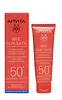
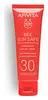
Apivita Natural Cosmetics Bee Sun Safe Hydra Sensitive Soothing Face Cream SPF50+ Versus Apivita Natural Cosmetics Hydra Fresh Face Gel Cream SPF30
This chemical sunscreen covers the full UV range and blocks ~98% of UVB at SPF 50.
This chemical sunscreen covers the full UV range and blocks ~97% of UVB at SPF 30.

What's inside
What's inside
 Key Ingredients
Benefits
Concerns
Ingredients Side-by-side
Water
Skin ConditioningBis-Ethylhexyloxyphenol Methoxyphenyl Triazine
UV Absorber
Diethylamino Hydroxybenzoyl Hexyl Benzoate
UV Filter
Dicaprylyl Carbonate
EmollientEthylhexyl Triazone
UV Absorber
Ethylhexyl Salicylate
UV Absorber
Isoamyl Laurate
Emollient

Triheptanoin
Skin ConditioningSorbitol
Humectant

Cocoglycerides
Emollient
Propanediol
Solvent
Glyceryl Stearate Citrate
Emollient
Sodium Stearoyl Glutamate
CleansingPropolis Extract
Skin Conditioning




Scutellaria Baicalensis Root Extract
Astringent
Glycyrrhiza Glabra Root Extract
Bleaching

Camellia Sinensis Leaf Extract
Antimicrobial



Polygonum Cuspidatum Root Extract
Antioxidant
Rosa Canina Fruit Extract
Astringent
Rosmarinus Officinalis Leaf Extract
AntimicrobialChamomilla Recutita Flower Extract
Masking
Centella Asiatica Extract
Cleansing
Aloe Barbadensis Leaf Juice Powder
Skin Conditioning
Panthenol
Skin Conditioning
Brassica Campestris Seed Oil
Skin Conditioning
Hydroxypropyl Cyclodextrin
MaskingSodium Hyaluronate
Humectant
Bisabolol
Antioxidant
Tocopheryl Acetate
Antioxidant
Glycerin
Humectant
Ethylhexylglycerin
Skin ConditioningDisodium EDTA
ChelatingSorbitan Olivate
Emulsifying
Sorbitan Palmitate
Emulsifying
Cetyl Palmitate
Emollient
Triacontanyl Pvp
HumectantSclerotium Gum
Emulsion StabilisingXanthan Gum
EmulsifyingHydroxyacetophenone
Antioxidant
Citronellyl Methylcrotonate
Masking
Sodium Hydroxide
BufferingWater, Bis-Ethylhexyloxyphenol Methoxyphenyl Triazine, Diethylamino Hydroxybenzoyl Hexyl Benzoate, Dicaprylyl Carbonate, Ethylhexyl Triazone, Ethylhexyl Salicylate, Isoamyl Laurate, Triheptanoin, Sorbitol, Cocoglycerides, Propanediol, Glyceryl Stearate Citrate, Sodium Stearoyl Glutamate, Propolis Extract, Scutellaria Baicalensis Root Extract, Glycyrrhiza Glabra Root Extract, Camellia Sinensis Leaf Extract, Polygonum Cuspidatum Root Extract, Rosa Canina Fruit Extract, Rosmarinus Officinalis Leaf Extract, Chamomilla Recutita Flower Extract, Centella Asiatica Extract, Aloe Barbadensis Leaf Juice Powder, Panthenol, Brassica Campestris Seed Oil, Hydroxypropyl Cyclodextrin, Sodium Hyaluronate, Bisabolol, Tocopheryl Acetate, Glycerin, Ethylhexylglycerin, Disodium EDTA, Sorbitan Olivate, Sorbitan Palmitate, Cetyl Palmitate, Triacontanyl Pvp, Sclerotium Gum, Xanthan Gum, Hydroxyacetophenone, Citronellyl Methylcrotonate, Sodium Hydroxide
Water
Skin ConditioningPropanediol
Solvent
Diethylamino Hydroxybenzoyl Hexyl Benzoate
UV Filter
Bis-Ethylhexyloxyphenol Methoxyphenyl Triazine
UV Absorber
Ethylhexyl Triazone
UV Absorber
Isoamyl Laurate
Emollient
Glycerin
Humectant
C13-15 Alkane
SolventTriheptanoin
Skin ConditioningSilica
Abrasive
C9-12 Alkane
SolventParfum
Masking


Hydrolyzed Algin
Maris Aqua
HumectantChlorella Vulgaris Extract
Skin ConditioningPropolis Extract
Skin Conditioning
Rosa Canina Fruit Extract
Astringent
Panthenol
Skin Conditioning
Aloe Barbadensis Leaf Juice Powder
Skin Conditioning
Helianthus Annuus Seed Oil
Emollient
Sodium Hyaluronate
Humectant
Tocopherol
Antioxidant
Allantoin
Skin Conditioning
Hydroxypropyl Cyclodextrin
MaskingTocopheryl Acetate
Antioxidant
Coco-Caprylate/Caprate
Emollient
Glyceryl Stearate
Emollient
Sorbitan Oleate
Emulsifying
PEG-100 Stearate
Surfactant
Ethylhexylglycerin
Skin ConditioningDisodium EDTA
ChelatingAcrylates/C10-30 Alkyl Acrylate Crosspolymer
Emulsion StabilisingTriacontanyl Pvp
HumectantXanthan Gum
EmulsifyingCarbomer
Emulsion StabilisingCitronellyl Methylcrotonate
Masking
Hydroxyacetophenone
Antioxidant
Sodium Hydroxide
BufferingWater, Propanediol, Diethylamino Hydroxybenzoyl Hexyl Benzoate, Bis-Ethylhexyloxyphenol Methoxyphenyl Triazine, Ethylhexyl Triazone, Isoamyl Laurate, Glycerin, C13-15 Alkane, Triheptanoin, Silica, C9-12 Alkane, Parfum, Hydrolyzed Algin, Maris Aqua, Chlorella Vulgaris Extract, Propolis Extract, Rosa Canina Fruit Extract, Panthenol, Aloe Barbadensis Leaf Juice Powder, Helianthus Annuus Seed Oil, Sodium Hyaluronate, Tocopherol, Allantoin, Hydroxypropyl Cyclodextrin, Tocopheryl Acetate, Coco-Caprylate/Caprate, Glyceryl Stearate, Sorbitan Oleate, PEG-100 Stearate, Ethylhexylglycerin, Disodium EDTA, Acrylates/C10-30 Alkyl Acrylate Crosspolymer, Triacontanyl Pvp, Xanthan Gum, Carbomer, Citronellyl Methylcrotonate, Hydroxyacetophenone, Sodium Hydroxide
Ingredients Explained
These ingredients are found in both products.
Ingredients higher up in an ingredient list are typically present in a larger amount.
Aloe Barbadensis Leaf Juice Powder comes from the aloe plant.
You may know Aloe to be a good sunburn reliever and inflammation reducer. This is because it contains many components that are known to help reduce irritation and itchiness.
Aloe leaves are also great moisturizers. They are naturally rich in polysaccharides, a carbohydrate made of sugars. Polysaccharides are able to mimic the carbs found in the top layer of your skin. This can help keep your skin hydrated.
Aloe contains the antioxidants Vitamins A, C, and E. These vitamins neutralize free radicals. Free-radicals are molecules that may damage your skin cells, such as pollution.
Aloe does not protect against UV rays, despite it soothing sunburns.
Learn more about Aloe Barbadensis Leaf Juice PowderThis ingredient is better known as bemotrizinol or Tinosorb S and is one of the best broad-spectrum UV filters in modern sunscreen.
It works by absorbing UV light across a whole range (280-400 nm) with peaks around 310 nm (UVB) and 340-345 nm (UVA). This means it covers UVB plus the deeper UVA wavelengths that drive photoaging and pigmentation.
Another pro?
It's exceptionally photostable, barely degrades in sunlight, and acts as a "bodyguard" for less stable filters.
That's why you'll see it paired with avobenzone or octinoxate; this team up ensures they keep working through sun exposure.
Safety reviews have been reassuring across the board. This ingredient shows low absorption through the skin, rarely irritates, and lab studies found it doesn't act like a hormone in the body (a concern that's been raised about some older sunscreen filters).
On maximum concentrations:
In 2026, the US F.D.A finally added it as an OTC sunscreen ingredient at concentrations up to 6% for adults / children 6 months and older
Learn more about Bis-Ethylhexyloxyphenol Methoxyphenyl TriazineCitronellyl Methylcrotonate is a fragrance.
Diethylamino Hydroxybenzoyl Hexyl Benzoate (DHHB) is a chemical UV-A absorber. It is formulated for high UVA protection (320-400 nm).
DHHB is well-liked for:
DHHB has been approved by the EU, Japan, Taiwan, and South America for use up to 10%. Unfortunately, it has not been approved for use in the US or Canada due to slow regulatory processes.
This ingredient is soluble in oils, fats, and lipids.
Learn more about Diethylamino Hydroxybenzoyl Hexyl BenzoateDisodium EDTA is a chelating agent. It grabs onto and deactivates metal ions that sneak into your products from water, packaging, or air.
This ingredient mainly works behind the scenes and helps with:
On top of that, this ingredient can counteract the effects of hard water by binding to the minerals in it.
One thing worth knowing is that Disodium EDTA has been shown to be a mild penetration enhancer. It can help other ingredients absorb into skin more effectively which can be a double-edged sword (great for actives, but can also make the active too strong if you have sensitive skin).
Clinical patch testing showed no significant skin irritation at typical use concentrations and minimal dermal absorption.
You'll most likely see this ingredient near the end of an ingredient list. It's typically found in concentrations less than 1%.
Learn more about Disodium EDTAEthylhexyl Triazone (aka Octyl Triazone) is an oil-soluble organic UVB filter. It has peak absorption around 314 nm, right in the middle of the UVB range.
This ingredient is described as one of the most effective UVB filters available and small concentrations are enough to deliver a high SPF thanks to its strong UV absorbing power.
Formulators love it for its stability; its ability to filter UV stays practically unchanged even under intense radiation and it can also help boost the photostability of less stable filters like avobenzone.
It's also a great pick for water resistant products because it's insoluble in water and has a good affinity for keratin.
Because it's a big, heavy molecule, the European Scientific Committee has found to to have very low dermal penetration and negative results for allergenicity.
In vitro testing also showed a low absorption rate and clean results on irritation.
Typical use levels are 1-5% with 5% being the maximum in the EU, Japan, and other markets that allow it. However, this ingredient is not approved yet in the US or Canada.
Learn more about Ethylhexyl TriazoneEthylhexylglycerin is created from glycerin. It is a multitasker ingredient that:
The CIR Expert Panel found minimal skin absorption or sensitization of any kind in a safety assessment. Though this ingredient is considered well-tolerated, a small number of cases of allergic dermatitis have been published since 2002. Just be sure to patch test if you are unsure.
Industry-reported use ranges from 8% in rinse-off products and 2% in leave-on formulations.
Learn more about EthylhexylglycerinGlycerin (or glycerol) is a compound naturally found in your skin. It's a powerhouse humectant that pulls water into the stratum corneum.
Topically, glycerin does several things at once:
Your skin makes glycerin on its own (mostly from sebaceous oil breakdown) and shuttles it to your outermost layer of skin, or your epidermis, via aquaporin-3.
Aquaporin-3 is a transporter that is essential for normal skin hydration, elasticity, and repair. Interestingly, mice lacking in AQP3 have dry and less elastic skin that can be fully corrected with glycerin.
This ingredient is non-irritating, plays well with almost every ingredient, and works across all skin types. Typical use is anywhere between 3-10% but can go up to 79% in some leave-on products.
Just know very high concentrations (>40%) can feel tacky in low humidity.
Glycerin is the name for this ingredient in American English. British English uses Glycerol/Glycerine.
Learn more about GlycerinHydroxyacetophenone is a small phenolic molecule that earns its place in a formulas as an antioxidant and preservative booster.
As a phenol, it is able to neutralize free radicals to protect both the product and the skin from oxidative stress.
Though it can't kill microbes on its own, it works as a good supporting agent when combined with other preservatives like Phenoxyethanol or 1,2-Hexanediol.
This ingredient naturally occurs as piceol in Norwegian spruce needles (~0.4-1.1% dry weight and in cloudberries). Though the cosmetic-grade material is synthesized for purity and consistency.
You'll usually see it used at low levels and suppliers recommend up to 1% added to a water phase.
Safety testing was done at concentrations like 0.05% in SPF products and 0.5% in a Human Repeated Insult Patch Test. The safety evidence is assuring; this ingredient is safe for cosmetics in current use and also holds safety status as a food flavoring as well.
An honest caveat: the "soothing" and "anti-inflammatory" claims come mostly from supplier marketing rather than published clinical trials. The Cosmetic Ingredient Review's own literature search found no useful efficacy studies on this ingredient.
So the antioxidant and preservative-boosting roles are the well supported ones while the calming benefit is plausible but thinly evidenced.
Overall, this is a well-tolerated, low-irritation multitasker that quietly helps a formula stay fresh and stable.
Learn more about HydroxyacetophenoneThis ingredient is used in skincare as a delivery system.
It works by "encapsulating" active ingredients with its unique ring shape that is water-loving on the outside and oil-loving on the inside. This improves the stability and absorption of the product into the skin.
According to a manufacturer, it also offer some moisturizing effects.
Learn more about Hydroxypropyl CyclodextrinIsoamyl Laurate is a plant-derived and biodegradable lightweight emollient that is an Ecocert/COSMOS approved alternative to silicones.
It functions as an emollient that helps soften and hydrate skin without leaving a greasy/sticky feel.
You'll find it in a range of products from makeup to sunscreen, and typically at low percentages (~2-5%).
This ingredient is deemed safe at current cosmetic use and non-sensitizing in human studies (it's even approved as a food additive flavoring substance).
Because this ingredient is an easter of lauric acid, it falls in the C11-24 range that Malassezia can feed on, making this ingredient not fungal acne safe.
Learn more about Isoamyl LauratePanthenol is a common ingredient that helps hydrate and soothe the skin. It is found naturally in our skin and hair.
There are two forms of panthenol: D and L.
D-panthenol is also known as dexpanthenol. Most cosmetics use dexpanthenol or a mixture of D and L-panthenol.
Panthenol is famous due to its ability to go deeper into the skin's layers. Using this ingredient has numerous pros (and no cons):
Like hyaluronic acid, panthenol is a humectant. Humectants are able to bind and hold large amounts of water to keep skin hydrated.
This ingredient works well for wound healing. It works by increasing tissue in the wound and helps close open wounds.
Once oxidized, panthenol converts to pantothenic acid. Panthothenic acid is found in all living cells.
This ingredient is also referred to as pro-vitamin B5.
Learn more about PanthenolPropanediol is an all-star ingredient. It softens, hydrates, and smooths the skin.
It’s often used to:
Propanediol is not likely to cause sensitivity and considered safe to use. It is derived from corn or petroleum with a clear color and no scent.
Learn more about PropanediolPropolis Extract is a natural ingredient derived from propolis (also known as bee glue). Bees make propolis by mixing their saliva and beeswax with resins collected from tree buds and plants.
This ingredient is packed with bioactive compounds like flavonoids, phenolic acids, and amino acids that give it antioxidant and anti-inflammatory properties.
Research shows it can help:
It also pairs nicely with hydrating ingredients like niacinamide and ceramides.
Just so you know, Propolis Extract is recognized as a contact allergen. In patch tests done in the EU, roughly 1-6% of patients react to it. Be sure to steer clear of this ingredient if you have a known allergy to bee products.
Since it is an animal-derived product, this ingredient is not considered vegan. For vegan alternatives, check out Galactomyces Ferment Filtrate or Centella Asiatica Extract.
Learn more about Propolis ExtractRosa Canina Fruit Extract is from Rosehip. Rosehips are a fruit from a wild rose bush native to Eurasia and Africa.
Rosehip contains Vitamin C, Vitamin E, fatty acids and linolenic acids that hydrate skin. Having hydrated skin helps reduce the appearance of fine-lines and wrinkles.
Vitamins C and E are potent antioxidants and may help with anti-aging. The fatty acids are emollients that help soften and hydrate your skin.
Another potent vitamin found in rosehip is Vitamin A, or retinol. Retinol encourages collagen production in the skin.
Rosehip extract may help with brightening the skin. Several components, such as beta-carotene, are able to reduce pigmentation caused by sun damage.
Learn more about Rosa Canina Fruit ExtractSodium Hyaluronate is the salt form of hyaluronic acid. It is a long sugar chain that is naturally found in your skin, joints, and connective tissue that maintains hydration and elasticity.
In skincare, it works as a humectant. It pulls water from the environment and deeper layers of skin and binds it to the surface.
Interestingly, the size of the molecule affects its behavior:
Some clinical evidence links low molecular weight versions to improved wrinkle depth, elasticity, anti-inflammatory effects, and barrier repair.
Many serums use a blend of both weights so you can get surface hydration plus longer-lasting and deeper effects.
You'll typically see concentrations between 0.1-2% for this ingredient.
Learn more about Sodium HyaluronateSodium Hydroxide is also known as lye or caustic soda. It is used to adjust the pH of products; many ingredients require a specific pH to be effective.
In small amounts, sodium hydroxide is considered safe to use. However, large amounts may cause chemical burns due to its high alkaline.
Your skin has a natural pH and acid mantle. This acid mantle helps prevent harmful bacteria from breaking through. The acid mantle also helps keep your skin hydrated.
"Alkaline" refers to a high pH level. A low pH level would be considered acidic.
Learn more about Sodium HydroxideTocopheryl Acetate is a stable, shelf-friendly form of vitamin E.
Formulators love it because plain vitamin E oxidizes quickly once it hits air. This acetate version stays stable and resists going off, helping to extend a product's shelf life.
It's actually inactive on its own and works like a slow-release "storage" form; the enzymes in your skin called esterases gradually convert it into active vitamin E over time.
One in vivo study showed 5% of the acetate in the living layer of the epidermis converted to vitamin E after 5 days of application. This study also found the skin gained protection against UV damage even though the conversion was slow and small.
Once converted, vitamin E acts as a skin's main fat-soluble antioxidant that fights free radicals to protect skin from damage.
Topical vitamin E generally boosts the skin's photoprotection, and it reduced UV-damage in animal models.
This ingredient has some brightening potential but it's more of a prevention ingredient than spot-fader. Cell studies show it can slow down melanin production but it's worth noting that it's not the most powerful brightener out there.
Overall, it has a pretty solid safety profile and has been found to be non-irritating and non-comedogenic. Allergic reactions may happen but stay rare due to how widely the ingredient gets used.
The concentration will vary depending on the formula; industry data shows 0.1% in baby lotions, 3% in lipsticks, and 5% in foot powders. You can also find this ingredient at 100% in a pure vitamin E oil.
Most leave-on skincare keeps it at the lower end, often between 0.5-1%.
Learn more about Tocopheryl AcetateWe don't have a description for Triacontanyl Pvp yet.
We don't have a description for Triheptanoin yet.
Water. It's the most common cosmetic ingredient of all. You'll usually see it at the top of ingredient lists, meaning that it makes up the largest part of the product.
So why is it so popular? Water most often acts as a solvent - this means that it helps dissolve other ingredients into the formulation.
You'll also recognize water as that liquid we all need to stay alive. If you see this, drink a glass of water. Remember to stay hydrated!
Learn more about WaterXanthan gum is used as a stabilizer and thickener within cosmetic products. It helps give products a sticky, thick feeling - preventing them from being too runny.
On the technical side of things, xanthan gum is a polysaccharide - a combination consisting of multiple sugar molecules bonded together.
Xanthan gum is a pretty common and great ingredient. It is a natural, non-toxic, non-irritating ingredient that is also commonly used in food products.
Learn more about Xanthan Gum

