From This Island Acne Defense Serum
A serum with 49 ingredients, including vitamin C, BHA, and vitamin E.
This acne serum is formulated around Salicylic Acid and Madecassoside to clear breakouts and calm redness.
Worth noting
Contains Salicylic Acid, an exfoliating acid best introduced gradually.
We independently verify ingredients, backed by peer-reviewed research. Suggest an update.
What's inside
Ingredients List
Water
Skin ConditioningButylene Glycol
Humectant

Dipropylene Glycol
HumectantPropanediol
Solvent
2,3-Butanediol
HumectantGlycerin
Humectant
1,2-Hexanediol
Skin Conditioning
Salicylic Acid
Masking










Hexylene Glycol
EmulsifyingGlyceryl Glucoside
Humectant
Panthenol
Skin Conditioning

Pentylene Glycol
Skin Conditioning
Sodium Hydroxide
BufferingPEG-40 Hydrogenated Castor Oil
Emulsifying

Xanthan Gum
EmulsifyingMadecassoside
Antioxidant

Asiaticoside
Antioxidant
Calophyllum Inophyllum Seed Oil
Antimicrobial
Allantoin
Skin Conditioning
Hyaluronic Acid
Humectant
Sodium Hyaluronate
Humectant
Hydrolyzed Hyaluronic Acid
Humectant
Melaleuca Alternifolia Leaf Extract
Perfuming
Brassica Oleracea Italica Extract
AstringentEthylhexylglycerin
Skin ConditioningSodium Metabisulfite
Antioxidant
Sodium Phytate
ChelatingCurcuma Longa Root Extract
Antioxidant
Melia Azadirachta Leaf Extract
Skin ConditioningAnanas Sativus Fruit Extract
Skin ConditioningCaprylyl Glycol
Emollient
Centella Asiatica Leaf Extract
Skin Conditioning
Tremella Fuciformis Extract
Humectant
Melia Azadirachta Flower Extract
Skin ConditioningEthyl Hexanediol
SolventSolanum Lycopersicum Fruit Extract
Antioxidant
Ascorbyl Glucoside
Antioxidant
Acetyl Hexapeptide-1
Skin Conditioning
Phenoxyethanol
Preservative
Resveratrol
Antioxidant
Magnesium Chloride
Calcium Gluconate
HumectantPyridoxine Hcl
Skin ConditioningTocopherol
Antioxidant

Yeast Extract
Skin ConditioningCyanocobalamin
Skin ConditioningOcimum Sanctum Leaf Extract
Skin ConditioningMentha Arvensis Extract
MaskingAzadirachta Indica Leaf Extract
Skin ConditioningWater, Butylene Glycol, Dipropylene Glycol, Propanediol, 2,3-Butanediol, Glycerin, 1,2-Hexanediol, Salicylic Acid, Hexylene Glycol, Glyceryl Glucoside, Panthenol, Pentylene Glycol, Sodium Hydroxide, PEG-40 Hydrogenated Castor Oil, Xanthan Gum, Madecassoside, Asiaticoside, Calophyllum Inophyllum Seed Oil, Allantoin, Hyaluronic Acid, Sodium Hyaluronate, Hydrolyzed Hyaluronic Acid, Melaleuca Alternifolia Leaf Extract, Brassica Oleracea Italica Extract, Ethylhexylglycerin, Sodium Metabisulfite, Sodium Phytate, Curcuma Longa Root Extract, Melia Azadirachta Leaf Extract, Ananas Sativus Fruit Extract, Caprylyl Glycol, Centella Asiatica Leaf Extract, Tremella Fuciformis Extract, Melia Azadirachta Flower Extract, Ethyl Hexanediol, Solanum Lycopersicum Fruit Extract, Ascorbyl Glucoside, Acetyl Hexapeptide-1, Phenoxyethanol, Resveratrol, Magnesium Chloride, Calcium Gluconate, Pyridoxine Hcl, Tocopherol, Yeast Extract, Cyanocobalamin, Ocimum Sanctum Leaf Extract, Mentha Arvensis Extract, Azadirachta Indica Leaf Extract
Key Ingredients
Benefits
Concerns
Ingredients Explained
Water. It's the most common cosmetic ingredient of all. You'll usually see it at the top of ingredient lists, meaning that it makes up the largest part of the product.
So why is it so popular? Water most often acts as a solvent - this means that it helps dissolve other ingredients into the formulation.
You'll also recognize water as that liquid we all need to stay alive. If you see this, drink a glass of water. Remember to stay hydrated!
Learn more about WaterButylene Glycol (or BG) is used within cosmetic products for a few different reasons:
Overall, Butylene Glycol is a safe and well-rounded ingredient that works well with other ingredients.
Though this ingredient works well with most skin types, some people with sensitive skin may experience a reaction such as allergic rashes, closed comedones, or itchiness.
Learn more about Butylene GlycolDipropylene Glycol is a synthetically created humectant, stabilizer, and solvent.
This ingredient helps:
Dipropylene glycol is technically an alcohol, but it belongs to the glycol family (often considered part of the ‘good’ alcohols). This means it is hydrating and gentle on skin unlike drying solvent alcohols like denatured alcohol.
As a masking agent, Dipropylene Glycol can be used to cover the smell of other ingredients. However, it does not have a scent.
Studies show Dipropylene Glycol is considered safe to use in skincare.
Learn more about Dipropylene GlycolPropanediol is an all-star ingredient. It softens, hydrates, and smooths the skin.
It’s often used to:
Propanediol is not likely to cause sensitivity and considered safe to use. It is derived from corn or petroleum with a clear color and no scent.
Learn more about Propanediol2,3-Butanediol is a naturally occurring humectant and solvent. It's created from fermentation and can be found in foods like cocoa butter and sweet corn.
This ingredient attracts and holds onto moisture to boost hydration in skin. According to a manufacturer, this ingredient improves the spreadability of ingredients like vitamin C.
Glycerin (or glycerol) is a compound naturally found in your skin. It's a powerhouse humectant that pulls water into the stratum corneum.
Topically, glycerin does several things at once:
Your skin makes glycerin on its own (mostly from sebaceous oil breakdown) and shuttles it to your outermost layer of skin, or your epidermis, via aquaporin-3.
Aquaporin-3 is a transporter that is essential for normal skin hydration, elasticity, and repair. Interestingly, mice lacking in AQP3 have dry and less elastic skin that can be fully corrected with glycerin.
This ingredient is non-irritating, plays well with almost every ingredient, and works across all skin types. Typical use is anywhere between 3-10% but can go up to 79% in some leave-on products.
Just know very high concentrations (>40%) can feel tacky in low humidity.
Glycerin is the name for this ingredient in American English. British English uses Glycerol/Glycerine.
Learn more about Glycerin1,2-Hexanediol is a synthetic liquid and another multi-functional powerhouse.
It is a:
- Humectant, drawing moisture into the skin
- Emollient, helping to soften skin
- Solvent, dispersing and stabilizing formulas
- Preservative booster, enhancing the antimicrobial activity of other preservatives
Salicylic Acid (also known as beta hydroxy acid or BHA) is a well-known ingredient for treating skin that struggles with acne and clogged pores. It exfoliates both the skin's surface and deep within the pores to help clear out buildup, control oil, and reduce inflammation.
Unlike AHAs (alpha hydroxy acids), salicylic acid is oil-soluble. This allows it to penetrate into pores which makes it especially effective for treating blackheads and preventing future breakouts.
Salicylic acid is also known for its soothing properties. It has a similar structure to aspirin and can calm inflamed or irritated skin, making it a good option for acne-prone skin that is also sensitive.
Concentrations of 0.5-2% are recognized by the U.S. FDA as an over-the-counter topical acne product.
It can cause irritation and/or dryness if one's skin already has a compromised moisture barrier, so it's best to focus on repairing that before introducing this ingredient into your routine.
While salicylic acid does not increase sun sensitivity, it’s still important to wear sunscreen daily to protect your skin.
If you are looking for the ingredient called BHA or Butylated Hydroxyanisole, click here.
Learn more about Salicylic AcidHexylene Glycol is a multitasker ingredient that works as a solvent, humectant, emulsifier, viscosity reducer, and preservative booster.
It is able to dissolve both water and oil-soluble ingredients to stabilize tricky actives and make products spread more easily.
As a humectant, it pulls water into the skin. But it's a pretty minor moisturizing ingredient compared to other humectants, like glycerin.
Interestingly, it can act as a mild penetration enhancer. One in vitro study on human skin found a 12% concentration upped the absorption of mometasone furoate (a medicinal ingredient used to treat inflammatory skin conditions) up to 7%.
This ingredient is typically used at levels of 0.1-10% depending on the role it's playing.
A patch test study on eczema patients didn't find a significant increase in irritation versus the control group, but the potential for irritation rises at higher concentrations.
Learn more about Hexylene GlycolGlyceryl Glucoside is made from glycerol and glucose.
It is a humectant. Humectants help hydrate your skin by drawing moisture to it from the air.
Some foods that contain glyceryl glucoside include sake, miso, and wines.
Learn more about Glyceryl GlucosidePanthenol is a common ingredient that helps hydrate and soothe the skin. It is found naturally in our skin and hair.
There are two forms of panthenol: D and L.
D-panthenol is also known as dexpanthenol. Most cosmetics use dexpanthenol or a mixture of D and L-panthenol.
Panthenol is famous due to its ability to go deeper into the skin's layers. Using this ingredient has numerous pros (and no cons):
Like hyaluronic acid, panthenol is a humectant. Humectants are able to bind and hold large amounts of water to keep skin hydrated.
This ingredient works well for wound healing. It works by increasing tissue in the wound and helps close open wounds.
Once oxidized, panthenol converts to pantothenic acid. Panthothenic acid is found in all living cells.
This ingredient is also referred to as pro-vitamin B5.
Learn more about PanthenolPentylene Glycol (1,2-pentanediol) is a multitasking little diol with three main roles in a formula:
Research on alkanediols (the family pentylene glycol belongs to) show they work by disrupting microbial cell membranes. This disruption helps the primary preservative system in a product work more effectively at lower doses.
On the safety side, the Cosmetic Ingredient Review Expert Panel has concluded this ingredient to be safe as used in current cosmetic practices + concentrations.
Typical use levels in a formula run about 1-5%.
Learn more about Pentylene GlycolSodium Hydroxide is also known as lye or caustic soda. It is used to adjust the pH of products; many ingredients require a specific pH to be effective.
In small amounts, sodium hydroxide is considered safe to use. However, large amounts may cause chemical burns due to its high alkaline.
Your skin has a natural pH and acid mantle. This acid mantle helps prevent harmful bacteria from breaking through. The acid mantle also helps keep your skin hydrated.
"Alkaline" refers to a high pH level. A low pH level would be considered acidic.
Learn more about Sodium HydroxidePEG-40 Hydrogenated Castor Oil is an emulsifier derived from castor oil.
As an emulsifying agent, it helps other ingredients like fragrances and fat-soluble vitamins dissolve cohesively.
Due to its large molecule size, it doesn't penetrate beyond the skin's surface.
This ingredient has a solid regulatory track record; the CIR Expert Panel first concluded it was safe for use in cosmetics at concentrations up to 100% in 1997. A 2012 reassessment reaffirmed that finding. Safety studies have also found no irritation or evidence of toxicity.
A 2019 study did find this ingredient to grow Malassezia, so this ingredient may not be fungal acne safe.
Learn more about PEG-40 Hydrogenated Castor OilXanthan gum is used as a stabilizer and thickener within cosmetic products. It helps give products a sticky, thick feeling - preventing them from being too runny.
On the technical side of things, xanthan gum is a polysaccharide - a combination consisting of multiple sugar molecules bonded together.
Xanthan gum is a pretty common and great ingredient. It is a natural, non-toxic, non-irritating ingredient that is also commonly used in food products.
Learn more about Xanthan GumMadecassoside is one of four active compounds found in Centella asiatica and is one of the main reasons Centella is so effective at calming irritated skin and supporting the moisture barrier.
There's a solid body of peer-reviewed research backing Madecassoside for several skin benefits. Studies have found:
Madecassoside pairs well with other hydrating or antioxidant ingredients like Ascorbic Acid or Hyaluronic Acid.
Learn more about MadecassosideAsiaticoside comes from the super popular skin-soothing ingredient, Centella asiatica. It's the reason centella-based products have a strong reputation for repairing and calming skin, along with its sibling compound Madecassoside.
Research from 2016-2025 supports its role in:
You'll usually find this in concentrations between 0.2-5%.
Learn more about AsiaticosideCalophyllum Inophyllum Seed Oil comes from the Tamanu tree. This tree grows in tropical regions of Asia and Polynesian countries such as Fiji.
Calophyllum Inophyllum Seed Oil contains many fatty acids such as linoleic, oleic, stearic, and palmitic acid. These properties help your skin stay hydrated.
As an antioxidant, Calophyllum Inophyllum Seed Oil may also slow down the signs of aging. Antioxidants help fight unstable free-radical molecules.
These molecules may damage your skin cells and speed up aging. By helping to stabilize these molecules, antioxidants may help slow the signs of aging.
A study from 2015 found Tamanu oil to have antibacterial and anti-inflammatory properties.
Another study from 2009 found Tamanu Oil to help absorb UV rays. However, this should not replace your sunscreen.
Due to the fatty acid content, this ingredient may not be fungal-acne safe.
Learn more about Calophyllum Inophyllum Seed OilAllantoin is a soothing ingredient known for its protective and moisturizing properties; it's basically a quiet workhorse ingredient you can find in a huge range of cosmetics.
Though it can be derived from the comfrey plant, allantoin is produced synthetically for cosmetic products to ensure purity.
Research shows it can encourage your skin cells to turn over and renew by stimulating keratinocyte and fibroblast proliferation.
It also has mild keratolytic properties to help loosen and shed dead skin cells without being harsh.
Studies also suggest allantoin can help calm inflammation by dialing down some of the chemical signals your skin sends out when it is irritated.
This ingredient is typically used in the 0.1-0.5% range, and the FDA recognizes it as a skin protectant in OTC products up to 2%.
Overall, allantoin is a wonderful addition to most routines; it is stable across a wide pH range (~4-8), works well with other ingredients, and is considered non-sensitizing/non-irritating.
Fun fact: Allantoin is naturally occurring in comfrey root, beets, chamomile, and wheat sprouts. Our bodies even produce it as a byproduct of uric acid metabolism.
Learn more about AllantoinHyaluronic acid (HA) is a glycosaminoglycan (basically a long sugar chain) that your skin already makes on its own. In your skin, HA lives in the extracellular matrix and acts as the body's moisture reservoir.
Topically, HA is a humectant that binds water and helps skin look more plump, smooth, and hydrated.
The only catch is that HA isn't a single thing; it actually comes in a wide range of molecular weights (~50 - 2,000+ kDA) and size matters.
Some clinical evidence links low molecular weight versions to improved wrinkle depth, elasticity, anti-inflammatory effects, and barrier repair.
This is why the best HA serums blend the two sizes together so you get the best of both worlds.
The majority of cosmetic HA is produced by bacterial fermentation, typically using Streptococcus or Bacillus strains. Typical use levels in skincare sit around 0.1-2%.
A clinical study using a 0.2% low-molecular weight HA gel showed improvement in facial seborrheic dermatitis with excellent tolerance.
These are some other common types of Hyaluronic Acid:
Learn more about Hyaluronic AcidSodium Hyaluronate is the salt form of hyaluronic acid. It is a long sugar chain that is naturally found in your skin, joints, and connective tissue that maintains hydration and elasticity.
In skincare, it works as a humectant. It pulls water from the environment and deeper layers of skin and binds it to the surface.
Interestingly, the size of the molecule affects its behavior:
Some clinical evidence links low molecular weight versions to improved wrinkle depth, elasticity, anti-inflammatory effects, and barrier repair.
Many serums use a blend of both weights so you can get surface hydration plus longer-lasting and deeper effects.
You'll typically see concentrations between 0.1-2% for this ingredient.
Learn more about Sodium HyaluronateHydrolyzed Hyaluronic Acid is hyaluronic acid (HA) that is broken down into lower molecular weight fragments.
It's a humectant that pulls and holds water in the skin to help with hydration, plumpness, and reduce transepidermal water loss.
Because hydrolyzed hyaluronic acid is smaller in size, it can slip past your outermost layer of skin more easily than full-sized HA.
Most formulations will combine all sizes to get the best of both worlds.
Typical usage levels range from 0.01-1%. Any percentage higher than 2% might become goopy and tacky.
Learn more about Hydrolyzed Hyaluronic AcidMelaleuca Alternifolia Leaf Extract comes from the Tea Tree, Melaleuca alternifolia, Myrtaceae. This tea tree is native to Australia.
Tea Leaf extract contains antimicrobial and anti-acne properties.
This ingredient has perfuming properties and contains linalool and limonene. These fragrance and terpinen components can cause skin sensitivity.
Learn more about the benefits of Tea Tree Oil here.
Learn more about Melaleuca Alternifolia Leaf ExtractYou might know Brassica Oleracea Italica as Broccoli. Broccoli is rich in antioxidants.
Broccoli extract is rich in antioxidants. Antioxidants help fight free-radical molecules. These unstable molecules may damage your skin cells. By helping to stabilize them, antioxidants may help with anti-aging. Beta-carotene, vitamin A, and vitamin C are three types of antioxidants found in broccoli.
Broccoli is also rich in fatty acids such as oleic and linoleic acids.
Brassica Oleracea Italica Extract can be extracted from any part of the broccoli plant.
Learn more about Brassica Oleracea Italica ExtractEthylhexylglycerin is created from glycerin. It is a multitasker ingredient that:
The CIR Expert Panel found minimal skin absorption or sensitization of any kind in a safety assessment. Though this ingredient is considered well-tolerated, a small number of cases of allergic dermatitis have been published since 2002. Just be sure to patch test if you are unsure.
Industry-reported use ranges from 8% in rinse-off products and 2% in leave-on formulations.
Learn more about EthylhexylglycerinSodium metabisulfite is also known as Sodium Pyrosulfite. It is a preservative, antioxidant, and disinfectant.
As a preservative, it helps stabilize cosmetic formulas without affecting their color or scent.
Sodium Phytate is the sodium salt of Phytic acid, a compound that plants store phosphorus in. It's the plant-derived alternative to ingredients like Disodium EDTA.
In skincare, this ingredient is a chelator that grabs onto trace metal ions like iron and copper that sneak into formulas through water/raw materials.
Those metals speed up oxidation so binding them keeps oils, fragrance, and actives from going off, stops color changes, and helps the preservative system work harder.
Survey data shows usage levels range from 0.0099%-0.5% in leave-on products, 0.025%-0.3% in rinse-off, and up to 0.05% in eye-area products. Suppliers typically recommend a range between 0.05-0.5%.
Learn more about Sodium PhytateCurcuma Longa Root Extract comes from the rhizome (underground stem) of the turmeric plant.
While the official EU Cosing Database lists this ingredient as a fragrance, it actually does more than give products a scent.
This ingredient contains a group of yellow pigments called curcuminoids (mostly curcumin) that give it genuine antioxidant and anti-inflammatory activity in skin.
Reviews of topical clinical studies have found turmeric/curcumin to be generally well-tolerated and useful across conditions like eczema and mild inflammation.
One thing working in its favor is that curcumin barely penetrates; in lab skin-permeation testing, the curcuminoids mostly stayed in the outermost layer of skin. This is a good thing because its soothing and antioxidant activity is a surface-level job anyway.
At this time, industry data shows there's no single "correct" cosmetic percentage. It's used across a wide range depending on the product and varies from tiny fractions of a percent up to a few percent.
Allergy-wise, curcumin is a documented (but uncommon) contact allergen. It can also cross react with related plants, so anyone with a turmeric/ginger/cinnamon allergy or reactive skin should patch test first.
Learn more about Curcuma Longa Root ExtractThis ingredient is also known as neem leaf extract. It contains natural compounds like nimbidin, quercetin, and other polyphenols that give it antibacterial, antifungal, and anti-inflammatory activity.
Lab studies have shown neem leaf extract can inhibit acne-related bacteria and help calm skin. Animal studies on wound gels using 1-3% neem leaf extract found it sped up healing without causing irritation.
A wound-healing study testing gels with the extract at 1%, 2%, and 3% concentrations and found none of them irritated the skin.
Most commercial products also use it in a similar low range (typically under 5%).
Allergy-wise, there are some case reports on neem oil causing allergic contact dermatitis so people with plant/botanical sensitivities may want to patch test first.
Learn more about Melia Azadirachta Leaf ExtractThis extract comes from the pineapple fruit. Its main claim to fame is bromelain, a gentle exfoliator that helps remove dead skin cells from the outermost layer of skin.
Exfoliation from bromelain is considered a gentler alternative to physical or chemical exfoliants; this makes it suitable for sensitive skin types.
Beyond exfoliation, this extract also contains natural sugars with humectant properties and some vitamin C.
Overall, this is a well-tolerated and low-risk ingredient unless you have a pineapple allergy.
Learn more about Ananas Sativus Fruit ExtractCaprylyl Glycol is a humectant, skin conditioner, emollient, and preservative booster derived from either caprylic acid or synthetically created.
Typical use levels vary from 0.3-1% as a preservative booster and go up to 2% to condition skin.
Because it is not a free-fatty acid, this ingredient is fungal acne safe (there's nothing for Malassezia to feed on).
Learn more about Caprylyl GlycolCentella Asiatica Leaf Extract comes from the leaves of an herb plant native to Southeast Asia. Centella Asiatica is rich in antioxidants and amino acids. It can help reduce irritation and soothe the skin.
Many active components found in centella asiatica, such as Madecassic Acid and Asiaticoside, encourage the skin to naturally produce hyaluronic acid. This helps keep our skin hydrated. Many of these components also show antioxidant activity and may help reduce the signs of aging.
Research shows centella asiatica can help increase Type I collagen production by increasing fibroblast production. Fibroblast helps form connective tissue.
The combination of all these properties makes centella asiatica leaf extract effective at soothing the skin.
Other components of centella asiatica leaf extract include Vitamin A, vitamin C, several B vitamins, and Asiatic Acid.
Recent studies found madecassoside may help prevent damage from UV rays by preventing UV-induced inflammation. Further research is needed.
This plant has been used as a medicine and in food for many centuries. As a medicine, it is used to treat burns, scratches, and wounds.
Learn more about Centella Asiatica Leaf ExtractTremella Fuciformis Extract comes from the tremella fuciformis mushroom, also known as snow mushroom or white jelly mushroom.
The snow mushroom has moisturizing and antioxidant properties.
Snow mushroom is rich in polysaccharides, giving it moisturizing benefits. As a humectant, snow mushroom helps draw moisture from the air to the skin. Polysaccharides are able to mimic our skin's natural carbohydrates to help the skin retain water.
Snow mushroom has been shown to help with anti-aging due to its antioxidants. It increases the presence of superoxide dismutase in our brain and liver. Superoxide is a by-product of oxygen metabolism. It left unregulated, superoxide causes cell damage. Thus, superoxide dismutase acts as an antioxidant to protect our living cells.
Another study from 2016 showed snow mushroom extract blocks the skin from creating melanin when exposed to UVB. Thus, it may help protect against the signs of aging from sun exposure. However, more studies are needed to confirm this. Another study from 2021 found snow mushroom to protect against UVA damage as well.
This white mushroom is native to Asian countries such as China, Korea, Japan, and Thailand. It is a common ingredient in traditional Chinese cuisine and medicine.
Learn more about Tremella Fuciformis ExtractMelia Azadirachta Flower Extract is from the Neem tree. Neem trees originate from India.
Melia Azadirachta Flower Extract contains antioxidants. Antioxidants help fight free-radicals. Free-radicals are molecules that may damage your skin cells, such as pollution.
The flowers of this tree are lilac colored.
Learn more about Melia Azadirachta Flower ExtractEthyl Hexanediol is an aliphatic alcohol. It is a solvent.
Solvents are used to keep ingredients together in a product. They can help dissolve ingredients to stable bases or help evenly distribute ingredients throughout the product.
This ingredient is also known as tomato fruit extract. It comes from ripe tomatoes and is rich in antioxidants.
According to a manufacturer, the antioxidants of this ingredients help sooth irritation and redness while protecting skin from free radical damage.
Ascorbyl Glucoside (AA-2G) is one of the most stable vitamin C derivatives out there.
It's made by attaching a glucose molecule to ascorbic acid; this glucose "cap" shields the vitamin C from air, light, heat, and metal ions that normally cause pure ascorbic acid to oxidize.
Once on your skin, the enzyme alpha-glucosidase snips off the glucose and gradually releases active ascorbic acid right where it's needed. Basically, it behaves like a slow-release pro-vitamin C with less of a stinging that high-strength ascorbic acid can cause.
The research supports the classic vitamin C benefits as well. In lab and human studies, AA-2G slowed down the skin's production of melanin (the pigment behind dark spots) and helped shield skin cells against sun damage better than ascorbyl phosphate.
These studies also showed AA-2G released vitamin C over a longer period.
A frequently cited manufacturer trial found that a 2% AA-2G face cream significantly improved wrinkle depth and skin roughness after 45 days.
And in 2009, a clinical trial showed it meaningfully lightened dark patches on the gums compared to a placebo.
There's also collagen-synthesis support (since vitamin C is a required cofactor for that) and an antioxidant effect too.
Typical usage is usually between 0.5-5% and most studies/products land around 2%.
AA-2G performs best when formulated at a mildly acidic pH (~5-7) which is much gentler than the pH that pure vitamin C demands (~2.5-3.5).
Just one thing worth knowing: the in-skin conversation rate is only about 55-60% by weight. So a 5% AA-2G product delivers roughly 2.75-3% of actual active vitamin C. On top of that, skin absorption is relatively low because the ingredient is water-soluble.
Learn more about Ascorbyl GlucosideThis peptide is a lab-made "messenger peptide" that differs from other peptides; it's mostly known for nudging skin pigmentation upward rather than smoothing wrinkles like other peptides.
It works by mimicing parts of the alpha-melanocyte-stimulating hormone signaling pathway by telling pigment making cells (melanocytes) to make more melanin.
Our bodies produce melanin in response to UV so this peptide is marketed for supporting tanning and has also been explored in hypopigmentation contexts like vitiligo.
Though there is some human data, it's doesn't have the best "single-ingredient" evidence.
For example, an 8 week clinical study in middle-aged Chinese women found using an essence with 0.02% acetyl hexapeptide-1 + retinol improved photoaging related measures. Since it was a combo product, you can't attribute the results to the peptide alone.
In vitiligo research a topical cream with acetyl hexapeptide-1 plus other actives was reported to support repigmentation in some areas. Again, this was a combo product so it's not a pure “acetyl hexapeptide-1 did this” conclusion.
If you're trying to fade hyperpigmentation like melasma and sun spots, this may not be the ingredient for you. Again, its generally positioned as a pro-pigment / tanning support peptide.
Peptides are usually well tolerated but be sure to patch test if you're cautious or have extra sensitive skin.
Learn more about Acetyl Hexapeptide-1Phenoxyethanol is one of the most widely used preservatives in skincare (and for good reason!).
It has a large spectrum of antimicrobial activity and especially effective bacteria, yeast, and mold while only having a weak effect on your skin's natural microbiome.
On a cellular level, it disrupts the cell membranes of microbes by poking holes that make the cell leak. This shuts down the chemical reactions the microbe needs to make energy so it can no longer survive.
Another perk of this ingredient is that it stays functional across a wide pH range (3-10).
You'll often see it paired with boosters like Ethylhexylglycerin; one study showed that a 1:9 ratio of Ethylhexylglycerin to Phenoxyethanol damages bacterial membranes as effectively as doubling the Phenoxyethanol concentration on its own.
Typical use concentrations range from 0.3-1% depending on the formula, and this ingredient is capped at 1% int the EU.
Safety-wise, the fear mongering does not hold up to the evidence. The EU's Scientific Committee on Consumer Safety and FDA consider it safe as a preservative at up to 1%, including for children of all ages.
Adverse systemic effects only showed up in animal studies at exposures roughly 200x higher than what people get from cosmetics. And despite its very widespread use, this ingredient is a rare sensitizer and allergic reactions are uncommon.
Learn more about PhenoxyethanolResveratrol is a well-studied polyphenol antioxidant that has gained attention in skincare for its protective and calming effects on the skin. It’s often considered a gentler option for people who can’t tolerate retinoids.
This antioxidant is best known for its anti-aging benefits. Research suggests resveratrol helps combat visible signs of aging by:
Beyond anti-aging, resveratrol is also valued for its skin-brightening and soothing properties.
Some forms of resveratrol appear to be more effective than others. Resveratrol isobutyrate and resveratrol butyrate are often cited as more stable derivatives.
Research also suggests these two forms have stronger effects on Type I collagen stimulation and inflammation reduction compared to basic resveratrol.
Resveratrol is naturally unstable and can degrade when exposed to light and oxygen. Well-designed products often use stabilized derivatives, airless or opaque packaging, and supporting antioxidants to help maintain effectiveness on skin.
A note on resveratrol as a retinoid alternative:
While resveratrol offers antioxidant protection, inflammation control, and some collagen-supporting benefits, it does not replace retinoids in terms of cell turnover or acne treatment.
However, it can be a useful option for people with retinoid sensitivity or intolerance, or for those looking to support skin health without irritation.
Fun fact: Resveratrol is naturally found in grapes, peanuts, and berries, which is why it’s frequently associated with wine and grape-derived skincare ingredients.
Learn more about ResveratrolMagnesium chloride is a mineral salt made from magnesium and chloride. It is mainly used to control product stability and texture in cosmetics.
This ingredient can also play a role in soothing the skin and supporting normal skin function.
Magnesium chloride is water-soluble, generally well tolerated, and does not act as a strong “active” ingredient on its own.
Learn more about Magnesium ChlorideThis ingredient is calcium salt of gluconic acid. It is a humectant, meaning it attracts water to your skin.
Pyridoxine hydrochloride, also known as vitamin B6, has skin conditioning properties. According to a manufacturer, this ingredient is an effective anti-dandruff treatment as it reduces sebum levels and oily spots.
Tocopherol is a fat-soluble antioxidant known as Vitamin E.
You'll find this ingredient in the vast majority of skincare (for good reason). It works to neutralize free radicals, or unstable molecules generated by UV exposure, pollution, and other environmental stressors, before they can cause oxidative damage to your skin cells.
Topically applied tocopherol has been shown to protect against UV damage by ramping up the skin's own natural defense enzymes.
It also acts as a skin conditioning agent; some studies show that regular topical use can improve the skin's water-binding capacity over 2-4 weeks.
This ingredient is especially loved for being a team player. When combined with Vitamin C, the photoprotective effect of both ingredients roughly doubles and the combo also helps reduce UV-induced DNA damage.
This ingredient has some brightening potential but it's more of a prevention ingredient than spot-fader. Cell studies show it can slow down melanin production but it's worth noting that it's not the most powerful brightener out there.
In formulations, it also serves as a stabilizer that helps protect other oxidation-prone ingredients from degrading.
Concentrations usually range from 0.1-1% in most leave-on products.
Learn more about TocopherolYeast extract is a silky, clear liquid derived from yeast (usually Saccharomyces cerevisiae or Torula yeast).
This ingredient has plenty of skin benefits:
Bioferments of yeast and soy have been found to reduce hyperpigmentation at low levels.
Yeast extract is fungal acne safe because it's made up of amino acids, peptides, B vitamins, and nucleotides (not the C11-C24 fatty acids that Malassezia needs to thrive).
The "yeast" in the name can be misleading, but FA safety is about chemical composition and not ingredient origin.
Learn more about Yeast ExtractCyanocobalamin is the manufactured version of vitamin B12. It has skin soothing, antioxidant, and barrier protecting properties. Topical cyanocobalamin is used to treat skin irritation and atopic dermatitis.
Ocimum Sanctum Leaf Extract comes from the Holy Basil plant. Holy Basil is native to India.
Holy Basil is rich in antioxidants due to its high romarinic acid, ferulic acid, and rutin content. This gives it skin brightening and soothing properties.
While Holy Basil has many claims to help fight acne, more research is needed.
One thing to note is the presence of tannins; tannins are naturally found in nature. However, this compound may be skin-sensitizing.
Learn more about Ocimum Sanctum Leaf ExtractWe don't have a description for Mentha Arvensis Extract yet.
Azadirachta Indica is a tree commonly known as neem, nimtree, or Indian Lilac.
The leaves of this tree contain flavonoids and polyphenols. These two compounds are antioxidants, anti-inflammatory, and antibacterial.
Antioxidants help fight free-radicals. Free-radicals are molecules that may damage your skin cells, such as pollution.
A 2017 study found neem oil was effective at treating wrinkles and dry skin in mice. The study also found higher levels of elastin and procollagen.
Learn more about Azadirachta Indica Leaf ExtractReviews
No written reviews yet. Be the first to review this product.
Recent searches
Search reviews by skin type, ingredient, or keyword.
Where it's from
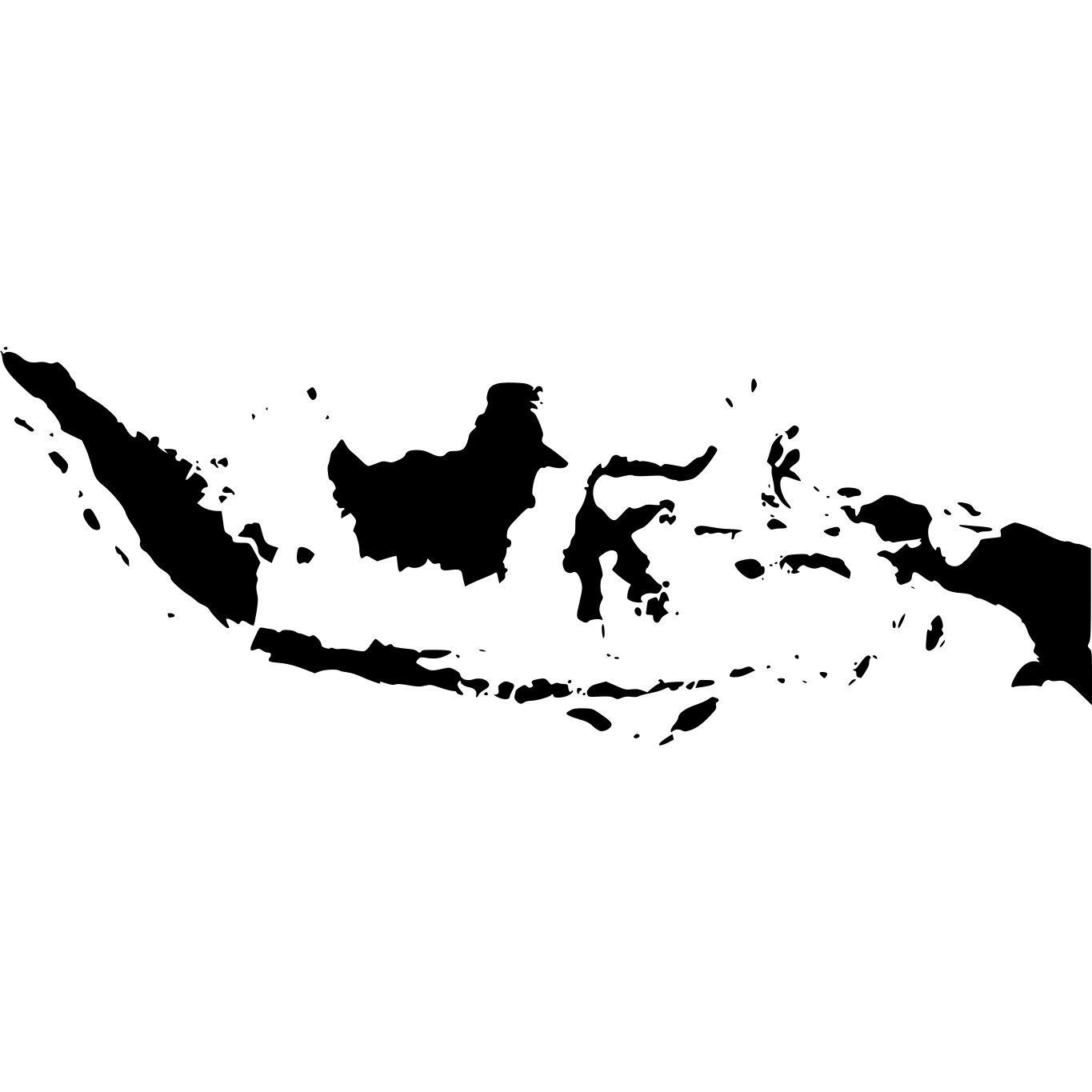
From This Island is a Indonesian brand

We're dedicated to providing you with the most up-to-date and science-backed ingredient info out there.
The data we've presented on this page has been verified by a member of the SkinSort Team.
Read more about us· Updated August 12, 2026 • Added by liloowe


