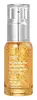
This brightening serum is formulated around Hippophae Rhamnoides Fruit Extract and Niacinamide to brighten dull-looking skin and soften the look of wrinkles.
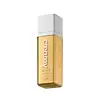
This brightening serum is formulated around Ascorbyl Tetraisopalmitate and Ferulic Acid to fade the look of dark spots and brighten dull-looking skin.


What's inside
What's inside
 Key Ingredients
Benefits
Concerns
Ingredients Side-by-side
Hippophae Rhamnoides Fruit Extract
Skin Conditioning


Water
Skin ConditioningGlycerin
Humectant

Propanediol
Solvent
Niacinamide
Smoothing







Caprylic/Capric Triglyceride
Masking
Dipropylene Glycol
HumectantC12-15 Pareth-9
EmulsifyingAstaxanthin
Skin Conditioning
Commiphora Abyssinica Gum Oil
Perfuming



Helianthus Annuus Seed Oil
Emollient

Xanthan Gum
EmulsifyingHydrolyzed Collagen
Emollient
Hydrolyzed Pearl
Skin ConditioningCopper Tripeptide-1
Skin Conditioning
Palmitoyl Tetrapeptide-7
Skin Conditioning
Palmitoyl Tripeptide-1
Skin Conditioning
Benzyl Glycol
SolventSodium Hyaluronate
Humectant
Hydrolyzed Hyaluronic Acid
Humectant
Pvp
Emulsion StabilisingSodium Acetylated Hyaluronate
Humectant
Glyceryl Glucoside
Humectant
Carbomer
Emulsion StabilisingBiota Orientalis Leaf Extract
HumectantZanthoxylum Piperitum Fruit Extract
Skin ConditioningPolygonum Cuspidatum Root Extract
Antioxidant
Sclerotium Gum
Emulsion StabilisingBacillus/Folic Acid/Soybean Ferment Extract
Skin ConditioningRosmarinus Officinalis Leaf Extract
AntimicrobialButylene Glycol
Humectant
Betaine
Humectant
Beta-Glucan
Skin Conditioning
Arginine
Masking
Adenosine
Skin Conditioning
Tranexamic Acid
Astringent
Glutathione
Tocopherol
Antioxidant
Bisabolol
Antioxidant
Ceramide NP
Skin Conditioning
Beta-Carotene
Skin ConditioningXanthophylls
Skin ConditioningFullerenes
AntimicrobialFerulic Acid
Antimicrobial
Pentylene Glycol
Skin Conditioning
Hydrogenated Lecithin
Emulsifying
Caprylyl Glycol
Emollient
Polyglyceryl-10 Diisostearate
Emulsifying
Sodium Polyacrylate
Absorbent
Agar
Masking1,2-Hexanediol
Skin Conditioning
Ethylhexylglycerin
Skin ConditioningHippophae Rhamnoides Fruit Extract, Water, Glycerin, Propanediol, Niacinamide, Caprylic/Capric Triglyceride, Dipropylene Glycol, C12-15 Pareth-9, Astaxanthin, Commiphora Abyssinica Gum Oil, Helianthus Annuus Seed Oil, Xanthan Gum, Hydrolyzed Collagen, Hydrolyzed Pearl, Copper Tripeptide-1, Palmitoyl Tetrapeptide-7, Palmitoyl Tripeptide-1, Benzyl Glycol, Sodium Hyaluronate, Hydrolyzed Hyaluronic Acid, Pvp, Sodium Acetylated Hyaluronate, Glyceryl Glucoside, Carbomer, Biota Orientalis Leaf Extract, Zanthoxylum Piperitum Fruit Extract, Polygonum Cuspidatum Root Extract, Sclerotium Gum, Bacillus/Folic Acid/Soybean Ferment Extract, Rosmarinus Officinalis Leaf Extract, Butylene Glycol, Betaine, Beta-Glucan, Arginine, Adenosine, Tranexamic Acid, Glutathione, Tocopherol, Bisabolol, Ceramide NP, Beta-Carotene, Xanthophylls, Fullerenes, Ferulic Acid, Pentylene Glycol, Hydrogenated Lecithin, Caprylyl Glycol, Polyglyceryl-10 Diisostearate, Sodium Polyacrylate, Agar, 1,2-Hexanediol, Ethylhexylglycerin
Water
Skin ConditioningPropanediol
Solvent
PEG-40 Hydrogenated Castor Oil
Emulsifying
Ethoxydiglycol
HumectantAscorbyl Tetraisopalmitate
Antioxidant
Phenoxyethanol
Preservative
Sargassum Filipendula Extract
Skin Protecting

Hypnea Musciformis Extract
Skin Protecting
Xanthan Gum
EmulsifyingFerulic Acid
Antimicrobial
Hydroxyethyl Acrylate/Sodium Acryloyldimethyl Taurate Copolymer
Emulsion StabilisingSodium
Glycerin
Humectant
Sodium Acrylate/Sodium Acryloyldimethyl Taurate Copolymer
Emulsion StabilisingSclerotium Gum
Emulsion StabilisingLecithin
Emollient
Isohexadecane
EmollientPullulan
Zinc Gluconate
Skin Conditioning
Caprylyl Glycol
Emollient
Sorbitol
Humectant
Sodium Hyaluronate
Humectant
Polysorbate 60
Emulsifying
Epigallocatechin Gallatyl Glucoside
Antioxidant
Ascorbic Acid
Antioxidant
Sorbitan Isostearate
Emulsifying
Silica
Abrasive
1,2-Hexanediol
Skin Conditioning
Ethylhexylglycerin
Skin ConditioningSodium Benzoate
Masking
Potassium Sorbate
Preservative
Gold
Cosmetic ColorantGlutathione
Water, Propanediol, PEG-40 Hydrogenated Castor Oil, Ethoxydiglycol, Ascorbyl Tetraisopalmitate, Phenoxyethanol, Sargassum Filipendula Extract, Hypnea Musciformis Extract, Xanthan Gum, Ferulic Acid, Hydroxyethyl Acrylate/Sodium Acryloyldimethyl Taurate Copolymer, Sodium, Glycerin, Sodium Acrylate/Sodium Acryloyldimethyl Taurate Copolymer, Sclerotium Gum, Lecithin, Isohexadecane, Pullulan, Zinc Gluconate, Caprylyl Glycol, Sorbitol, Sodium Hyaluronate, Polysorbate 60, Epigallocatechin Gallatyl Glucoside, Ascorbic Acid, Sorbitan Isostearate, Silica, 1,2-Hexanediol, Ethylhexylglycerin, Sodium Benzoate, Potassium Sorbate, Gold, Glutathione
Reviews
Ingredients Explained
These ingredients are found in both products.
Ingredients higher up in an ingredient list are typically present in a larger amount.
1,2-Hexanediol is a synthetic liquid and another multi-functional powerhouse.
It is a:
- Humectant, drawing moisture into the skin
- Emollient, helping to soften skin
- Solvent, dispersing and stabilizing formulas
- Preservative booster, enhancing the antimicrobial activity of other preservatives
Caprylyl Glycol is a humectant, skin conditioner, emollient, and preservative booster derived from either caprylic acid or synthetically created.
Typical use levels vary from 0.3-1% as a preservative booster and go up to 2% to condition skin.
Because it is not a free-fatty acid, this ingredient is fungal acne safe (there's nothing for Malassezia to feed on).
Learn more about Caprylyl GlycolEthylhexylglycerin is created from glycerin. It is a multitasker ingredient that:
The CIR Expert Panel found minimal skin absorption or sensitization of any kind in a safety assessment. Though this ingredient is considered well-tolerated, a small number of cases of allergic dermatitis have been published since 2002. Just be sure to patch test if you are unsure.
Industry-reported use ranges from 8% in rinse-off products and 2% in leave-on formulations.
Learn more about EthylhexylglycerinFerulic Acid is a plant based antioxidant that can be naturally found in the cell walls of grains like rice, oats, and corn. It has antioxidant and antimicrobial properties, and has the ability to boost the performance of other antioxidants as well.
A well-known study found that adding Ferulic Acid to a solution of Vitamins C and E doubled the photoprotection of skin. This is why you'll often see it paired with Vitamin C or Vitamin E serums rather than sold on its own.
A 2025 review of 18 human studies found that using Ferulic Acid (0.5-1%) daily for one to three months showed improvements in:
As far as allergies go, Ferulic acid is generally well-tolerated but can cause an allergic reaction in very rare cases. It's also worth noting that Ferulic acid is often extracted from plant sources like rice bran or wheat bran, so be sure to path test if you have known grain allergies.
Outside of skincare, researchers are also looking into Ferulic Acid for its potential benefits in areas like diabetes, Alzheimer's, and heart health.
Learn more about Ferulic AcidGlutathione is a tiny protein-like molecule (a "tripeptide" build from 3 amino acids: glycine, cysteine, and glutamic acid) that your body already makes on its own.
Inside your body, it acts as one of the skin's main antioxidants that help fight against free radicals.
In skincare, it's best known as a brightening ingredient that slows down tyrosinase, the key enzyme that makes skin pigment. It also nudges the skin toward making a lighter type of pigment instead of a darker one.
This is why you'll see it in products aimed at dark spots and uneven tone.
A small number of real human trials have found a topical glutathione lotion:
The honest caveat is that the current evidence is still thin (few studies, small groups, short timelines). Glutathione also doesn't absorb into skin very easily so results tend to be modest and fade if you stop using it.
One thing worth clearing up:
The scary side effects you may have heard about come from glutathione injected intravenously, which has real safety concerns. Applying it topically is a completely different thing and has a clean track record.
Most human studies used it around 2% (as Glutathione or Glutathione Disulfide) and a 2% oxidized glutathione lotion and a 2% S-acyl glutathione cream are the concentrations with actual clinical data behind them.
There's no established "ideal" percentage yet but 1-2% is the evidence-backed range.
Allergy-wise, there is very low risk for this ingredient; it was well-tolerated across the topical trials. Only one participant had mild temporary redness that cleared up on its own and another study reported no adverse reactions at all.
One trial had ~10% of users drop out for irritation was using a combination cream that also had 10% azelaic acid so the irritation likely wasn't from the glutathione. There's no notable contact-allergy signal for topical glutathione in the literature but patch-testing before first use is still sensible for those with sensitive skin.
Learn more about GlutathioneGlycerin (or glycerol) is a compound naturally found in your skin. It's a powerhouse humectant that pulls water into the stratum corneum.
Topically, glycerin does several things at once:
Your skin makes glycerin on its own (mostly from sebaceous oil breakdown) and shuttles it to your outermost layer of skin, or your epidermis, via aquaporin-3.
Aquaporin-3 is a transporter that is essential for normal skin hydration, elasticity, and repair. Interestingly, mice lacking in AQP3 have dry and less elastic skin that can be fully corrected with glycerin.
This ingredient is non-irritating, plays well with almost every ingredient, and works across all skin types. Typical use is anywhere between 3-10% but can go up to 79% in some leave-on products.
Just know very high concentrations (>40%) can feel tacky in low humidity.
Glycerin is the name for this ingredient in American English. British English uses Glycerol/Glycerine.
Learn more about GlycerinPropanediol is an all-star ingredient. It softens, hydrates, and smooths the skin.
It’s often used to:
Propanediol is not likely to cause sensitivity and considered safe to use. It is derived from corn or petroleum with a clear color and no scent.
Learn more about PropanediolSclerotium Gum is a natural sugar-based fiber made by fermenting a fungus called Sclerotium rolfsii. It's often used as the plant-friendly alternative for synthetic thickeners like carbomer.
In skincare, it works as a thickener, gel former, and stabilizer that keeps heavy ingredients suspended so a product does not separate.
It is non-ionic and forms a triple helix in solution. This is just a fancy way of saying it builds a smooth, cushiony, and non-sticky gel that feels silkier than many other gums.
Another perk of this ingredient is that it is very sturdy and holds up across a wide pH range (~2-11). It's also good at resisting heat and hydrolysis.
Since it holds water at the skin surface, it can provide some light hydration as well.
Typical use levels are around 0.25-2%; formulators usually use 0.2-0.5% to thicken lotions and up to 2% for a firmer gel base.
This ingredient has been found safe in cosmetics with no meaningful evidence of skin sensitization.
Learn more about Sclerotium GumSodium Hyaluronate is the salt form of hyaluronic acid. It is a long sugar chain that is naturally found in your skin, joints, and connective tissue that maintains hydration and elasticity.
In skincare, it works as a humectant. It pulls water from the environment and deeper layers of skin and binds it to the surface.
Interestingly, the size of the molecule affects its behavior:
Some clinical evidence links low molecular weight versions to improved wrinkle depth, elasticity, anti-inflammatory effects, and barrier repair.
Many serums use a blend of both weights so you can get surface hydration plus longer-lasting and deeper effects.
You'll typically see concentrations between 0.1-2% for this ingredient.
Learn more about Sodium HyaluronateWater. It's the most common cosmetic ingredient of all. You'll usually see it at the top of ingredient lists, meaning that it makes up the largest part of the product.
So why is it so popular? Water most often acts as a solvent - this means that it helps dissolve other ingredients into the formulation.
You'll also recognize water as that liquid we all need to stay alive. If you see this, drink a glass of water. Remember to stay hydrated!
Learn more about WaterXanthan gum is used as a stabilizer and thickener within cosmetic products. It helps give products a sticky, thick feeling - preventing them from being too runny.
On the technical side of things, xanthan gum is a polysaccharide - a combination consisting of multiple sugar molecules bonded together.
Xanthan gum is a pretty common and great ingredient. It is a natural, non-toxic, non-irritating ingredient that is also commonly used in food products.
Learn more about Xanthan Gum

