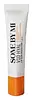
This brightening lip moisturizer is formulated around Tocopheryl Acetate and Panthenol to brighten dull-looking skin and hydrate lips.
This barrier-repair lip moisturizer is formulated around Butyrospermum Parkii Butter and Ricinus Communis Seed Oil to strengthen the lip barrier and hydrate lips.

What's inside
What's inside
 Key Ingredients
Benefits
Concerns
Ingredients Side-by-side
Bis-Diglyceryl Polyacyladipate-2
Emollient


Polyglyceryl-2 Isostearate/Dimer Dilinoleate Copolymer
EmollientDiisostearyl Malate
EmollientHydrogenated Castor Oil Isostearate
Skin Conditioning
Ethylhexyl Methoxycinnamate
UV Absorber


Pentaerythrityl Tetraisostearate
Emollient
Bis-Behenyl/Isostearyl/Phytosteryl Dimer Dilinoleyl Dimer Dilinoleate
EmollientHydrogenated Polyisobutene
EmollientPhytosteryl/Isostearyl/Cetyl/Stearyl/Behenyl Dimer Dilinoleate
Skin Conditioning
Tocopheryl Acetate
Antioxidant


Ethylhexyl Salicylate
UV Absorber
Euphorbia Cerifera Cera
Astringent
Caprylic/Capric Triglyceride
Masking

Microcrystalline Wax
Emulsion StabilisingCitrus Limon Peel Oil
Masking




Citrus Aurantium Dulcis Peel Oil
Masking
Olea Europaea Fruit Oil
Masking
Glyceryl Behenate/Eicosadioate
Emollient
Glycerin
Humectant
Water
Skin ConditioningPolyglyceryl-10 Stearate
Skin Conditioning
Panthenol
Skin Conditioning

Sodium Ascorbyl Phosphate
Antioxidant



Niacinamide
Smoothing



Retinyl Palmitate
Skin Conditioning
Biotin
AntiseborrhoeicThiamine Hcl
MaskingFolic Acid
Skin ConditioningPyridoxine
Skin ConditioningCyanocobalamin
Skin ConditioningDehydroacetic Acid
Preservative
Limonene
Perfuming
Bis-Diglyceryl Polyacyladipate-2, Polyglyceryl-2 Isostearate/Dimer Dilinoleate Copolymer, Diisostearyl Malate, Hydrogenated Castor Oil Isostearate, Ethylhexyl Methoxycinnamate, Pentaerythrityl Tetraisostearate, Bis-Behenyl/Isostearyl/Phytosteryl Dimer Dilinoleyl Dimer Dilinoleate, Hydrogenated Polyisobutene, Phytosteryl/Isostearyl/Cetyl/Stearyl/Behenyl Dimer Dilinoleate, Tocopheryl Acetate, Ethylhexyl Salicylate, Euphorbia Cerifera Cera, Caprylic/Capric Triglyceride, Microcrystalline Wax, Citrus Limon Peel Oil, Citrus Aurantium Dulcis Peel Oil, Olea Europaea Fruit Oil, Glyceryl Behenate/Eicosadioate, Glycerin, Water, Polyglyceryl-10 Stearate, Panthenol, Sodium Ascorbyl Phosphate, Niacinamide, Retinyl Palmitate, Biotin, Thiamine Hcl, Folic Acid, Pyridoxine, Cyanocobalamin, Dehydroacetic Acid, Limonene
Butyrospermum Parkii Butter
Skin Conditioning
Diisostearyl Malate
EmollientPolyglyceryl-2 Triisostearate
Emulsifying
Octyldodecanol
Emollient
Microcrystalline Wax
Emulsion StabilisingEthylhexyl Methoxycinnamate
UV Absorber
Ricinus Communis Seed Oil
Masking
Ceresin
Emulsion StabilisingEthylhexyl Salicylate
UV Absorber
Meadowfoam Delta-Lactone
Skin ConditioningEuphorbia Cerifera Wax
Ozokerite
Emulsion StabilisingParaffin
Skin Conditioning
Polybutene
Jojoba Esters
Emollient
Olea Europaea Fruit Oil
Masking
Polyethylene
Abrasive
Sorbitan Sesquioleate
Emulsifying
Prunus Amygdalus Dulcis Oil
Skin Conditioning
Tribehenin
Emollient
Polyglyceryl-6 Polyricinoleate
Emulsifying
Rosa Damascena Flower Oil
Masking
Oenothera Biennis Oil
Emollient
Camellia Japonica Seed Oil
Emollient
Limnanthes Alba Seed Oil
Skin Conditioning
Prunus Armeniaca Kernel Oil
Masking
Elaeis Guineensis Oil
Emollient
Carthamus Tinctorius Seed Oil
Masking
Helianthus Annuus Seed Oil
Emollient
Trihydroxystearin
Skin Conditioning
Tocopherol
Antioxidant
Dehydroacetic Acid
Preservative
Parfum
Masking
Butyrospermum Parkii Butter, Diisostearyl Malate, Polyglyceryl-2 Triisostearate, Octyldodecanol, Microcrystalline Wax, Ethylhexyl Methoxycinnamate, Ricinus Communis Seed Oil, Ceresin, Ethylhexyl Salicylate, Meadowfoam Delta-Lactone, Euphorbia Cerifera Wax, Ozokerite, Paraffin, Polybutene, Jojoba Esters, Olea Europaea Fruit Oil, Polyethylene, Sorbitan Sesquioleate, Prunus Amygdalus Dulcis Oil, Tribehenin, Polyglyceryl-6 Polyricinoleate, Rosa Damascena Flower Oil, Oenothera Biennis Oil, Camellia Japonica Seed Oil, Limnanthes Alba Seed Oil, Prunus Armeniaca Kernel Oil, Elaeis Guineensis Oil, Carthamus Tinctorius Seed Oil, Helianthus Annuus Seed Oil, Trihydroxystearin, Tocopherol, Dehydroacetic Acid, Parfum
Reviews
Ingredients Explained
These ingredients are found in both products.
Ingredients higher up in an ingredient list are typically present in a larger amount.
Dehydroacetic Acid is a synthetic preservative that keeps your products safe from microbes.
As an organic acid, it penetrates microbial cell walls and disrupts cellular metabolism. This makes it effective against bacteria, yeast, and mold.
It is effective at low concentrations (<0.6%). Clinical studies have found it to be non-irritating, non-sensitizing, and non-photosensitizing.
Learn more about Dehydroacetic AcidDiisostearyl Malate is an emollient and most often used in lip products. It comes from isostearyl alcohol, a fatty acid, and malic acid, an AHA.
As an emollient, Diisostearyl Malate helps create a thin film on your skin to trap moisture in. This helps keep your skin soft and smooth.
This ingredient is also known as Octinoxate and is one of the oldest and most widely used chemical UV filters in skincare.
It has a simple job: soap up UVB radiation (290-320 nm), the wavelengths responsible for sunburn and a big chunk of long-term sun damage.
In formulas, it's always paired with a separate UVA filter because octinoxate solely protects skin from UVB.
Because it's an oil-soluble liquid, it's easy to blend into the oil phase of lotions/creams and gives a cosmetically elegant feel.
The one quirk about formulating this ingredient is photostability; the molecule slowly changes shape into a less effective version when sunlight hits it. So the longer you're in the sun, the weaker its protection gets. The drop can be more than 30% in some formulas.
It also doesn't play nice with Avobenzone (the common UVA filter) since avobenzone destabilizes octinoxate and the two degrade each other. But don't worry: brands have solved this issue by adding photostabilizers like Tinosorb S to prevent degradation and keep SPF stable under heavy UV exposure.
The maximum allowed level is 10% in the EU and Australia, 7.5% in the US and Canada, and 20% in Japan.
The Cosmetic Ingredient Review Panel has concluded this ingredient to be safe in cosmetics up to 10%.
One last thing worth knowing for context:
Octinoxate has been the subject of ongoing review in Europe where the Scientific Committee on Consumer Safety's (SCCS) 2025 final opinion is that this ingredient is an endocrine-active substance.
Lab and animal studies suggest it can act a bit like a hormone in the body (mildly mimicking estrogen and slightly blocking male hormones). It's important to know this hasn't really been shown to happen in everyday human use.
This ingredient is also banned in Hawaii over coral reef concerns.
Learn more about Ethylhexyl MethoxycinnamateEthylhexyl Salicylate (also called Octisalate or Octyl Salicylate) is an oil-soluble organic UV filter that's been used in sunscreen since the 1950's.
It absorbs UVB light in the 280-320 nm range with a peak absorbance around 306 nm.
You'll often see it paired with other UV filters to boost overall SPF because octisalate is a fairly week filter on its own.
The reason you'll see it so often is because it can help solubilize and stabilize the trickier filters like oxybenzone and avobenzone.
Unlike these filters, octisalate has pretty good photostability and doesn't create skin-damaging free radicals when exposed to sunlight.
The fatty-alcohol part of the molecule also gives it a light, emollient feel so it doubles as a nice texture enhancer.
Usage levels vary around the world:
Safety-wise, this ingredient has a pretty reassuring track record. The EU's Scientific Committee on Consumer Products (SCCP) found very low skin penetration in human skin tests and negative results for irritation, phototoxicity, and photoallergy.
The real-world allergy risk is pretty low too; a 2012 European study of 1,031 people recorded only 2 reactions to it (a rate of 0.19%).
You might have seen scary headlines about sunscreen getting into your blood.
In 2019, the FDA found that several chemical filters can absorb through the skin and show up in the bloodstream at small but measurable levels.
Here's the important part: these tiny levels are just a cutoff the FDA uses to decide which ingredients need more testing and doesn't mean anything harmful was found.
The researchers were clear that the results are no reason to stop wearing sunscreen.
Learn more about Ethylhexyl SalicylateMicrocrystalline Wax is derived from petroleum through a de-oiling process, then highly refined and purified before use in cosmetics.
In skincare formulations, it is used to improve texture and create a smooth, even consistency. It also helps stabilize products by preventing ingredients from separating.
This ingredient is also known as olive oil. It has been used in skincare for centuries and science largely backs up its reputation as a nourishing emollient.
The main components of olive oil are oleic acid (55-83%), linoleic acid (3.5-20%), and palmitic acid (7-20%). Oleic acid promotes skin regeneration and helps regulate inflammatory responses.
Squalene is also naturally present in olive oil and exhibits moisturizing and antioxidant properties.
The polyphenols in olive oil also show anti-aging promise; one clinical study found a measurable improvement in skin appearance after 30 days of topical serum use.
Just be aware that applying olive oil directly to skin can weaken the barrier and cause redness. One study with volunteers found even people without sensitive skin experienced a significant reduction in stratum corneum integrity and induced mild erythema.
It's best to use this ingredient as part of a carefully crafted formula (instead of putting it on skin directly from the bottle).
Because it has a 0-2 on the comedogenic scale, it is low risk for acne-prone skin. Just remember the overall formulation of a product matters more than a few ingredients with comedogenic ratings.
This ingredient may not be fungal acne safe because of the oleic and palmitic acid content. These fall within the C11-24 fatty acid range that the Malassezia yeast can metabolize to grow.
Overall, olive oil is a well-studied and nourishing skincare ingredient.
Learn more about Olea Europaea Fruit Oil

