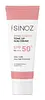
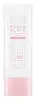
Sinoz Pink Touch Ton Eşitleyici Yüz Güneş Kremi SPF 50+ PA++++ (Pink Touch Tone Up Sun Cream SPF 50+ PA++++) Versus A'Pieu Power Block Tone Up Sun Base Pink SPF50+/PA++++
This hybrid sunscreen covers the full UV range and blocks ~98% of UVB at SPF 50.
This hybrid sunscreen covers the full UV range and blocks ~98% of UVB at SPF 50.


What's inside
What's inside
 Key Ingredients
Benefits
Concerns
Ingredients Side-by-side
Water
Skin ConditioningOctocrylene
UV Absorber



Ethylhexyl Methoxycinnamate
UV Absorber
Ethylhexyl Salicylate
UV Absorber
Cetearyl Alcohol
Emollient





Glyceryl Stearate
Emollient
Butyl Methoxydibenzoylmethane
UV Absorber
Cyclopentasiloxane
Emollient
Zinc Oxide
Cosmetic Colorant
Calamine
AbsorbentCeteareth-25
CleansingTitanium Dioxide
Cosmetic Colorant
Isopropyl Dibenzoylmethane
UV AbsorberDimethicone
Emollient
Glycyrrhiza Glabra Root Extract
Bleaching





Panthenol
Skin Conditioning
Tocopheryl Acetate
Antioxidant

Potassium Cetyl Phosphate
EmulsifyingCeteareth-12
EmulsifyingPhenoxyethanol
Preservative
Ethylhexylglycerin
Skin ConditioningCetyl Palmitate
Emollient
Parfum
Masking

Lactic Acid
Buffering



Tetrasodium EDTA
CI 77492
Cosmetic ColorantCI 77491
Cosmetic ColorantWater, Octocrylene, Ethylhexyl Methoxycinnamate, Ethylhexyl Salicylate, Cetearyl Alcohol, Glyceryl Stearate, Butyl Methoxydibenzoylmethane, Cyclopentasiloxane, Zinc Oxide, Calamine, Ceteareth-25, Titanium Dioxide, Isopropyl Dibenzoylmethane, Dimethicone, Glycyrrhiza Glabra Root Extract, Panthenol, Tocopheryl Acetate, Potassium Cetyl Phosphate, Ceteareth-12, Phenoxyethanol, Ethylhexylglycerin, Cetyl Palmitate, Parfum, Lactic Acid, Tetrasodium EDTA, CI 77492, CI 77491
Water
Skin ConditioningCentella Asiatica Extract
Cleansing
Homosalate
Skin Conditioning
C12-15 Alkyl Benzoate
AntimicrobialTitanium Dioxide
Cosmetic Colorant
Dipropylene Glycol
HumectantEthylhexyl Salicylate
UV Absorber
Caprylyl Methicone
Skin Conditioning
Diethylamino Hydroxybenzoyl Hexyl Benzoate
UV Filter
Cyclopentasiloxane
Emollient
Caprylic/Capric Triglyceride
Masking
Lauryl PEG-10 Tris(Trimethylsiloxy)Silylethyl Dimethicone
Emulsifying
Calamine
AbsorbentSodium Chloride
MaskingCetyl PEG/PPG-10/1 Dimethicone
Emulsifying
Polyglyceryl-4 Isostearate
Emulsifying
Silica
Abrasive
Bis-Ethylhexyloxyphenol Methoxyphenyl Triazine
UV Absorber
Gossypium Herbaceum
Skin Conditioning
Cochlearia Armoracia Root Extract
MaskingMadecassoside
Antioxidant
Panthenol
Skin Conditioning
Cyclohexasiloxane
Emollient
Hexyl Laurate
Emollient
Polyglyceryl-4 Diisostearate/Polyhydroxystearate/Sebacate
Emulsifying
Aluminum Hydroxide
EmollientStearic Acid
Cleansing
Disteardimonium Hectorite
StabilisingSorbitan Sesquioleate
Emulsifying
Sorbitan Oleate
Emulsifying
Dimethicone/Vinyl Dimethicone Crosspolymer
Skin Conditioning
Dimethicone
Emollient
Quaternium-18 Bentonite
Tocopheryl Acetate
Antioxidant
Polyhydroxystearic Acid
Emulsifying
Isopropyl Palmitate
Emollient
Isostearic Acid
Cleansing
Lecithin
Emollient
Ethylhexyl Palmitate
Emollient
Triethoxycaprylylsilane
Disodium EDTA
1,2-Hexanediol
Skin Conditioning
Iron Oxides
Parfum
Masking
Water, Centella Asiatica Extract, Homosalate, C12-15 Alkyl Benzoate, Titanium Dioxide, Dipropylene Glycol, Ethylhexyl Salicylate, Caprylyl Methicone, Diethylamino Hydroxybenzoyl Hexyl Benzoate, Cyclopentasiloxane, Caprylic/Capric Triglyceride, Lauryl PEG-10 Tris(Trimethylsiloxy)Silylethyl Dimethicone, Calamine, Sodium Chloride, Cetyl PEG/PPG-10/1 Dimethicone, Polyglyceryl-4 Isostearate, Silica, Bis-Ethylhexyloxyphenol Methoxyphenyl Triazine, Gossypium Herbaceum, Cochlearia Armoracia Root Extract, Madecassoside, Panthenol, Cyclohexasiloxane, Hexyl Laurate, Polyglyceryl-4 Diisostearate/Polyhydroxystearate/Sebacate, Aluminum Hydroxide, Stearic Acid, Disteardimonium Hectorite, Sorbitan Sesquioleate, Sorbitan Oleate, Dimethicone/Vinyl Dimethicone Crosspolymer, Dimethicone, Quaternium-18 Bentonite, Tocopheryl Acetate, Polyhydroxystearic Acid, Isopropyl Palmitate, Isostearic Acid, Lecithin, Ethylhexyl Palmitate, Triethoxycaprylylsilane, Disodium EDTA, 1,2-Hexanediol, Iron Oxides, Parfum
Ingredients Explained
These ingredients are found in both products.
Ingredients higher up in an ingredient list are typically present in a larger amount.
Calamine is a "pink powder" that is used to calm itchy or irritated skin. In official medical standards, calamine is basically almost all zinc oxide with a tiny bit of iron oxide added for the pink color.
Lab testing requires that it’s at least 98% zinc oxide, which just means it has to be very pure and mostly zinc oxide.
In skincare, calamine can help relieve itches, calm skin, and absorb excess moisture/oil. This is why you'll often see it used for oozing rashes. Calamine is approved as a skin protectant active at 1-25% in US OTC drug products.
A big part of calamine's soothing effect comes from zinc oxide's protective properties. Since calamine can absorb excess moisture/oil, it might be drying for already dry skin types.
A review of topical medicament allergies notes that contact dermatitis from calamine isn't typically reported, but added actives in a formulation are known sensitizers.
Learn more about CalamineCyclopentasiloxane (D5) is a lightweight silicone that mostly acts as an emollient and solvent in cosmetics. Its the reason your products feel silky, fast-spreading, and non-greasy.
Since D5 is volatile, it does its thing and then evaporates off the skin quickly.
The safety profile of this ingredient is reassuring; the US CIR Expert Panel concluded D5 is safe as used in cosmetics and Health Canada concluded that D5 is not harmful to human health or the environment as currently used in cosmetics
There's a study that people mention about D5 in a rat study showing tumors. This study is related to long-term inhalation of high D5 levels.
Regulatory bodies have judged this study to be not applicable in topical skincare since skin absorption of D5 is very low and we're not really inhaling huge amounts of D5.
The only restriction for this ingredient is environmental. The European Chemicals Agency (ECHA) restricted D5 in wash-off cosmetics at or above 0.1% due to their persistence in water.
Learn more about CyclopentasiloxaneDimethicone is a type of synthetic silicone created from natural materials such as quartz. It is also known as polydimethylsiloxane.
What it does:
Dimethicone comes in different viscosities:
Depending on the viscosity, dimethicone has different properties.
Ingredients lists don't always show which type is used, so we recommend reaching out to the brand if you have questions about the viscosity.
This ingredient is unlikely to cause irritation because it does not get absorbed into skin. However, people with silicone allergies should be careful about using this ingredient.
Note: Dimethicone may contribute to pilling. This is because it is not oil or water soluble, so pilling may occur when layered with products. When mixed with heavy oils in a formula, the outcome is also quite greasy.
Learn more about DimethiconeEthylhexyl Salicylate (also called Octisalate or Octyl Salicylate) is an oil-soluble organic UV filter that's been used in sunscreen since the 1950's.
It absorbs UVB light in the 280-320 nm range with a peak absorbance around 306 nm.
You'll often see it paired with other UV filters to boost overall SPF because octisalate is a fairly week filter on its own.
The reason you'll see it so often is because it can help solubilize and stabilize the trickier filters like oxybenzone and avobenzone.
Unlike these filters, octisalate has pretty good photostability and doesn't create skin-damaging free radicals when exposed to sunlight.
The fatty-alcohol part of the molecule also gives it a light, emollient feel so it doubles as a nice texture enhancer.
Usage levels vary around the world:
Safety-wise, this ingredient has a pretty reassuring track record. The EU's Scientific Committee on Consumer Products (SCCP) found very low skin penetration in human skin tests and negative results for irritation, phototoxicity, and photoallergy.
The real-world allergy risk is pretty low too; a 2012 European study of 1,031 people recorded only 2 reactions to it (a rate of 0.19%).
You might have seen scary headlines about sunscreen getting into your blood.
In 2019, the FDA found that several chemical filters can absorb through the skin and show up in the bloodstream at small but measurable levels.
Here's the important part: these tiny levels are just a cutoff the FDA uses to decide which ingredients need more testing and doesn't mean anything harmful was found.
The researchers were clear that the results are no reason to stop wearing sunscreen.
Learn more about Ethylhexyl SalicylatePanthenol is a common ingredient that helps hydrate and soothe the skin. It is found naturally in our skin and hair.
There are two forms of panthenol: D and L.
D-panthenol is also known as dexpanthenol. Most cosmetics use dexpanthenol or a mixture of D and L-panthenol.
Panthenol is famous due to its ability to go deeper into the skin's layers. Using this ingredient has numerous pros (and no cons):
Like hyaluronic acid, panthenol is a humectant. Humectants are able to bind and hold large amounts of water to keep skin hydrated.
This ingredient works well for wound healing. It works by increasing tissue in the wound and helps close open wounds.
Once oxidized, panthenol converts to pantothenic acid. Panthothenic acid is found in all living cells.
This ingredient is also referred to as pro-vitamin B5.
Learn more about PanthenolParfum is a catch-all term for an ingredient or more that is used to give a scent to products.
Also called "fragrance", this ingredient can be a blend of hundreds of chemicals or plant oils. This means every product with "fragrance" or "parfum" in the ingredients list is a different mixture.
For instance, Habanolide is a proprietary trade name for a specific aroma chemical. When used as a fragrance ingredient in cosmetics, most aroma chemicals fall under the broad labeling category of “FRAGRANCE” or “PARFUM” according to EU and US regulations.
The term 'parfum' or 'fragrance' is not regulated in many countries. In many cases, it is up to the brand to define this term.
For instance, many brands choose to label themselves as "fragrance-free" because they are not using synthetic fragrances. However, their products may still contain ingredients such as essential oils that are considered a fragrance by INCI standards.
One example is Calendula flower extract. Calendula is an essential oil that still imparts a scent or 'fragrance'.
Depending on the blend, the ingredients in the mixture can cause allergies and sensitivities on the skin. Some ingredients that are known EU allergens include linalool and citronellol.
Parfum can also be used to mask or cover an unpleasant scent.
The bottom line is: not all fragrances/parfum/ingredients are created equally. If you are worried about fragrances, we recommend taking a closer look at an ingredient. And of course, we always recommend speaking with a professional.
Learn more about ParfumTitanium Dioxide (TD) is a mineral UV filter widely used in sunscreens and cosmetics.
It's one of only two UV filters officially classified as "mineral" by regulatory agencies (the other being Zinc Oxide).
A really common myth is that mineral filters work by reflecting UV light off your skin like tiny mirrors.
They don't only do that; modern research shows TD protects mostly by absorbing UV radiation, the same way chemical filters do.
When researchers measured this, reflection accounted for only about 4-5% of the protection (and less than SPF 2 on its own). The other ~95% comes from absorption: the UV photons hit the particle and their energy gets soaked up by its semiconductor band gap rather than bouncing off.
So "reflects vs. absorbs" was never really the right way to split mineral from chemical filters.
TD gives broad-spectrum protection that's strongest in the UVB and UVA-2 range and weaker in the UVA-1 range. Its UVA protection isn't quite as strong as Zinc Oxide's which is why you'll often see the two paired together.
Together, they make a solid broad-spectrum system.
TD is a great pick for sensitive, acne-prone, or redness-prone skin because it's non-irritating and chemically inert. Regulatory reviews classify it as a non-sensitizer and mild-to-non-irritant.
It's also unlikely to cause the "eye sting" some chemical filters are known for.
The main trade-off is cosmetic; TD can leave a white cast and has a thicker texture. This is why mineral sunscreens are often less cosmetically elegant than chemical or hybrid formulas (and harder to shade-match on deeper skin tones).
Formulators often use micronized or nano-sized TD to cut down on white case and improve spreadability. Smaller particles scatter less visible light so the formula looks less chalky while still filtering UV.
TD is almost always bundled with coatings like Alumina, Silica, Stearic Acid, or Dimethicone. These coatings do two important jobs:
TD can be used at up to 25% in a finished sunscreen; this is the regulatory ceiling in both the US and the EU.
In practice, the amount in any given product varies a lot depending on the target SPF and whether it's paired with other UV filters.
TD is one of the most heavily vetted sunscreen ingredients out there. It is approved as a UV filter in all major markets worldwide, including the US, EU, UK, Japan, Korea, China, Australia, and Canada.
The safety evidence is solid. There was an old worry that nano particles might absorb through skin into the body but multiple studies (including on damaged, sunburned, and UV-irradiated skin) have shown that TD stays on the surface and the layer of dead skin cells on top of everything else.
There's also no evidence of carcinogenicity, mutagenicity, or reproductive toxicity from dermal exposure of this ingredient.
For those who have seen the headline about a 2022 EU ban on TD, that was on TD as a food additive (a complete separate use from topical sunscreen).
There are ongoing questions about how nano-TD might affect marine ecosystems. As of now, there has been no conclusive evidence that any form of TD (or any other sunscreen filter) harms coral reefs or marine life.
The science is still developing and it's a space worth watching rather than packing over.
However, several destinations have reef-safety sunscreen rules that restrict certain chemical filters and steer visitors toward mineral, non-nano options. If you're traveling somewhere with these rules, a non-nano mineral sunscreen is the safe bet.
Learn more about Titanium DioxideTocopheryl Acetate is a stable, shelf-friendly form of vitamin E.
Formulators love it because plain vitamin E oxidizes quickly once it hits air. This acetate version stays stable and resists going off, helping to extend a product's shelf life.
It's actually inactive on its own and works like a slow-release "storage" form; the enzymes in your skin called esterases gradually convert it into active vitamin E over time.
One in vivo study showed 5% of the acetate in the living layer of the epidermis converted to vitamin E after 5 days of application. This study also found the skin gained protection against UV damage even though the conversion was slow and small.
Once converted, vitamin E acts as a skin's main fat-soluble antioxidant that fights free radicals to protect skin from damage.
Topical vitamin E generally boosts the skin's photoprotection, and it reduced UV-damage in animal models.
This ingredient has some brightening potential but it's more of a prevention ingredient than spot-fader. Cell studies show it can slow down melanin production but it's worth noting that it's not the most powerful brightener out there.
Overall, it has a pretty solid safety profile and has been found to be non-irritating and non-comedogenic. Allergic reactions may happen but stay rare due to how widely the ingredient gets used.
The concentration will vary depending on the formula; industry data shows 0.1% in baby lotions, 3% in lipsticks, and 5% in foot powders. You can also find this ingredient at 100% in a pure vitamin E oil.
Most leave-on skincare keeps it at the lower end, often between 0.5-1%.
Learn more about Tocopheryl AcetateWater. It's the most common cosmetic ingredient of all. You'll usually see it at the top of ingredient lists, meaning that it makes up the largest part of the product.
So why is it so popular? Water most often acts as a solvent - this means that it helps dissolve other ingredients into the formulation.
You'll also recognize water as that liquid we all need to stay alive. If you see this, drink a glass of water. Remember to stay hydrated!
Learn more about Water

