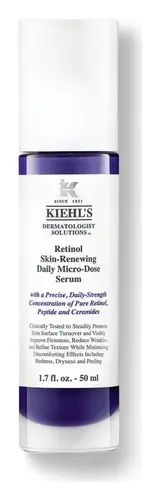
This brightening serum is formulated around 2-O-Ethyl Ascorbic Acid to brighten dull-looking skin.
This anti-aging treatment is formulated around Retinol and Glycyrrhiza Glabra Root Extract to soften the look of wrinkles and fade the look of dark spots.

What's inside
What's inside
 Key Ingredients
Benefits
Concerns
Ingredients Side-by-side
Water
Skin ConditioningButylene Glycol
Humectant

Glycerin
Humectant
Dipropylene Glycol
HumectantPotassium Methoxysalicylate
BleachingDimethicone
Emollient
Behenyl Alcohol
Emollient
Triethylhexanoin
MaskingDiphenylsiloxy Phenyl Trimethicone
Skin Conditioning
Talc
Abrasive
Batyl Alcohol
EmollientDiisostearyl Malate
EmollientPhenoxyethanol
Preservative
PEG-6
HumectantPEG-32
HumectantBehenic Acid
Cleansing

PEG-60 Glyceryl Isostearate
Surfactant
PEG-10 Dimethicone
Skin Conditioning
Sodium Metaphosphate
BufferingDisodium EDTA
ChelatingTocopheryl Acetate
Antioxidant


PEG/PPG-17/4 Dimethyl Ether
Skin ConditioningPhytosteryl/Octyldodecyl Lauroyl Glutamate
Skin ConditioningSilica
Abrasive

Sodium Citrate
BufferingAlumina
Abrasive
Potassium Hydroxide
BufferingSuccinoglycan
Skin ConditioningPEG/PPG-14/7 Dimethyl Ether
Skin ConditioningDipotassium Glycyrrhizate
Humectant

2-O-Ethyl Ascorbic Acid
Skin Conditioning

Xanthan Gum
EmulsifyingCI 77891
Cosmetic ColorantAlcohol
Antimicrobial



Parfum
Masking

Caffeine
Skin Conditioning
Sodium Metabisulfite
Antioxidant
Citric Acid
Buffering
Linalool
Perfuming
Tocopherol
Antioxidant
Citronellol
Perfuming
Geraniol
Perfuming
Angelica Keiskei Leaf/Stem Extract
Skin ConditioningCrataegus Monogyna Flower Extract
Skin ConditioningLimonene
Perfuming
Cellulose
Absorbent
Pancratium Maritimum Extract
BleachingRehmannia Chinensis Root Extract
Skin ConditioningArtemisia Princeps Leaf Extract
Skin ConditioningPrunus Yedoensis Leaf Extract
Skin ConditioningZiziphus Jujuba Fruit Extract
Skin ConditioningPyrola Incarnata Extract
Skin ConditioningPotentilla Erecta Root Extract
Skin ConditioningWater, Butylene Glycol, Glycerin, Dipropylene Glycol, Potassium Methoxysalicylate, Dimethicone, Behenyl Alcohol, Triethylhexanoin, Diphenylsiloxy Phenyl Trimethicone, Talc, Batyl Alcohol, Diisostearyl Malate, Phenoxyethanol, PEG-6, PEG-32, Behenic Acid, PEG-60 Glyceryl Isostearate, PEG-10 Dimethicone, Sodium Metaphosphate, Disodium EDTA, Tocopheryl Acetate, PEG/PPG-17/4 Dimethyl Ether, Phytosteryl/Octyldodecyl Lauroyl Glutamate, Silica, Sodium Citrate, Alumina, Potassium Hydroxide, Succinoglycan, PEG/PPG-14/7 Dimethyl Ether, Dipotassium Glycyrrhizate, 2-O-Ethyl Ascorbic Acid, Xanthan Gum, CI 77891, Alcohol, Parfum, Caffeine, Sodium Metabisulfite, Citric Acid, Linalool, Tocopherol, Citronellol, Geraniol, Angelica Keiskei Leaf/Stem Extract, Crataegus Monogyna Flower Extract, Limonene, Cellulose, Pancratium Maritimum Extract, Rehmannia Chinensis Root Extract, Artemisia Princeps Leaf Extract, Prunus Yedoensis Leaf Extract, Ziziphus Jujuba Fruit Extract, Pyrola Incarnata Extract, Potentilla Erecta Root Extract
Water
Skin ConditioningPentaerythrityl Tetraethylhexanoate
Emollient
Dipropylene Glycol
HumectantHydrogenated Polydecene
EmollientGlycerin
Humectant
Betaine
Humectant
Behenyl Alcohol
Emollient
Dimethicone
Emollient
Potassium Methoxysalicylate
BleachingPetrolatum
Emollient

Hydrogenated Palm Oil
Emollient
Stearyl Alcohol
Emollient
Maltitol
HumectantBeheneth-20
EmulsifyingElaeis Guineensis Kernel Oil
Emollient
Phenoxyethanol
Preservative
Butylene Glycol
Humectant
Elaeis Guineensis Oil
Emollient
Copernicia Cerifera Wax
Hydrogenated Polyisobutene
EmollientPolyvinyl Alcohol
Microcrystalline Wax
Emulsion StabilisingParfum
Masking
Carbomer
Emulsion StabilisingTocopheryl Acetate
Antioxidant
Rosa Damascena Flower Water
Masking
Xanthan Gum
EmulsifyingBHT
Antioxidant
Retinol
Skin Conditioning

Polysorbate 20
Emulsifying
Alcohol
Antimicrobial
Caffeine
Skin Conditioning
Potassium Hydroxide
BufferingLavandula Angustifolia Oil
Masking
Trisodium EDTA
ChelatingPPG-3 Dipivalate
Skin ConditioningLimonene
Perfuming
Tocopherol
Antioxidant
Hexyl Cinnamal
Perfuming
Linalool
Perfuming
Glycyrrhiza Glabra Root Extract
Bleaching
Citronellol
Perfuming
Angelica Acutiloba Root Extract
Skin ConditioningAngelica Keiskei Leaf/Stem Extract
Skin ConditioningOlea Europaea Leaf Extract
Perfuming
Sanguisorba Officinalis Root Extract
CleansingLamium Album Flower/Leaf/Stem Extract
Skin ConditioningCamellia Sinensis Leaf Extract
Antimicrobial
Inositol
Humectant
Carthamus Tinctorius Flower Extract
Skin ConditioningPinus Sylvestris Cone Extract
Masking
Ziziphus Jujuba Fruit Extract
Skin ConditioningRetinyl Acetate
Skin Conditioning
Helianthus Annuus Seed Oil
Emollient
Rosmarinus Officinalis Leaf Extract
AntimicrobialCellulose
Absorbent
CI 75130
Cosmetic ColorantCinnamomum Cassia Bark Extract
Masking
Citric Acid
Buffering
Bupleurum Falcatum Root Extract
Skin ConditioningWater, Pentaerythrityl Tetraethylhexanoate, Dipropylene Glycol, Hydrogenated Polydecene, Glycerin, Betaine, Behenyl Alcohol, Dimethicone, Potassium Methoxysalicylate, Petrolatum, Hydrogenated Palm Oil, Stearyl Alcohol, Maltitol, Beheneth-20, Elaeis Guineensis Kernel Oil, Phenoxyethanol, Butylene Glycol, Elaeis Guineensis Oil, Copernicia Cerifera Wax, Hydrogenated Polyisobutene, Polyvinyl Alcohol, Microcrystalline Wax, Parfum, Carbomer, Tocopheryl Acetate, Rosa Damascena Flower Water, Xanthan Gum, BHT, Retinol, Polysorbate 20, Alcohol, Caffeine, Potassium Hydroxide, Lavandula Angustifolia Oil, Trisodium EDTA, PPG-3 Dipivalate, Limonene, Tocopherol, Hexyl Cinnamal, Linalool, Glycyrrhiza Glabra Root Extract, Citronellol, Angelica Acutiloba Root Extract, Angelica Keiskei Leaf/Stem Extract, Olea Europaea Leaf Extract, Sanguisorba Officinalis Root Extract, Lamium Album Flower/Leaf/Stem Extract, Camellia Sinensis Leaf Extract, Inositol, Carthamus Tinctorius Flower Extract, Pinus Sylvestris Cone Extract, Ziziphus Jujuba Fruit Extract, Retinyl Acetate, Helianthus Annuus Seed Oil, Rosmarinus Officinalis Leaf Extract, Cellulose, CI 75130, Cinnamomum Cassia Bark Extract, Citric Acid, Bupleurum Falcatum Root Extract
Reviews
Ingredients Explained
These ingredients are found in both products.
Ingredients higher up in an ingredient list are typically present in a larger amount.
This ingredient is also called ethanol or ethyl alcohol. It is denatured, meaning made undrinkable for cosmetic use.
In formulas, it:
Is it bad for your skin?
The answer comes down to concentration. Patch and wash studies have found highly concentrated alcohol-based hand rubs (60-100%) cause less barrier disruption than washing with a basic detergent like SLS. The only measurable effect in these studies was a temporary dip in skin hydration.
Concentrations below 12-15% in leave-on cosmetics is generally well-tolerated. Concentrations above start to see increased transepidermal water loss (TEWL) and reduced hydration.
In concentrations about 58%, it creates temporary channels in your skin's lipid layers to become more permeable and allow other ingredients to slip through easily.
This ingredient can be up to 80% of the formula in alcohol-based perfumes.
Overall, this ingredient is probably harmless if found lower down an ingredients list but worth side-eyeing if it's high up (especially if your barrier is already struggling).
Alcohol can worsen dry skin, eczema, and oily skin, especially at higher concentrations. This is because it can increase transepidermal water loss and decrease hydration to disrupt the skin barrier.
According to the National Rosacea Society based in the US, you should be mindful of products with these alcohols in the top half of ingredients.
True allergic contact dermatitis to ethanol is uncommon, but be sure to patch test if you have dry or sensitive skin.
Learn more about AlcoholWe don't have a description for Angelica Keiskei Leaf/Stem Extract yet.
Behenyl Alcohol is a type of fatty alcohol (these are different from the drying, solvent alcohols).
Fatty Alcohols have hydrating properties and are most often used as an emollient or to thicken a product. They are usually derived from natural fats and oils; behenyl alcohol is derived from the fats of vegetable oils.
Emollients help keep your skin soft and hydrated by creating a film that traps moisture in.
In 2000, Behenyl Alcohol was approved by the US as medicine to reduce the duration of cold sores.
Learn more about Behenyl AlcoholButylene Glycol (or BG) is used within cosmetic products for a few different reasons:
Overall, Butylene Glycol is a safe and well-rounded ingredient that works well with other ingredients.
Though this ingredient works well with most skin types, some people with sensitive skin may experience a reaction such as allergic rashes, closed comedones, or itchiness.
Learn more about Butylene GlycolCaffeine is a naturally occurring plant compound found in coffee beans, tea leaves, cocoa pods, and guarana.
As an antioxidant, caffeine protects your skin from free radical damage caused by UV exposure and envionrmnetal stressors.
Early research also shows that caffeine can help calm redness, soothe irritated skin, and support hair growth by stimulating microcirculation in the scalp.
You might have seen eye creams marketing caffeine as a depuffing ingredient. This is because it is a vasoconstrictor meaning it can temporarily constrict blood vessels, though clinical evidence for this specific use is still limited.
Most skincare products contain this ingredient at concentrations between 1-6%. It is able to penetrate skin easily regardless of skin type or thickness.
Just so you know, a very small number of case reports describe caffeine-induced allergy. This ingredient is generally well-tolerated, non-irritating, and non-sensitizing for the majority of people.
Learn more about CaffeineCellulose is the main component of plant cell walls. It is used as an emulsifier, absorbent, and texture enhancer.
This ingredient has many functions:
Fun fact: Cellulose is the most abundant form of organic polymer on Earth.
Learn more about CelluloseCitric Acid is an alpha hydroxy acid (AHA) naturally found in citrus fruits like oranges, lemons, and limes.
Like other AHAs, citric acid can exfoliate skin by breaking down the bonds that hold dead skin cells together. This helps reveal smoother and brighter skin underneath.
However, this exfoliating effect only happens at high concentrations (20%) which can be hard to find in cosmetic products.
Due to this, citric acid is usually included in small amounts as a pH adjuster. This helps keep products slightly more acidic and compatible with skin's natural pH.
In skincare formulas, citric acid can:
While it can provide some skin benefits, research shows lactic acid and glycolic acid are generally more effective and less irritating exfoliants.
Most citric acid used in skincare today is made by fermenting sugars (usually from molasses). This synthetic version is identical to the natural citrus form but easier to stabilize and use in formulations.
Rosacea skin has a lower threshold for acids generally, with 62.5% of rosacea subjects in one study reacting to lactic acid in a sting test. This is why we mark citric acid as a potential rosacea trigger.
However, this ingredient shows up as a pH adjuster or chelator at roughly 0.1-1% in many products. These low levels are unlikely to be an issue for rosacea skin and becomes a potential trigger at exfoliating concentrations (20%). Because everybody's skin is unique, we recommend a patch test if you are unsure.
Learn more about Citric AcidCitronellol is used to add fragrance/parfum to a product. It is often derived from plants such as roses. In fact, it can be found in many essential oils including geranium, lavender, neroli, and more. The scent of Citronellol is often described as "fresh, grassy, and citrus-like".
Since the Citronellol molecule is already unstable, Citronellol becomes irritating on the skin when exposed to air.
Citronellol is a modified terpene. Terpenes are unsaturated hydrocarbons found in plants. They make up the primary part of essential oils.
Citronellol is not able to be absorbed into deeper layers of the skin. It has low permeability,
Citronellol is also a natural insect repellent.
Learn more about CitronellolDimethicone is a type of synthetic silicone created from natural materials such as quartz. It is also known as polydimethylsiloxane.
What it does:
Dimethicone comes in different viscosities:
Depending on the viscosity, dimethicone has different properties.
Ingredients lists don't always show which type is used, so we recommend reaching out to the brand if you have questions about the viscosity.
This ingredient is unlikely to cause irritation because it does not get absorbed into skin. However, people with silicone allergies should be careful about using this ingredient.
Note: Dimethicone may contribute to pilling. This is because it is not oil or water soluble, so pilling may occur when layered with products. When mixed with heavy oils in a formula, the outcome is also quite greasy.
Learn more about DimethiconeDipropylene Glycol is a synthetically created humectant, stabilizer, and solvent.
This ingredient helps:
Dipropylene glycol is technically an alcohol, but it belongs to the glycol family (often considered part of the ‘good’ alcohols). This means it is hydrating and gentle on skin unlike drying solvent alcohols like denatured alcohol.
As a masking agent, Dipropylene Glycol can be used to cover the smell of other ingredients. However, it does not have a scent.
Studies show Dipropylene Glycol is considered safe to use in skincare.
Learn more about Dipropylene GlycolGlycerin (or glycerol) is a compound naturally found in your skin. It's a powerhouse humectant that pulls water into the stratum corneum.
Topically, glycerin does several things at once:
Your skin makes glycerin on its own (mostly from sebaceous oil breakdown) and shuttles it to your outermost layer of skin, or your epidermis, via aquaporin-3.
Aquaporin-3 is a transporter that is essential for normal skin hydration, elasticity, and repair. Interestingly, mice lacking in AQP3 have dry and less elastic skin that can be fully corrected with glycerin.
This ingredient is non-irritating, plays well with almost every ingredient, and works across all skin types. Typical use is anywhere between 3-10% but can go up to 79% in some leave-on products.
Just know very high concentrations (>40%) can feel tacky in low humidity.
Glycerin is the name for this ingredient in American English. British English uses Glycerol/Glycerine.
Learn more about GlycerinLimonene is the compound that gives citrus peel its smell.
In skincare, it shows up as a standalone fragrance ingredient or as a natural compound of citrus and other essential oils.
You'll typically see this ingredient used in very small amounts; anything above 0.001% in a leave-on product or 0.01% in a rinse-off has to be named on the label in the EU. The citrus oils that carry it sit around 0.5-1% in a finished formula.
Fresh limonene is a weak allergen; the real issue is that it slowly reacts with air and then breaks down from oxidation to create hydroperoxides (which are strong sensitizers). This is why suppliers are required to keep the peroxide value below 20 mmol.
Positive reactions in people being investigated for eczema vary:
It's worth skipping if you have a known fragrance allergy or a compromised barrier, but the risk is low for most people.
Older or long-opened products are also more likely to bother you than fresh ones due to oxidation.
Learn more about LimoneneLinalool is a small, naturally occurring scent molecule found in plants like lavender, coriander, bergamot, and more.
It is one of the two most-used fragrance ingredients in cosmetics and added purely for smell. Since it's not used for a skin benefit, there's no "effective dose". Concentration depends on the fragrance load of the product.
The EU requires it to be named on the label above 0.001% in leave-on and 0.01% in rinse-off products.
Fresh linalool is a weak sensitizer but air exposure turns some of it into hydroperoxides, which are strong sensitizers. Those oxidation products are the actual allergy concern.
Patch-test clinics see positive reactions to linalool hydroperoxides in about 4% to 12% of dermatitis patients depending on country and test concentration.
Resassuringly, one analytical study found hydroperoxide levels in real fragranced products to be orders of magnitude below what induced sensitization in animal studies with no evidence of oxidation building up during normal storage.
The practical takeaway is that linalool is fine for most people but worth avoiding if you have a confirmed fragrance contact allergy or a badly compromised barrier.
Products stored a long time after opening are also the high-risk scenario since that is when oxidation happens.
The scent of linalool is described as floral, spicy tropical, and citrus-like.
Learn more about LinaloolParfum is a catch-all term for an ingredient or more that is used to give a scent to products.
Also called "fragrance", this ingredient can be a blend of hundreds of chemicals or plant oils. This means every product with "fragrance" or "parfum" in the ingredients list is a different mixture.
For instance, Habanolide is a proprietary trade name for a specific aroma chemical. When used as a fragrance ingredient in cosmetics, most aroma chemicals fall under the broad labeling category of “FRAGRANCE” or “PARFUM” according to EU and US regulations.
The term 'parfum' or 'fragrance' is not regulated in many countries. In many cases, it is up to the brand to define this term.
For instance, many brands choose to label themselves as "fragrance-free" because they are not using synthetic fragrances. However, their products may still contain ingredients such as essential oils that are considered a fragrance by INCI standards.
One example is Calendula flower extract. Calendula is an essential oil that still imparts a scent or 'fragrance'.
Depending on the blend, the ingredients in the mixture can cause allergies and sensitivities on the skin. Some ingredients that are known EU allergens include linalool and citronellol.
Parfum can also be used to mask or cover an unpleasant scent.
The bottom line is: not all fragrances/parfum/ingredients are created equally. If you are worried about fragrances, we recommend taking a closer look at an ingredient. And of course, we always recommend speaking with a professional.
Learn more about ParfumPhenoxyethanol is one of the most widely used preservatives in skincare (and for good reason!).
It has a large spectrum of antimicrobial activity and especially effective bacteria, yeast, and mold while only having a weak effect on your skin's natural microbiome.
On a cellular level, it disrupts the cell membranes of microbes by poking holes that make the cell leak. This shuts down the chemical reactions the microbe needs to make energy so it can no longer survive.
Another perk of this ingredient is that it stays functional across a wide pH range (3-10).
You'll often see it paired with boosters like Ethylhexylglycerin; one study showed that a 1:9 ratio of Ethylhexylglycerin to Phenoxyethanol damages bacterial membranes as effectively as doubling the Phenoxyethanol concentration on its own.
Typical use concentrations range from 0.3-1% depending on the formula, and this ingredient is capped at 1% int the EU.
Safety-wise, the fear mongering does not hold up to the evidence. The EU's Scientific Committee on Consumer Safety and FDA consider it safe as a preservative at up to 1%, including for children of all ages.
Adverse systemic effects only showed up in animal studies at exposures roughly 200x higher than what people get from cosmetics. And despite its very widespread use, this ingredient is a rare sensitizer and allergic reactions are uncommon.
Learn more about PhenoxyethanolPotassium Hydroxide (also known as potash) is a strong alkaline ingredient that does one job: it nudges a product's pH up so the whole formula lands in a skin-friendly range.
It's also the base that turns oils into liquid soap during the soap making process.
An expert safety panel reviewed it and found it safe when formulations are made to be non-irritating.
As a pH adjuster, it's typically used well under 1% though regulatory caps go much higher: 5% in nail cuticle removers and 2-4.5% in hair straighteners.
Though there is some concern for irritation from raw or high pH material, a well-balanced formula will be a non-issue for the vast majority of people.
Learn more about Potassium HydroxideWe don't have a description for Potassium Methoxysalicylate yet.
Tocopherol is a fat-soluble antioxidant known as Vitamin E.
You'll find this ingredient in the vast majority of skincare (for good reason). It works to neutralize free radicals, or unstable molecules generated by UV exposure, pollution, and other environmental stressors, before they can cause oxidative damage to your skin cells.
Topically applied tocopherol has been shown to protect against UV damage by ramping up the skin's own natural defense enzymes.
It also acts as a skin conditioning agent; some studies show that regular topical use can improve the skin's water-binding capacity over 2-4 weeks.
This ingredient is especially loved for being a team player. When combined with Vitamin C, the photoprotective effect of both ingredients roughly doubles and the combo also helps reduce UV-induced DNA damage.
This ingredient has some brightening potential but it's more of a prevention ingredient than spot-fader. Cell studies show it can slow down melanin production but it's worth noting that it's not the most powerful brightener out there.
In formulations, it also serves as a stabilizer that helps protect other oxidation-prone ingredients from degrading.
Concentrations usually range from 0.1-1% in most leave-on products.
Learn more about TocopherolTocopheryl Acetate is a stable, shelf-friendly form of vitamin E.
Formulators love it because plain vitamin E oxidizes quickly once it hits air. This acetate version stays stable and resists going off, helping to extend a product's shelf life.
It's actually inactive on its own and works like a slow-release "storage" form; the enzymes in your skin called esterases gradually convert it into active vitamin E over time.
One in vivo study showed 5% of the acetate in the living layer of the epidermis converted to vitamin E after 5 days of application. This study also found the skin gained protection against UV damage even though the conversion was slow and small.
Once converted, vitamin E acts as a skin's main fat-soluble antioxidant that fights free radicals to protect skin from damage.
Topical vitamin E generally boosts the skin's photoprotection, and it reduced UV-damage in animal models.
This ingredient has some brightening potential but it's more of a prevention ingredient than spot-fader. Cell studies show it can slow down melanin production but it's worth noting that it's not the most powerful brightener out there.
Overall, it has a pretty solid safety profile and has been found to be non-irritating and non-comedogenic. Allergic reactions may happen but stay rare due to how widely the ingredient gets used.
The concentration will vary depending on the formula; industry data shows 0.1% in baby lotions, 3% in lipsticks, and 5% in foot powders. You can also find this ingredient at 100% in a pure vitamin E oil.
Most leave-on skincare keeps it at the lower end, often between 0.5-1%.
Learn more about Tocopheryl AcetateWater. It's the most common cosmetic ingredient of all. You'll usually see it at the top of ingredient lists, meaning that it makes up the largest part of the product.
So why is it so popular? Water most often acts as a solvent - this means that it helps dissolve other ingredients into the formulation.
You'll also recognize water as that liquid we all need to stay alive. If you see this, drink a glass of water. Remember to stay hydrated!
Learn more about WaterXanthan gum is used as a stabilizer and thickener within cosmetic products. It helps give products a sticky, thick feeling - preventing them from being too runny.
On the technical side of things, xanthan gum is a polysaccharide - a combination consisting of multiple sugar molecules bonded together.
Xanthan gum is a pretty common and great ingredient. It is a natural, non-toxic, non-irritating ingredient that is also commonly used in food products.
Learn more about Xanthan GumWe don't have a description for Ziziphus Jujuba Fruit Extract yet.