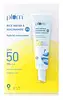
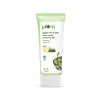
Plum Goodness 2% Niacinamide & Rice Water SPF 50 PA+++ Hybrid Sunscreen Versus Plum Goodness Green Tea & Zinc Super-Matte Sunscreen Gel SPF 50
This hybrid sunscreen covers the full UV range and blocks ~98% of UVB at SPF 50.
This hybrid sunscreen covers the full UV range and blocks ~98% of UVB at SPF 50.

What's inside
What's inside
 Key Ingredients
Benefits
Concerns
Ingredients Side-by-side
Water
Skin ConditioningEthylhexyl Methoxycinnamate
UV Absorber


Butyl Methoxydibenzoylmethane
UV Absorber
Benzophenone-3
UV Absorber
Phospholipids
Skin Conditioning

Butylene Glycol
Humectant
Propanediol
Solvent
Niacinamide
Smoothing










Glycerin
Humectant
Titanium Dioxide
Cosmetic Colorant
Rice Ferment Filtrate
Skin Conditioning
Oryza Sativa Extract
Absorbent
Aluminum Hydroxide
EmollientBenzyl Alcohol
Perfuming





Hydroxyacetophenone
Antioxidant
Stearic Acid
Cleansing

Caprylyl Glycol
Emollient
Ammonium Acryloyldimethyltaurate/Vp Copolymer
Sodium Polyacryloyldimethyl Taurate
Emulsion StabilisingSodium Benzoate
Masking
Potassium Sorbate
Preservative
Sodium Gluconate
Skin ConditioningPanthenol
Skin Conditioning
Water, Ethylhexyl Methoxycinnamate, Butyl Methoxydibenzoylmethane, Benzophenone-3, Phospholipids, Butylene Glycol, Propanediol, Niacinamide, Glycerin, Titanium Dioxide, Rice Ferment Filtrate, Oryza Sativa Extract, Aluminum Hydroxide, Benzyl Alcohol, Hydroxyacetophenone, Stearic Acid, Caprylyl Glycol, Ammonium Acryloyldimethyltaurate/Vp Copolymer, Sodium Polyacryloyldimethyl Taurate, Sodium Benzoate, Potassium Sorbate, Sodium Gluconate, Panthenol
Water
Skin ConditioningEthylhexyl Methoxycinnamate
UV Absorber
Butyl Methoxydibenzoylmethane
UV Absorber
Benzophenone-3
UV Absorber
Phospholipids
Skin Conditioning
Butylene Glycol
Humectant
C12-15 Alkyl Benzoate
AntimicrobialDimethicone
Emollient
Sodium Acrylates Copolymer
Lecithin
Emollient
Xylitylglucoside
Humectant
Anhydroxylitol
Humectant
Xylitol
Humectant
Glycerin
Humectant
Camellia Sinensis Leaf Extract
Antimicrobial
Zinc PCA
Humectant
Oat Amino Acids
Skin ConditioningSalix Nigra Bark Extract
Skin ProtectingGlycyrrhiza Glabra Root Extract
Bleaching
Aloe Barbadensis Leaf Extract
Emollient
Zinc Oxide
Cosmetic Colorant
Hyaluronic Acid
Humectant
Ceramide NP
Skin Conditioning
Ceramide AP
Skin Conditioning
Ceramide EOP
Skin Conditioning
Phytosphingosine
Skin Conditioning
Cholesterol
Emollient
Sodium Lauroyl Lactylate
EmulsifyingCarbomer
Emulsion StabilisingXanthan Gum
EmulsifyingAllantoin
Skin Conditioning
Tocopherol
Antioxidant
3-O-Ethyl Ascorbic Acid
Skin Conditioning
Ethoxydiglycol
HumectantHelianthus Annuus Seed Oil
Emollient
Glyceryl Stearate
Emollient
Oxothiazolidine
Skin ProtectingPhenoxyethanol
Preservative
Ethylhexylglycerin
Skin ConditioningTitanium Dioxide
Cosmetic Colorant
Trehalose
Humectant
Water, Ethylhexyl Methoxycinnamate, Butyl Methoxydibenzoylmethane, Benzophenone-3, Phospholipids, Butylene Glycol, C12-15 Alkyl Benzoate, Dimethicone, Sodium Acrylates Copolymer, Lecithin, Xylitylglucoside, Anhydroxylitol, Xylitol, Glycerin, Camellia Sinensis Leaf Extract, Zinc PCA, Oat Amino Acids, Salix Nigra Bark Extract, Glycyrrhiza Glabra Root Extract, Aloe Barbadensis Leaf Extract, Zinc Oxide, Hyaluronic Acid, Ceramide NP, Ceramide AP, Ceramide EOP, Phytosphingosine, Cholesterol, Sodium Lauroyl Lactylate, Carbomer, Xanthan Gum, Allantoin, Tocopherol, 3-O-Ethyl Ascorbic Acid, Ethoxydiglycol, Helianthus Annuus Seed Oil, Glyceryl Stearate, Oxothiazolidine, Phenoxyethanol, Ethylhexylglycerin, Titanium Dioxide, Trehalose
Ingredients Explained
These ingredients are found in both products.
Ingredients higher up in an ingredient list are typically present in a larger amount.
This ingredient is also known as oxybenzone, and is one of the older organic UV filters. Its main job is sitting in the oil phase and soaking up UV photons (primarily UVB with some short-wave UVA II range).
At low levels, oxybenzone also pulls double duty as a formula stabilizer that protects fragrance and colorants from fading in the light.
On concentrations:
So why did the EU cut back on how much you can use?
It comes down to absorption. Oxybenzone passes through skin more easily than other filters.
When the FDA tested sunscreens, every filter showed up in people's blood above the level where the agency wants extra safety testing done. But Oxybenzone showed up at by far the highest levels of the bunch.
To be clear, the FDA's point was that we need more research and not that the ingredient is dangerous. They also said to keep using sunscreen.
That high absorption, plus some animal studies pointing to effects on reproduction, is why EU regulators labeled Benzophenone-3 a hormone disruptor in 2025. An official classification is expected to follow in 2026.
It's also the most common photoallergen among sunscreen filters so it's a more frequent cause of contact/photoallergic dermatitis than most alternatives.
Places like Hawaii and Palau have also banned it over coral-reef concerns.
Learn more about Benzophenone-3Also known as Avobenzone, this ingredient is an oil-soluble used to absorb the full spectrum of UVA rays (peak 357 nm).
It's one of the most effective UVA filters available but has a major caveat of photostability: avobenzone is susceptible to photodegradation.
This means it can lose efficacy when exposed to sunlight without the help of a stabilizing agent.
Studies show antioxidants (like vitamin E or vitamin C) and some UV filters (like octocrylene and Tinosorb S) can meaningfully improve its stability in a formulation.
The maximum allowable concentration according to regulation is 3% in the US + Canada, and 5% in the EU, Australia, China, Korea, and ASEAN countries.
It has a well-support safety profile: a comprehensive 2025 review found minimal toxicity with no evidence of carcinogenicity.
Overall, avobenzone is a safe and regulated ingredient used in sunscreen for over 40 years.
Learn more about Butyl MethoxydibenzoylmethaneButylene Glycol (or BG) is used within cosmetic products for a few different reasons:
Overall, Butylene Glycol is a safe and well-rounded ingredient that works well with other ingredients.
Though this ingredient works well with most skin types, some people with sensitive skin may experience a reaction such as allergic rashes, closed comedones, or itchiness.
Learn more about Butylene GlycolThis ingredient is also known as Octinoxate and is one of the oldest and most widely used chemical UV filters in skincare.
It has a simple job: soap up UVB radiation (290-320 nm), the wavelengths responsible for sunburn and a big chunk of long-term sun damage.
In formulas, it's always paired with a separate UVA filter because octinoxate solely protects skin from UVB.
Because it's an oil-soluble liquid, it's easy to blend into the oil phase of lotions/creams and gives a cosmetically elegant feel.
The one quirk about formulating this ingredient is photostability; the molecule slowly changes shape into a less effective version when sunlight hits it. So the longer you're in the sun, the weaker its protection gets. The drop can be more than 30% in some formulas.
It also doesn't play nice with Avobenzone (the common UVA filter) since avobenzone destabilizes octinoxate and the two degrade each other. But don't worry: brands have solved this issue by adding photostabilizers like Tinosorb S to prevent degradation and keep SPF stable under heavy UV exposure.
The maximum allowed level is 10% in the EU and Australia, 7.5% in the US and Canada, and 20% in Japan.
The Cosmetic Ingredient Review Panel has concluded this ingredient to be safe in cosmetics up to 10%.
One last thing worth knowing for context:
Octinoxate has been the subject of ongoing review in Europe where the Scientific Committee on Consumer Safety's (SCCS) 2025 final opinion is that this ingredient is an endocrine-active substance.
Lab and animal studies suggest it can act a bit like a hormone in the body (mildly mimicking estrogen and slightly blocking male hormones). It's important to know this hasn't really been shown to happen in everyday human use.
This ingredient is also banned in Hawaii over coral reef concerns.
Learn more about Ethylhexyl MethoxycinnamateGlycerin (or glycerol) is a compound naturally found in your skin. It's a powerhouse humectant that pulls water into the stratum corneum.
Topically, glycerin does several things at once:
Your skin makes glycerin on its own (mostly from sebaceous oil breakdown) and shuttles it to your outermost layer of skin, or your epidermis, via aquaporin-3.
Aquaporin-3 is a transporter that is essential for normal skin hydration, elasticity, and repair. Interestingly, mice lacking in AQP3 have dry and less elastic skin that can be fully corrected with glycerin.
This ingredient is non-irritating, plays well with almost every ingredient, and works across all skin types. Typical use is anywhere between 3-10% but can go up to 79% in some leave-on products.
Just know very high concentrations (>40%) can feel tacky in low humidity.
Glycerin is the name for this ingredient in American English. British English uses Glycerol/Glycerine.
Learn more about GlycerinPhospholipids are a family of skin-identical lipids that makeup the structural backbone of every cell membrane in your body.
In cosmetics, they function as skin conditioning agents with emulsifier and surfactant properties. They're typically sourced from soybean or sunflower lecithin (or sometimes egg yolk or marine sources).
Because they mirror the lipids naturally found in the deeper layers of your skin, topical phospholipids help reinforce the lipid matrix, reduce transepidermal water loss, and leave skin feeling conditioned.
They're also used to form liposomes, or tiny self-assembling vesible used to stabilize actives like vitamin c or retinol. This helps these ingredients integrate into the upper layers of skin more easily.
Phospholipids are compatible with everything and the CIR Expert Panel has concluded them to be safe at current use levels.
Some types of phospholipids include:
Learn more about PhospholipidsTitanium Dioxide (TD) is a mineral UV filter widely used in sunscreens and cosmetics.
It's one of only two UV filters officially classified as "mineral" by regulatory agencies (the other being Zinc Oxide).
A really common myth is that mineral filters work by reflecting UV light off your skin like tiny mirrors.
They don't only do that; modern research shows TD protects mostly by absorbing UV radiation, the same way chemical filters do.
When researchers measured this, reflection accounted for only about 4-5% of the protection (and less than SPF 2 on its own). The other ~95% comes from absorption: the UV photons hit the particle and their energy gets soaked up by its semiconductor band gap rather than bouncing off.
So "reflects vs. absorbs" was never really the right way to split mineral from chemical filters.
TD gives broad-spectrum protection that's strongest in the UVB and UVA-2 range and weaker in the UVA-1 range. Its UVA protection isn't quite as strong as Zinc Oxide's which is why you'll often see the two paired together.
Together, they make a solid broad-spectrum system.
TD is a great pick for sensitive, acne-prone, or redness-prone skin because it's non-irritating and chemically inert. Regulatory reviews classify it as a non-sensitizer and mild-to-non-irritant.
It's also unlikely to cause the "eye sting" some chemical filters are known for.
The main trade-off is cosmetic; TD can leave a white cast and has a thicker texture. This is why mineral sunscreens are often less cosmetically elegant than chemical or hybrid formulas (and harder to shade-match on deeper skin tones).
Formulators often use micronized or nano-sized TD to cut down on white case and improve spreadability. Smaller particles scatter less visible light so the formula looks less chalky while still filtering UV.
TD is almost always bundled with coatings like Alumina, Silica, Stearic Acid, or Dimethicone. These coatings do two important jobs:
TD can be used at up to 25% in a finished sunscreen; this is the regulatory ceiling in both the US and the EU.
In practice, the amount in any given product varies a lot depending on the target SPF and whether it's paired with other UV filters.
TD is one of the most heavily vetted sunscreen ingredients out there. It is approved as a UV filter in all major markets worldwide, including the US, EU, UK, Japan, Korea, China, Australia, and Canada.
The safety evidence is solid. There was an old worry that nano particles might absorb through skin into the body but multiple studies (including on damaged, sunburned, and UV-irradiated skin) have shown that TD stays on the surface and the layer of dead skin cells on top of everything else.
There's also no evidence of carcinogenicity, mutagenicity, or reproductive toxicity from dermal exposure of this ingredient.
For those who have seen the headline about a 2022 EU ban on TD, that was on TD as a food additive (a complete separate use from topical sunscreen).
There are ongoing questions about how nano-TD might affect marine ecosystems. As of now, there has been no conclusive evidence that any form of TD (or any other sunscreen filter) harms coral reefs or marine life.
The science is still developing and it's a space worth watching rather than packing over.
However, several destinations have reef-safety sunscreen rules that restrict certain chemical filters and steer visitors toward mineral, non-nano options. If you're traveling somewhere with these rules, a non-nano mineral sunscreen is the safe bet.
Learn more about Titanium DioxideWater. It's the most common cosmetic ingredient of all. You'll usually see it at the top of ingredient lists, meaning that it makes up the largest part of the product.
So why is it so popular? Water most often acts as a solvent - this means that it helps dissolve other ingredients into the formulation.
You'll also recognize water as that liquid we all need to stay alive. If you see this, drink a glass of water. Remember to stay hydrated!
Learn more about Water

