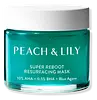
Peach & Lily Super Reboot Resurfacing Mask Versus Fenty Beauty Cherry Dub Blah To Bright 5% AHA Face Mask
This wash off mask is formulated around Salicylic Acid to clear breakouts and unclog pores.
This wash off mask is formulated around Glycolic Acid to exfoliate and smooth skin.


What's inside
What's inside
 Key Ingredients
Benefits
Concerns
Ingredients Side-by-side
Water
Skin ConditioningGlycolic Acid
Buffering











Sodium Citrate
BufferingPropanediol
Solvent

Butylene Glycol
Humectant
Hydroxyethylcellulose
Emulsion StabilisingAgave Tequilana Leaf Extract
AstringentAllantoin
Skin Conditioning

Aloe Barbadensis Flower Extract
EmollientCamellia Sinensis Leaf Extract
Antimicrobial
Centella Asiatica Extract
Cleansing
Chamomilla Recutita Flower Extract
Masking
Chlorphenesin
Antimicrobial
Coccinia Indica Fruit Extract
Skin Conditioning
Corallina Officinalis Extract
Skin Conditioning

Curcuma Longa Root Extract
Antioxidant
1,2-Hexanediol
Skin Conditioning
Ethylhexylglycerin
Skin ConditioningGlyceryl Caprylate
EmollientGlycyrrhiza Glabra Root Extract
Bleaching
Hydrolyzed Hyaluronic Acid
Humectant
Melia Azadirachta Flower Extract
Skin ConditioningMelia Azadirachta Leaf Extract
Skin ConditioningOcimum Sanctum Leaf Extract
Skin ConditioningPanthenol
Skin Conditioning
Pantolactone
Humectant
Phenoxyethanol
Preservative
Polygonum Cuspidatum Root Extract
Antioxidant
Rosmarinus Officinalis Leaf Extract
AntimicrobialSalicylic Acid
Masking

Scutellaria Baicalensis Root Extract
Astringent
Sodium Acetylated Hyaluronate
Humectant
Sodium Hyaluronate
Humectant
Solanum Melongena Fruit Extract
Skin ConditioningTrisodium Ethylenediamine Disuccinate
ChelatingXanthan Gum
EmulsifyingPolyglyceryl-10 Caprylate/Caprate
EmulsifyingPolyglyceryl-10 Laurate
Skin Conditioning
Lavandula Angustifolia Oil
Masking


Pelargonium Graveolens Flower Oil
Masking
Water, Glycolic Acid, Sodium Citrate, Propanediol, Butylene Glycol, Hydroxyethylcellulose, Agave Tequilana Leaf Extract, Allantoin, Aloe Barbadensis Flower Extract, Camellia Sinensis Leaf Extract, Centella Asiatica Extract, Chamomilla Recutita Flower Extract, Chlorphenesin, Coccinia Indica Fruit Extract, Corallina Officinalis Extract, Curcuma Longa Root Extract, 1,2-Hexanediol, Ethylhexylglycerin, Glyceryl Caprylate, Glycyrrhiza Glabra Root Extract, Hydrolyzed Hyaluronic Acid, Melia Azadirachta Flower Extract, Melia Azadirachta Leaf Extract, Ocimum Sanctum Leaf Extract, Panthenol, Pantolactone, Phenoxyethanol, Polygonum Cuspidatum Root Extract, Rosmarinus Officinalis Leaf Extract, Salicylic Acid, Scutellaria Baicalensis Root Extract, Sodium Acetylated Hyaluronate, Sodium Hyaluronate, Solanum Melongena Fruit Extract, Trisodium Ethylenediamine Disuccinate, Xanthan Gum, Polyglyceryl-10 Caprylate/Caprate, Polyglyceryl-10 Laurate, Lavandula Angustifolia Oil, Pelargonium Graveolens Flower Oil
Water
Skin ConditioningGlycerin
Humectant
Glycolic Acid
Buffering
Ammonium Acryloyldimethyltaurate/Vp Copolymer
Propanediol
Solvent
Polyacrylate Crosspolymer-6
Emulsion StabilisingSodium Hydroxide
BufferingLactic Acid
Buffering
3-O-Ethyl Ascorbic Acid
Skin Conditioning
Carrageenan

Malpighia Glabra Fruit Juice
Skin ConditioningMalpighia Glabra Fruit Extract
Skin ConditioningSalicylic Acid
Masking
Panthenol
Skin Conditioning
Caffeine
Skin Conditioning
Sodium Hyaluronate
Humectant
Tocopherol
Antioxidant
Rosmarinus Officinalis Leaf Extract
AntimicrobialHelianthus Annuus Extract
Emollient
Oryza Sativa Bran Extract
Skin Conditioning
Raphanus Sativus Root Extract
AstringentLeuconostoc/Radish Root Ferment Filtrate
Antimicrobial
Lactobacillus
Skin ConditioningMaltodextrin
Absorbent
Oleth-20
CleansingPentaerythrityl Tetra-Di-T-Butyl Hydroxyhydrocinnamate
Antioxidant
Sodium Benzotriazolyl Butylphenol Sulfonate
UV AbsorberSodium Phytate
ChelatingGlyceryl Polyacrylate
Parfum
Masking
Phenoxyethanol
Preservative
CI 16035
Cosmetic ColorantWater, Glycerin, Glycolic Acid, Ammonium Acryloyldimethyltaurate/Vp Copolymer, Propanediol, Polyacrylate Crosspolymer-6, Sodium Hydroxide, Lactic Acid, 3-O-Ethyl Ascorbic Acid, Carrageenan, Malpighia Glabra Fruit Juice, Malpighia Glabra Fruit Extract, Salicylic Acid, Panthenol, Caffeine, Sodium Hyaluronate, Tocopherol, Rosmarinus Officinalis Leaf Extract, Helianthus Annuus Extract, Oryza Sativa Bran Extract, Raphanus Sativus Root Extract, Leuconostoc/Radish Root Ferment Filtrate, Lactobacillus, Maltodextrin, Oleth-20, Pentaerythrityl Tetra-Di-T-Butyl Hydroxyhydrocinnamate, Sodium Benzotriazolyl Butylphenol Sulfonate, Sodium Phytate, Glyceryl Polyacrylate, Parfum, Phenoxyethanol, CI 16035
Reviews
Ingredients Explained
These ingredients are found in both products.
Ingredients higher up in an ingredient list are typically present in a larger amount.
Glycolic Acid is arguably the most famous alpha hydroxy acid (AHA) with tons of research backing its benefits.
It is found naturally in sugar cane but the form used in skincare is usually synthetic for purity and stability.
Glycolic acid removes the top layer of dead skin cells to allow newer and fresher ones to emerge.
AHAs work by breaking down the structural “glue” that holds old skin cells in place. When that buildup is gone, your skin can renew itself more efficiently.
Research also shows glycolic acid stimulates collagen production, helping to firm and thicken the skin over time. This is one of its biggest advantages over other AHAs.
Overall, glycolic acid helps with:
Fun fact: Glycolic acid boosts skin hydration by helping it produce molecules that increase hyaluronic acid naturally.
To work best, glycolic acid products should have a pH between 3-4 (that’s where exfoliation is most effective but still gentle on skin).
The pH and concentration of a product are key to its effectiveness:
It is normal to feel a slight stinging sensation when using glycolic acid. This usually fades as your skin adjusts.
Because glycolic acid has the smallest molecular size in the AHA family, it can penetrate deeper, which enhances its effectiveness but also makes it more likely to irritate sensitive skin.
If your skin is very sensitive or prone to rosacea, glycolic acid may be too strong; in that case, try milder options like lactic acid or a PHA instead.
Recent studies suggest glycolic acid might even help protect against UV damage. But don’t skip sunscreen! Freshly exfoliated skin is more sensitive to the sun.
Glycolic acid is a skincare superstar. It smooths, brightens, hydrates, and firms the skin. Unless you’re highly sensitive, it’s well worth adding to your routine.
Read more about some other popular AHA's here:
Learn more about Glycolic AcidPanthenol is a common ingredient that helps hydrate and soothe the skin. It is found naturally in our skin and hair.
There are two forms of panthenol: D and L.
D-panthenol is also known as dexpanthenol. Most cosmetics use dexpanthenol or a mixture of D and L-panthenol.
Panthenol is famous due to its ability to go deeper into the skin's layers. Using this ingredient has numerous pros (and no cons):
Like hyaluronic acid, panthenol is a humectant. Humectants are able to bind and hold large amounts of water to keep skin hydrated.
This ingredient works well for wound healing. It works by increasing tissue in the wound and helps close open wounds.
Once oxidized, panthenol converts to pantothenic acid. Panthothenic acid is found in all living cells.
This ingredient is also referred to as pro-vitamin B5.
Learn more about PanthenolPhenoxyethanol is one of the most widely used preservatives in skincare (and for good reason!).
It has a large spectrum of antimicrobial activity and especially effective bacteria, yeast, and mold while only having a weak effect on your skin's natural microbiome.
On a cellular level, it disrupts the cell membranes of microbes by poking holes that make the cell leak. This shuts down the chemical reactions the microbe needs to make energy so it can no longer survive.
Another perk of this ingredient is that it stays functional across a wide pH range (3-10).
You'll often see it paired with boosters like Ethylhexylglycerin; one study showed that a 1:9 ratio of Ethylhexylglycerin to Phenoxyethanol damages bacterial membranes as effectively as doubling the Phenoxyethanol concentration on its own.
Typical use concentrations range from 0.3-1% depending on the formula, and this ingredient is capped at 1% int the EU.
Safety-wise, the fear mongering does not hold up to the evidence. The EU's Scientific Committee on Consumer Safety and FDA consider it safe as a preservative at up to 1%, including for children of all ages.
Adverse systemic effects only showed up in animal studies at exposures roughly 200x higher than what people get from cosmetics. And despite its very widespread use, this ingredient is a rare sensitizer and allergic reactions are uncommon.
Learn more about PhenoxyethanolPropanediol is an all-star ingredient. It softens, hydrates, and smooths the skin.
It’s often used to:
Propanediol is not likely to cause sensitivity and considered safe to use. It is derived from corn or petroleum with a clear color and no scent.
Learn more about PropanediolThis is a botanical extract from the rosemary plant (the same one you cook with). In skincare, it mostly works as a skin conditioning agent.
Its activity comes from a handful of polyphenols, carnosic acid, carnosol, and rosmarinic acid. Almost 90% of the antioxidant activity of this ingredient can be attributed to canosol and carnosic acid.
These compounds protect your skin two ways:
1) They fight off free radicals, or the unstable molecules from things like sun and pollution that age and damage skin.
2) They help calm inflammation by switching off the chemical signals that tell skin to get red and irritated.
Lab studies also suggest that rosmarinic acid may help protect collagen and slow sugar-related damage to it.
The Cosmetic Ingredient Review has concluded rosemary-derived ingredients to be safe when formulated to be non-sensitizing.
Rosemary can occasionally cause allergic contact dermatitis (due to carnosol), so be sure to patch test if you have reactive or fragrance-sensitive skin.
Learn more about Rosmarinus Officinalis Leaf ExtractSalicylic Acid (also known as beta hydroxy acid or BHA) is a well-known ingredient for treating skin that struggles with acne and clogged pores. It exfoliates both the skin's surface and deep within the pores to help clear out buildup, control oil, and reduce inflammation.
Unlike AHAs (alpha hydroxy acids), salicylic acid is oil-soluble. This allows it to penetrate into pores which makes it especially effective for treating blackheads and preventing future breakouts.
Salicylic acid is also known for its soothing properties. It has a similar structure to aspirin and can calm inflamed or irritated skin, making it a good option for acne-prone skin that is also sensitive.
Concentrations of 0.5-2% are recognized by the U.S. FDA as an over-the-counter topical acne product.
It can cause irritation and/or dryness if one's skin already has a compromised moisture barrier, so it's best to focus on repairing that before introducing this ingredient into your routine.
While salicylic acid does not increase sun sensitivity, it’s still important to wear sunscreen daily to protect your skin.
If you are looking for the ingredient called BHA or Butylated Hydroxyanisole, click here.
Learn more about Salicylic AcidSodium Hyaluronate is the salt form of hyaluronic acid. It is a long sugar chain that is naturally found in your skin, joints, and connective tissue that maintains hydration and elasticity.
In skincare, it works as a humectant. It pulls water from the environment and deeper layers of skin and binds it to the surface.
Interestingly, the size of the molecule affects its behavior:
Some clinical evidence links low molecular weight versions to improved wrinkle depth, elasticity, anti-inflammatory effects, and barrier repair.
Many serums use a blend of both weights so you can get surface hydration plus longer-lasting and deeper effects.
You'll typically see concentrations between 0.1-2% for this ingredient.
Learn more about Sodium HyaluronateWater. It's the most common cosmetic ingredient of all. You'll usually see it at the top of ingredient lists, meaning that it makes up the largest part of the product.
So why is it so popular? Water most often acts as a solvent - this means that it helps dissolve other ingredients into the formulation.
You'll also recognize water as that liquid we all need to stay alive. If you see this, drink a glass of water. Remember to stay hydrated!
Learn more about Water

