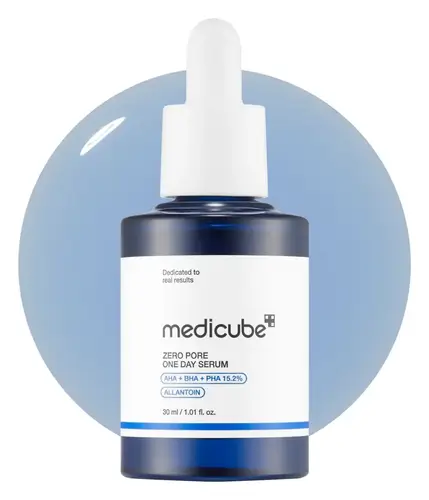
This pore-care serum is formulated around Niacinamide and Lactic Acid to refine the look of pores and refine skin texture.
This acne serum is formulated around Glycolic Acid and Niacinamide to clear breakouts and refine skin texture.


What's inside
What's inside
 Key Ingredients
Benefits
Concerns
Ingredients Side-by-side
Water
Skin ConditioningMethylpropanediol
SolventGlycerin
Humectant


Propanediol
Solvent
Niacinamide
Smoothing









Tromethamine
Buffering1,2-Hexanediol
Skin Conditioning
Polyglycerin-3
Humectant
Lactic Acid
Buffering



Dimethicone
Emollient
Gluconolactone
Skin Conditioning
Salicylic Acid
Masking


Hydroxyethylcellulose
Emulsion StabilisingSodium Polyacryloyldimethyl Taurate
Emulsion StabilisingLecithin
Emollient
C12-14 Alketh-12
EmulsifyingAllantoin
Skin Conditioning
Citric Acid
Buffering
Ethylhexylglycerin
Skin ConditioningAdenosine
Skin Conditioning
Butylene Glycol
Humectant
Dextrin
AbsorbentGlycolic Acid
Buffering
Sodium Citrate
BufferingGardenia Florida Fruit Extract
Skin ConditioningTrisodium Phosphate
BufferingCapryloyl Salicylic Acid
Exfoliating
Myosotis Sylvatica Flower/Leaf/Stem Extract
Skin ConditioningHemerocallis Fulva Flower Extract
Skin ConditioningStellaria Media Extract
Skin ConditioningLactobacillus Ferment Lysate
Skin Conditioning
Taraxacum Officinale Leaf Extract
Skin ConditioningLactobacillus Ferment
Skin Conditioning
Caprylic/Capric Triglyceride
Masking
Sorbitan Laurate
Emulsifying
Cetyl Palmitate
Emollient
Sorbitan Stearate
Emulsifying
Polysorbate 80
Emulsifying
Caprylyl Glycol
Emollient
Acetyl Glutamine
Skin ConditioningAcetyl Dipeptide-1 Cetyl Ester
Skin Conditioning
Bacillus/Soybean Ferment Extract
Skin ConditioningSodium Benzoate
Masking
Ulmus Davidiana Root Extract
Skin Conditioning
Pueraria Lobata Root Extract
HumectantPinus Palustris Leaf Extract
TonicOenothera Biennis Flower Extract
AstringentHydrogenated Lecithin
Emulsifying
Palmitoyl Tripeptide-5
Skin Conditioning
Acetyl Hexapeptide-1
Skin Conditioning
Tocopherol
Antioxidant

Acetyl Octapeptide-3
Humectant
Sodium Hyaluronate
Humectant
Palmitoyl Tetrapeptide-10
Skin Conditioning
Folic Acid
Skin ConditioningCopper Tripeptide-1
Skin Conditioning
Oligopeptide-3
Skin Conditioning
Oligopeptide-2
Skin Conditioning
Oligopeptide-1
Skin Conditioning
Hexapeptide-11
Skin Conditioning
Water, Methylpropanediol, Glycerin, Propanediol, Niacinamide, Tromethamine, 1,2-Hexanediol, Polyglycerin-3, Lactic Acid, Dimethicone, Gluconolactone, Salicylic Acid, Hydroxyethylcellulose, Sodium Polyacryloyldimethyl Taurate, Lecithin, C12-14 Alketh-12, Allantoin, Citric Acid, Ethylhexylglycerin, Adenosine, Butylene Glycol, Dextrin, Glycolic Acid, Sodium Citrate, Gardenia Florida Fruit Extract, Trisodium Phosphate, Capryloyl Salicylic Acid, Myosotis Sylvatica Flower/Leaf/Stem Extract, Hemerocallis Fulva Flower Extract, Stellaria Media Extract, Lactobacillus Ferment Lysate, Taraxacum Officinale Leaf Extract, Lactobacillus Ferment, Caprylic/Capric Triglyceride, Sorbitan Laurate, Cetyl Palmitate, Sorbitan Stearate, Polysorbate 80, Caprylyl Glycol, Acetyl Glutamine, Acetyl Dipeptide-1 Cetyl Ester, Bacillus/Soybean Ferment Extract, Sodium Benzoate, Ulmus Davidiana Root Extract, Pueraria Lobata Root Extract, Pinus Palustris Leaf Extract, Oenothera Biennis Flower Extract, Hydrogenated Lecithin, Palmitoyl Tripeptide-5, Acetyl Hexapeptide-1, Tocopherol, Acetyl Octapeptide-3, Sodium Hyaluronate, Palmitoyl Tetrapeptide-10, Folic Acid, Copper Tripeptide-1, Oligopeptide-3, Oligopeptide-2, Oligopeptide-1, Hexapeptide-11
Water
Skin ConditioningAlcohol Denat.
Antimicrobial
Propanediol
Solvent
Glycolic Acid
Buffering
Niacinamide
Smoothing
Dimethyl Isosorbide
SolventPentylene Glycol
Skin Conditioning
Salicylic Acid
Masking
Sodium Hydroxide
BufferingPEG-60 Hydrogenated Castor Oil
Emulsifying
Hydroxyethylpiperazine Ethane Sulfonic Acid
BufferingCitric Acid
Buffering
PEG-30 Glyceryl Cocoate
Emulsifying
Capryloyl Salicylic Acid
Exfoliating
Biosaccharide Gum-1
Humectant
Maltodextrin
Absorbent
Phytic Acid
Polyquaternium-10
Parfum
Masking

Water, Alcohol Denat., Propanediol, Glycolic Acid, Niacinamide, Dimethyl Isosorbide, Pentylene Glycol, Salicylic Acid, Sodium Hydroxide, PEG-60 Hydrogenated Castor Oil, Hydroxyethylpiperazine Ethane Sulfonic Acid, Citric Acid, PEG-30 Glyceryl Cocoate, Capryloyl Salicylic Acid, Biosaccharide Gum-1, Maltodextrin, Phytic Acid, Polyquaternium-10, Parfum
Reviews
Ingredients Explained
These ingredients are found in both products.
Ingredients higher up in an ingredient list are typically present in a larger amount.
Capryloyl Salicylic Acid comes from salicylic acid, the famous acne-fighting BHA.
It usually goes by a more common name of LHA, or lipohydroxy acid.
Like salicylic acid, this ingredient is a chemical exfoliant that can help break down the oil in your pores and reduce inflammation.
Though studies for LHA do show it to be less effective than salicylic acid. To be fair, salicylic acid is the reigning monarch of acne treatments.
However, a study from 2009 found LHA to be comparable to BPO, making it a good alternative for people with sensitive skin. Another study of 14 patients found a significant decrease in comedones after using LHA.
Another pro of LHA? It is less irritating than salicylic acid due to its large molecule size.
Large molecules cannot penetrate skin as well, so they are gentler on the skin. LHA is much less penetrative than salicylic acid.
An in-vitro study (not done on a living organism) found only 6% of LHA penetrated past the statum corneum compared to 58% of salicylic acid. An in-vivo (done on a living organism) analysis revealed ~17% of LHA was still present in the top layer of skin after 4 days, versus ~9% of salicylic acid.
Interestingly, a study from 2008 found LHA comparable to another famous acid, glycolic acid.
This study found about 10% of LHA is as effective as 20-50% of glycolic acid in treating hyperpigmentation and fine-lines.
Hydroxy acids have been found to stimulate skin protein, lipids, and thermal thickening. This may have anti-aging benefits.
Learn more about Capryloyl Salicylic AcidCitric Acid is an alpha hydroxy acid (AHA) naturally found in citrus fruits like oranges, lemons, and limes.
Like other AHAs, citric acid can exfoliate skin by breaking down the bonds that hold dead skin cells together. This helps reveal smoother and brighter skin underneath.
However, this exfoliating effect only happens at high concentrations (20%) which can be hard to find in cosmetic products.
Due to this, citric acid is usually included in small amounts as a pH adjuster. This helps keep products slightly more acidic and compatible with skin's natural pH.
In skincare formulas, citric acid can:
While it can provide some skin benefits, research shows lactic acid and glycolic acid are generally more effective and less irritating exfoliants.
Most citric acid used in skincare today is made by fermenting sugars (usually from molasses). This synthetic version is identical to the natural citrus form but easier to stabilize and use in formulations.
Rosacea skin has a lower threshold for acids generally, with 62.5% of rosacea subjects in one study reacting to lactic acid in a sting test. This is why we mark citric acid as a potential rosacea trigger.
However, this ingredient shows up as a pH adjuster or chelator at roughly 0.1-1% in many products. These low levels are unlikely to be an issue for rosacea skin and becomes a potential trigger at exfoliating concentrations (20%). Because everybody's skin is unique, we recommend a patch test if you are unsure.
Learn more about Citric AcidGlycolic Acid is arguably the most famous alpha hydroxy acid (AHA) with tons of research backing its benefits.
It is found naturally in sugar cane but the form used in skincare is usually synthetic for purity and stability.
Glycolic acid removes the top layer of dead skin cells to allow newer and fresher ones to emerge.
AHAs work by breaking down the structural “glue” that holds old skin cells in place. When that buildup is gone, your skin can renew itself more efficiently.
Research also shows glycolic acid stimulates collagen production, helping to firm and thicken the skin over time. This is one of its biggest advantages over other AHAs.
Overall, glycolic acid helps with:
Fun fact: Glycolic acid boosts skin hydration by helping it produce molecules that increase hyaluronic acid naturally.
To work best, glycolic acid products should have a pH between 3-4 (that’s where exfoliation is most effective but still gentle on skin).
The pH and concentration of a product are key to its effectiveness:
It is normal to feel a slight stinging sensation when using glycolic acid. This usually fades as your skin adjusts.
Because glycolic acid has the smallest molecular size in the AHA family, it can penetrate deeper, which enhances its effectiveness but also makes it more likely to irritate sensitive skin.
If your skin is very sensitive or prone to rosacea, glycolic acid may be too strong; in that case, try milder options like lactic acid or a PHA instead.
Recent studies suggest glycolic acid might even help protect against UV damage. But don’t skip sunscreen! Freshly exfoliated skin is more sensitive to the sun.
Glycolic acid is a skincare superstar. It smooths, brightens, hydrates, and firms the skin. Unless you’re highly sensitive, it’s well worth adding to your routine.
Read more about some other popular AHA's here:
Learn more about Glycolic AcidNiacinamide is a multitasking form of vitamin B3 that strengthens the skin barrier, reduces pores and dark spots, regulates oil, and improves signs of aging.
And the best part? It's gentle and well-tolerated by most skin types, including sensitive and reactive skin.
You might have heard of "niacin flush", or the reddening of skin that causes itchiness. Niacinamide has not been found to cause this.
In very rare cases, some individuals may not be able to tolerate niacinamide at all or experience an allergic reaction to it.
If you are experiencing flaking, irritation, and dryness with this ingredient, be sure to double check all your products as this ingredient can be found in all categories of skincare.
When incorporating niacinamide into your routine, look out for concentration amounts. Typically, 5% niacinamide provides benefits such as fading dark spots. However, if you have sensitive skin, it is better to begin with a smaller concentration.
When you apply niacinamide to your skin, your body converts it into nicotinamide adenine dinucleotide (NAD). NAD is an essential coenzyme that is already found in your cells as "fuel" and powers countless biological processes.
In your skin, NAD helps repair cell damage, produce new healthy cells, support collagen production, strengthen the skin barrier, and fight environmental stressors (like UV and pollution).
Our natural NAD levels start to decline with age, leading to slower skin repair, visible aging, and a weaker skin barrier. By providing your skin niacinamide, you're recharging your skin's NAD levels. This leads to stronger, healthier, and younger looking skin.
Another name for vitamin B3 is nicotinamide. This vitamin is water-soluble and our bodies don't store it. We obtain Vitamin B3 from either food or skincare. Meat, fish, wheat, yeast, and leafy greens contain vitamin B3.
The type of niacinamide used in skincare is synthetically created.
Learn more about NiacinamidePropanediol is an all-star ingredient. It softens, hydrates, and smooths the skin.
It’s often used to:
Propanediol is not likely to cause sensitivity and considered safe to use. It is derived from corn or petroleum with a clear color and no scent.
Learn more about PropanediolSalicylic Acid (also known as beta hydroxy acid or BHA) is a well-known ingredient for treating skin that struggles with acne and clogged pores. It exfoliates both the skin's surface and deep within the pores to help clear out buildup, control oil, and reduce inflammation.
Unlike AHAs (alpha hydroxy acids), salicylic acid is oil-soluble. This allows it to penetrate into pores which makes it especially effective for treating blackheads and preventing future breakouts.
Salicylic acid is also known for its soothing properties. It has a similar structure to aspirin and can calm inflamed or irritated skin, making it a good option for acne-prone skin that is also sensitive.
Concentrations of 0.5-2% are recognized by the U.S. FDA as an over-the-counter topical acne product.
It can cause irritation and/or dryness if one's skin already has a compromised moisture barrier, so it's best to focus on repairing that before introducing this ingredient into your routine.
While salicylic acid does not increase sun sensitivity, it’s still important to wear sunscreen daily to protect your skin.
If you are looking for the ingredient called BHA or Butylated Hydroxyanisole, click here.
Learn more about Salicylic AcidWater. It's the most common cosmetic ingredient of all. You'll usually see it at the top of ingredient lists, meaning that it makes up the largest part of the product.
So why is it so popular? Water most often acts as a solvent - this means that it helps dissolve other ingredients into the formulation.
You'll also recognize water as that liquid we all need to stay alive. If you see this, drink a glass of water. Remember to stay hydrated!
Learn more about Water