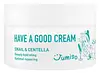
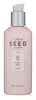
JUMISO Have A Good Cream Snail & Centella Deeply Hydrating Versus The Face Shop Chia Seed Hydro Lotion
This barrier-repair moisturizer is formulated around Squalane and Centella Asiatica Extract to strengthen the skin barrier and hydrate skin.
This barrier-repair moisturizer is formulated around Salvia Hispanica Seed Extract and Sodium Hyaluronate to strengthen the skin barrier and hydrate skin.

What's inside
What's inside
 Key Ingredients
Benefits
Concerns
Ingredients Side-by-side
Water
Skin ConditioningCetyl Ethylhexanoate
EmollientButylene Glycol
Humectant

Glycerin
Humectant
Squalane
Emollient
Centella Asiatica Extract
Cleansing


Bacillus Ferment
Skin Conditioning

1,2-Hexanediol
Skin Conditioning
Dicaprylyl Carbonate
EmollientCetearyl Alcohol
Emollient




Cetearyl Olivate
Dimethicone
Emollient
Trehalose
Humectant
Arachidyl Alcohol
Emollient
Sorbitan Olivate
Emulsifying
Arginine
Masking
Carbomer
Emulsion StabilisingCyclopentasiloxane
Emollient
Panthenol
Skin Conditioning
Caprylyl Glycol
Emollient
Behenyl Alcohol
Emollient
Hydrogenated Lecithin
Emulsifying
Polysilicone-11

Arachidyl Glucoside
EmulsifyingEthylhexylglycerin
Skin ConditioningSimmondsia Chinensis Seed Oil
Emollient
Macadamia Ternifolia Seed Oil
Emollient
Allantoin
Skin Conditioning
Sodium Hyaluronate
Humectant
Mentha Haplocalix Extract
MaskingSnail Secretion Filtrate
Skin Conditioning
Menthyl Lactate
Masking
Disodium EDTA
Backhousia Citriodora Leaf Oil
Masking


Phenoxyethanol
Preservative
Asiaticoside
Antioxidant
Madecassic Acid
Skin Conditioning
Asiatic Acid
Skin Conditioning
Beta-Glucan
Skin Conditioning
Water, Cetyl Ethylhexanoate, Butylene Glycol, Glycerin, Squalane, Centella Asiatica Extract, Bacillus Ferment, 1,2-Hexanediol, Dicaprylyl Carbonate, Cetearyl Alcohol, Cetearyl Olivate, Dimethicone, Trehalose, Arachidyl Alcohol, Sorbitan Olivate, Arginine, Carbomer, Cyclopentasiloxane, Panthenol, Caprylyl Glycol, Behenyl Alcohol, Hydrogenated Lecithin, Polysilicone-11, Arachidyl Glucoside, Ethylhexylglycerin, Simmondsia Chinensis Seed Oil, Macadamia Ternifolia Seed Oil, Allantoin, Sodium Hyaluronate, Mentha Haplocalix Extract, Snail Secretion Filtrate, Menthyl Lactate, Disodium EDTA, Backhousia Citriodora Leaf Oil, Phenoxyethanol, Asiaticoside, Madecassic Acid, Asiatic Acid, Beta-Glucan
Water
Skin ConditioningDipropylene Glycol
HumectantTriethylhexanoin
MaskingTrimethylolpropane Tricaprylate/Tricaprate
EmollientButylene Glycol
Humectant
Caprylic/Capric Triglyceride
Masking
1,2-Hexanediol
Skin Conditioning
Dimethicone
Emollient
Hydrogenated Polydecene
EmollientTri-C14-15 Alkyl Citrate
EmollientGlycerin
Humectant
Salvia Hispanica Seed Extract
Emollient
Cyanocobalamin
Skin ConditioningSodium Hyaluronate
Humectant
Beta-Glucan
Skin Conditioning
Gossypium Herbaceum Seed Extract
Skin ConditioningCetearyl Olivate
Behenyl Alcohol
Emollient
Hydrogenated Lecithin
Emulsifying
Panthenol
Skin Conditioning
Stearic Acid
Cleansing
Sorbitan Olivate
Emulsifying
Cyclopentasiloxane
Emollient
Glyceryl Stearate Se
Emulsifying
Carbomer
Emulsion StabilisingPropylene Glycol
Humectant
Hydrogenated Phosphatidylcholine
Emulsifying
Maltodextrin
Absorbent
Sodium Citrate
BufferingCitric Acid
Buffering

Eclipta Prostrata Extract
Skin Conditioning
Melia Azadirachta Leaf Extract
Skin ConditioningMoringa Oleifera Seed Oil
Emollient
Potassium Hydroxide
BufferingDimethiconol
Emollient
PEG-100 Stearate
Surfactant
Trisodium EDTA
Parfum
Masking
Benzyl Benzoate
Antimicrobial
Citral
Perfuming
Limonene
Perfuming
Geraniol
Perfuming
Hexyl Cinnamal
Perfuming
Linalool
Perfuming
Water, Dipropylene Glycol, Triethylhexanoin, Trimethylolpropane Tricaprylate/Tricaprate, Butylene Glycol, Caprylic/Capric Triglyceride, 1,2-Hexanediol, Dimethicone, Hydrogenated Polydecene, Tri-C14-15 Alkyl Citrate, Glycerin, Salvia Hispanica Seed Extract, Cyanocobalamin, Sodium Hyaluronate, Beta-Glucan, Gossypium Herbaceum Seed Extract, Cetearyl Olivate, Behenyl Alcohol, Hydrogenated Lecithin, Panthenol, Stearic Acid, Sorbitan Olivate, Cyclopentasiloxane, Glyceryl Stearate Se, Carbomer, Propylene Glycol, Hydrogenated Phosphatidylcholine, Maltodextrin, Sodium Citrate, Citric Acid, Eclipta Prostrata Extract, Melia Azadirachta Leaf Extract, Moringa Oleifera Seed Oil, Potassium Hydroxide, Dimethiconol, PEG-100 Stearate, Trisodium EDTA, Parfum, Benzyl Benzoate, Citral, Limonene, Geraniol, Hexyl Cinnamal, Linalool
Ingredients Explained
These ingredients are found in both products.
Ingredients higher up in an ingredient list are typically present in a larger amount.
1,2-Hexanediol is a synthetic liquid and another multi-functional powerhouse.
It is a:
- Humectant, drawing moisture into the skin
- Emollient, helping to soften skin
- Solvent, dispersing and stabilizing formulas
- Preservative booster, enhancing the antimicrobial activity of other preservatives
Behenyl Alcohol is a type of fatty alcohol (these are different from the drying, solvent alcohols).
Fatty Alcohols have hydrating properties and are most often used as an emollient or to thicken a product. They are usually derived from natural fats and oils; behenyl alcohol is derived from the fats of vegetable oils.
Emollients help keep your skin soft and hydrated by creating a film that traps moisture in.
In 2000, Behenyl Alcohol was approved by the US as medicine to reduce the duration of cold sores.
Learn more about Behenyl AlcoholBeta-Glucan is a soluble polysaccharide (a chain of glucose sugars) sourced from the cells walls of oats, baker's yeast, mushrooms, and seaweed.
It's a rare ingredient that pulls double-duty as a heavy-duty hydrator and skin-soothing repair agent.
On the surface, it acts as a humectant that holds water in place and reduces moisture loss for a plumper, smoother feel, while its anti-inflammatory and antioxidant properties make it a great pick for calming redness or sensitive skin
The more interesting story is underneath:
Despite its large molecular size, oat beta-glucan has been shown to penetrate the epidermis and reach the dermis by slipping between skin cells. Here, it interacts with fibroblasts and macrophages to nudge collagen synthesis and support wound repair.
A small 2005 split-face clinical study of 27 subjects found topical beta-glucan produced measurable reductions in wrinkle depth, height, and roughness after 8 weeks of use.
It is worth noting the trial was small and the penetration testing used frozen, irradiated skin so the anti-aging data is encouraging rather than definitive.
This ingredient gets along with pretty much everything and is typically used around 0.1-1%.
Fungal acne: This ingredient is not a food source for the Malassezia yeast because it is a glucose polysaccharide with no fatty acid or ester component.
Learn more about Beta-GlucanButylene Glycol (or BG) is used within cosmetic products for a few different reasons:
Overall, Butylene Glycol is a safe and well-rounded ingredient that works well with other ingredients.
Though this ingredient works well with most skin types, some people with sensitive skin may experience a reaction such as allergic rashes, closed comedones, or itchiness.
Learn more about Butylene GlycolCarbomer is a synthetic thickening and gelling agent. It's basically the ingredient that gives a lot of serums, gels, creams, and sunscreens their smooth, non-sticky texture.
Although legally permitted at very high levels, carbomers are normally used at concentrations below 1%.
It also needs to be neutralized to actually thicken, and because it is a large molecule, it doesn't really penetrate the skin barrier.
Allergy-wise, the risk is very low. Clinical studies show carbomers have low potential for skin irritation/sensitization even at concentrations up to 100%.
A 2024 UK study patch-tested 1,302 patients and found true allergy to the parent group of carbomer to be rare with no confirmed relevant reactions.
Learn more about CarbomerCetearyl Olivate is a plant-derived emulsifier and texture enhancer. It helps keep the oil and water phases from separating so your formulas stay stable.
You'll likely see it combined with Sorbitan Olivate (together sold as the trade name Olivem 1000). This combination generates a liquid crystal structure that closely resemble the lipid organization of the stratum corneum.
These "skin-like" liquid crystals improve skin barrier integrity and promote the delivery of actives into the skin.
This ingredient is well-tolerated and has no significant sensitization data.
Because it is derived from the fatty acids in olive oil, this ingredient may not be fungal acne safe.
Learn more about Cetearyl OlivateCyclopentasiloxane (D5) is a lightweight silicone that mostly acts as an emollient and solvent in cosmetics. Its the reason your products feel silky, fast-spreading, and non-greasy.
Since D5 is volatile, it does its thing and then evaporates off the skin quickly.
The safety profile of this ingredient is reassuring; the US CIR Expert Panel concluded D5 is safe as used in cosmetics and Health Canada concluded that D5 is not harmful to human health or the environment as currently used in cosmetics
There's a study that people mention about D5 in a rat study showing tumors. This study is related to long-term inhalation of high D5 levels.
Regulatory bodies have judged this study to be not applicable in topical skincare since skin absorption of D5 is very low and we're not really inhaling huge amounts of D5.
The only restriction for this ingredient is environmental. The European Chemicals Agency (ECHA) restricted D5 in wash-off cosmetics at or above 0.1% due to their persistence in water.
Learn more about CyclopentasiloxaneDimethicone is a type of synthetic silicone created from natural materials such as quartz. It is also known as polydimethylsiloxane.
What it does:
Dimethicone comes in different viscosities:
Depending on the viscosity, dimethicone has different properties.
Ingredients lists don't always show which type is used, so we recommend reaching out to the brand if you have questions about the viscosity.
This ingredient is unlikely to cause irritation because it does not get absorbed into skin. However, people with silicone allergies should be careful about using this ingredient.
Note: Dimethicone may contribute to pilling. This is because it is not oil or water soluble, so pilling may occur when layered with products. When mixed with heavy oils in a formula, the outcome is also quite greasy.
Learn more about DimethiconeGlycerin (or glycerol) is a compound naturally found in your skin. It's a powerhouse humectant that pulls water into the stratum corneum.
Topically, glycerin does several things at once:
Your skin makes glycerin on its own (mostly from sebaceous oil breakdown) and shuttles it to your outermost layer of skin, or your epidermis, via aquaporin-3.
Aquaporin-3 is a transporter that is essential for normal skin hydration, elasticity, and repair. Interestingly, mice lacking in AQP3 have dry and less elastic skin that can be fully corrected with glycerin.
This ingredient is non-irritating, plays well with almost every ingredient, and works across all skin types. Typical use is anywhere between 3-10% but can go up to 79% in some leave-on products.
Just know very high concentrations (>40%) can feel tacky in low humidity.
Glycerin is the name for this ingredient in American English. British English uses Glycerol/Glycerine.
Learn more about GlycerinHydrogenated Lecithin is a more stable version of lecithin.
It's made by taking lecithin (a phospholipid commonly found in soybeans and egg yolks) and hydrogenating it. This just means the unsaturated fatty acids are turned into saturated ones so they don't go bad as easily.
This ingredient is an emollient, emulsifier, and penetration enhancer. As an emollient, it helps soften and hydrate skin by trapping moisture within. As an emulsifier, it prevents oil and water ingredients from separating.
Hydrogenated Lecithin can form tiny spherical structures made of phospholipid bilayers called liposomes. These liposomes are able to capture compounds inside their structure and deliver them through the skin barrier.
Because phospholipids are a natural component of our cell membranes, this ingredient is inherently compatible with skin.
A 2021 study found lecithin-based surfactants were less harsh and more tolerable comared to Sodium Lauryl Sulfate (SLS).
Learn more about Hydrogenated LecithinPanthenol is a common ingredient that helps hydrate and soothe the skin. It is found naturally in our skin and hair.
There are two forms of panthenol: D and L.
D-panthenol is also known as dexpanthenol. Most cosmetics use dexpanthenol or a mixture of D and L-panthenol.
Panthenol is famous due to its ability to go deeper into the skin's layers. Using this ingredient has numerous pros (and no cons):
Like hyaluronic acid, panthenol is a humectant. Humectants are able to bind and hold large amounts of water to keep skin hydrated.
This ingredient works well for wound healing. It works by increasing tissue in the wound and helps close open wounds.
Once oxidized, panthenol converts to pantothenic acid. Panthothenic acid is found in all living cells.
This ingredient is also referred to as pro-vitamin B5.
Learn more about PanthenolSodium Hyaluronate is the salt form of hyaluronic acid. It is a long sugar chain that is naturally found in your skin, joints, and connective tissue that maintains hydration and elasticity.
In skincare, it works as a humectant. It pulls water from the environment and deeper layers of skin and binds it to the surface.
Interestingly, the size of the molecule affects its behavior:
Some clinical evidence links low molecular weight versions to improved wrinkle depth, elasticity, anti-inflammatory effects, and barrier repair.
Many serums use a blend of both weights so you can get surface hydration plus longer-lasting and deeper effects.
You'll typically see concentrations between 0.1-2% for this ingredient.
Learn more about Sodium HyaluronateSorbitan Olivate is created from the fatty acids in olive oil and sorbitol.
This ingredient is an oil in water emulsifier. It helps stabilize a product by preventing oils and waters from separating. Sorbitan Olivate also helps hydrate the skin.
This ingredient is also known as part of Olivem 1000, with Cetearyl Olivate being the other part.
According to a manufacturer, this ingredient helps preserve the natural microbiome of skin. Having a healthy microbiome helps keep our skin healthy and protects against harmful bacteria.
Please note, having a healthy microbiome is different from fungal acne; a healthy microbiome includes small amounts of yeast that normally live on your skin without causing problems.
Fungal acne happens when one type of yeast (Malassezia) grows out of control. This is usually because it's feeding on certain oils or fatty acids. Due to the olive oil base, this ingredient may not be fungal acne safe.
Learn more about Sorbitan OlivateWater. It's the most common cosmetic ingredient of all. You'll usually see it at the top of ingredient lists, meaning that it makes up the largest part of the product.
So why is it so popular? Water most often acts as a solvent - this means that it helps dissolve other ingredients into the formulation.
You'll also recognize water as that liquid we all need to stay alive. If you see this, drink a glass of water. Remember to stay hydrated!
Learn more about Water

