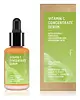
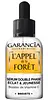
Freshly Cosmetics Vitamin C Concentrate Serum Versus Garancia L'Appel De La Forêt Sérum Double Phase
This brightening serum is formulated around Ascorbyl Glucoside and Astaxanthin to brighten dull-looking skin and fade the look of dark spots.
This anti-aging serum is formulated around Bakuchiol and Acetyl Hexapeptide-8 to soften the look of wrinkles and brighten dull-looking skin.


What's inside
What's inside
 Key Ingredients
Benefits
Concerns
Ingredients Side-by-side
Aloe Barbadensis Leaf Juice Powder
Skin Conditioning


Water
Skin ConditioningGlycerin
Humectant

Pentylene Glycol
Skin Conditioning
Saccharomyces/Xylinum/Black Tea Ferment
Skin Conditioning

Coco-Caprylate/Caprate
Emollient
Simmondsia Chinensis Seed Oil
Emollient
Elaeis Guineensis Oil
Emollient

Sucrose Distearate
Emollient
Gossypium Herbaceum Seed Oil
Skin Conditioning
Hydrolyzed Hyaluronic Acid
Humectant

Sodium Hyaluronate
Humectant
Oryza Sativa Starch
AbsorbentPrunus Amygdalus Dulcis Oil
Skin Conditioning
Linum Usitatissimum Seed Oil
Perfuming

Astaxanthin
Skin Conditioning
Carthamus Tinctorius Seed Oil
Masking
Ascorbyl Glucoside
Antioxidant

Bidens Pilosa Extract
HumectantVaccinium Vitis-Idaea Fruit Extract
Antioxidant
Helianthus Annuus Seed Oil
Emollient
Prunus Armeniaca Fruit Extract
Skin ConditioningPrunus Persica Juice
MoisturisingCitrus Aurantifolia Peel Extract
Cleansing
Cucumis Melo Fruit Extract
Skin ConditioningCitrus Grandis Peel Extract
Astringent
Lavandula Angustifolia Flower/Leaf/Stem Extract
Masking
Pyrus Malus Fruit Extract
Skin Conditioning
Vanilla Planifolia Fruit Extract
Skin Conditioning
Citrus Aurantium Dulcis Fruit Extract
MaskingPrunus Amygdalus Dulcis Bud Extract
Skin ConditioningPrunus Persica Fruit Extract
Abrasive
Mentha Piperita Leaf Extract
Skin ConditioningPhosphatidylcholine
EmulsifyingTerminalia Ferdinandiana Fruit Extract
Antioxidant
Mannitol
Humectant
Sucrose Stearate
EmollientGlycine Soja Oil
Emollient
Cetyl Alcohol
Emollient
Squalene
Emollient
P-Anisic Acid
MaskingSodium Gluconate
ChelatingSodium Levulinate
Skin ConditioningXanthan Gum
EmulsifyingLevulinic Acid
Perfuming
Arginine
Masking
Tocopherol
Antioxidant
Sodium Benzoate
Masking
Polyglyceryl-10 Laurate
Skin Conditioning
Gluconolactone
Chelating




Citric Acid
Buffering
Beta-Sitosterol
Emulsion Stabilising
Sodium Chloride
MaskingCalcium Gluconate
HumectantLimonene
Perfuming
Linalool
Perfuming
Aloe Barbadensis Leaf Juice Powder, Water, Glycerin, Pentylene Glycol, Saccharomyces/Xylinum/Black Tea Ferment, Coco-Caprylate/Caprate, Simmondsia Chinensis Seed Oil, Elaeis Guineensis Oil, Sucrose Distearate, Gossypium Herbaceum Seed Oil, Hydrolyzed Hyaluronic Acid, Sodium Hyaluronate, Oryza Sativa Starch, Prunus Amygdalus Dulcis Oil, Linum Usitatissimum Seed Oil, Astaxanthin, Carthamus Tinctorius Seed Oil, Ascorbyl Glucoside, Bidens Pilosa Extract, Vaccinium Vitis-Idaea Fruit Extract, Helianthus Annuus Seed Oil, Prunus Armeniaca Fruit Extract, Prunus Persica Juice, Citrus Aurantifolia Peel Extract, Cucumis Melo Fruit Extract, Citrus Grandis Peel Extract, Lavandula Angustifolia Flower/Leaf/Stem Extract, Pyrus Malus Fruit Extract, Vanilla Planifolia Fruit Extract, Citrus Aurantium Dulcis Fruit Extract, Prunus Amygdalus Dulcis Bud Extract, Prunus Persica Fruit Extract, Mentha Piperita Leaf Extract, Phosphatidylcholine, Terminalia Ferdinandiana Fruit Extract, Mannitol, Sucrose Stearate, Glycine Soja Oil, Cetyl Alcohol, Squalene, P-Anisic Acid, Sodium Gluconate, Sodium Levulinate, Xanthan Gum, Levulinic Acid, Arginine, Tocopherol, Sodium Benzoate, Polyglyceryl-10 Laurate, Gluconolactone, Citric Acid, Beta-Sitosterol, Sodium Chloride, Calcium Gluconate, Limonene, Linalool
Water
Skin ConditioningCoco-Caprylate/Caprate
Emollient
Propanediol
Solvent
Canola Oil
Emollient
Glycerin
Humectant
Pentylene Glycol
Skin Conditioning
Artemisia Capillaris Flower Extract
Skin ConditioningTerminalia Ferdinandiana Fruit Extract
Antioxidant
Bakuchiol
Antimicrobial
Hydrolyzed Hyaluronic Acid
Humectant
Sodium Hyaluronate
Humectant
Acetyl Hexapeptide-8
Humectant
Tocopherol
Antioxidant
Tocopheryl Acetate
Antioxidant
Daucus Carota Sativa Root Extract
Skin Conditioning
Daucus Carota Sativa Seed Oil
Emollient
Glycine Soja Oil
Emollient
Helianthus Annuus Seed Oil
Emollient
Decyl Glucoside
Cleansing
Beta-Carotene
Skin ConditioningLevulinic Acid
Perfuming
Sodium Levulinate
Skin ConditioningSodium Benzoate
Masking
Sodium Hydroxide
BufferingWater, Coco-Caprylate/Caprate, Propanediol, Canola Oil, Glycerin, Pentylene Glycol, Artemisia Capillaris Flower Extract, Terminalia Ferdinandiana Fruit Extract, Bakuchiol, Hydrolyzed Hyaluronic Acid, Sodium Hyaluronate, Acetyl Hexapeptide-8, Tocopherol, Tocopheryl Acetate, Daucus Carota Sativa Root Extract, Daucus Carota Sativa Seed Oil, Glycine Soja Oil, Helianthus Annuus Seed Oil, Decyl Glucoside, Beta-Carotene, Levulinic Acid, Sodium Levulinate, Sodium Benzoate, Sodium Hydroxide
Reviews
Ingredients Explained
These ingredients are found in both products.
Ingredients higher up in an ingredient list are typically present in a larger amount.
Coco-Caprylate/Caprate is a lightweight ester created from coconut oil fatty acids, caprylic acid, and capric acid.
It is an emollient that helps soften skin and reduce transepidermal water loss (TEWL). What sets it apart from heavier emollients is its ultralight, non-greasy feel.
Once applied, this ingredient dries down quickly and leaves a dry, silky finish behind. This also helps improve spreadability and texture.
This ingredient has an excellent safety-record and is non-irritating.
Typical concentrations for cosmetics range from 0.5-62%.
Research on Malassezia growth found no growth on fatty acid esters with chain lengths shorter than 12 carbons (it prefers C11-24).
Since Coco-Caprylate/Caprate is built on C8 and C10 fatty acids, it is out of the range that Malassezia metabolizes, and therefore safe for fungal acne.
Learn more about Coco-Caprylate/CaprateGlycerin (or glycerol) is a compound naturally found in your skin. It's a powerhouse humectant that pulls water into the stratum corneum.
Topically, glycerin does several things at once:
Your skin makes glycerin on its own (mostly from sebaceous oil breakdown) and shuttles it to your outermost layer of skin, or your epidermis, via aquaporin-3.
Aquaporin-3 is a transporter that is essential for normal skin hydration, elasticity, and repair. Interestingly, mice lacking in AQP3 have dry and less elastic skin that can be fully corrected with glycerin.
This ingredient is non-irritating, plays well with almost every ingredient, and works across all skin types. Typical use is anywhere between 3-10% but can go up to 79% in some leave-on products.
Just know very high concentrations (>40%) can feel tacky in low humidity.
Glycerin is the name for this ingredient in American English. British English uses Glycerol/Glycerine.
Learn more about GlycerinGlycine Soja Oil is a plant-derived oil from soybean seeds. Like other oils, it is rich in essential fatty acids (mostly linoleic and oleic) that support skin hydration and barrier function.
The fatty acids are able to integrate into the lipid matrix of the stratum corneum to help soften skin and reduce water loss.
On top of that, soybean oil is rich in vitamins like vitamin E, a potent antioxidant.
Research on soybean's active components also point to anti-inflammatory, collagen-stimulating, antioxidant activity, and protection against UV-induced oxidative damage.
Most of this research applies to the broader soybean plant and not just the oil fraction alone.
This ingredient does carry a comedogenic rating of 3 from the old rabbit-ear assay. Just remember testing finished products in humans showed that formulas built with "comedogenic" ingredients are not necessarily comedogenic themselves. It's worth patch testing if you're breakout prone, and always listen to your skin.
This ingredient may not be fungal acne safe due to the oleic acid content.
Learn more about Glycine Soja OilHelianthus Annuus Seed Oil is a plant oil derived from the seeds of a sunflower.
It is rich in fatty acids, primarily linoleic acid and oleic acid. This gives it emollient and skin conditioning properties.
The reason this ingredient is so effective is because it forms a thin film on the skin that reduces transepidermal water loss (TEWL) while supplying linoleic acid to the stratum corneum to improve barrier strength.
The high linoleic acid content is particularly noteworthy for acne-prone skin.
Research suggests that acne-prone skin tends to be deficient in linoleic acid in sebum. Topical application may help replenish this to support a healthier follicular environment and less comedone-promoting sebum.
One randomized study found sunflower seed oil preserved skin barrier integrity in adult volunteers with and without atopic dermatitis (outperforming olive oil).
This ingredient is well-studied, gentle, and an effective emollient suitable for most skin types.
On fungal acne: This ingredient may not be Fungal acne (Malassezia folliculitis) safe. This is because it contains fatty acids with carbon chain lengths in the C11-C24 range.
Learn more about Helianthus Annuus Seed OilHydrolyzed Hyaluronic Acid is hyaluronic acid (HA) that is broken down into lower molecular weight fragments.
It's a humectant that pulls and holds water in the skin to help with hydration, plumpness, and reduce transepidermal water loss.
Because hydrolyzed hyaluronic acid is smaller in size, it can slip past your outermost layer of skin more easily than full-sized HA.
Most formulations will combine all sizes to get the best of both worlds.
Typical usage levels range from 0.01-1%. Any percentage higher than 2% might become goopy and tacky.
Learn more about Hydrolyzed Hyaluronic AcidLevulinic Acid is a fragrance that comes from the degradation of cellulose. It is a saturated fatty acid.
This ingredient is often used a building block for other compounds, such as in pharmaceuticals.
According to a manufacturer, this ingredient smells like caramel.
Learn more about Levulinic AcidPentylene Glycol (1,2-pentanediol) is a multitasking little diol with three main roles in a formula:
Research on alkanediols (the family pentylene glycol belongs to) show they work by disrupting microbial cell membranes. This disruption helps the primary preservative system in a product work more effectively at lower doses.
On the safety side, the Cosmetic Ingredient Review Expert Panel has concluded this ingredient to be safe as used in current cosmetic practices + concentrations.
Typical use levels in a formula run about 1-5%.
Learn more about Pentylene GlycolSodium Benzoate is a preservative. It's used in both cosmetic and food products to inhibit the growth of mold and bacteria. It is typically produced synthetically.
Both the US FDA and EU Health Committee have approved the use of sodium benzoate. In the US, levels of 0.1% (of the total product) are allowed.
Sodium benzoate works as a preservative by inhibiting the growth of bacteria inside of cells. It prevents the cell from fermenting a type of sugar using an enzyme called phosphofructokinase.
It is the salt of benzoic acid. Foods containing sodium benzoate include soda, salad dressings, condiments, fruit juices, wines, and snack foods.
Studies for using ascorbic acid and sodium benzoate in cosmetics are lacking, especially in skincare routines with multiple steps.
We always recommend speaking with a professional, such as a dermatologist, if you have any concerns.
Learn more about Sodium BenzoateSodium Hyaluronate is the salt form of hyaluronic acid. It is a long sugar chain that is naturally found in your skin, joints, and connective tissue that maintains hydration and elasticity.
In skincare, it works as a humectant. It pulls water from the environment and deeper layers of skin and binds it to the surface.
Interestingly, the size of the molecule affects its behavior:
Some clinical evidence links low molecular weight versions to improved wrinkle depth, elasticity, anti-inflammatory effects, and barrier repair.
Many serums use a blend of both weights so you can get surface hydration plus longer-lasting and deeper effects.
You'll typically see concentrations between 0.1-2% for this ingredient.
Learn more about Sodium HyaluronateSodium levulinate is the a sodium salt of Levulinic Acid. Oncedissolved in an aqueous solution, the two ingredients become identical. It is usually derived from renewable plant sources like corn starch or sugarcane.
In skincare, it mostly acts as a skin conditioning agent that keeps skin soft and hydrated. It also acts as a preservative booster by inhibiting the growth of mold, yeast, and bacteria.
It's often paired with Sodium Anisate as the two create a broad-spectrum preservative system that is popular in "natural" formulations.
This ingredient is water-soluble.
The CIR Expert Panel for Cosmetic Ingredient Safety has concluded this ingredient to be non-irritated and there are no restrictions for use in EU cosmetics. The FDA also allows this ingredient to be used as a food-grade flavoring agent.
Learn more about Sodium LevulinateTerminalia Ferdinandiana Fruit Extract is from the Kakadu plum. The Kakadu plum is native to northern Australia. The Kakadu plum holds the record for having the highest amount of natural vitamin C.
This ingredient is an antioxidant. Antioxidants help fight free-radical molecules. Free-radical molecules are capable of damaging our cells and other genetic material. Antioxidants help stabilize free-radicals and thus may reduce the signs of aging.
The high vitamin C content of Kakadu plum also helps lighten skin. Vitamin C has been shown to block the process of skin darkening that leads to hyperpigmentation.
Kakadu plums have been used by indigenous cultures as medicine to help treat colds and as an antiseptic.
Learn more about Terminalia Ferdinandiana Fruit ExtractTocopherol is a fat-soluble antioxidant known as Vitamin E.
You'll find this ingredient in the vast majority of skincare (for good reason). It works to neutralize free radicals, or unstable molecules generated by UV exposure, pollution, and other environmental stressors, before they can cause oxidative damage to your skin cells.
Topically applied tocopherol has been shown to protect against UV damage by ramping up the skin's own natural defense enzymes.
It also acts as a skin conditioning agent; some studies show that regular topical use can improve the skin's water-binding capacity over 2-4 weeks.
This ingredient is especially loved for being a team player. When combined with Vitamin C, the photoprotective effect of both ingredients roughly doubles and the combo also helps reduce UV-induced DNA damage.
This ingredient has some brightening potential but it's more of a prevention ingredient than spot-fader. Cell studies show it can slow down melanin production but it's worth noting that it's not the most powerful brightener out there.
In formulations, it also serves as a stabilizer that helps protect other oxidation-prone ingredients from degrading.
Concentrations usually range from 0.1-1% in most leave-on products.
Learn more about TocopherolWater. It's the most common cosmetic ingredient of all. You'll usually see it at the top of ingredient lists, meaning that it makes up the largest part of the product.
So why is it so popular? Water most often acts as a solvent - this means that it helps dissolve other ingredients into the formulation.
You'll also recognize water as that liquid we all need to stay alive. If you see this, drink a glass of water. Remember to stay hydrated!
Learn more about Water

