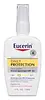
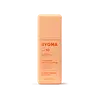
Eucerin Daily Protection Face Lotion Broad Spectrum SPF 30 Versus BYOMA Ultralight Face Fluid SPF 30
This barrier-repair day moisturizer is formulated around Glycerin to strengthen the skin barrier and hydrate skin.
This chemical sunscreen covers most of the UV range, lighter on the deep UVA that drives aging.


What's inside
What's inside
 Key Ingredients
Benefits
Concerns
Ingredients Side-by-side
Phenylbenzimidazole Sulfonic Acid 2%
UV Absorber
Ethylhexyl Methoxycinnamate 7.5%
UV Absorber

Ethylhexyl Salicylate 4.5%
UV Absorber
Titanium Dioxide 2.4%
Cosmetic Colorant
Zinc Oxide 4.8%
Cosmetic Colorant
Water
Skin ConditioningGlycerin
Humectant


C12-15 Alkyl Benzoate
AntimicrobialDimethicone
Emollient
Cyclomethicone
Emollient
Methylpropanediol
SolventCetearyl Alcohol
Emollient






Cetyl Alcohol
Emollient
Ceteareth-20
Cleansing
Phenoxyethanol
Preservative
Glyceryl Stearate Se
Emulsifying
Sodium Lactate
Buffering
Lactic Acid
Buffering





1,2-Hexanediol
Skin Conditioning
Hydrogenated Coco-Glycerides
Emollient
Vp/Hexadecene Copolymer
Xanthan Gum
EmulsifyingPEG-40
HumectantRicinus Communis Seed Oil
Masking

Sodium Hydroxide
BufferingTrisodium EDTA
ChelatingAlumina
Abrasive
Sodium Cetearyl Sulfate
Cleansing
Triethoxycaprylylsilane
Simethicone
Emollient
Phenylbenzimidazole Sulfonic Acid 2%, Ethylhexyl Methoxycinnamate 7.5%, Ethylhexyl Salicylate 4.5%, Titanium Dioxide 2.4%, Zinc Oxide 4.8%, Water, Glycerin, C12-15 Alkyl Benzoate, Dimethicone, Cyclomethicone, Methylpropanediol, Cetearyl Alcohol, Cetyl Alcohol, Ceteareth-20, Phenoxyethanol, Glyceryl Stearate Se, Sodium Lactate, Lactic Acid, 1,2-Hexanediol, Hydrogenated Coco-Glycerides, Vp/Hexadecene Copolymer, Xanthan Gum, PEG-40, Ricinus Communis Seed Oil, Sodium Hydroxide, Trisodium EDTA, Alumina, Sodium Cetearyl Sulfate, Triethoxycaprylylsilane, Simethicone
Water
Skin ConditioningOctocrylene
UV Absorber
Homosalate
Skin Conditioning
Ethylhexyl Salicylate
UV Absorber
Butyloctyl Salicylate
Skin Conditioning
Butyl Methoxydibenzoylmethane
UV Absorber
Glycerin
Humectant
Sodium Hyaluronate
Humectant

Tocopherol
Antioxidant

Bisabolol
Antioxidant
Ethyl Ferulate
Antioxidant
Ceramide NP
Skin Conditioning
Cholesterol
Emollient
Olea Europaea Fruit Oil
Masking
Aloe Barbadensis Leaf Juice
Skin Conditioning
Astaxanthin
Skin Conditioning
Phytosphingosine
Skin Conditioning
Haematococcus Pluvialis Extract
Antioxidant
Beta-Glucan
Skin Conditioning
Cocoglycerides
Emollient
Dicaprylyl Carbonate
EmollientDiisopropyl Adipate
EmollientCaprylic/Capric Triglyceride
Masking
Oleic Acid
Emollient
Stearic Acid
Cleansing
Sodium Stearoyl Glutamate
CleansingGlyceryl Stearate Se
Emulsifying
Hydrogenated Lecithin
Emulsifying
Propanediol
Solvent
Lactic Acid
Buffering
Microcrystalline Cellulose
AbsorbentXanthan Gum
EmulsifyingCellulose Gum
Emulsion StabilisingSodium Gluconate
ChelatingCitric Acid
Buffering
Caprylhydroxamic Acid
ChelatingCaprylyl Glycol
Emollient
Methylheptylglycerin
HumectantSodium Benzoate
Masking
Potassium Sorbate
Preservative
1,2-Hexanediol
Skin Conditioning
Phospholipids
Skin Conditioning
Glycolipids
Skin ConditioningPhosphatidylserine
Emulsion StabilisingWater, Octocrylene, Homosalate, Ethylhexyl Salicylate, Butyloctyl Salicylate, Butyl Methoxydibenzoylmethane, Glycerin, Sodium Hyaluronate, Tocopherol, Bisabolol, Ethyl Ferulate, Ceramide NP, Cholesterol, Olea Europaea Fruit Oil, Aloe Barbadensis Leaf Juice, Astaxanthin, Phytosphingosine, Haematococcus Pluvialis Extract, Beta-Glucan, Cocoglycerides, Dicaprylyl Carbonate, Diisopropyl Adipate, Caprylic/Capric Triglyceride, Oleic Acid, Stearic Acid, Sodium Stearoyl Glutamate, Glyceryl Stearate Se, Hydrogenated Lecithin, Propanediol, Lactic Acid, Microcrystalline Cellulose, Xanthan Gum, Cellulose Gum, Sodium Gluconate, Citric Acid, Caprylhydroxamic Acid, Caprylyl Glycol, Methylheptylglycerin, Sodium Benzoate, Potassium Sorbate, 1,2-Hexanediol, Phospholipids, Glycolipids, Phosphatidylserine
Reviews
Ingredients Explained
These ingredients are found in both products.
Ingredients higher up in an ingredient list are typically present in a larger amount.
1,2-Hexanediol is a synthetic liquid and another multi-functional powerhouse.
It is a:
- Humectant, drawing moisture into the skin
- Emollient, helping to soften skin
- Solvent, dispersing and stabilizing formulas
- Preservative booster, enhancing the antimicrobial activity of other preservatives
Ethylhexyl Salicylate (also called Octisalate or Octyl Salicylate) is an oil-soluble organic UV filter that's been used in sunscreen since the 1950's.
It absorbs UVB light in the 280-320 nm range with a peak absorbance around 306 nm.
You'll often see it paired with other UV filters to boost overall SPF because octisalate is a fairly week filter on its own.
The reason you'll see it so often is because it can help solubilize and stabilize the trickier filters like oxybenzone and avobenzone.
Unlike these filters, octisalate has pretty good photostability and doesn't create skin-damaging free radicals when exposed to sunlight.
The fatty-alcohol part of the molecule also gives it a light, emollient feel so it doubles as a nice texture enhancer.
Usage levels vary around the world:
Safety-wise, this ingredient has a pretty reassuring track record. The EU's Scientific Committee on Consumer Products (SCCP) found very low skin penetration in human skin tests and negative results for irritation, phototoxicity, and photoallergy.
The real-world allergy risk is pretty low too; a 2012 European study of 1,031 people recorded only 2 reactions to it (a rate of 0.19%).
You might have seen scary headlines about sunscreen getting into your blood.
In 2019, the FDA found that several chemical filters can absorb through the skin and show up in the bloodstream at small but measurable levels.
Here's the important part: these tiny levels are just a cutoff the FDA uses to decide which ingredients need more testing and doesn't mean anything harmful was found.
The researchers were clear that the results are no reason to stop wearing sunscreen.
Learn more about Ethylhexyl SalicylateGlycerin (or glycerol) is a compound naturally found in your skin. It's a powerhouse humectant that pulls water into the stratum corneum.
Topically, glycerin does several things at once:
Your skin makes glycerin on its own (mostly from sebaceous oil breakdown) and shuttles it to your outermost layer of skin, or your epidermis, via aquaporin-3.
Aquaporin-3 is a transporter that is essential for normal skin hydration, elasticity, and repair. Interestingly, mice lacking in AQP3 have dry and less elastic skin that can be fully corrected with glycerin.
This ingredient is non-irritating, plays well with almost every ingredient, and works across all skin types. Typical use is anywhere between 3-10% but can go up to 79% in some leave-on products.
Just know very high concentrations (>40%) can feel tacky in low humidity.
Glycerin is the name for this ingredient in American English. British English uses Glycerol/Glycerine.
Learn more about GlycerinGlyceryl Stearate SE is a self-emulsifying (SE) form of Glyceryl Stearate. It comes with a small amount of soap (usually potassium or sodium stearate) that gives it the "SE" part.
That soap lets it pull oil and water together on its own which is why it shows up as an emulsifier, thickener, and emollient.
Industry survey data shows this ingredient is used around 1-5% but Glyceryl Stearate goes as high at 17% in a leave-on deodorant.
Safety-wise, it's pretty boring: it's been deemed safe for topical use in 1982 and again most recently in 2021 by the CIR. Human repeat insult patch tests come back non-irritating, non-sensitizing, non-phototoxic, and non-photoallergenic.
This ingredient does carry a comedogenic rating of 3 from the old rabbit-ear assay. Just remember testing finished products in humans showed that formulas built with "comedogenic" ingredients are not necessarily comedogenic themselves. It's worth patch testing if you're breakout prone, and always listen to your skin.
The Malassezia yeast can potentially metabolize the stearic acid in this ingredient, so it may not be fungal acne safe.
Allergy is rare: a 310-patient patch test study of common emulsifiers found this ingredient was not a meaningful reactor. Isolated case reports do exist so a true contact allergy is possible but uncommon.
Learn more about Glyceryl Stearate SeLactic Acid is another well-loved alpha hydroxy acid (AHA). It is gentler than glycolic acid but still highly effective.
Its main role is to exfoliate the surface of the skin by loosening the “glue” that holds dead skin cells together. Shedding those old cells leads to smoother, softer, and more even-toned skin.
Because lactic acid molecules are larger than glycolic acid, they don’t penetrate as deeply. This means they’re less likely to sting or irritate, making it a great choice for beginners or those with sensitive skin.
Like glycolic acid, it can:
Lactic acid also acts as a humectant (like hyaluronic acid). It can draw water into the skin to improve hydration and also plays a role in the skin's natural moisturizing factor (NMF) in the form of sodium lactate.
Studies show it can boost ceramide production to strengthen the skin barrier and even help balance the skin’s microbiome.
To get results, choose products with a pH between 3-4.
Lower strengths (5-12%) focus on surface exfoliation; higher strengths (12% and up) can reach deeper in the dermis (deeper, supportive layer) to improve skin texture and firmness over time.
Though it was originally derived from milk, most modern lactic acid used in skincare is vegan. It is made through non-dairy fermentation to create a bio-identical and stable form suitable for all formulations.
When lactic acid shows up near the end of an ingredient list, it usually means the brand added just a tiny amount to adjust the product’s pH.
Legend has it that Cleopatra used to bathe in sour milk to help reduce wrinkles.
Lactic acid is truly a gentle multitasker: it exfoliates, hydrates, strengthens, and brightens. It's a great ingredient for giving your skin a smooth, glowing, and healthy look without the harshness of stronger acids.
Read more about some other popular AHA's here:
Learn more about Lactic AcidWater. It's the most common cosmetic ingredient of all. You'll usually see it at the top of ingredient lists, meaning that it makes up the largest part of the product.
So why is it so popular? Water most often acts as a solvent - this means that it helps dissolve other ingredients into the formulation.
You'll also recognize water as that liquid we all need to stay alive. If you see this, drink a glass of water. Remember to stay hydrated!
Learn more about WaterXanthan gum is used as a stabilizer and thickener within cosmetic products. It helps give products a sticky, thick feeling - preventing them from being too runny.
On the technical side of things, xanthan gum is a polysaccharide - a combination consisting of multiple sugar molecules bonded together.
Xanthan gum is a pretty common and great ingredient. It is a natural, non-toxic, non-irritating ingredient that is also commonly used in food products.
Learn more about Xanthan Gum

