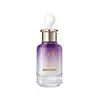
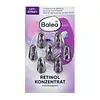
This anti-aging ampoule is formulated around Niacinamide and Retinol to soften the look of wrinkles and refine skin texture.


What's inside
What's inside
 Key Ingredients
Benefits
Concerns
Ingredients Side-by-side
Water
Skin ConditioningGlycerin
Humectant


Butylene Glycol
Humectant
Niacinamide
Smoothing









1,2-Hexanediol
Skin Conditioning
Methyl Gluceth-20
Humectant
Betaine
Humectant
Glyceryl Glucoside
Humectant
Benzyl Glycol
SolventPvp
Emulsion StabilisingPolyglyceryl-10 Laurate
Skin Conditioning

Propanediol
Solvent
Ethylhexylglycerin
Skin ConditioningCarbomer
Emulsion StabilisingHelianthus Annuus Hybrid Oil
Emollient
Butyrospermum Parkii Butter
Skin Conditioning


Arginine
Masking
Allantoin
Skin Conditioning
Pullulan
Hydrolyzed Collagen
Emollient
Hydrogenated Lecithin
Emulsifying
Adenosine
Skin Conditioning
Polyglyceryl-10 Stearate
Skin Conditioning
Disodium EDTA
ChelatingXanthan Gum
EmulsifyingParfum
Masking


Caprylic/Capric Triglyceride
Masking
Methyl Methacrylate Crosspolymer
Beta-Glucan
Skin Conditioning
Cynara Scolymus Leaf Extract
Skin ConditioningFerulic Acid
Antimicrobial
Sclerotium Gum
Emulsion StabilisingAstaxanthin
Skin Conditioning
Fullerenes
AntimicrobialPentylene Glycol
Skin Conditioning
Polyglyceryl-10 Diisostearate
Emulsifying
Retinol
Skin Conditioning
Sodium Hyaluronate
Humectant
Cholesterol
Emollient
Magnolia Liliflora Bud Extract
Skin ConditioningSophora Japonica Bud Extract
Skin ProtectingRetinyl Palmitate
Skin Conditioning
Tocopheryl Acetate
Antioxidant
BHT
Antioxidant
Polyglutamic Acid
Skin Conditioning
Arachis Hypogaea Oil
Skin Conditioning
Phaseolus Radiatus Seed Extract
Skin ConditioningBHA
Antioxidant
Panax Ginseng Root Extract
Emollient
Camellia Sinensis Leaf Extract
Antimicrobial
Lactobacillus/Rice Ferment
Skin Conditioning
Propylene Glycol
Humectant
Taraxacum Officinale Leaf Extract
Skin ConditioningCaprylyl Glycol
Emollient
Polysorbate 80
Emulsifying
Avena Sativa Meal Extract
SoothingTocopherol
Antioxidant
Ubiquinone
Antioxidant
Palmitoyl Pentapeptide-4
Skin Conditioning
Palmitoyl Tripeptide-1
Skin Conditioning
Hexapeptide-9
Skin Conditioning
Acetyl Hexapeptide-8
Humectant
Tripeptide-1
Skin Conditioning
Copper Tripeptide-1
Skin Conditioning
Water, Glycerin, Butylene Glycol, Niacinamide, 1,2-Hexanediol, Methyl Gluceth-20, Betaine, Glyceryl Glucoside, Benzyl Glycol, Pvp, Polyglyceryl-10 Laurate, Propanediol, Ethylhexylglycerin, Carbomer, Helianthus Annuus Hybrid Oil, Butyrospermum Parkii Butter, Arginine, Allantoin, Pullulan, Hydrolyzed Collagen, Hydrogenated Lecithin, Adenosine, Polyglyceryl-10 Stearate, Disodium EDTA, Xanthan Gum, Parfum, Caprylic/Capric Triglyceride, Methyl Methacrylate Crosspolymer, Beta-Glucan, Cynara Scolymus Leaf Extract, Ferulic Acid, Sclerotium Gum, Astaxanthin, Fullerenes, Pentylene Glycol, Polyglyceryl-10 Diisostearate, Retinol, Sodium Hyaluronate, Cholesterol, Magnolia Liliflora Bud Extract, Sophora Japonica Bud Extract, Retinyl Palmitate, Tocopheryl Acetate, BHT, Polyglutamic Acid, Arachis Hypogaea Oil, Phaseolus Radiatus Seed Extract, BHA, Panax Ginseng Root Extract, Camellia Sinensis Leaf Extract, Lactobacillus/Rice Ferment, Propylene Glycol, Taraxacum Officinale Leaf Extract, Caprylyl Glycol, Polysorbate 80, Avena Sativa Meal Extract, Tocopherol, Ubiquinone, Palmitoyl Pentapeptide-4, Palmitoyl Tripeptide-1, Hexapeptide-9, Acetyl Hexapeptide-8, Tripeptide-1, Copper Tripeptide-1
Dimethicone
Emollient
Dicaprylyl Ether
Emollient
Squalane
Emollient
Dimethicone Crosspolymer
Emulsion Stabilising
Limnanthes Alba Seed Oil
Skin Conditioning
Tocopheryl Acetate
Antioxidant
Retinyl Palmitate
Skin Conditioning
Bakuchiol
Antimicrobial
Hydroxypinacolone Retinoate
Skin Conditioning
Tocopherol
Antioxidant
Helianthus Annuus Seed Oil
Emollient
Panax Ginseng Root Extract
Emollient
Phenoxyethanol
Preservative
Dimethyl Isosorbide
SolventParfum
Masking
Ingredients Explained
These ingredients are found in both products.
Ingredients higher up in an ingredient list are typically present in a larger amount.
Ginseng root is a well-loved ingredient in Asian skincare for good reason. It hydrates the skin, soothes irritation, and helps even out skin tone.
In traditional East Asian medicine, ginseng has been used for centuries both as food and as a healing remedy, and modern research continues to confirm its skin benefits.
One of the standout features of ginseng is its ability to improve blood circulation and oxygen delivery to the skin, bringing a fresh supply of nutrients to support overall skin health. It also has antioxidant and anti-inflammatory properties. This helps to protect your skin against damage from UV exposure, pollution, and daily stress.
Additionally, studies suggest that ginseng may help reduce hyperpigmentation by inhibiting tyrosinase, the enzyme involved in melanin production.
There are different types of ginseng used in skincare, and while they all share core benefits, their potency can vary.
Most products use fresh or white ginseng because it’s more affordable. However, red ginseng, produced by steaming the root, contains higher levels of ginsenosides, which are compounds with proven anti-aging effects. These ginsenosides help reduce the appearance of wrinkles and improve skin elasticity.
Note: All forms of ginseng are listed simply as “Panax ginseng” in ingredient lists. We recommend reaching out to the brand if you have questions about which type of ginseng is used in their ingredients.
For general antioxidant benefits, any ginseng extract will do, but for wrinkle care or firmer skin, red or fermented ginseng is often more effective.
In short, ginseng is a powerhouse ingredient that supports hydration, radiance, and resilience.
Learn more about Panax Ginseng Root ExtractParfum is a catch-all term for an ingredient or more that is used to give a scent to products.
Also called "fragrance", this ingredient can be a blend of hundreds of chemicals or plant oils. This means every product with "fragrance" or "parfum" in the ingredients list is a different mixture.
For instance, Habanolide is a proprietary trade name for a specific aroma chemical. When used as a fragrance ingredient in cosmetics, most aroma chemicals fall under the broad labeling category of “FRAGRANCE” or “PARFUM” according to EU and US regulations.
The term 'parfum' or 'fragrance' is not regulated in many countries. In many cases, it is up to the brand to define this term.
For instance, many brands choose to label themselves as "fragrance-free" because they are not using synthetic fragrances. However, their products may still contain ingredients such as essential oils that are considered a fragrance by INCI standards.
One example is Calendula flower extract. Calendula is an essential oil that still imparts a scent or 'fragrance'.
Depending on the blend, the ingredients in the mixture can cause allergies and sensitivities on the skin. Some ingredients that are known EU allergens include linalool and citronellol.
Parfum can also be used to mask or cover an unpleasant scent.
The bottom line is: not all fragrances/parfum/ingredients are created equally. If you are worried about fragrances, we recommend taking a closer look at an ingredient. And of course, we always recommend speaking with a professional.
Learn more about ParfumRetinyl Palmitate is a form of retinoid. Retinoids are the superstar class of anti-aging ingredients that include Tretinoin and Retinol.
This particular ingredient has had a bumpy year with its rise and fall in popularity.
First, Retinyl Palmitate is created from Palmitic Acid and Retinol. It is a Retinol ester and considered one of the weaker forms of retinoid.
This is because all retinoids have to be converted to Tretinoin, AKA Retinoic Acid.
Retinyl Palmitate is pretty far down the line and has to go through multiple conversions before its effects are seen. Once it's on your skin, enzymes called esterases convert it into Retinol, then into Retinal, and finally into Retinoic Acid; that's three steps with a little lost at each one.
The benefits of Retinyl Palmitate are debated due to this long and ineffective conversion line.
So why use it at all?
The answer is stability. Retinol and Retinoic Acid break down fast when they hit light, heat, and air, and Retinoic Acid can be pretty irritating on top of that.
Retinyl Palmitate is much more stable and gentler, making it easier to formulate with and easier on sensitive skin (even if it's weaker gram for gram).
Studies show Retinyl Palmitate to help:
Newer research from 2023-2025 also found that Retinyl Palmitate works especially well when paired with Retinol. The two seem to cover each other's weak spots; retinol brings the potency while Retinyl Palmitate brings the stability and gentleness. Together, they repair UV damage better than either one does alone.
This ingredient used to be found in sunscreens to boost the efficacy of sunscreen filters.
The downfall of Retinyl Palmitate was due to released reports about the ingredient being correlated to sun damage and skin tumors.
Most of this traces back to a 2012 US National Toxicology Program (NTP) study where hairless mice coated in Retinyl Palmitate cream and exposed to UV light developed skin tumors faster.
Here's the nuance, though.
When the Cosmetic Ingredient Review (CIR) Expert Panel went back through that study, they found methodological flaws and decided the results couldn't be interpreted as proof of extra risk.
The EU's Scientific Committee on Consumer Safety (SCCS) said the mouse findings might point to a concern but they're hard to apply to humans since hairless mouse skin and human skin behave differently.
While there is a study showing this ingredient to cause DNA damage when exposed to UVA, there is no concrete proof of it being linked to skin cancer. It is completely safe to use when used correctly.
Both the CIR and the SCCS consider it safe at the concentrations used in cosmetics; the SCCS specifically cleared retinoids up to 0.05% in body lotions and 0.3% in face creams, hand creams, and rinse-off products.
As of 2025, the EU has written those limits into law, plus a label warning about your total Vitamin A intake from all sources.
All retinoids increase your skin's sensitivity to the sun in the first few months of usage. Be especially careful with reapplying sunscreen when using any form of retinoid.
One more note: if you're pregnant, high doses of Vitamin A can be a concern, so a lot of people skip topical retinoids (including Retinyl Palmitate) during pregnancy just to be safe. Check with your doctor if you're unsure.
Fun fact: This ingredient is often added to low-fat milk to increase the levels of Vitamin A.
Learn more about Retinyl PalmitateTocopherol is a fat-soluble antioxidant known as Vitamin E.
You'll find this ingredient in the vast majority of skincare (for good reason). It works to neutralize free radicals, or unstable molecules generated by UV exposure, pollution, and other environmental stressors, before they can cause oxidative damage to your skin cells.
Topically applied tocopherol has been shown to protect against UV damage by ramping up the skin's own natural defense enzymes.
It also acts as a skin conditioning agent; some studies show that regular topical use can improve the skin's water-binding capacity over 2-4 weeks.
This ingredient is especially loved for being a team player. When combined with Vitamin C, the photoprotective effect of both ingredients roughly doubles and the combo also helps reduce UV-induced DNA damage.
This ingredient has some brightening potential but it's more of a prevention ingredient than spot-fader. Cell studies show it can slow down melanin production but it's worth noting that it's not the most powerful brightener out there.
In formulations, it also serves as a stabilizer that helps protect other oxidation-prone ingredients from degrading.
Concentrations usually range from 0.1-1% in most leave-on products.
Learn more about TocopherolTocopheryl Acetate is a stable, shelf-friendly form of vitamin E.
Formulators love it because plain vitamin E oxidizes quickly once it hits air. This acetate version stays stable and resists going off, helping to extend a product's shelf life.
It's actually inactive on its own and works like a slow-release "storage" form; the enzymes in your skin called esterases gradually convert it into active vitamin E over time.
One in vivo study showed 5% of the acetate in the living layer of the epidermis converted to vitamin E after 5 days of application. This study also found the skin gained protection against UV damage even though the conversion was slow and small.
Once converted, vitamin E acts as a skin's main fat-soluble antioxidant that fights free radicals to protect skin from damage.
Topical vitamin E generally boosts the skin's photoprotection, and it reduced UV-damage in animal models.
This ingredient has some brightening potential but it's more of a prevention ingredient than spot-fader. Cell studies show it can slow down melanin production but it's worth noting that it's not the most powerful brightener out there.
Overall, it has a pretty solid safety profile and has been found to be non-irritating and non-comedogenic. Allergic reactions may happen but stay rare due to how widely the ingredient gets used.
The concentration will vary depending on the formula; industry data shows 0.1% in baby lotions, 3% in lipsticks, and 5% in foot powders. You can also find this ingredient at 100% in a pure vitamin E oil.
Most leave-on skincare keeps it at the lower end, often between 0.5-1%.
Learn more about Tocopheryl Acetate

