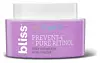
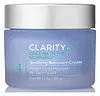
Bliss Youth Got This Prevent-4 + Pure Retinol Deep Hydration Moisturizer Versus ClarityRx Call Me In The Morning Soothing Recovery Cream
This anti-aging moisturizer is formulated around Squalane and Retinol to soften the look of wrinkles and hydrate skin.
This calming day moisturizer is formulated around Aloe Barbadensis Leaf Juice and Azulene to calm redness and hydrate skin.

What's inside
What's inside
 Key Ingredients
Benefits
Concerns
Ingredients Side-by-side
Water
Skin ConditioningPolysilicone-11


Dimethicone
Emollient
Glycerin
Humectant

Propanediol
Solvent
Undecane
EmollientSaccharide Isomerate
Humectant
Glyceryl Stearate
Emollient

Ammonium Acryloyldimethyltaurate/Vp Copolymer
Squalane
Emollient
Butyrospermum Parkii Butter
Skin Conditioning


PEG-100 Stearate
Surfactant
Retinol
Skin Conditioning






Tocopherol
Antioxidant

Sodium Ascorbate
Antioxidant
Panthenol
Skin Conditioning
Palmitoyl Tripeptide-5
Skin Conditioning
Acetyl Hexapeptide-8
Humectant
Arginine
Masking
Serine
Masking
Alanine
Masking
Glycine
Buffering
Threonine
Proline
Skin Conditioning
Lysine Hcl
Skin Conditioning
Glutamic Acid
Humectant
PCA
Humectant
Sodium PCA
Humectant
Hydrolyzed Corallina Officinalis Extract
Skin ConditioningSimmondsia Chinensis Seed Oil
Emollient
Sodium Hyaluronate
Humectant
Acacia Senegal Gum
MaskingXanthan Gum
EmulsifyingCaprylyl Glycol
Emollient
Caprylic/Capric Triglyceride
Masking
Anhydroxylitol
Humectant
Sodium Lactate
Buffering
Cetearyl Alcohol
Emollient
Tridecane
Perfuming

Xylityl Sesquicaprylate
Antimicrobial
Polyglyceryl-4 Laurate/Succinate
PEG-40 Hydrogenated Castor Oil
Emulsifying
Cetearyl Glucoside
Emulsifying
Laureth-12
EmulsifyingBetaine
Humectant
Hexylene Glycol
EmulsifyingSodium Citrate
BufferingTetrasodium Glutamate Diacetate
ChelatingPhenoxyethanol
Preservative
Ethylhexylglycerin
Skin ConditioningPotassium Sorbate
Preservative
Citric Acid
Buffering
Water, Polysilicone-11, Dimethicone, Glycerin, Propanediol, Undecane, Saccharide Isomerate, Glyceryl Stearate, Ammonium Acryloyldimethyltaurate/Vp Copolymer, Squalane, Butyrospermum Parkii Butter, PEG-100 Stearate, Retinol, Tocopherol, Sodium Ascorbate, Panthenol, Palmitoyl Tripeptide-5, Acetyl Hexapeptide-8, Arginine, Serine, Alanine, Glycine, Threonine, Proline, Lysine Hcl, Glutamic Acid, PCA, Sodium PCA, Hydrolyzed Corallina Officinalis Extract, Simmondsia Chinensis Seed Oil, Sodium Hyaluronate, Acacia Senegal Gum, Xanthan Gum, Caprylyl Glycol, Caprylic/Capric Triglyceride, Anhydroxylitol, Sodium Lactate, Cetearyl Alcohol, Tridecane, Xylityl Sesquicaprylate, Polyglyceryl-4 Laurate/Succinate, PEG-40 Hydrogenated Castor Oil, Cetearyl Glucoside, Laureth-12, Betaine, Hexylene Glycol, Sodium Citrate, Tetrasodium Glutamate Diacetate, Phenoxyethanol, Ethylhexylglycerin, Potassium Sorbate, Citric Acid
Aloe Barbadensis Leaf Juice
Skin Conditioning
Carthamus Tinctorius Seed Oil
Masking
Stearic Acid
Cleansing
Cetyl Alcohol
Emollient
Dimethicone
Emollient
Algin
MaskingHumulus Lupulus Extract
AntimicrobialRosmarinus Officinalis Leaf Extract
AntimicrobialSponge Extract
Antioxidant
Corylus Avellana Seed Oil
Emollient
Triticum Vulgare Germ Oil
Emollient
Phenoxyethanol
Preservative
Sodium Hyaluronate
Humectant
Sodium PCA
Humectant
Ethanolamine
BufferingPersea Gratissima Oil
Skin Conditioning
Azulene
Skin Conditioning
Tocopheryl Acetate
Antioxidant
Retinyl Palmitate
Skin Conditioning
Ascorbyl Palmitate
Antioxidant
Panthenol
Skin Conditioning
Panax Ginseng Root Extract
Emollient
Allantoin
Skin Conditioning
Potassium Sorbate
Preservative
Sodium Benzoate
Masking
Citric Acid
Buffering
Aloe Barbadensis Leaf Juice, Carthamus Tinctorius Seed Oil, Stearic Acid, Cetyl Alcohol, Dimethicone, Algin, Humulus Lupulus Extract, Rosmarinus Officinalis Leaf Extract, Sponge Extract, Corylus Avellana Seed Oil, Triticum Vulgare Germ Oil, Phenoxyethanol, Sodium Hyaluronate, Sodium PCA, Ethanolamine, Persea Gratissima Oil, Azulene, Tocopheryl Acetate, Retinyl Palmitate, Ascorbyl Palmitate, Panthenol, Panax Ginseng Root Extract, Allantoin, Potassium Sorbate, Sodium Benzoate, Citric Acid
Ingredients Explained
These ingredients are found in both products.
Ingredients higher up in an ingredient list are typically present in a larger amount.
Citric Acid is an alpha hydroxy acid (AHA) naturally found in citrus fruits like oranges, lemons, and limes.
Like other AHAs, citric acid can exfoliate skin by breaking down the bonds that hold dead skin cells together. This helps reveal smoother and brighter skin underneath.
However, this exfoliating effect only happens at high concentrations (20%) which can be hard to find in cosmetic products.
Due to this, citric acid is usually included in small amounts as a pH adjuster. This helps keep products slightly more acidic and compatible with skin's natural pH.
In skincare formulas, citric acid can:
While it can provide some skin benefits, research shows lactic acid and glycolic acid are generally more effective and less irritating exfoliants.
Most citric acid used in skincare today is made by fermenting sugars (usually from molasses). This synthetic version is identical to the natural citrus form but easier to stabilize and use in formulations.
Rosacea skin has a lower threshold for acids generally, with 62.5% of rosacea subjects in one study reacting to lactic acid in a sting test. This is why we mark citric acid as a potential rosacea trigger.
However, this ingredient shows up as a pH adjuster or chelator at roughly 0.1-1% in many products. These low levels are unlikely to be an issue for rosacea skin and becomes a potential trigger at exfoliating concentrations (20%). Because everybody's skin is unique, we recommend a patch test if you are unsure.
Learn more about Citric AcidDimethicone is a type of synthetic silicone created from natural materials such as quartz. It is also known as polydimethylsiloxane.
What it does:
Dimethicone comes in different viscosities:
Depending on the viscosity, dimethicone has different properties.
Ingredients lists don't always show which type is used, so we recommend reaching out to the brand if you have questions about the viscosity.
This ingredient is unlikely to cause irritation because it does not get absorbed into skin. However, people with silicone allergies should be careful about using this ingredient.
Note: Dimethicone may contribute to pilling. This is because it is not oil or water soluble, so pilling may occur when layered with products. When mixed with heavy oils in a formula, the outcome is also quite greasy.
Learn more about DimethiconePanthenol is a common ingredient that helps hydrate and soothe the skin. It is found naturally in our skin and hair.
There are two forms of panthenol: D and L.
D-panthenol is also known as dexpanthenol. Most cosmetics use dexpanthenol or a mixture of D and L-panthenol.
Panthenol is famous due to its ability to go deeper into the skin's layers. Using this ingredient has numerous pros (and no cons):
Like hyaluronic acid, panthenol is a humectant. Humectants are able to bind and hold large amounts of water to keep skin hydrated.
This ingredient works well for wound healing. It works by increasing tissue in the wound and helps close open wounds.
Once oxidized, panthenol converts to pantothenic acid. Panthothenic acid is found in all living cells.
This ingredient is also referred to as pro-vitamin B5.
Learn more about PanthenolPhenoxyethanol is one of the most widely used preservatives in skincare (and for good reason!).
It has a large spectrum of antimicrobial activity and especially effective bacteria, yeast, and mold while only having a weak effect on your skin's natural microbiome.
On a cellular level, it disrupts the cell membranes of microbes by poking holes that make the cell leak. This shuts down the chemical reactions the microbe needs to make energy so it can no longer survive.
Another perk of this ingredient is that it stays functional across a wide pH range (3-10).
You'll often see it paired with boosters like Ethylhexylglycerin; one study showed that a 1:9 ratio of Ethylhexylglycerin to Phenoxyethanol damages bacterial membranes as effectively as doubling the Phenoxyethanol concentration on its own.
Typical use concentrations range from 0.3-1% depending on the formula, and this ingredient is capped at 1% int the EU.
Safety-wise, the fear mongering does not hold up to the evidence. The EU's Scientific Committee on Consumer Safety and FDA consider it safe as a preservative at up to 1%, including for children of all ages.
Adverse systemic effects only showed up in animal studies at exposures roughly 200x higher than what people get from cosmetics. And despite its very widespread use, this ingredient is a rare sensitizer and allergic reactions are uncommon.
Learn more about PhenoxyethanolPotassium Sorbate is a preservative used to prevent yeast and mold in products. It is commonly found in both cosmetic and food products.
This ingredient comes from potassium salt derived from sorbic acid. Sorbic acid is a natural antibiotic and effective against fungus.
Both potassium sorbate and sorbic acid can be found in baked goods, cheeses, dried meats, dried fruit, ice cream, pickles, wine, yogurt, and more.
You'll often find this ingredient used with other preservatives.
Learn more about Potassium SorbateSodium Hyaluronate is the salt form of hyaluronic acid. It is a long sugar chain that is naturally found in your skin, joints, and connective tissue that maintains hydration and elasticity.
In skincare, it works as a humectant. It pulls water from the environment and deeper layers of skin and binds it to the surface.
Interestingly, the size of the molecule affects its behavior:
Some clinical evidence links low molecular weight versions to improved wrinkle depth, elasticity, anti-inflammatory effects, and barrier repair.
Many serums use a blend of both weights so you can get surface hydration plus longer-lasting and deeper effects.
You'll typically see concentrations between 0.1-2% for this ingredient.
Learn more about Sodium HyaluronateSodium PCA (the salt of PCA) is one of the most well-established humectants in skincare.
Why is it so special? Your skin already makes it naturally; it's a natural component of your skin's Natural Moisturizing Factor (NMF), or the mix of water-binding compounds inside your skin cells that keeps things soft and hydrated.
As a cosmetic ingredient, it grabs water and holds it in the upper layers of skin to smooth roughness and ease dehydration.
There's some clinical support for the NMF approach with a study showing that a cream built to mimic the skin's NMF significantly boosted hydration.
Safety-wise, this ingredient non-irritating, non-comedogenic, and non-phototoxic in testing, with minimal skin absorption.
It also works really well with other hydrators like glycerin or hyaluronic acid, and typical usage is somewhere between 0.2-4%.
Learn more about Sodium PCA

