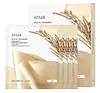
This brightening sheet mask is formulated around Niacinamide and Oryza Sativa Extract to brighten dull-looking skin and hydrate skin.

What's inside
What's inside
 Key Ingredients
Benefits
Concerns
Ingredients Side-by-side
Oryza Sativa Bran Water
Masking
Water
Skin ConditioningDipropylene Glycol
HumectantHydrogenated Polydecene
Emollient1,2-Hexanediol
Skin Conditioning
Glycerin
Humectant

Niacinamide
Smoothing









Acrylates Copolymer
Ceratonia Siliqua Gum
EmollientXanthan Gum
EmulsifyingCarrageenan



Hydroxyacetophenone
Antioxidant
Oryza Sativa Extract
Absorbent
Sucrose
Humectant
Allantoin
Skin Conditioning
Potassium Chloride
Oryza Sativa Hull Powder
Abrasive
Sodium Polyacrylate
Absorbent
Dipotassium Glycyrrhizate
Humectant
Cellulose Gum
Emulsion StabilisingGellan Gum
Caprylyl Glycol
Emollient
Adenosine
Skin Conditioning
Butylene Glycol
Humectant
Panthenol
Skin Conditioning
Ethylhexylglycerin
Skin ConditioningSodium Phytate
ChelatingIron Oxides
Soluble Collagen
Humectant
Sodium Hyaluronate
Humectant
CI 77491
Cosmetic ColorantHydroxypropyltrimonium Hyaluronate
Phytosphingosine
Skin Conditioning
Oryza Sativa Seed Protein
Antioxidant
Hydrolyzed Rice Protein
Skin ConditioningCeramide NP
Skin Conditioning
Sodium Acetylated Hyaluronate
Humectant
Hydrolyzed Hyaluronic Acid
Humectant
Hyaluronic Acid
Humectant
Sodium Hyaluronate Crosspolymer
Humectant
Hydrolyzed Sodium Hyaluronate
Skin Conditioning
Potassium Hyaluronate
Skin ConditioningOryza Sativa Bran Water, Water, Dipropylene Glycol, Hydrogenated Polydecene, 1,2-Hexanediol, Glycerin, Niacinamide, Acrylates Copolymer, Ceratonia Siliqua Gum, Xanthan Gum, Carrageenan, Hydroxyacetophenone, Oryza Sativa Extract, Sucrose, Allantoin, Potassium Chloride, Oryza Sativa Hull Powder, Sodium Polyacrylate, Dipotassium Glycyrrhizate, Cellulose Gum, Gellan Gum, Caprylyl Glycol, Adenosine, Butylene Glycol, Panthenol, Ethylhexylglycerin, Sodium Phytate, Iron Oxides, Soluble Collagen, Sodium Hyaluronate, CI 77491, Hydroxypropyltrimonium Hyaluronate, Phytosphingosine, Oryza Sativa Seed Protein, Hydrolyzed Rice Protein, Ceramide NP, Sodium Acetylated Hyaluronate, Hydrolyzed Hyaluronic Acid, Hyaluronic Acid, Sodium Hyaluronate Crosspolymer, Hydrolyzed Sodium Hyaluronate, Potassium Hyaluronate
Water
Skin ConditioningKaolin
Abrasive
Honey
Humectant
Glycerin
Humectant
Propanediol
Solvent
Dipropylene Glycol
HumectantOryza Sativa Hull Powder
Abrasive
Isononyl Isononanoate
Emollient1,2-Hexanediol
Skin Conditioning
Cetyl Alcohol
Emollient


Caprylic/Capric Triglyceride
Masking
Polyglyceryl-3 Methylglucose Distearate
Emulsifying
Glyceryl Stearate
Emollient
Butylene Glycol
Humectant
Oryza Sativa Bran
Abrasive
Oryza Sativa Lees Extract
Skin ConditioningOryza Sativa Extract
Absorbent
Honey Extract
Humectant
Bentonite
Absorbent
Palmitic Acid
Emollient
Stearic Acid
Cleansing
Behenyl Alcohol
Emollient
Cellulose
Absorbent
Zea Mays Starch
Absorbent
Xanthan Gum
EmulsifyingHydroxyacetophenone
Antioxidant
Potassium Cetyl Phosphate
EmulsifyingEthylhexylglycerin
Skin ConditioningPolyacrylate-13
Hydrogenated Polyisobutene
EmollientSodium Phytate
ChelatingPolyglyceryl-10 Laurate
Skin Conditioning
Ethylhexyl Palmitate
Emollient
Sorbitan Isostearate
Emulsifying
Menthyl Lactate
Masking
Water, Kaolin, Honey, Glycerin, Propanediol, Dipropylene Glycol, Oryza Sativa Hull Powder, Isononyl Isononanoate, 1,2-Hexanediol, Cetyl Alcohol, Caprylic/Capric Triglyceride, Polyglyceryl-3 Methylglucose Distearate, Glyceryl Stearate, Butylene Glycol, Oryza Sativa Bran, Oryza Sativa Lees Extract, Oryza Sativa Extract, Honey Extract, Bentonite, Palmitic Acid, Stearic Acid, Behenyl Alcohol, Cellulose, Zea Mays Starch, Xanthan Gum, Hydroxyacetophenone, Potassium Cetyl Phosphate, Ethylhexylglycerin, Polyacrylate-13, Hydrogenated Polyisobutene, Sodium Phytate, Polyglyceryl-10 Laurate, Ethylhexyl Palmitate, Sorbitan Isostearate, Menthyl Lactate
Reviews
Ingredients Explained
These ingredients are found in both products.
Ingredients higher up in an ingredient list are typically present in a larger amount.
1,2-Hexanediol is a synthetic liquid and another multi-functional powerhouse.
It is a:
- Humectant, drawing moisture into the skin
- Emollient, helping to soften skin
- Solvent, dispersing and stabilizing formulas
- Preservative booster, enhancing the antimicrobial activity of other preservatives
Butylene Glycol (or BG) is used within cosmetic products for a few different reasons:
Overall, Butylene Glycol is a safe and well-rounded ingredient that works well with other ingredients.
Though this ingredient works well with most skin types, some people with sensitive skin may experience a reaction such as allergic rashes, closed comedones, or itchiness.
Learn more about Butylene GlycolDipropylene Glycol is a synthetically created humectant, stabilizer, and solvent.
This ingredient helps:
Dipropylene glycol is technically an alcohol, but it belongs to the glycol family (often considered part of the ‘good’ alcohols). This means it is hydrating and gentle on skin unlike drying solvent alcohols like denatured alcohol.
As a masking agent, Dipropylene Glycol can be used to cover the smell of other ingredients. However, it does not have a scent.
Studies show Dipropylene Glycol is considered safe to use in skincare.
Learn more about Dipropylene GlycolEthylhexylglycerin is created from glycerin. It is a multitasker ingredient that:
The CIR Expert Panel found minimal skin absorption or sensitization of any kind in a safety assessment. Though this ingredient is considered well-tolerated, a small number of cases of allergic dermatitis have been published since 2002. Just be sure to patch test if you are unsure.
Industry-reported use ranges from 8% in rinse-off products and 2% in leave-on formulations.
Learn more about EthylhexylglycerinGlycerin (or glycerol) is a compound naturally found in your skin. It's a powerhouse humectant that pulls water into the stratum corneum.
Topically, glycerin does several things at once:
Your skin makes glycerin on its own (mostly from sebaceous oil breakdown) and shuttles it to your outermost layer of skin, or your epidermis, via aquaporin-3.
Aquaporin-3 is a transporter that is essential for normal skin hydration, elasticity, and repair. Interestingly, mice lacking in AQP3 have dry and less elastic skin that can be fully corrected with glycerin.
This ingredient is non-irritating, plays well with almost every ingredient, and works across all skin types. Typical use is anywhere between 3-10% but can go up to 79% in some leave-on products.
Just know very high concentrations (>40%) can feel tacky in low humidity.
Glycerin is the name for this ingredient in American English. British English uses Glycerol/Glycerine.
Learn more about GlycerinHydroxyacetophenone is a small phenolic molecule that earns its place in a formulas as an antioxidant and preservative booster.
As a phenol, it is able to neutralize free radicals to protect both the product and the skin from oxidative stress.
Though it can't kill microbes on its own, it works as a good supporting agent when combined with other preservatives like Phenoxyethanol or 1,2-Hexanediol.
This ingredient naturally occurs as piceol in Norwegian spruce needles (~0.4-1.1% dry weight and in cloudberries). Though the cosmetic-grade material is synthesized for purity and consistency.
You'll usually see it used at low levels and suppliers recommend up to 1% added to a water phase.
Safety testing was done at concentrations like 0.05% in SPF products and 0.5% in a Human Repeated Insult Patch Test. The safety evidence is assuring; this ingredient is safe for cosmetics in current use and also holds safety status as a food flavoring as well.
An honest caveat: the "soothing" and "anti-inflammatory" claims come mostly from supplier marketing rather than published clinical trials. The Cosmetic Ingredient Review's own literature search found no useful efficacy studies on this ingredient.
So the antioxidant and preservative-boosting roles are the well supported ones while the calming benefit is plausible but thinly evidenced.
Overall, this is a well-tolerated, low-irritation multitasker that quietly helps a formula stay fresh and stable.
Learn more about HydroxyacetophenoneOryza Sativa Extract comes from the rice grain, Oryza sativa. Rice extract has wound healing, antioxidant, anti-inflammatory, and hydrating properties.
Rice grains contain numerous antioxidants which may help with anti-aging, such as vitamin E. Antioxidants help stabilize free-radical molecules. Unstable free-radical molecules may damage your skin cells and accelerate signs of aging.
A study from 2002 found rice to help increase the rate of wound healing. The same study found an improvement of skin barrier function in the patients after taking rice baths.
Numerous in-vitro studies have found rice water to help decrease sun damage by increasing collagen production and inhibiting the process of tyrosinase.
Long story short- tyrosinase is an enzyme that controls melanin production. Our bodies start producing melanin (AKA tanning) when exposed to UV radiation to protect against damage. Rice water is found to partially block this process.
Though more research is needed on rice's ability to help with UV protection, recent studies seem promising.
Wondering why rice is hydrating? The protein in rice have emollient properties. Emollients create a barrier on the skin to trap moisture in, keeping your skin moisturized.
Some rice extract may have mildly-exfoliating properties. These are mainly limited to Oryza Sativa (Rice) Bran and Oryza Sativa (Rice) Germ Powder.
This rice was first cultivated in China over 10,000 years ago. Many cultures throughout Asia have used rice water on skin and hair for centuries.
Learn more about Oryza Sativa ExtractOryza Sativa Hull Powder is an exfoliant.
Sodium Phytate is the sodium salt of Phytic acid, a compound that plants store phosphorus in. It's the plant-derived alternative to ingredients like Disodium EDTA.
In skincare, this ingredient is a chelator that grabs onto trace metal ions like iron and copper that sneak into formulas through water/raw materials.
Those metals speed up oxidation so binding them keeps oils, fragrance, and actives from going off, stops color changes, and helps the preservative system work harder.
Survey data shows usage levels range from 0.0099%-0.5% in leave-on products, 0.025%-0.3% in rinse-off, and up to 0.05% in eye-area products. Suppliers typically recommend a range between 0.05-0.5%.
Learn more about Sodium PhytateWater. It's the most common cosmetic ingredient of all. You'll usually see it at the top of ingredient lists, meaning that it makes up the largest part of the product.
So why is it so popular? Water most often acts as a solvent - this means that it helps dissolve other ingredients into the formulation.
You'll also recognize water as that liquid we all need to stay alive. If you see this, drink a glass of water. Remember to stay hydrated!
Learn more about WaterXanthan gum is used as a stabilizer and thickener within cosmetic products. It helps give products a sticky, thick feeling - preventing them from being too runny.
On the technical side of things, xanthan gum is a polysaccharide - a combination consisting of multiple sugar molecules bonded together.
Xanthan gum is a pretty common and great ingredient. It is a natural, non-toxic, non-irritating ingredient that is also commonly used in food products.
Learn more about Xanthan Gum

