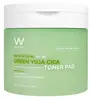
This calming toner pad uses a pre-saturated pad with Panthenol and Centella Asiatica Extract to calm redness and refine skin texture.
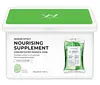
This hydrating sheet mask is formulated around Allantoin and Dipotassium Glycyrrhizate to hydrate skin and calm redness.

What's inside
What's inside
 Key Ingredients
Benefits
Concerns
Ingredients Side-by-side
Water
Skin ConditioningGlycerin
Humectant


Butylene Glycol
Humectant
1,2-Hexanediol
Skin Conditioning
C12-14 Alketh-12
EmulsifyingPolyglyceryl-10 Laurate
Skin Conditioning

Panthenol
Skin Conditioning

Disodium EDTA
ChelatingCarbomer
Emulsion StabilisingAllantoin
Skin Conditioning
Tromethamine
BufferingMalt Extract
Skin ProtectingCaprylic/Capric Triglyceride
Masking
Centella Asiatica Extract
Cleansing

Lactobionic Acid
Buffering




Bifida Ferment Lysate
Skin Conditioning
Gardenia Florida Fruit Extract
Skin ConditioningCitrus Junos Fruit Extract
Skin ConditioningMenthyl Lactate
Masking
Ethyl Menthane Carboxamide
TonicDextrin
AbsorbentCynanchum Atratum Extract
Skin ConditioningMethyl Diisopropyl Propionamide
MaskingMadecassoside
Antioxidant
Sodium Hyaluronate
Humectant
Mentha Rotundifolia Leaf Extract
TonicCamellia Sinensis Leaf Extract
Antimicrobial
Thymus Vulgaris Leaf Extract
Skin ProtectingHydrolyzed Hyaluronic Acid
Humectant
Sodium Acetylated Hyaluronate
Humectant
Copper Tripeptide-1
Skin Conditioning
Acetyl Hexapeptide-8
Humectant
Palmitoyl Pentapeptide-4
Skin Conditioning
Madecassic Acid
Skin Conditioning
Asiaticoside
Antioxidant
Asiatic Acid
Skin Conditioning
Ethylhexylglycerin
Skin ConditioningRosmarinus Officinalis Leaf Oil
Masking
Water, Glycerin, Butylene Glycol, 1,2-Hexanediol, C12-14 Alketh-12, Polyglyceryl-10 Laurate, Panthenol, Disodium EDTA, Carbomer, Allantoin, Tromethamine, Malt Extract, Caprylic/Capric Triglyceride, Centella Asiatica Extract, Lactobionic Acid, Bifida Ferment Lysate, Gardenia Florida Fruit Extract, Citrus Junos Fruit Extract, Menthyl Lactate, Ethyl Menthane Carboxamide, Dextrin, Cynanchum Atratum Extract, Methyl Diisopropyl Propionamide, Madecassoside, Sodium Hyaluronate, Mentha Rotundifolia Leaf Extract, Camellia Sinensis Leaf Extract, Thymus Vulgaris Leaf Extract, Hydrolyzed Hyaluronic Acid, Sodium Acetylated Hyaluronate, Copper Tripeptide-1, Acetyl Hexapeptide-8, Palmitoyl Pentapeptide-4, Madecassic Acid, Asiaticoside, Asiatic Acid, Ethylhexylglycerin, Rosmarinus Officinalis Leaf Oil
Water
Skin ConditioningButylene Glycol
Humectant
Dipropylene Glycol
HumectantHydroxyethylcellulose
Emulsion Stabilising1,2-Hexanediol
Skin Conditioning
Chlorphenesin
Antimicrobial
Arginine
Masking
Carbomer
Emulsion StabilisingGlycerin
Humectant
Allantoin
Skin Conditioning
Disodium EDTA
ChelatingPolyglyceryl-10 Laurate
Skin Conditioning
Polyglyceryl-4 Laurate
Emulsifying
Parfum
Masking



Trehalose
Humectant
Dipotassium Glycyrrhizate
Humectant
Caprylyl/Capryl Glucoside
CleansingSodium Hyaluronate
Humectant
Glyceryl Acrylate/Acrylic Acid Copolymer
HumectantPolysorbate 60
Emulsifying
Disodium Phosphate
BufferingPropylene Glycol
Humectant
Pvm/Ma Copolymer
Emulsion StabilisingEthylhexylglycerin
Skin ConditioningSodium Phosphate
BufferingNiacinamide
Smoothing

Calcium Pantothenate
Sodium Starch Octenylsuccinate
AbsorbentMaltodextrin
Absorbent
Sea Water
HumectantSodium Ascorbyl Phosphate
Antioxidant
Jellyfish Extract
HumectantGlycine
Buffering
Pyridoxine Hcl
Skin ConditioningTocopheryl Acetate
Antioxidant
Serine
Masking
Glutamic Acid
Humectant
Hyaluronic Acid
Humectant
Aspartic Acid
Masking
Leucine
Skin ConditioningHydrolyzed Hyaluronic Acid
Humectant
Hydrolyzed Sodium Hyaluronate
Skin Conditioning
Alanine
Masking
Lysine
Skin ConditioningTyrosine
MaskingAcacia Senegal Gum
MaskingPhenylalanine
Masking
Proline
Skin Conditioning
Threonine
Valine
MaskingIsoleucine
Skin ConditioningHistidine
Humectant
Cysteine
Antioxidant
Methionine
Skin ConditioningCoptis Japonica Root Extract
Skin ConditioningHydrolyzed Glycosaminoglycans
HumectantHydrogenated Lecithin
Emulsifying
Acorus Calamus Root Extract
Perfuming
Citrus Grandis Seed Extract
Astringent
Schisandra Chinensis Fruit Extract
Skin Conditioning
Silica
Abrasive
Glycyrrhiza Glabra Root Extract
Bleaching
Zingiber Officinale Root Extract
Masking
Perilla Ocymoides Leaf Extract
TonicCamellia Sinensis Leaf Extract
Antimicrobial
Peat Water
Skin ConditioningHydroxypropyl Methylcellulose
Emulsion StabilisingCitric Acid
Buffering
Copper Tripeptide-1
Skin Conditioning
Hydroxypropyltrimonium Hyaluronate
Palmitoyl Pentapeptide-4
Skin Conditioning
Acetyl Hexapeptide-8
Humectant
Sodium Hyaluronate Crosspolymer
Humectant
Sodium Acetylated Hyaluronate
Humectant
Dimethylsilanol Hyaluronate
Humectant
Palmitoyl Tripeptide-1
Skin Conditioning
Palmitoyl Tetrapeptide-7
Skin Conditioning
Potassium Sorbate
Preservative
Linalool
Perfuming
Water, Butylene Glycol, Dipropylene Glycol, Hydroxyethylcellulose, 1,2-Hexanediol, Chlorphenesin, Arginine, Carbomer, Glycerin, Allantoin, Disodium EDTA, Polyglyceryl-10 Laurate, Polyglyceryl-4 Laurate, Parfum, Trehalose, Dipotassium Glycyrrhizate, Caprylyl/Capryl Glucoside, Sodium Hyaluronate, Glyceryl Acrylate/Acrylic Acid Copolymer, Polysorbate 60, Disodium Phosphate, Propylene Glycol, Pvm/Ma Copolymer, Ethylhexylglycerin, Sodium Phosphate, Niacinamide, Calcium Pantothenate, Sodium Starch Octenylsuccinate, Maltodextrin, Sea Water, Sodium Ascorbyl Phosphate, Jellyfish Extract, Glycine, Pyridoxine Hcl, Tocopheryl Acetate, Serine, Glutamic Acid, Hyaluronic Acid, Aspartic Acid, Leucine, Hydrolyzed Hyaluronic Acid, Hydrolyzed Sodium Hyaluronate, Alanine, Lysine, Tyrosine, Acacia Senegal Gum, Phenylalanine, Proline, Threonine, Valine, Isoleucine, Histidine, Cysteine, Methionine, Coptis Japonica Root Extract, Hydrolyzed Glycosaminoglycans, Hydrogenated Lecithin, Acorus Calamus Root Extract, Citrus Grandis Seed Extract, Schisandra Chinensis Fruit Extract, Silica, Glycyrrhiza Glabra Root Extract, Zingiber Officinale Root Extract, Perilla Ocymoides Leaf Extract, Camellia Sinensis Leaf Extract, Peat Water, Hydroxypropyl Methylcellulose, Citric Acid, Copper Tripeptide-1, Hydroxypropyltrimonium Hyaluronate, Palmitoyl Pentapeptide-4, Acetyl Hexapeptide-8, Sodium Hyaluronate Crosspolymer, Sodium Acetylated Hyaluronate, Dimethylsilanol Hyaluronate, Palmitoyl Tripeptide-1, Palmitoyl Tetrapeptide-7, Potassium Sorbate, Linalool
Reviews
Ingredients Explained
These ingredients are found in both products.
Ingredients higher up in an ingredient list are typically present in a larger amount.
1,2-Hexanediol is a synthetic liquid and another multi-functional powerhouse.
It is a:
- Humectant, drawing moisture into the skin
- Emollient, helping to soften skin
- Solvent, dispersing and stabilizing formulas
- Preservative booster, enhancing the antimicrobial activity of other preservatives
Acetyl Hexapeptide-8 (also known as Argireline) is a synthetic hexapeptide that is often called a "topical Botox alternative".
It works by mimicking how Botox relaxes muscles; it interferes with the signaling process that tells your facial muscles to contract. This can help soften expression lines like forehead wrinkles or crow's feet over time.
The comparison to Botox does have limits because the molecule is water-loving and relatively large.
Acetyl Hexapeptide-8 has a hard time absorbing deeply enough through the skin's outer barrier to actually reach the muscles.
So whether it truly works the way Botox does at a biological level is still up for debate, but early clinical outcomes are fairly encouraging.
A 12 week human study of a multi-ingredient regimen containing this ingredient saw:
While some studies have observed improvements in wrinkle appearance, it is important to note that more consistent results are seen in multi-ingredient formulations (vs just Acetyl Hexapeptide-8 alone).
Some research studies also used higher concentrations (up to 10%) while this ingredient is usually found in concentrations up to 0.005% in leave-on formulations.
Learn more about Acetyl Hexapeptide-8Allantoin is a soothing ingredient known for its protective and moisturizing properties; it's basically a quiet workhorse ingredient you can find in a huge range of cosmetics.
Though it can be derived from the comfrey plant, allantoin is produced synthetically for cosmetic products to ensure purity.
Research shows it can encourage your skin cells to turn over and renew by stimulating keratinocyte and fibroblast proliferation.
It also has mild keratolytic properties to help loosen and shed dead skin cells without being harsh.
Studies also suggest allantoin can help calm inflammation by dialing down some of the chemical signals your skin sends out when it is irritated.
This ingredient is typically used in the 0.1-0.5% range, and the FDA recognizes it as a skin protectant in OTC products up to 2%.
Overall, allantoin is a wonderful addition to most routines; it is stable across a wide pH range (~4-8), works well with other ingredients, and is considered non-sensitizing/non-irritating.
Fun fact: Allantoin is naturally occurring in comfrey root, beets, chamomile, and wheat sprouts. Our bodies even produce it as a byproduct of uric acid metabolism.
Learn more about AllantoinButylene Glycol (or BG) is used within cosmetic products for a few different reasons:
Overall, Butylene Glycol is a safe and well-rounded ingredient that works well with other ingredients.
Though this ingredient works well with most skin types, some people with sensitive skin may experience a reaction such as allergic rashes, closed comedones, or itchiness.
Learn more about Butylene GlycolCamellia Sinensis Leaf Extract (tea extract) is one of the most well-researched plant extracts in skincare with an impressive resume.
Black tea, green tea, and oolong tea are all harvested from the Camellia Sinensis plant.
Studies show green tea extract and its catechins (like epigallocatechin gallate (EGCG)) help your skin cells product energy more efficiently and reducing the number of free-radicals that can damage your skin from the inside.
In lab-grown skin models, this translated to younger, healthier, and stronger skin.
There's also good sun protection data; researchers saw less DNA damage and redness on human skin when green tea was applied before UVB exposure. And the more they applied, the better the protection.
Needless to say, this ingredient shouldn't replace your sunscreen. But it is a great supportive ingredient that you can already find in many sunscreens and antioxidant serums.
A 2009 study found a 2% green tea lotion was effective for mild-to-moderate acne thanks to its anti-inflammatory and mild antimicrobial activity.
The quality of the extract matters a lot here:
Good extracts contain 50-90% catechins while lower quality ones are mostly there for marketing. We recommend reaching out to the brand if you have questions about the quality or source of their ingredients.
Human Repeated Insult Patch Testing showed no irritation or sensitization at use concentrations (0.86% in leave-on products and up to 30% as leaf water).
Learn more about Camellia Sinensis Leaf ExtractCarbomer is a synthetic thickening and gelling agent. It's basically the ingredient that gives a lot of serums, gels, creams, and sunscreens their smooth, non-sticky texture.
Although legally permitted at very high levels, carbomers are normally used at concentrations below 1%.
It also needs to be neutralized to actually thicken, and because it is a large molecule, it doesn't really penetrate the skin barrier.
Allergy-wise, the risk is very low. Clinical studies show carbomers have low potential for skin irritation/sensitization even at concentrations up to 100%.
A 2024 UK study patch-tested 1,302 patients and found true allergy to the parent group of carbomer to be rare with no confirmed relevant reactions.
Learn more about CarbomerCopper Tripeptide-1 (GHK-Cu) is a skin repairing ingredient said to boost collagen, improve firmness, and support skin regeneration.
It is a complex made up of a naturally occurring peptide (glycine-histidine-lysine) and copper, an essential trace element.
While studying wound healing, researchers noticed GHK-Cu stimulated hair follicle enlargement and growth by keeping hair in its active growth phase longer. This has made it a promising ingredient for hair regrowth treatments.
Some people have reported increased facial hair. While GHK-Cu can make your hair follicles bigger, it usually doesn’t turn soft, barely-visible facial hairs into thick, dark ones.
Anecdotal reports suggest that overusing copper peptides might lead to premature aging due to excess free copper or enzyme imbalances. This claim isn’t backed by large-scale studies.
Unfortunately, there are limited human studies for this ingredient. While early results are promising, many studies are either small, in-vitro, or not rigorously controlled.
For example, there is a 1998 study that explored the effects of copper tripeptide, vitamin C, tretinoin, and melatonin on skin repair and collagen synthesis.
After one month, increased procollagen production was seen in 7 out of 10 participants using copper tripeptide (more than those using vitamin C, melatonin, or tretinoin.
While the study was exploratory, it offers early evidence that copper tripeptide may support collagen production. Larger, well-designed trials are still needed to confirm its potential and understand individual responses.
Read more about other common types of peptides here:
Learn more about Copper Tripeptide-1Disodium EDTA is a chelating agent. It grabs onto and deactivates metal ions that sneak into your products from water, packaging, or air.
This ingredient mainly works behind the scenes and helps with:
On top of that, this ingredient can counteract the effects of hard water by binding to the minerals in it.
One thing worth knowing is that Disodium EDTA has been shown to be a mild penetration enhancer. It can help other ingredients absorb into skin more effectively which can be a double-edged sword (great for actives, but can also make the active too strong if you have sensitive skin).
Clinical patch testing showed no significant skin irritation at typical use concentrations and minimal dermal absorption.
You'll most likely see this ingredient near the end of an ingredient list. It's typically found in concentrations less than 1%.
Learn more about Disodium EDTAEthylhexylglycerin is created from glycerin. It is a multitasker ingredient that:
The CIR Expert Panel found minimal skin absorption or sensitization of any kind in a safety assessment. Though this ingredient is considered well-tolerated, a small number of cases of allergic dermatitis have been published since 2002. Just be sure to patch test if you are unsure.
Industry-reported use ranges from 8% in rinse-off products and 2% in leave-on formulations.
Learn more about EthylhexylglycerinGlycerin (or glycerol) is a compound naturally found in your skin. It's a powerhouse humectant that pulls water into the stratum corneum.
Topically, glycerin does several things at once:
Your skin makes glycerin on its own (mostly from sebaceous oil breakdown) and shuttles it to your outermost layer of skin, or your epidermis, via aquaporin-3.
Aquaporin-3 is a transporter that is essential for normal skin hydration, elasticity, and repair. Interestingly, mice lacking in AQP3 have dry and less elastic skin that can be fully corrected with glycerin.
This ingredient is non-irritating, plays well with almost every ingredient, and works across all skin types. Typical use is anywhere between 3-10% but can go up to 79% in some leave-on products.
Just know very high concentrations (>40%) can feel tacky in low humidity.
Glycerin is the name for this ingredient in American English. British English uses Glycerol/Glycerine.
Learn more about GlycerinHydrolyzed Hyaluronic Acid is hyaluronic acid (HA) that is broken down into lower molecular weight fragments.
It's a humectant that pulls and holds water in the skin to help with hydration, plumpness, and reduce transepidermal water loss.
Because hydrolyzed hyaluronic acid is smaller in size, it can slip past your outermost layer of skin more easily than full-sized HA.
Most formulations will combine all sizes to get the best of both worlds.
Typical usage levels range from 0.01-1%. Any percentage higher than 2% might become goopy and tacky.
Learn more about Hydrolyzed Hyaluronic AcidYou might know this ingredient as Matrixyl. It is a synthetic peptide made up of five amino acids attached to a palmitic acid, a fatty acid that helps it absorb into skin more easily.
As a signal peptide, Matrixyl acts like a little messenger. Once it reaches your skin cells, it tells them to ramp up production of collagen, elastin, and other proteins that keep skin looking firm and smooth.
A 12 week clinical study found that a moisturizer containing just 3 ppm of Matrixyl led to a significant improvement in fine-lines and wrinkles. Another study showed an 18% reduction in wrinkle depth, 37% reduction in wrinkle thickness, and a 21% improvement in skin firmness after just 28 days of twice-daily use.
The coolest part is that it works at incredibly low concentrations (like 0.0003%) and it plays well with other actives.
The CIR (Cosmetic Ingredient Review) panel found it to be non-sensitizing across multiple tests and human patch tests also showed no irritation or sensitization.
Fun fact: Matrixyl was originally developed by French company Sederma and Procter & Gamble.
Read more about other common types of peptides here:
Learn more about Palmitoyl Pentapeptide-4Polyglyceryl-10 Laurate is a cleansing agent and emulsifier.
It rounds up dirt, oil, and grime, so they can be rinsed off easily as a cleanser.
On the emulsifier side, it keeps your formula smooth and well-mixed by playing peacekeeper for ingredients that don't naturally get along (like oil and water).
Because it has a C12 (lauric acid) fatty acid chain, this ingredient can potentially feed the Malassezia yeast that causes fungal acne. The Malassezia yeast prefers esters with C11-C24 fatty acids.
This ingredient is an ester of lauric acid and Polyglycerin-10.
Learn more about Polyglyceryl-10 LaurateSodium Acetylated Hyaluronate is a type of Hyaluronic Acid.
Hyaluronic Acids help moisturize, soothe, and protect the skin.
Read about common types of Hyaluronic Acid here:
Learn more about Sodium Acetylated HyaluronateSodium Hyaluronate is the salt form of hyaluronic acid. It is a long sugar chain that is naturally found in your skin, joints, and connective tissue that maintains hydration and elasticity.
In skincare, it works as a humectant. It pulls water from the environment and deeper layers of skin and binds it to the surface.
Interestingly, the size of the molecule affects its behavior:
Some clinical evidence links low molecular weight versions to improved wrinkle depth, elasticity, anti-inflammatory effects, and barrier repair.
Many serums use a blend of both weights so you can get surface hydration plus longer-lasting and deeper effects.
You'll typically see concentrations between 0.1-2% for this ingredient.
Learn more about Sodium HyaluronateWater. It's the most common cosmetic ingredient of all. You'll usually see it at the top of ingredient lists, meaning that it makes up the largest part of the product.
So why is it so popular? Water most often acts as a solvent - this means that it helps dissolve other ingredients into the formulation.
You'll also recognize water as that liquid we all need to stay alive. If you see this, drink a glass of water. Remember to stay hydrated!
Learn more about Water

