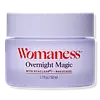
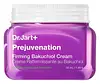
Womaness Overnight Magic Nighttime Repair Cream Versus Dr. Jart+ Prejuvenation Firming Bakuchiol Cream
This anti-aging night moisturizer is formulated around Bakuchiol and Sodium Hyaluronate to soften the look of wrinkles and strengthen the skin barrier.


What's inside
What's inside
 Key Ingredients
Benefits
Concerns
Ingredients Side-by-side
Water
Skin ConditioningDi-C12-15 Alkyl Fumarate
EmollientMyristyl Myristate
Emollient




Propanediol
Solvent

C15-19 Alkane
SolventCetyl Palmitate
Emollient
Hydrogenated Palm Oil
Emollient
Theobroma Cacao Seed Butter
Emollient
Sodium Acrylate/Sodium Acryloyldimethyl Taurate Copolymer
Emulsion StabilisingBakuchiol
Antimicrobial









Sodium Hyaluronate
Humectant
Panthenol
Skin Conditioning
Caprylyl Glycol
Emollient
Chlorphenesin
Antimicrobial
Ethylhexylglycerin
Skin ConditioningParfum
Masking


Magnesium Aluminum Silicate
Absorbent
Pentylene Glycol
Skin Conditioning
Polyglycerin-6
HumectantPolyglyceryl-6 Laurate
Emulsifying
Sodium Phytate
ChelatingSteareth-2
EmulsifyingSteareth-21
CleansingWater, Di-C12-15 Alkyl Fumarate, Myristyl Myristate, Propanediol, C15-19 Alkane, Cetyl Palmitate, Hydrogenated Palm Oil, Theobroma Cacao Seed Butter, Sodium Acrylate/Sodium Acryloyldimethyl Taurate Copolymer, Bakuchiol, Sodium Hyaluronate, Panthenol, Caprylyl Glycol, Chlorphenesin, Ethylhexylglycerin, Parfum, Magnesium Aluminum Silicate, Pentylene Glycol, Polyglycerin-6, Polyglyceryl-6 Laurate, Sodium Phytate, Steareth-2, Steareth-21
Water
Skin ConditioningGlycerin
Humectant
Butylene Glycol
Humectant
Caprylic/Capric Triglyceride
Masking
Pentaerythrityl Tetraethylhexanoate
Emollient
Bis-Behenyl/Isostearyl/Phytosteryl Dimer Dilinoleyl Dimer Dilinoleate
EmollientMethylpropanediol
SolventDicaprylyl Ether
Emollient
Polyglyceryl-3 Methylglucose Distearate
Emulsifying
Cetearyl Alcohol
Emollient
1,2-Hexanediol
Skin Conditioning
Phytosteryl/Isostearyl/Cetyl/Stearyl/Behenyl Dimer Dilinoleate
Skin Conditioning
Phenyl Trimethicone
Skin Conditioning
Panthenol
Skin Conditioning
Pentylene Glycol
Skin Conditioning
Caprylyl Methicone
Skin Conditioning
Bakuchiol
Antimicrobial
Jojoba Esters
Emollient
Cetearyl Olivate
Glyceryl Caprylate
EmollientHydrolyzed Collagen
Emollient
Adenosine
Skin Conditioning
C12-16 Alcohols
EmollientCetyl Alcohol
Emollient
Hydroxyethyl Acrylate/Sodium Acryloyldimethyl Taurate Copolymer
Emulsion StabilisingBoron Nitride
Absorbent
Sodium Polyacryloyldimethyl Taurate
Emulsion StabilisingGlyceryl Stearate Se
Emulsifying
Palmitic Acid
Emollient
Hydrogenated Lecithin
Emulsifying
Copernicia Cerifera Wax
Sorbitan Olivate
Emulsifying
Acrylates/C10-30 Alkyl Acrylate Crosspolymer
Emulsion StabilisingSorbitan Isostearate
Emulsifying
Parfum
Masking
Sodium Phytate
ChelatingTocopherol
Antioxidant
Phenoxyethanol
Preservative
Sodium Benzoate
Masking
CI 14700
Cosmetic ColorantCI 42090
Cosmetic ColorantWater, Glycerin, Butylene Glycol, Caprylic/Capric Triglyceride, Pentaerythrityl Tetraethylhexanoate, Bis-Behenyl/Isostearyl/Phytosteryl Dimer Dilinoleyl Dimer Dilinoleate, Methylpropanediol, Dicaprylyl Ether, Polyglyceryl-3 Methylglucose Distearate, Cetearyl Alcohol, 1,2-Hexanediol, Phytosteryl/Isostearyl/Cetyl/Stearyl/Behenyl Dimer Dilinoleate, Phenyl Trimethicone, Panthenol, Pentylene Glycol, Caprylyl Methicone, Bakuchiol, Jojoba Esters, Cetearyl Olivate, Glyceryl Caprylate, Hydrolyzed Collagen, Adenosine, C12-16 Alcohols, Cetyl Alcohol, Hydroxyethyl Acrylate/Sodium Acryloyldimethyl Taurate Copolymer, Boron Nitride, Sodium Polyacryloyldimethyl Taurate, Glyceryl Stearate Se, Palmitic Acid, Hydrogenated Lecithin, Copernicia Cerifera Wax, Sorbitan Olivate, Acrylates/C10-30 Alkyl Acrylate Crosspolymer, Sorbitan Isostearate, Parfum, Sodium Phytate, Tocopherol, Phenoxyethanol, Sodium Benzoate, CI 14700, CI 42090
Reviews
Ingredients Explained
These ingredients are found in both products.
Ingredients higher up in an ingredient list are typically present in a larger amount.
Bakuchiol is a plant-derived antioxidant from the seeds of the Psoralea corylifolia plant. It has antimicrobial, emollient, skin conditioning, and antioxidant properties.
You'll likely see it called a "retinol replacement" but the two are technically not related. This is because bakuchiol is able to flip many of the same switches in your skin cells to tell them to:
1) produce more collagen (type I, III, and IV)
2) activate the same genes retinoids do
Unlike retinoids, this ingredient will not increase photosensitivity and is safe to use during pregnancy (but please still check in with your doctor!).
The flagship clinical trial from Dhaliwal et al. 2019 found 0.5% bakuchiol (twice daily) and 0.5% retinol (once daily) reduced wrinkles and hyperpigmentation equally, but bakuchiol had significantly less irritation.
Systematic reviews also back this up:
Bakuchiol is comparable to retinol for photoaging but with better tolerability. It also has mild antibacterial properties against Cutibacterium acnes and antifungal activity in vitro against Candida and dermatophytes.
The reason bakuchiol works well is due to its structure; it is a meroterpene phenol, or a hybrid molecule. The phenol half acts as an antioxidant while the terpene half is fat-loving. This helps the molecule slip through the skin barrier.
This ingredient is usually used between 0.5-2%. Only one case of contact dermatitis has ever been reported for this ingredient.
Learn more about BakuchiolPanthenol is a common ingredient that helps hydrate and soothe the skin. It is found naturally in our skin and hair.
There are two forms of panthenol: D and L.
D-panthenol is also known as dexpanthenol. Most cosmetics use dexpanthenol or a mixture of D and L-panthenol.
Panthenol is famous due to its ability to go deeper into the skin's layers. Using this ingredient has numerous pros (and no cons):
Like hyaluronic acid, panthenol is a humectant. Humectants are able to bind and hold large amounts of water to keep skin hydrated.
This ingredient works well for wound healing. It works by increasing tissue in the wound and helps close open wounds.
Once oxidized, panthenol converts to pantothenic acid. Panthothenic acid is found in all living cells.
This ingredient is also referred to as pro-vitamin B5.
Learn more about PanthenolParfum is a catch-all term for an ingredient or more that is used to give a scent to products.
Also called "fragrance", this ingredient can be a blend of hundreds of chemicals or plant oils. This means every product with "fragrance" or "parfum" in the ingredients list is a different mixture.
For instance, Habanolide is a proprietary trade name for a specific aroma chemical. When used as a fragrance ingredient in cosmetics, most aroma chemicals fall under the broad labeling category of “FRAGRANCE” or “PARFUM” according to EU and US regulations.
The term 'parfum' or 'fragrance' is not regulated in many countries. In many cases, it is up to the brand to define this term.
For instance, many brands choose to label themselves as "fragrance-free" because they are not using synthetic fragrances. However, their products may still contain ingredients such as essential oils that are considered a fragrance by INCI standards.
One example is Calendula flower extract. Calendula is an essential oil that still imparts a scent or 'fragrance'.
Depending on the blend, the ingredients in the mixture can cause allergies and sensitivities on the skin. Some ingredients that are known EU allergens include linalool and citronellol.
Parfum can also be used to mask or cover an unpleasant scent.
The bottom line is: not all fragrances/parfum/ingredients are created equally. If you are worried about fragrances, we recommend taking a closer look at an ingredient. And of course, we always recommend speaking with a professional.
Learn more about ParfumPentylene Glycol (1,2-pentanediol) is a multitasking little diol with three main roles in a formula:
Research on alkanediols (the family pentylene glycol belongs to) show they work by disrupting microbial cell membranes. This disruption helps the primary preservative system in a product work more effectively at lower doses.
On the safety side, the Cosmetic Ingredient Review Expert Panel has concluded this ingredient to be safe as used in current cosmetic practices + concentrations.
Typical use levels in a formula run about 1-5%.
Learn more about Pentylene GlycolSodium Phytate is the sodium salt of Phytic acid, a compound that plants store phosphorus in. It's the plant-derived alternative to ingredients like Disodium EDTA.
In skincare, this ingredient is a chelator that grabs onto trace metal ions like iron and copper that sneak into formulas through water/raw materials.
Those metals speed up oxidation so binding them keeps oils, fragrance, and actives from going off, stops color changes, and helps the preservative system work harder.
Survey data shows usage levels range from 0.0099%-0.5% in leave-on products, 0.025%-0.3% in rinse-off, and up to 0.05% in eye-area products. Suppliers typically recommend a range between 0.05-0.5%.
Learn more about Sodium PhytateWater. It's the most common cosmetic ingredient of all. You'll usually see it at the top of ingredient lists, meaning that it makes up the largest part of the product.
So why is it so popular? Water most often acts as a solvent - this means that it helps dissolve other ingredients into the formulation.
You'll also recognize water as that liquid we all need to stay alive. If you see this, drink a glass of water. Remember to stay hydrated!
Learn more about Water

