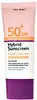
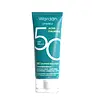
The Raw Cera-Shield Hybrid Sunscreen SPF 50+ Versus Wardah UV Shield Acne Calming Sunscreen Serum SPF 50
This hybrid sunscreen covers the full UV range and blocks ~98% of UVB at SPF 50.
This chemical sunscreen covers most of the UV range, lighter on the deep UVA that drives aging.


What's inside
What's inside
 Key Ingredients
Benefits
Concerns
Ingredients Side-by-side
Water
Skin ConditioningDipropylene Glycol
HumectantGlycerin
Humectant


Dibutyl Adipate
EmollientPhenethyl Benzoate
Emollient

Titanium Dioxide
Cosmetic Colorant

Isononyl Isononanoate
EmollientDiethylamino Hydroxybenzoyl Hexyl Benzoate
UV Filter
Coco-Caprylate/Caprate
Emollient
Bis-Ethylhexyloxyphenol Methoxyphenyl Triazine
UV Absorber
Silica
Abrasive


Ethylhexyl Triazone
UV Absorber
Polymethylsilsesquioxane

Polysilicone-15
UV Filter
Terephthalylidene Dicamphor Sulfonic Acid
UV Absorber
1,2-Hexanediol
Skin Conditioning
Potassium Cetyl Phosphate
EmulsifyingPolyglyceryl-3 Methylglucose Distearate
Emulsifying

Behenyl Alcohol
Emollient
Poly C10-30 Alkyl Acrylate
Emulsion StabilisingPolyhydroxystearic Acid
Emulsifying
Allantoin
Skin Conditioning

Tromethamine
BufferingSodium Acrylates Crosspolymer-2
AbsorbentSodium Polyacryloyldimethyl Taurate
Emulsion StabilisingHydroxyethyl Acrylate/Sodium Acryloyldimethyl Taurate Copolymer
Emulsion StabilisingAluminum Hydroxide
EmollientCaprylic/Capric Triglyceride
Masking
Hydroxyacetophenone
Antioxidant
Stearic Acid
Cleansing
Polyacrylate Crosspolymer-6
Emulsion StabilisingHydrogenated Lecithin
Emulsifying
Polyglyceryl-2 Dipolyhydroxystearate
Skin Conditioning
Ceramide NP
Skin Conditioning

Disodium EDTA
ChelatingT-Butyl Alcohol
Perfuming


Lauric Acid
Cleansing
Cetearyl Alcohol
Emollient
Palmitic Acid
Emollient
Myristic Acid
Cleansing
Ceramide Ns
Skin Conditioning
Cholesterol
Emollient
Phytosphingosine
Skin Conditioning
Ceramide AP
Skin Conditioning
Ceramide EOP
Skin Conditioning
Water, Dipropylene Glycol, Glycerin, Dibutyl Adipate, Phenethyl Benzoate, Titanium Dioxide, Isononyl Isononanoate, Diethylamino Hydroxybenzoyl Hexyl Benzoate, Coco-Caprylate/Caprate, Bis-Ethylhexyloxyphenol Methoxyphenyl Triazine, Silica, Ethylhexyl Triazone, Polymethylsilsesquioxane, Polysilicone-15, Terephthalylidene Dicamphor Sulfonic Acid, 1,2-Hexanediol, Potassium Cetyl Phosphate, Polyglyceryl-3 Methylglucose Distearate, Behenyl Alcohol, Poly C10-30 Alkyl Acrylate, Polyhydroxystearic Acid, Allantoin, Tromethamine, Sodium Acrylates Crosspolymer-2, Sodium Polyacryloyldimethyl Taurate, Hydroxyethyl Acrylate/Sodium Acryloyldimethyl Taurate Copolymer, Aluminum Hydroxide, Caprylic/Capric Triglyceride, Hydroxyacetophenone, Stearic Acid, Polyacrylate Crosspolymer-6, Hydrogenated Lecithin, Polyglyceryl-2 Dipolyhydroxystearate, Ceramide NP, Disodium EDTA, T-Butyl Alcohol, Lauric Acid, Cetearyl Alcohol, Palmitic Acid, Myristic Acid, Ceramide Ns, Cholesterol, Phytosphingosine, Ceramide AP, Ceramide EOP
Water
Skin ConditioningPropanediol
Solvent
Ethylhexyl Methoxycinnamate
UV Absorber
Butyl Methoxydibenzoylmethane
UV Absorber
Polymethyl Methacrylate
Butylene Glycol
Humectant
Octocrylene
UV Absorber
Ammonium Acryloyldimethyltaurate/Vp Copolymer
Niacinamide
Smoothing




1,2-Hexanediol
Skin Conditioning
Ethylhexyl Triazone
UV Absorber
Cetearyl Olivate
Panthenol
Skin Conditioning
Glycerin
Humectant
Allantoin
Skin Conditioning
Chlorphenesin
Antimicrobial
Propylene Glycol
Humectant
Salicylic Acid
Masking
Xanthan Gum
EmulsifyingDisodium EDTA
ChelatingLecithin
Emollient
Sorbitan Olivate
Emulsifying
Caprylhydroxamic Acid
ChelatingGlycyrrhiza Glabra Root Extract
Bleaching
Aminomethyl Propanol
BufferingPhenoxyethanol
Preservative
Artemisia Capillaris Flower Extract
Skin ConditioningCamellia Sinensis Extract
Antioxidant
Haberlea Rhodopensis Leaf Extract
Skin ConditioningBHT
Antioxidant
Potassium Sorbate
Preservative
Sodium Benzoate
Masking
Citric Acid
Buffering
Water, Propanediol, Ethylhexyl Methoxycinnamate, Butyl Methoxydibenzoylmethane, Polymethyl Methacrylate, Butylene Glycol, Octocrylene, Ammonium Acryloyldimethyltaurate/Vp Copolymer, Niacinamide, 1,2-Hexanediol, Ethylhexyl Triazone, Cetearyl Olivate, Panthenol, Glycerin, Allantoin, Chlorphenesin, Propylene Glycol, Salicylic Acid, Xanthan Gum, Disodium EDTA, Lecithin, Sorbitan Olivate, Caprylhydroxamic Acid, Glycyrrhiza Glabra Root Extract, Aminomethyl Propanol, Phenoxyethanol, Artemisia Capillaris Flower Extract, Camellia Sinensis Extract, Haberlea Rhodopensis Leaf Extract, BHT, Potassium Sorbate, Sodium Benzoate, Citric Acid
Reviews
Ingredients Explained
These ingredients are found in both products.
Ingredients higher up in an ingredient list are typically present in a larger amount.
1,2-Hexanediol is a synthetic liquid and another multi-functional powerhouse.
It is a:
- Humectant, drawing moisture into the skin
- Emollient, helping to soften skin
- Solvent, dispersing and stabilizing formulas
- Preservative booster, enhancing the antimicrobial activity of other preservatives
Allantoin is a soothing ingredient known for its protective and moisturizing properties; it's basically a quiet workhorse ingredient you can find in a huge range of cosmetics.
Though it can be derived from the comfrey plant, allantoin is produced synthetically for cosmetic products to ensure purity.
Research shows it can encourage your skin cells to turn over and renew by stimulating keratinocyte and fibroblast proliferation.
It also has mild keratolytic properties to help loosen and shed dead skin cells without being harsh.
Studies also suggest allantoin can help calm inflammation by dialing down some of the chemical signals your skin sends out when it is irritated.
This ingredient is typically used in the 0.1-0.5% range, and the FDA recognizes it as a skin protectant in OTC products up to 2%.
Overall, allantoin is a wonderful addition to most routines; it is stable across a wide pH range (~4-8), works well with other ingredients, and is considered non-sensitizing/non-irritating.
Fun fact: Allantoin is naturally occurring in comfrey root, beets, chamomile, and wheat sprouts. Our bodies even produce it as a byproduct of uric acid metabolism.
Learn more about AllantoinDisodium EDTA is a chelating agent. It grabs onto and deactivates metal ions that sneak into your products from water, packaging, or air.
This ingredient mainly works behind the scenes and helps with:
On top of that, this ingredient can counteract the effects of hard water by binding to the minerals in it.
One thing worth knowing is that Disodium EDTA has been shown to be a mild penetration enhancer. It can help other ingredients absorb into skin more effectively which can be a double-edged sword (great for actives, but can also make the active too strong if you have sensitive skin).
Clinical patch testing showed no significant skin irritation at typical use concentrations and minimal dermal absorption.
You'll most likely see this ingredient near the end of an ingredient list. It's typically found in concentrations less than 1%.
Learn more about Disodium EDTAEthylhexyl Triazone (aka Octyl Triazone) is an oil-soluble organic UVB filter. It has peak absorption around 314 nm, right in the middle of the UVB range.
This ingredient is described as one of the most effective UVB filters available and small concentrations are enough to deliver a high SPF thanks to its strong UV absorbing power.
Formulators love it for its stability; its ability to filter UV stays practically unchanged even under intense radiation and it can also help boost the photostability of less stable filters like avobenzone.
It's also a great pick for water resistant products because it's insoluble in water and has a good affinity for keratin.
Because it's a big, heavy molecule, the European Scientific Committee has found to to have very low dermal penetration and negative results for allergenicity.
In vitro testing also showed a low absorption rate and clean results on irritation.
Typical use levels are 1-5% with 5% being the maximum in the EU, Japan, and other markets that allow it. However, this ingredient is not approved yet in the US or Canada.
Learn more about Ethylhexyl TriazoneGlycerin (or glycerol) is a compound naturally found in your skin. It's a powerhouse humectant that pulls water into the stratum corneum.
Topically, glycerin does several things at once:
Your skin makes glycerin on its own (mostly from sebaceous oil breakdown) and shuttles it to your outermost layer of skin, or your epidermis, via aquaporin-3.
Aquaporin-3 is a transporter that is essential for normal skin hydration, elasticity, and repair. Interestingly, mice lacking in AQP3 have dry and less elastic skin that can be fully corrected with glycerin.
This ingredient is non-irritating, plays well with almost every ingredient, and works across all skin types. Typical use is anywhere between 3-10% but can go up to 79% in some leave-on products.
Just know very high concentrations (>40%) can feel tacky in low humidity.
Glycerin is the name for this ingredient in American English. British English uses Glycerol/Glycerine.
Learn more about GlycerinWater. It's the most common cosmetic ingredient of all. You'll usually see it at the top of ingredient lists, meaning that it makes up the largest part of the product.
So why is it so popular? Water most often acts as a solvent - this means that it helps dissolve other ingredients into the formulation.
You'll also recognize water as that liquid we all need to stay alive. If you see this, drink a glass of water. Remember to stay hydrated!
Learn more about Water

