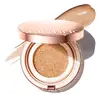
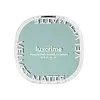
Skintific Cover All Perfect Cushion SPF 35 Versus Luxcrime Perfecting Cover Cushion Velvet Matte SPF 50 PA +++


What's inside
What's inside
 Key Ingredients
Benefits
Concerns
Ingredients Side-by-side
Water
Skin ConditioningCI 77891
Cosmetic ColorantCyclopentasiloxane
Emollient
Trimethylsiloxysilicate
Emollient
Dimethicone
Emollient
Methyl Trimethicone
Skin Conditioning
Hexyldecyl Myristoyl Methylaminopropionate
EmollientButylene Glycol
Humectant

CI 77492
Cosmetic ColorantGlycerin
Humectant
Acrylates/Stearyl Acrylate/Dimethicone Methacrylate Copolymer
CI 77491
Cosmetic ColorantMagnesium Sulfate
Disteardimonium Hectorite
StabilisingAluminum Hydroxide
EmollientTriethoxycaprylylsilane
Synthetic Fluorphlogopite
1,2-Hexanediol
Skin Conditioning
CI 77499
Cosmetic ColorantCaprylyl Glycol
Emollient
Dimethicone Crosspolymer
Emulsion Stabilising
Glyceryl Caprylate
EmollientTrihydroxystearin
Skin Conditioning

Palmitic Acid
Emollient


Ethylhexylglycerin
Skin ConditioningSorbitan Sesquioleate
Emulsifying
Centella Asiatica Extract
Cleansing



Cholesterol
Emollient
Ceramide AP
Skin Conditioning
Ceramide NP
Skin Conditioning
Ceramide As
Skin Conditioning
Ceramide Ns
Skin Conditioning
Ceramide Ng
Skin Conditioning
Ceramide EOP
Skin Conditioning
Stearic Acid
Cleansing
Myristic Acid
Cleansing
Tocopherol
Antioxidant



Titanium Dioxide
Cosmetic Colorant

Zinc Oxide
Cosmetic Colorant
Homosalate
Skin Conditioning
Hydrolyzed Hyaluronic Acid
Humectant
Hydrogenated Lecithin
Emulsifying
Dipropylene Glycol
HumectantPentylene Glycol
Skin Conditioning
Glyceryl Stearate
Emollient
Sucrose Distearate
Emollient
Water, CI 77891, Cyclopentasiloxane, Trimethylsiloxysilicate, Dimethicone, Methyl Trimethicone, Hexyldecyl Myristoyl Methylaminopropionate, Butylene Glycol, CI 77492, Glycerin, Acrylates/Stearyl Acrylate/Dimethicone Methacrylate Copolymer, CI 77491, Magnesium Sulfate, Disteardimonium Hectorite, Aluminum Hydroxide, Triethoxycaprylylsilane, Synthetic Fluorphlogopite, 1,2-Hexanediol, CI 77499, Caprylyl Glycol, Dimethicone Crosspolymer, Glyceryl Caprylate, Trihydroxystearin, Palmitic Acid, Ethylhexylglycerin, Sorbitan Sesquioleate, Centella Asiatica Extract, Cholesterol, Ceramide AP, Ceramide NP, Ceramide As, Ceramide Ns, Ceramide Ng, Ceramide EOP, Stearic Acid, Myristic Acid, Tocopherol, Titanium Dioxide, Zinc Oxide, Homosalate, Hydrolyzed Hyaluronic Acid, Hydrogenated Lecithin, Dipropylene Glycol, Pentylene Glycol, Glyceryl Stearate, Sucrose Distearate
Water
Skin ConditioningCI 77891
Cosmetic ColorantPolymethylsilsesquioxane
Ethylhexyl Methoxycinnamate
UV Absorber
Cyclopentasiloxane
Emollient
Silica
Abrasive

Trimethylsiloxysilicate
Emollient
Isododecane
EmollientEthylhexyl Salicylate
UV Absorber
Butylene Glycol
Humectant
Lauryl PEG-10 Tris(Trimethylsiloxy)Silylethyl Dimethicone
Emulsifying
Niacinamide
Smoothing

Butylene Glycol Dicaprylate/Dicaprate
EmollientPhenyl Trimethicone
Skin Conditioning
Pentylene Glycol
Skin Conditioning
Hdi/Trimethylol Hexyllactone Crosspolymer
Disteardimonium Hectorite
StabilisingC12-15 Alkyl Benzoate
AntimicrobialPEG-9 Polydimethylsiloxyethyl Dimethicone
Emulsifying
PEG-10 Dimethicone
Skin Conditioning
Magnesium Sulfate
Phenoxyethanol
Preservative
Triethoxycaprylylsilane
Polypropylsilsesquioxane
Copernicia Cerifera Wax
Octyldodecanol
Emollient
Polymethyl Methacrylate
Stearic Acid
Cleansing
Alumina
Abrasive
Ethylhexylglycerin
Skin ConditioningPropylene Carbonate
SolventCeteareth-20
Cleansing
Polyglyceryl-4 Isostearate
Emulsifying
Steareth-100
Gel FormingDisodium EDTA
ChelatingIsopropyl Titanium Triisostearate
Emollient
Caprylyl Glycol
Emollient
Hexylene Glycol
EmulsifyingBHT
Antioxidant
Tocopherol
Antioxidant
Caffeine
Skin Conditioning
Hydrogenated Lecithin
Emulsifying
Cetearyl Alcohol
Emollient
Ceramide NP
Skin Conditioning
Ceramide Ns
Skin Conditioning
Cholesterol
Emollient
Phytosphingosine
Skin Conditioning
Ceramide AP
Skin Conditioning
Ceramide As
Skin Conditioning
Ceramide EOP
Skin Conditioning
Water, CI 77891, Polymethylsilsesquioxane, Ethylhexyl Methoxycinnamate, Cyclopentasiloxane, Silica, Trimethylsiloxysilicate, Isododecane, Ethylhexyl Salicylate, Butylene Glycol, Lauryl PEG-10 Tris(Trimethylsiloxy)Silylethyl Dimethicone, Niacinamide, Butylene Glycol Dicaprylate/Dicaprate, Phenyl Trimethicone, Pentylene Glycol, Hdi/Trimethylol Hexyllactone Crosspolymer, Disteardimonium Hectorite, C12-15 Alkyl Benzoate, PEG-9 Polydimethylsiloxyethyl Dimethicone, PEG-10 Dimethicone, Magnesium Sulfate, Phenoxyethanol, Triethoxycaprylylsilane, Polypropylsilsesquioxane, Copernicia Cerifera Wax, Octyldodecanol, Polymethyl Methacrylate, Stearic Acid, Alumina, Ethylhexylglycerin, Propylene Carbonate, Ceteareth-20, Polyglyceryl-4 Isostearate, Steareth-100, Disodium EDTA, Isopropyl Titanium Triisostearate, Caprylyl Glycol, Hexylene Glycol, BHT, Tocopherol, Caffeine, Hydrogenated Lecithin, Cetearyl Alcohol, Ceramide NP, Ceramide Ns, Cholesterol, Phytosphingosine, Ceramide AP, Ceramide As, Ceramide EOP
Reviews
Ingredients Explained
These ingredients are found in both products.
Ingredients higher up in an ingredient list are typically present in a larger amount.
Butylene Glycol (or BG) is used within cosmetic products for a few different reasons:
Overall, Butylene Glycol is a safe and well-rounded ingredient that works well with other ingredients.
Though this ingredient works well with most skin types, some people with sensitive skin may experience a reaction such as allergic rashes, closed comedones, or itchiness.
Learn more about Butylene GlycolCaprylyl Glycol is a humectant, skin conditioner, emollient, and preservative booster derived from either caprylic acid or synthetically created.
Typical use levels vary from 0.3-1% as a preservative booster and go up to 2% to condition skin.
Because it is not a free-fatty acid, this ingredient is fungal acne safe (there's nothing for Malassezia to feed on).
Learn more about Caprylyl GlycolCeramide AP is is a skin-identical lipid that mimics what your skin already makes naturally. Ceramides help maintain epidermal integrity and barrier function.
You'll often see this ingredient paired with other ceramides (like ceramide NP), cholesterol, or fatty acids because this combination best mimics the natural lipid mix your skin already has.
The skin's ability to produce ceramides gets disrupted in skin conditions like eczema. This in turn weakens the skin barrier and applying ceramides topically has been shown to replenish what's been lost to restore barrier function.
Most of the studies with Ceramide AP test it as part of a multi-ceramide complex; studies reinforce ceramide AP's role in rebalancing ceramides in skin and improving skin hydration.
Learn more about Ceramide APCeramide AS is formally known as Ceramides 4 and 5.
Ceramides are intercellular lipids naturally found in our skin that bonds dead skin cells together to create a barrier. They are known for their ability to hold water and thus are a great ingredient for dry skin.
Ceramide EOP is formally known as Ceramide 1.
It is naturally found in skin and part of the intercellular "mortar" holding everything together in your outermost layer.
EOP stands for a linked Ester fatty acid, a linked Omega hydroxy fatty acid, and the Phytosphingosine base.
What makes Ceramide EOP special is its ultra-long fatty acid chain; this unique structure allows it to bridge the lipid layers in your skin barrier to prevent water loss (something no other ceramide can do).
Low levels of Ceramide EOP have been found in people with eczema and psoriasis.
Using it together with other ceramides, cholesterol, and linoleic acid have been shown to meaningfully improve hydration and reduce water loss.
In one clinical study, a regimen using Ceramide EOP, NP, and AP led to significant symptom improvements in patients with eczema, psoriasis, and dry skin in just 4 weeks.
You'll usually see concentrations between 0.1-0.5% in formulations. Overall, this is a well-tolerated and safe ingredient for cosmetic use.
Learn more about Ceramide EOPCeramide NP (formerly known as Ceramide 3) is one of the skin's naturally occurring lipids.
Since ceramides are the major lipid components of the skin, they are crucial for maintaining skin barrier and hydration. Ceramide NP most closely mirrors the dominant kind in human skin amongst ceramide subtypes.
This ceramide works by slotting into gaps within the stratum corneum's lipid matrix to limit trans-epidermal water loss (TEWL) and shield the skin against external irritants.
A study with 312 patients found that using a ceramide-containing routine for 4 weeks reduced the severity of atopic dermatitis by over 61%.
Another clinical study in subjects aged 60 and older found that a ceramide body wash and moisturizer improved skin dryness and itchy skin in 15 days.
Overall, ceramides are considered non-irritating and safety tests have found little to no observable adverse effects from using this ingredient.
Ceramide NP is usually sourced from plants (like soybean or rice bran), or produced synthetically.
Learn more about Ceramide NPCeramide NS is formally known as Ceramide 2. It is one of the major ceramides in the stratum corneum (outermost layer of skin) plays a role in forming a protective barrier.
Due to its structure, skin lipids can be packed tightly and in turn, this strengthens the barrier and reduces water loss.
Studies show conditions like atopic dermatitis can worsen when ceramide NS levels are low.
Learn more about Ceramide NsCholesterol is a lipid that is naturally found in human skin and is one of the three key components of your skin barrier. In skincare, it is an emollient and barrier-repairing ingredient.
It works by fitting directly into the lipid layers of skin to help restore structure and reduce transepidermal water loss (TEWL).
This is a great ingredient for dry, compromised, or aging skin; our skin starts to produce less cholesterol with age.
Research shows cholesterol works best in combination with ceramides and fatty acids, the other two major components in your skin barrier.
Cholesterol is also a well-establish penetration enhancer and can help other actives absorb more effectively.
Cosmetic-grade cholesterol is usually derived from lanolin but plant and synthetic options also exist. We recommend reaching out to the brand if you have questions about their source of cholesterol.
Learn more about CholesterolCi 77891 is a white pigment from Titanium dioxide. It is naturally found in minerals such as rutile and ilmenite.
It's main function is to add a white color to cosmetics. It can also be mixed with other colors to create different shades.
Ci 77891 is commonly found in sunscreens due to its ability to block UV rays.
Learn more about CI 77891Cyclopentasiloxane (D5) is a lightweight silicone that mostly acts as an emollient and solvent in cosmetics. Its the reason your products feel silky, fast-spreading, and non-greasy.
Since D5 is volatile, it does its thing and then evaporates off the skin quickly.
The safety profile of this ingredient is reassuring; the US CIR Expert Panel concluded D5 is safe as used in cosmetics and Health Canada concluded that D5 is not harmful to human health or the environment as currently used in cosmetics
There's a study that people mention about D5 in a rat study showing tumors. This study is related to long-term inhalation of high D5 levels.
Regulatory bodies have judged this study to be not applicable in topical skincare since skin absorption of D5 is very low and we're not really inhaling huge amounts of D5.
The only restriction for this ingredient is environmental. The European Chemicals Agency (ECHA) restricted D5 in wash-off cosmetics at or above 0.1% due to their persistence in water.
Learn more about CyclopentasiloxaneDisteardimonium Hectorite comes from the clay mineral named hectorite. It is used to add thickness to a product.
It can also help stabilize a product by helping to disperse other ingredients.
Hectorite is a rare, white clay mineral.
Learn more about Disteardimonium HectoriteEthylhexylglycerin is created from glycerin. It is a multitasker ingredient that:
The CIR Expert Panel found minimal skin absorption or sensitization of any kind in a safety assessment. Though this ingredient is considered well-tolerated, a small number of cases of allergic dermatitis have been published since 2002. Just be sure to patch test if you are unsure.
Industry-reported use ranges from 8% in rinse-off products and 2% in leave-on formulations.
Learn more about EthylhexylglycerinHydrogenated Lecithin is a more stable version of lecithin.
It's made by taking lecithin (a phospholipid commonly found in soybeans and egg yolks) and hydrogenating it. This just means the unsaturated fatty acids are turned into saturated ones so they don't go bad as easily.
This ingredient is an emollient, emulsifier, and penetration enhancer. As an emollient, it helps soften and hydrate skin by trapping moisture within. As an emulsifier, it prevents oil and water ingredients from separating.
Hydrogenated Lecithin can form tiny spherical structures made of phospholipid bilayers called liposomes. These liposomes are able to capture compounds inside their structure and deliver them through the skin barrier.
Because phospholipids are a natural component of our cell membranes, this ingredient is inherently compatible with skin.
A 2021 study found lecithin-based surfactants were less harsh and more tolerable comared to Sodium Lauryl Sulfate (SLS).
Learn more about Hydrogenated LecithinMagnesium Sulfate is a salt. More specifically, it is an epsom salt, or the bath salt used to help relieve muscle aches.
Despite having ‘sulfate’ in the name, it isn’t a surfactant or cleansing agent like sodium lauryl sulfate. Unlike those sulfates, magnesium sulfate doesn’t have the same cleansing or foaming properties (it's simply a type of salt).
In cosmetics, Magnesium Sulfate is used to thicken a product or help dilute other solids. It is a non-reactive and non-irritating ingredient.
One study shows magnesium deficiency may lead to inflammation of the skin. Applying magnesium topically may help reduce inflammation.
You can find this ingredient in sea water or mineral deposits.
Learn more about Magnesium SulfatePentylene Glycol (1,2-pentanediol) is a multitasking little diol with three main roles in a formula:
Research on alkanediols (the family pentylene glycol belongs to) show they work by disrupting microbial cell membranes. This disruption helps the primary preservative system in a product work more effectively at lower doses.
On the safety side, the Cosmetic Ingredient Review Expert Panel has concluded this ingredient to be safe as used in current cosmetic practices + concentrations.
Typical use levels in a formula run about 1-5%.
Learn more about Pentylene GlycolStearic Acid is a fatty acid that is already found in your skin. It's one of the free fatty acids that works alongside ceramides and cholesterols to maintain your barrier.
In cosmetics, it is a multitasker:
Safety-wise, the CIR Expert Panel has concluded it to be safe in cosmetics when formulated to be non-irritating and non-sensitizing.
Free stearic acid is a C18 fatty acid that the Malassezia yeast can substrate, so this ingredient may not be fungal acne safe.
This ingredient does have a comedogenic rating of 2-3, but this doesn't mean a formula with this ingredient will clog pores.
Human testing has proved that any finished product with this ingredient won't automatically make you break out; it really comes down to concentration, formula, and your skin.
Learn more about Stearic AcidTocopherol is a fat-soluble antioxidant known as Vitamin E.
You'll find this ingredient in the vast majority of skincare (for good reason). It works to neutralize free radicals, or unstable molecules generated by UV exposure, pollution, and other environmental stressors, before they can cause oxidative damage to your skin cells.
Topically applied tocopherol has been shown to protect against UV damage by ramping up the skin's own natural defense enzymes.
It also acts as a skin conditioning agent; some studies show that regular topical use can improve the skin's water-binding capacity over 2-4 weeks.
This ingredient is especially loved for being a team player. When combined with Vitamin C, the photoprotective effect of both ingredients roughly doubles and the combo also helps reduce UV-induced DNA damage.
This ingredient has some brightening potential but it's more of a prevention ingredient than spot-fader. Cell studies show it can slow down melanin production but it's worth noting that it's not the most powerful brightener out there.
In formulations, it also serves as a stabilizer that helps protect other oxidation-prone ingredients from degrading.
Concentrations usually range from 0.1-1% in most leave-on products.
Learn more about TocopherolTriethoxycaprylylsilane is a silicon-based surface modifier that makes sunscreens feel silky and makeup stay put.
Its main job is to coat mineral particles like titanium dioxide, zinc oxide, and color pigments in a thin, oily layer so they spread smoothly, don't clump, and stick to skin better.
This ingredient is typically used at low levels (up to 2.5% in eyeshadow and 1% in lipstick).
Learn more about TriethoxycaprylylsilaneThis silicone is an emollient. Emollients create a thin film on the skin to prevent moisture from escaping.
It is not soluble in water and helps increase water-resistance in products.
According to a manufacturer, it can blend seamlessly with silicone oils, such as Cyclopentasiloxane.
Learn more about TrimethylsiloxysilicateWater. It's the most common cosmetic ingredient of all. You'll usually see it at the top of ingredient lists, meaning that it makes up the largest part of the product.
So why is it so popular? Water most often acts as a solvent - this means that it helps dissolve other ingredients into the formulation.
You'll also recognize water as that liquid we all need to stay alive. If you see this, drink a glass of water. Remember to stay hydrated!
Learn more about Water

