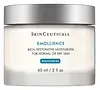
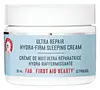
SkinCeuticals Emollience Rich Moisturizer Versus First Aid Beauty Ultra Repair Hydra-Firm Night Cream
This calming moisturizer is formulated around Vitis Vinifera Seed Oil and Rosa Canina Fruit Oil to calm redness and hydrate skin.
This anti-aging night moisturizer is formulated around Butyrospermum Parkii Butter and Niacinamide to soften the look of wrinkles and hydrate skin.

What's inside
What's inside
 Key Ingredients
Benefits
Concerns
Ingredients Side-by-side
Water
Skin ConditioningGlycerin
Humectant


Sesamum Indicum Seed Oil
Emollient




Propylene Glycol
Humectant
Glyceryl Stearate
Emollient
Vitis Vinifera Seed Oil
Emollient
Rosa Canina Fruit Oil
Emollient
Macadamia Ternifolia Seed Oil
Emollient
Mangifera Indica Seed Butter
Skin Conditioning
Stearic Acid
Cleansing
Palmitic Acid
Emollient
Triethanolamine
BufferingCaprylic/Capric Glycerides
EmollientPhenoxyethanol
Preservative
Panthenol
Skin Conditioning
Carbomer
Emulsion StabilisingChlorphenesin
Antimicrobial
Caprylyl Glycol
Emollient
Aloe Barbadensis Leaf Extract
Emollient
Aloe Barbadensis Leaf Juice
Skin Conditioning
Disodium EDTA
Allantoin
Skin Conditioning
Laminaria Ochroleuca Extract
Skin Conditioning
Ginkgo Biloba Leaf Extract
Skin Conditioning
Chlorella Vulgaris Extract
Skin ConditioningAlgae Extract
Emollient
Prunus Cerasus Fruit Extract
Antioxidant
Prunus Cerasus Extract
Antioxidant
Fagus Sylvatica Bud Extract
TonicLavandula Angustifolia Oil
Masking



Rosmarinus Officinalis Leaf Oil
Masking
Prunus Armeniaca Kernel Oil
Masking
Mentha Piperita Oil
Masking
Linalool
Perfuming
Mentha Piperita Extract
CleansingChamomilla Recutita Extract
Skin Conditioning
Water, Glycerin, Sesamum Indicum Seed Oil, Propylene Glycol, Glyceryl Stearate, Vitis Vinifera Seed Oil, Rosa Canina Fruit Oil, Macadamia Ternifolia Seed Oil, Mangifera Indica Seed Butter, Stearic Acid, Palmitic Acid, Triethanolamine, Caprylic/Capric Glycerides, Phenoxyethanol, Panthenol, Carbomer, Chlorphenesin, Caprylyl Glycol, Aloe Barbadensis Leaf Extract, Aloe Barbadensis Leaf Juice, Disodium EDTA, Allantoin, Laminaria Ochroleuca Extract, Ginkgo Biloba Leaf Extract, Chlorella Vulgaris Extract, Algae Extract, Prunus Cerasus Fruit Extract, Prunus Cerasus Extract, Fagus Sylvatica Bud Extract, Lavandula Angustifolia Oil, Rosmarinus Officinalis Leaf Oil, Prunus Armeniaca Kernel Oil, Mentha Piperita Oil, Linalool, Mentha Piperita Extract, Chamomilla Recutita Extract
Water
Skin ConditioningGlycerin
Humectant
Caprylic/Capric Triglyceride
Masking
Butyrospermum Parkii Butter
Skin Conditioning
Dimethicone
Emollient
Glyceryl Stearate
Emollient
C10-18 Triglycerides
Emollient
Ethylhexyl Palmitate
Emollient
Lactobacillus Ferment
Skin Conditioning
Jojoba Esters
Emollient
Cetyl Alcohol
Emollient
Niacinamide
Smoothing







Spilanthes Acmella Flower Extract
Skin ConditioningHelianthus Annuus Seed Cera
Emollient
Acacia Decurrens Flower Cera
Emollient
Algae Extract
Emollient
Palmitoyl Tripeptide-38
Skin Conditioning
Sodium Hyaluronate
Humectant
Avena Sativa Kernel Flour
Abrasive
Palmitoyl Hexapeptide-12
Skin Conditioning
Palmitoyl Tetrapeptide-7
Skin Conditioning
Camellia Sinensis Leaf Extract
Antimicrobial
Chrysanthemum Parthenium Extract
Skin ConditioningGlycyrrhiza Glabra Root Extract
Bleaching
Hydroxypropyl Cyclodextrin
MaskingSodium Lactate
Buffering
Butylene Glycol
Humectant
PEG-75 Stearate
Surfactant
Acrylates/C10-30 Alkyl Acrylate Crosspolymer
Emulsion StabilisingCeteth-20
CleansingSteareth-20
CleansingPolyglycerin-3
Humectant
Carbomer
Emulsion StabilisingPolysorbate 20
Emulsifying
Phenoxyethanol
Preservative
Xanthan Gum
EmulsifyingTetrasodium EDTA
Sodium Hydroxide
BufferingWater, Glycerin, Caprylic/Capric Triglyceride, Butyrospermum Parkii Butter, Dimethicone, Glyceryl Stearate, C10-18 Triglycerides, Ethylhexyl Palmitate, Lactobacillus Ferment, Jojoba Esters, Cetyl Alcohol, Niacinamide, Spilanthes Acmella Flower Extract, Helianthus Annuus Seed Cera, Acacia Decurrens Flower Cera, Algae Extract, Palmitoyl Tripeptide-38, Sodium Hyaluronate, Avena Sativa Kernel Flour, Palmitoyl Hexapeptide-12, Palmitoyl Tetrapeptide-7, Camellia Sinensis Leaf Extract, Chrysanthemum Parthenium Extract, Glycyrrhiza Glabra Root Extract, Hydroxypropyl Cyclodextrin, Sodium Lactate, Butylene Glycol, PEG-75 Stearate, Acrylates/C10-30 Alkyl Acrylate Crosspolymer, Ceteth-20, Steareth-20, Polyglycerin-3, Carbomer, Polysorbate 20, Phenoxyethanol, Xanthan Gum, Tetrasodium EDTA, Sodium Hydroxide
Reviews
Ingredients Explained
These ingredients are found in both products.
Ingredients higher up in an ingredient list are typically present in a larger amount.
Algae Extract is one of the vaguest names on any label because it just means "extract of some alga" (and there are thousands of species and dozens of ways to extract them). This just means two products listing it can contain completely different things.
This ingredient name was actually officially retired in the INCI dictionary in 2015 and brands were pushed toward species-specific names instead (like Laminaria Digitata Extract or Chondrus Crispus Extract).
Generally, it is used to hold water and soften skin in a formula. Algae are rich in polysaccharides, pigments, and amino-acids that act as humectants, emollients, and skin-conditioning agents.
It isn't on standard cosmetic-patch test panels and "seaweed dermatitis" is actually an acute irritant reaction to algal toxins in seawater and not the cosmetic ingredient.
You'll see algae listed as a 5/5 on a lot of pore-clogging charts and that number doesn't come from anywhere; it's not in the original rabbit-ear studies that most comedogenic ratings trace back to.
The reasoning behind the reputation is that seaweed is high in iodine and iodine can trigger acne-like breakouts when eaten. This traces back to a 1976 letter in Archives of Dermatology describing two women whose breakouts cleared after they stopped taking high-dose kelp supplements orally.
And the reaction of these two women wasn't clogged pores at all: it was an iodine-triggered pustular rash. Later research found normal dietary iodine doesn't meaningfully affect acne either and nobody has shown topical algae delivers enough iodine to matter.
What we do have is dozens of brown and red algae ingredients found to be non-irritating and non-sensitizing, and a handful of studies that found algae compounds may actually help acne.
However, plenty of people do report breaking out from algae-containing products. Skin is individual and it's worth avoiding if yours has reacted to algae before.
Learn more about Algae ExtractCarbomer is a synthetic thickening and gelling agent. It's basically the ingredient that gives a lot of serums, gels, creams, and sunscreens their smooth, non-sticky texture.
Although legally permitted at very high levels, carbomers are normally used at concentrations below 1%.
It also needs to be neutralized to actually thicken, and because it is a large molecule, it doesn't really penetrate the skin barrier.
Allergy-wise, the risk is very low. Clinical studies show carbomers have low potential for skin irritation/sensitization even at concentrations up to 100%.
A 2024 UK study patch-tested 1,302 patients and found true allergy to the parent group of carbomer to be rare with no confirmed relevant reactions.
Learn more about CarbomerGlycerin (or glycerol) is a compound naturally found in your skin. It's a powerhouse humectant that pulls water into the stratum corneum.
Topically, glycerin does several things at once:
Your skin makes glycerin on its own (mostly from sebaceous oil breakdown) and shuttles it to your outermost layer of skin, or your epidermis, via aquaporin-3.
Aquaporin-3 is a transporter that is essential for normal skin hydration, elasticity, and repair. Interestingly, mice lacking in AQP3 have dry and less elastic skin that can be fully corrected with glycerin.
This ingredient is non-irritating, plays well with almost every ingredient, and works across all skin types. Typical use is anywhere between 3-10% but can go up to 79% in some leave-on products.
Just know very high concentrations (>40%) can feel tacky in low humidity.
Glycerin is the name for this ingredient in American English. British English uses Glycerol/Glycerine.
Learn more about GlycerinGlyceryl Stearate is made by reacting glycerin with stearic acid (typically sourced from plant oils like palm or coconut). It's an emulsifier, emollient, and mild occlusive.
Emulsifiers help ingredients like oil and water stay mixed so your formula stays nicely blended and uniform in texture.
This ingredient is typically used in concentrations between 1-10%. Studies have found it to be non-sensitizing, non-phototoxic, and non-photoallergenic.
A close cousin of this ingredient is Glyceryl Stearate SE ("self-emulsifying"). This just has a small amount of sodium or potassium stearate added so it can emulsify without a co-emulsifier.
Since this ingredient is an ester of a C18 fatty acid, it may not be fungal acne safe. The Malassezia yeast can potentially metabolize within the C11-C24 range.
Fun fact: The human body also creates Glyceryl Stearate naturally.
Learn more about Glyceryl StearatePhenoxyethanol is one of the most widely used preservatives in skincare (and for good reason!).
It has a large spectrum of antimicrobial activity and especially effective bacteria, yeast, and mold while only having a weak effect on your skin's natural microbiome.
On a cellular level, it disrupts the cell membranes of microbes by poking holes that make the cell leak. This shuts down the chemical reactions the microbe needs to make energy so it can no longer survive.
Another perk of this ingredient is that it stays functional across a wide pH range (3-10).
You'll often see it paired with boosters like Ethylhexylglycerin; one study showed that a 1:9 ratio of Ethylhexylglycerin to Phenoxyethanol damages bacterial membranes as effectively as doubling the Phenoxyethanol concentration on its own.
Typical use concentrations range from 0.3-1% depending on the formula, and this ingredient is capped at 1% int the EU.
Safety-wise, the fear mongering does not hold up to the evidence. The EU's Scientific Committee on Consumer Safety and FDA consider it safe as a preservative at up to 1%, including for children of all ages.
Adverse systemic effects only showed up in animal studies at exposures roughly 200x higher than what people get from cosmetics. And despite its very widespread use, this ingredient is a rare sensitizer and allergic reactions are uncommon.
Learn more about PhenoxyethanolWater. It's the most common cosmetic ingredient of all. You'll usually see it at the top of ingredient lists, meaning that it makes up the largest part of the product.
So why is it so popular? Water most often acts as a solvent - this means that it helps dissolve other ingredients into the formulation.
You'll also recognize water as that liquid we all need to stay alive. If you see this, drink a glass of water. Remember to stay hydrated!
Learn more about Water

