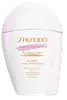
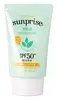
Shiseido Urban Environment Sun Dual Care Oil-Free Sunscreen SPF 42 Versus Etude House Sunprise Mild Watery Light SPF50+/PA+++
This hybrid sunscreen covers the full UV range and blocks ~98% of UVB at SPF 42.
This chemical sunscreen covers most of the UV range, lighter on the deep UVA that drives aging.


What's inside
What's inside
 Key Ingredients
Benefits
Concerns
Ingredients Side-by-side
Phenylbenzimidazole Sulfonic Acid 1%
UV Absorber
Homosalate 15%
Skin Conditioning
Ethylhexyl Salicylate 5%
UV Absorber
Zinc Oxide 15.5%
Cosmetic Colorant
Water
Skin ConditioningDimethicone
Emollient

Trisiloxane
Skin Conditioning
Sd Alcohol 40-B
Astringent


Glycerin
Humectant

Silica
Abrasive

PEG/PPG-14/7 Dimethyl Ether
Skin ConditioningLauryl PEG-9 Polydimethylsiloxyethyl Dimethicone
Skin Conditioning
PEG-10 Dimethicone
Skin Conditioning
Trehalose
Humectant
Myristyl Myristate
Emollient



Ethylhexyl Palmitate
Emollient
Dextrin Palmitate
Emulsifying
Isodecyl Neopentanoate
EmollientAscorbyl Tetraisopalmitate
Antioxidant


Thiotaurine
Antioxidant
Dipotassium Glycyrrhizate
Humectant

Scutellaria Baicalensis Root Extract
Astringent
Paeonia Albiflora Root Extract
Skin ConditioningSodium Hyaluronate
Humectant
Sanguisorba Officinalis Root Extract
CleansingCamellia Sinensis Leaf Extract
Antimicrobial
Garcinia Mangostana Bark Extract
Skin ConditioningPerilla Ocymoides Leaf Extract
TonicSpirulina Platensis Extract
Skin ProtectingTriethanolamine
BufferingTriethoxycaprylylsilane
Butylene Glycol
Humectant
Disodium EDTA
Disteardimonium Hectorite
StabilisingTocopherol
Antioxidant
BHT
Antioxidant
Alcohol
Antimicrobial
Isostearic Acid
Cleansing
Menthoxypropanediol
Masking
Sodium Metabisulfite
Antioxidant
Polysilicone-2
CI 77120
Cosmetic ColorantSodium Citrate
BufferingPhenoxyethanol
Preservative
Benzoic Acid
Masking
Parfum
Masking

Iron Oxides
Phenylbenzimidazole Sulfonic Acid 1%, Homosalate 15%, Ethylhexyl Salicylate 5%, Zinc Oxide 15.5%, Water, Dimethicone, Trisiloxane, Sd Alcohol 40-B, Glycerin, Silica, PEG/PPG-14/7 Dimethyl Ether, Lauryl PEG-9 Polydimethylsiloxyethyl Dimethicone, PEG-10 Dimethicone, Trehalose, Myristyl Myristate, Ethylhexyl Palmitate, Dextrin Palmitate, Isodecyl Neopentanoate, Ascorbyl Tetraisopalmitate, Thiotaurine, Dipotassium Glycyrrhizate, Scutellaria Baicalensis Root Extract, Paeonia Albiflora Root Extract, Sodium Hyaluronate, Sanguisorba Officinalis Root Extract, Camellia Sinensis Leaf Extract, Garcinia Mangostana Bark Extract, Perilla Ocymoides Leaf Extract, Spirulina Platensis Extract, Triethanolamine, Triethoxycaprylylsilane, Butylene Glycol, Disodium EDTA, Disteardimonium Hectorite, Tocopherol, BHT, Alcohol, Isostearic Acid, Menthoxypropanediol, Sodium Metabisulfite, Polysilicone-2, CI 77120, Sodium Citrate, Phenoxyethanol, Benzoic Acid, Parfum, Iron Oxides
Water
Skin ConditioningEthylhexyl Methoxycinnamate
UV Absorber
Homosalate
Skin Conditioning
Ethylhexyl Salicylate
UV Absorber
Diethylamino Hydroxybenzoyl Hexyl Benzoate
UV Filter
Alcohol
Antimicrobial
Butylene Glycol
Humectant
Dicaprylyl Carbonate
EmollientCyclopentasiloxane
Emollient
Octocrylene
UV Absorber
C20-22 Alkyl Phosphate
EmulsifyingC20-22 Alcohols
Emulsion Stabilising
Silica
Abrasive
1,2-Hexanediol
Skin Conditioning
Cetyl Alcohol
Emollient
Viscum Album Leaf Extract
SoothingPortulaca Oleracea Extract
Skin Conditioning
Centella Asiatica Extract
Cleansing
Glyceryl Stearate
Emollient
Methyl Methacrylate Crosspolymer
Tromethamine
BufferingDimethicone/Vinyl Dimethicone Crosspolymer
Skin Conditioning
Phenoxyethanol
Preservative
Octyldodecanol
Emollient
Polyacrylate Crosspolymer-6
Emulsion StabilisingCereus Grandiflorus Extract
Antioxidant
Aloe Barbadensis Leaf Juice
Skin Conditioning
Glycine Soja Lipids
Skin ConditioningMicrocrystalline Cellulose
AbsorbentXanthan Gum
EmulsifyingSodium Acrylate/Sodium Acryloyldimethyl Taurate Copolymer
Emulsion StabilisingPolyisobutene
Carex Humillis Root Extract
Skin ConditioningCitrus Aurantium Bergamia Fruit Oil
Masking

Citrus Limon Peel Oil
Masking
Eucalyptus Globulus Leaf Oil
Perfuming
Pinus Sylvestris Leaf Oil
Masking
Citrus Aurantifolia Oil
Cleansing
Citrus Aurantium Dulcis Peel Oil
Masking
Echium Plantagineum Seed Oil
Skin Conditioning
Euterpe Oleracea Fruit Extract
Malpighia Glabra Fruit Extract
Skin ConditioningTerminalia Ferdinandiana Fruit Extract
Antioxidant
Cellulose Gum
Emulsion StabilisingAdansonia Digitata Seed Oil
Emollient
Ascidian Tunic Extract
Sorbitan Oleate
Emulsifying
Caprylyl/Capryl Glucoside
CleansingHelianthus Annuus Seed Oil
Emollient
Cardiospermum Halicacabum Flower/Leaf/Vine Extract
Skin ConditioningHelianthus Annuus Seed Oil Unsaponifiables
Emollient
Isoceteth-10
EmulsifyingIsoceteth-25
EmulsifyingWater, Ethylhexyl Methoxycinnamate, Homosalate, Ethylhexyl Salicylate, Diethylamino Hydroxybenzoyl Hexyl Benzoate, Alcohol, Butylene Glycol, Dicaprylyl Carbonate, Cyclopentasiloxane, Octocrylene, C20-22 Alkyl Phosphate, C20-22 Alcohols, Silica, 1,2-Hexanediol, Cetyl Alcohol, Viscum Album Leaf Extract, Portulaca Oleracea Extract, Centella Asiatica Extract, Glyceryl Stearate, Methyl Methacrylate Crosspolymer, Tromethamine, Dimethicone/Vinyl Dimethicone Crosspolymer, Phenoxyethanol, Octyldodecanol, Polyacrylate Crosspolymer-6, Cereus Grandiflorus Extract, Aloe Barbadensis Leaf Juice, Glycine Soja Lipids, Microcrystalline Cellulose, Xanthan Gum, Sodium Acrylate/Sodium Acryloyldimethyl Taurate Copolymer, Polyisobutene, Carex Humillis Root Extract, Citrus Aurantium Bergamia Fruit Oil, Citrus Limon Peel Oil, Eucalyptus Globulus Leaf Oil, Pinus Sylvestris Leaf Oil, Citrus Aurantifolia Oil, Citrus Aurantium Dulcis Peel Oil, Echium Plantagineum Seed Oil, Euterpe Oleracea Fruit Extract, Malpighia Glabra Fruit Extract, Terminalia Ferdinandiana Fruit Extract, Cellulose Gum, Adansonia Digitata Seed Oil, Ascidian Tunic Extract, Sorbitan Oleate, Caprylyl/Capryl Glucoside, Helianthus Annuus Seed Oil, Cardiospermum Halicacabum Flower/Leaf/Vine Extract, Helianthus Annuus Seed Oil Unsaponifiables, Isoceteth-10, Isoceteth-25
Reviews
Ingredients Explained
These ingredients are found in both products.
Ingredients higher up in an ingredient list are typically present in a larger amount.
This ingredient is also called ethanol or ethyl alcohol. It is denatured, meaning made undrinkable for cosmetic use.
In formulas, it:
Is it bad for your skin?
The answer comes down to concentration. Patch and wash studies have found highly concentrated alcohol-based hand rubs (60-100%) cause less barrier disruption than washing with a basic detergent like SLS. The only measurable effect in these studies was a temporary dip in skin hydration.
Concentrations below 12-15% in leave-on cosmetics is generally well-tolerated. Concentrations above start to see increased transepidermal water loss (TEWL) and reduced hydration.
In concentrations about 58%, it creates temporary channels in your skin's lipid layers to become more permeable and allow other ingredients to slip through easily.
This ingredient can be up to 80% of the formula in alcohol-based perfumes.
Overall, this ingredient is probably harmless if found lower down an ingredients list but worth side-eyeing if it's high up (especially if your barrier is already struggling).
Alcohol can worsen dry skin, eczema, and oily skin, especially at higher concentrations. This is because it can increase transepidermal water loss and decrease hydration to disrupt the skin barrier.
According to the National Rosacea Society based in the US, you should be mindful of products with these alcohols in the top half of ingredients.
True allergic contact dermatitis to ethanol is uncommon, but be sure to patch test if you have dry or sensitive skin.
Learn more about AlcoholButylene Glycol (or BG) is used within cosmetic products for a few different reasons:
Overall, Butylene Glycol is a safe and well-rounded ingredient that works well with other ingredients.
Though this ingredient works well with most skin types, some people with sensitive skin may experience a reaction such as allergic rashes, closed comedones, or itchiness.
Learn more about Butylene GlycolEthylhexyl Salicylate (also called Octisalate or Octyl Salicylate) is an oil-soluble organic UV filter that's been used in sunscreen since the 1950's.
It absorbs UVB light in the 280-320 nm range with a peak absorbance around 306 nm.
You'll often see it paired with other UV filters to boost overall SPF because octisalate is a fairly week filter on its own.
The reason you'll see it so often is because it can help solubilize and stabilize the trickier filters like oxybenzone and avobenzone.
Unlike these filters, octisalate has pretty good photostability and doesn't create skin-damaging free radicals when exposed to sunlight.
The fatty-alcohol part of the molecule also gives it a light, emollient feel so it doubles as a nice texture enhancer.
Usage levels vary around the world:
Safety-wise, this ingredient has a pretty reassuring track record. The EU's Scientific Committee on Consumer Products (SCCP) found very low skin penetration in human skin tests and negative results for irritation, phototoxicity, and photoallergy.
The real-world allergy risk is pretty low too; a 2012 European study of 1,031 people recorded only 2 reactions to it (a rate of 0.19%).
You might have seen scary headlines about sunscreen getting into your blood.
In 2019, the FDA found that several chemical filters can absorb through the skin and show up in the bloodstream at small but measurable levels.
Here's the important part: these tiny levels are just a cutoff the FDA uses to decide which ingredients need more testing and doesn't mean anything harmful was found.
The researchers were clear that the results are no reason to stop wearing sunscreen.
Learn more about Ethylhexyl SalicylateHomosalate is an oil-soluble organic UVB filter that has been a sunscreen staple for decades. Its job is to absorb UVB rays (~295-315 nm) and protect your skin against sunburn,
This is one of the more photostable organic UV filters; it holds up pretty well under UV and a 2022 quantum-chemistry study found it stays stable in sunlight.
It's actually so reliable that formulators often pair it with shakier ingredients like oxybenzone and avobenzone. Formulators also use it to help dissolve the other UV filters into the oil phase.
One thing to keep in mind: "stable" isn't the same as "strong". On its own, homosalate is actually a pretty weak UV filter so it's better off as a helpful team player that helps boost overall SPF protection.
The safety picture is a bit nuanced but not scary.
This ingredient has a long track record of being gentle and regulators agree it isn't an irritant; EU's Scientific Committee on Consumer Safety found that homosalate is not considered a skin irritant and doesn't raise eye-irritation flags either.
There's talk about homosalate because your skin absorbs a little bit of it into your bloodstream. A 2020 FDA-backed study found homosalate showed up in people's blood levels at the level where the FDA decides to double check.
The EU's Scientific Committee on Consumer Safety (SCCS) also found small amounts in blood and breast milk. They estimated that about 5% of what you apply gets absorbed through the skin.
Due to the debate about whether it might mess with hormones, the SCCS recommended a maximum limit of 0.5% in most products of 7.3% in face creams/pump sprays.
One important thing to keep in mind: in the US, Homosalate is currently labeled "non-GRASE" by the FDA. This sounds alarming but really just means the FDA wants more data to confirm it's safe. It's not confidently saying this ingredient is harmful.
As of now, homosalate is still completely legal and widely used while that research gets done.
The current maximum limits are:
Learn more about HomosalatePhenoxyethanol is one of the most widely used preservatives in skincare (and for good reason!).
It has a large spectrum of antimicrobial activity and especially effective bacteria, yeast, and mold while only having a weak effect on your skin's natural microbiome.
On a cellular level, it disrupts the cell membranes of microbes by poking holes that make the cell leak. This shuts down the chemical reactions the microbe needs to make energy so it can no longer survive.
Another perk of this ingredient is that it stays functional across a wide pH range (3-10).
You'll often see it paired with boosters like Ethylhexylglycerin; one study showed that a 1:9 ratio of Ethylhexylglycerin to Phenoxyethanol damages bacterial membranes as effectively as doubling the Phenoxyethanol concentration on its own.
Typical use concentrations range from 0.3-1% depending on the formula, and this ingredient is capped at 1% int the EU.
Safety-wise, the fear mongering does not hold up to the evidence. The EU's Scientific Committee on Consumer Safety and FDA consider it safe as a preservative at up to 1%, including for children of all ages.
Adverse systemic effects only showed up in animal studies at exposures roughly 200x higher than what people get from cosmetics. And despite its very widespread use, this ingredient is a rare sensitizer and allergic reactions are uncommon.
Learn more about PhenoxyethanolSilica, also known as silicon dioxide, is a naturally occurring mineral. It is used as a fine, spherical, and porous powder in cosmetics.
Though it has exfoliant properties, the function of silica varies depending on the product.
The unique structure of silica enhances the spreadability and adds smoothness, making it a great texture enhancer.
It is also used as an active carrier, emulsifier, and mattifier due to its ability to absorb excess oil.
In some products, tiny microneedles called spicules are made from silica or hydrolyzed sponge. When you rub them in, they lightly polish away dead skin layers and enhance the penetration of active ingredients.
Learn more about SilicaWater. It's the most common cosmetic ingredient of all. You'll usually see it at the top of ingredient lists, meaning that it makes up the largest part of the product.
So why is it so popular? Water most often acts as a solvent - this means that it helps dissolve other ingredients into the formulation.
You'll also recognize water as that liquid we all need to stay alive. If you see this, drink a glass of water. Remember to stay hydrated!
Learn more about Water

