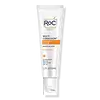
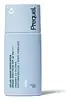
RoC Multi Correxion Revive + Glow Moisturizer SPF 30 Versus Prequel Solar Shade Broad Spectrum SPF 46 PA++++
This chemical sunscreen covers most of the UV range, lighter on the deep UVA that drives aging.
This chemical sunscreen covers most of the UV range, lighter on the deep UVA that drives aging.


What's inside
What's inside
 Key Ingredients
Benefits
Concerns
Ingredients Side-by-side
Butyl Methoxydibenzoylmethane 2%
UV Absorber
Homosalate 5.5%
Skin Conditioning
Ethylhexyl Salicylate 4.5%
UV Absorber
Octocrylene 4%
UV Absorber

Water
Skin ConditioningPropanediol
Solvent

Dimethicone
Emollient

Alcohol Denat.
Antimicrobial


C12-15 Alkyl Benzoate
AntimicrobialGlycerin
Humectant
Acrylates/Polytrimethylsiloxymethacrylate Copolymer
Skin ConditioningDiethylhexyl 2,6-Naphthalate
Emollient3-O-Ethyl Ascorbic Acid
Skin Conditioning




Butylene Glycol
Humectant
Laureth-1 Phosphate
SurfactantCitrullus Lanatus Fruit Extract
Skin Conditioning
Acrylates/C10-30 Alkyl Acrylate Crosspolymer
Emulsion StabilisingPyrus Malus Fruit Extract
Skin Conditioning
Cistus Monspeliensis Extract
MaskingLens Esculenta Fruit Extract
Skin ConditioningSodium PCA
Humectant
Sodium Lactate
Buffering
Nonapeptide-1
Skin Conditioning
Lecithin
Emollient
Sodium Polyacrylate
Absorbent
Sclerotium Gum
Emulsion StabilisingPullulan
Troxerutin
Skin Conditioning
Polygonum Aviculare Extract
EmollientMaltodextrin
Absorbent
Xanthan Gum
EmulsifyingAminomethyl Propanol
BufferingSodium Benzoate
Masking
Caprylhydroxamic Acid
ChelatingSodium Phosphate
BufferingCaprylyl Glycol
Emollient
Disodium Phosphate
Buffering1,2-Hexanediol
Skin Conditioning
Potassium Sorbate
Preservative
Parfum
Masking

Butyl Methoxydibenzoylmethane 2%, Homosalate 5.5%, Ethylhexyl Salicylate 4.5%, Octocrylene 4%, Water, Propanediol, Dimethicone, Alcohol Denat., C12-15 Alkyl Benzoate, Glycerin, Acrylates/Polytrimethylsiloxymethacrylate Copolymer, Diethylhexyl 2,6-Naphthalate, 3-O-Ethyl Ascorbic Acid, Butylene Glycol, Laureth-1 Phosphate, Citrullus Lanatus Fruit Extract, Acrylates/C10-30 Alkyl Acrylate Crosspolymer, Pyrus Malus Fruit Extract, Cistus Monspeliensis Extract, Lens Esculenta Fruit Extract, Sodium PCA, Sodium Lactate, Nonapeptide-1, Lecithin, Sodium Polyacrylate, Sclerotium Gum, Pullulan, Troxerutin, Polygonum Aviculare Extract, Maltodextrin, Xanthan Gum, Aminomethyl Propanol, Sodium Benzoate, Caprylhydroxamic Acid, Sodium Phosphate, Caprylyl Glycol, Disodium Phosphate, 1,2-Hexanediol, Potassium Sorbate, Parfum
Butyl Methoxydibenzoylmethane 3%
UV Absorber
Homosalate 7%
Skin Conditioning
Octocrylene 9%
UV Absorber
Ethylhexyl Salicylate 5%
UV Absorber
Water
Skin ConditioningGlycerin
Humectant
Butyloctyl Salicylate
Skin Conditioning
C12-15 Alkyl Benzoate
AntimicrobialPongamia Glabra Seed Oil
Skin Conditioning

Undecane
EmollientBetaine
Humectant
Silica
Abrasive

Ethyl Ferulate
Antioxidant
Oryza Sativa Extract
Absorbent

Oryza Sativa Germ Extract
EmollientGlycine Soja Seed Extract
Skin Conditioning
Tridecane
Perfuming
Glycine Soja Oil
Emollient

Sodium Dilauramidoglutamide Lysine
HumectantDunaliella Salina Extract
Skin ConditioningHaematococcus Pluvialis Extract
Antioxidant
Inulin
Skin Conditioning
Fructose
Humectant
Glucose
Humectant
Pongamia Pinnata Seed Extract
Skin ConditioningPolyglyceryl-4 Laurate
Emulsifying
Hydroxyethyl Acrylate/Sodium Acryloyldimethyl Taurate Copolymer
Emulsion StabilisingHydroxyacetophenone
Antioxidant
Arachidyl Alcohol
Emollient
Polyglyceryl-6 Laurate
Emulsifying
1,2-Hexanediol
Skin Conditioning
Caprylyl Glycol
Emollient
Behenyl Alcohol
Emollient
Cellulose Gum
Emulsion StabilisingPolyglyceryl-3 Diisostearate
Emulsifying
Arachidyl Glucoside
EmulsifyingTocopherol
Antioxidant
Sodium Phytate
ChelatingPolysorbate 60
Emulsifying
Sorbitan Isostearate
Emulsifying
Citric Acid
Buffering
Xanthan Gum
EmulsifyingCellulose
Absorbent
Butyl Methoxydibenzoylmethane 3%, Homosalate 7%, Octocrylene 9%, Ethylhexyl Salicylate 5%, Water, Glycerin, Butyloctyl Salicylate, C12-15 Alkyl Benzoate, Pongamia Glabra Seed Oil, Undecane, Betaine, Silica, Ethyl Ferulate, Oryza Sativa Extract, Oryza Sativa Germ Extract, Glycine Soja Seed Extract, Tridecane, Glycine Soja Oil, Sodium Dilauramidoglutamide Lysine, Dunaliella Salina Extract, Haematococcus Pluvialis Extract, Inulin, Fructose, Glucose, Pongamia Pinnata Seed Extract, Polyglyceryl-4 Laurate, Hydroxyethyl Acrylate/Sodium Acryloyldimethyl Taurate Copolymer, Hydroxyacetophenone, Arachidyl Alcohol, Polyglyceryl-6 Laurate, 1,2-Hexanediol, Caprylyl Glycol, Behenyl Alcohol, Cellulose Gum, Polyglyceryl-3 Diisostearate, Arachidyl Glucoside, Tocopherol, Sodium Phytate, Polysorbate 60, Sorbitan Isostearate, Citric Acid, Xanthan Gum, Cellulose
Reviews
Ingredients Explained
These ingredients are found in both products.
Ingredients higher up in an ingredient list are typically present in a larger amount.
1,2-Hexanediol is a synthetic liquid and another multi-functional powerhouse.
It is a:
- Humectant, drawing moisture into the skin
- Emollient, helping to soften skin
- Solvent, dispersing and stabilizing formulas
- Preservative booster, enhancing the antimicrobial activity of other preservatives
Also known as Avobenzone, this ingredient is an oil-soluble used to absorb the full spectrum of UVA rays (peak 357 nm).
It's one of the most effective UVA filters available but has a major caveat of photostability: avobenzone is susceptible to photodegradation.
This means it can lose efficacy when exposed to sunlight without the help of a stabilizing agent.
Studies show antioxidants (like vitamin E or vitamin C) and some UV filters (like octocrylene and Tinosorb S) can meaningfully improve its stability in a formulation.
The maximum allowable concentration according to regulation is 3% in the US + Canada, and 5% in the EU, Australia, China, Korea, and ASEAN countries.
It has a well-support safety profile: a comprehensive 2025 review found minimal toxicity with no evidence of carcinogenicity.
Overall, avobenzone is a safe and regulated ingredient used in sunscreen for over 40 years.
Learn more about Butyl MethoxydibenzoylmethaneC12-15 Alkyl Benzoate is a lightweight emollient made by combinig benzoic acid with fatty alcohols that are 12-15 carbons long.
In cosmetics, it plays several roles:
The Cosmetic Review Expert Panel has concluded the alkyl benzoate group to be safe as used in cosmetics; it wasn't found to be a skin irritant and unlikely to be absorbed due to its low water solubility.
This report recorded almost 1000 reported uses with concentrations up to 59% in leave-on products but your cosmetics will typically use 0.5-15% depending on the product.
It's often called a "SPF booster": this is because it keeps UV filters properly dissolved and evenly distributed to support a sunscreen's performance. It doesn't actually raise SPF on its own.
Overall, this ingredient is well tolerated.
This ingredient is fungal acne safe because it is an ester of benzoic acid.
Think of this ingredient as two parts stuck together: an oily part and an acid part. Malassezia only gets a meal when it can snip off a fatty acid to eat. With C12-15 Alkyl Benzoate, the acid part is benzoic acid, which isn't a fatty acid and which the yeast can't use as food.
Benzoic acid is actually used as a preservative to stop yeast from growing.
The oily part is a blend of C12-15 fatty alcohols but fatty alcohols in this size range can support only a little Malassezia growth (mostly for one species of Malassezia as well).
In the ingredient, those alcohols stay locked inside the molecule. The yeast can only reach them by snipping the benzoate bond, and that type of bond is harder for it to cut than a normal fatty bond.
So not much gets released. And whatever does get snipped comes packaged with benzoic acid, which discourages yeast growth.
Learn more about C12-15 Alkyl BenzoateCaprylyl Glycol is a humectant, skin conditioner, emollient, and preservative booster derived from either caprylic acid or synthetically created.
Typical use levels vary from 0.3-1% as a preservative booster and go up to 2% to condition skin.
Because it is not a free-fatty acid, this ingredient is fungal acne safe (there's nothing for Malassezia to feed on).
Learn more about Caprylyl GlycolEthylhexyl Salicylate (also called Octisalate or Octyl Salicylate) is an oil-soluble organic UV filter that's been used in sunscreen since the 1950's.
It absorbs UVB light in the 280-320 nm range with a peak absorbance around 306 nm.
You'll often see it paired with other UV filters to boost overall SPF because octisalate is a fairly week filter on its own.
The reason you'll see it so often is because it can help solubilize and stabilize the trickier filters like oxybenzone and avobenzone.
Unlike these filters, octisalate has pretty good photostability and doesn't create skin-damaging free radicals when exposed to sunlight.
The fatty-alcohol part of the molecule also gives it a light, emollient feel so it doubles as a nice texture enhancer.
Usage levels vary around the world:
Safety-wise, this ingredient has a pretty reassuring track record. The EU's Scientific Committee on Consumer Products (SCCP) found very low skin penetration in human skin tests and negative results for irritation, phototoxicity, and photoallergy.
The real-world allergy risk is pretty low too; a 2012 European study of 1,031 people recorded only 2 reactions to it (a rate of 0.19%).
You might have seen scary headlines about sunscreen getting into your blood.
In 2019, the FDA found that several chemical filters can absorb through the skin and show up in the bloodstream at small but measurable levels.
Here's the important part: these tiny levels are just a cutoff the FDA uses to decide which ingredients need more testing and doesn't mean anything harmful was found.
The researchers were clear that the results are no reason to stop wearing sunscreen.
Learn more about Ethylhexyl SalicylateGlycerin (or glycerol) is a compound naturally found in your skin. It's a powerhouse humectant that pulls water into the stratum corneum.
Topically, glycerin does several things at once:
Your skin makes glycerin on its own (mostly from sebaceous oil breakdown) and shuttles it to your outermost layer of skin, or your epidermis, via aquaporin-3.
Aquaporin-3 is a transporter that is essential for normal skin hydration, elasticity, and repair. Interestingly, mice lacking in AQP3 have dry and less elastic skin that can be fully corrected with glycerin.
This ingredient is non-irritating, plays well with almost every ingredient, and works across all skin types. Typical use is anywhere between 3-10% but can go up to 79% in some leave-on products.
Just know very high concentrations (>40%) can feel tacky in low humidity.
Glycerin is the name for this ingredient in American English. British English uses Glycerol/Glycerine.
Learn more about GlycerinHomosalate is an oil-soluble organic UVB filter that has been a sunscreen staple for decades. Its job is to absorb UVB rays (~295-315 nm) and protect your skin against sunburn,
This is one of the more photostable organic UV filters; it holds up pretty well under UV and a 2022 quantum-chemistry study found it stays stable in sunlight.
It's actually so reliable that formulators often pair it with shakier ingredients like oxybenzone and avobenzone. Formulators also use it to help dissolve the other UV filters into the oil phase.
One thing to keep in mind: "stable" isn't the same as "strong". On its own, homosalate is actually a pretty weak UV filter so it's better off as a helpful team player that helps boost overall SPF protection.
The safety picture is a bit nuanced but not scary.
This ingredient has a long track record of being gentle and regulators agree it isn't an irritant; EU's Scientific Committee on Consumer Safety found that homosalate is not considered a skin irritant and doesn't raise eye-irritation flags either.
There's talk about homosalate because your skin absorbs a little bit of it into your bloodstream. A 2020 FDA-backed study found homosalate showed up in people's blood levels at the level where the FDA decides to double check.
The EU's Scientific Committee on Consumer Safety (SCCS) also found small amounts in blood and breast milk. They estimated that about 5% of what you apply gets absorbed through the skin.
Due to the debate about whether it might mess with hormones, the SCCS recommended a maximum limit of 0.5% in most products of 7.3% in face creams/pump sprays.
One important thing to keep in mind: in the US, Homosalate is currently labeled "non-GRASE" by the FDA. This sounds alarming but really just means the FDA wants more data to confirm it's safe. It's not confidently saying this ingredient is harmful.
As of now, homosalate is still completely legal and widely used while that research gets done.
The current maximum limits are:
Learn more about HomosalateOctocrylene is an oil-soluble organic UV filter that mainly absorbs UVB and short wave UVA II light.
Its real superpower is teamwork: octocrylene is remarkably photostable and is most famous for stabilizing avobenzone (the workhorse UVA filter).
This ingredient is commonly used to enhance both UVB and UVA protection due to its unique property in stabilizing avobenzone. It also pulls double duty by boosting water resistance and giving formulas a smooth, spreadable feel.
The EU's Scientific Committee on Consumer Safety (SCCS) has deemed octocrylene to be safe as a UV-filter at concentrations up to 10% (capped at 9% in propellant sprays). The US also permits it up to 10%.
Two things worth knowing:
You'll usually see this ingredient used in concentrations between 2-10% (higher amounts when used as a stabilizer for avobenzone).
Learn more about OctocryleneWater. It's the most common cosmetic ingredient of all. You'll usually see it at the top of ingredient lists, meaning that it makes up the largest part of the product.
So why is it so popular? Water most often acts as a solvent - this means that it helps dissolve other ingredients into the formulation.
You'll also recognize water as that liquid we all need to stay alive. If you see this, drink a glass of water. Remember to stay hydrated!
Learn more about WaterXanthan gum is used as a stabilizer and thickener within cosmetic products. It helps give products a sticky, thick feeling - preventing them from being too runny.
On the technical side of things, xanthan gum is a polysaccharide - a combination consisting of multiple sugar molecules bonded together.
Xanthan gum is a pretty common and great ingredient. It is a natural, non-toxic, non-irritating ingredient that is also commonly used in food products.
Learn more about Xanthan Gum

