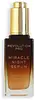
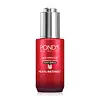
Revolution Beauty Pro Miracle Night Rescue Serum Advanced Complex Versus Pond's Age Miracle Ultimate Youth Night Serum Hexyl-Retinol
This barrier-repair serum is formulated around Lactobacillus Ferment Lysate and Bifida Ferment Lysate to strengthen the skin barrier and calm redness.
This anti-aging serum is formulated around Niacinamide and Hexylresorcinol to soften the look of wrinkles and fade the look of dark spots.


What's inside
What's inside
 Key Ingredients
Benefits
Concerns
Ingredients Side-by-side
Water
Skin ConditioningBis-PEG-18 Methyl Ether Dimethyl Silane
EmollientLactobacillus Ferment Lysate
Skin Conditioning
Bifida Ferment Lysate
Skin Conditioning


Propanediol
Solvent
PEG-8 Caprylic/Capric Glycerides
EmulsifyingBetaine
Humectant
Glycereth-26
Humectant
Methyl Gluceth-10
EmulsifyingPhenoxyethanol
Preservative
Glycerin
Humectant
Carbomer
Emulsion StabilisingCaffeine
Skin Conditioning
Propylene Glycol
Humectant

Yeast Extract
Skin ConditioningSodium Hydroxide
BufferingEthylhexylglycerin
Skin ConditioningDisodium EDTA
Simmondsia Chinensis Seed Oil
Emollient

Squalane
Emollient
Lavandula Angustifolia Oil
Masking



Bisabolol
Antioxidant
Sodium Hyaluronate
Humectant
Adansonia Digitata Fruit Extract
EmollientChamomilla Recutita Flower Extract
Masking
Lactic Acid
Buffering





Centella Asiatica Leaf Extract
Skin Conditioning
Leuconostoc/Radish Root Ferment Filtrate
Antimicrobial
Sodium Benzoate
Masking
Sodium Chloride
MaskingPotassium Sorbate
Preservative
Acetic Acid
BufferingRosa Centifolia Flower Extract
Astringent
Ceramide NP
Skin Conditioning
2,3-Butanediol
HumectantCaprylyl Glycol
Emollient
Bis(Tripeptide-1) Copper Acetate
Skin Conditioning
Hydrogenated Lecithin
Emulsifying
Sorbic Acid
Preservative
Glyceryl Stearate
Emollient
Ceramide AP
Skin Conditioning
Ceramide As
Skin Conditioning
Ceramide Ns
Skin Conditioning
Cholesterol
Emollient
Sodium Metabisulfite
Antioxidant
Ceramide EOP
Skin Conditioning
Farnesol
Perfuming
Citronellol
Perfuming
Geraniol
Perfuming
Linalool
Perfuming
CI 15985
Cosmetic ColorantCI 19140
Cosmetic ColorantCI 17200
Cosmetic ColorantWater, Bis-PEG-18 Methyl Ether Dimethyl Silane, Lactobacillus Ferment Lysate, Bifida Ferment Lysate, Propanediol, PEG-8 Caprylic/Capric Glycerides, Betaine, Glycereth-26, Methyl Gluceth-10, Phenoxyethanol, Glycerin, Carbomer, Caffeine, Propylene Glycol, Yeast Extract, Sodium Hydroxide, Ethylhexylglycerin, Disodium EDTA, Simmondsia Chinensis Seed Oil, Squalane, Lavandula Angustifolia Oil, Bisabolol, Sodium Hyaluronate, Adansonia Digitata Fruit Extract, Chamomilla Recutita Flower Extract, Lactic Acid, Centella Asiatica Leaf Extract, Leuconostoc/Radish Root Ferment Filtrate, Sodium Benzoate, Sodium Chloride, Potassium Sorbate, Acetic Acid, Rosa Centifolia Flower Extract, Ceramide NP, 2,3-Butanediol, Caprylyl Glycol, Bis(Tripeptide-1) Copper Acetate, Hydrogenated Lecithin, Sorbic Acid, Glyceryl Stearate, Ceramide AP, Ceramide As, Ceramide Ns, Cholesterol, Sodium Metabisulfite, Ceramide EOP, Farnesol, Citronellol, Geraniol, Linalool, CI 15985, CI 19140, CI 17200
Water
Skin ConditioningIsodecyl Neopentanoate
EmollientButylene Glycol
Humectant
Glycerin
Humectant
Niacinamide
Smoothing

Sodium Starch Octenylsuccinate
AbsorbentHexylresorcinol
Antimicrobial
Retinyl Propionate
Skin Conditioning
Sodium Acetylated Hyaluronate
Humectant
Sodium Hyaluronate
Humectant
Cetyl Alcohol
Emollient
Hydroxypropyl Starch Phosphate
1,2-Hexanediol
Skin Conditioning
Ethylhexylglycerin
Skin ConditioningAcrylates/C10-30 Alkyl Acrylate Crosspolymer
Emulsion StabilisingDilauryl Thiodipropionate
Antioxidant
Pentaerythrityl Tetra-Di-T-Butyl Hydroxyhydrocinnamate
Antioxidant
Bisabolol
Antioxidant
Decyl Glucoside
Cleansing
Potassium Hydroxide
BufferingZingiber Officinale Root Extract
Masking
Tocopherol
Antioxidant
Bifida Ferment Lysate
Skin Conditioning
Betaine
Humectant
Lecithin
Emollient
Retinol
Skin Conditioning
Acetyl Dipeptide-1 Cetyl Ester
Skin Conditioning
Sodium Hyaluronate Crosspolymer
Humectant
Hydrolyzed Sodium Hyaluronate
Skin Conditioning
Ascorbyl Palmitate
Antioxidant
Parfum
Masking
Disodium EDTA
BHT
Antioxidant
Phenoxyethanol
Preservative
CI 14700
Cosmetic ColorantCI 19140
Cosmetic ColorantWater, Isodecyl Neopentanoate, Butylene Glycol, Glycerin, Niacinamide, Sodium Starch Octenylsuccinate, Hexylresorcinol, Retinyl Propionate, Sodium Acetylated Hyaluronate, Sodium Hyaluronate, Cetyl Alcohol, Hydroxypropyl Starch Phosphate, 1,2-Hexanediol, Ethylhexylglycerin, Acrylates/C10-30 Alkyl Acrylate Crosspolymer, Dilauryl Thiodipropionate, Pentaerythrityl Tetra-Di-T-Butyl Hydroxyhydrocinnamate, Bisabolol, Decyl Glucoside, Potassium Hydroxide, Zingiber Officinale Root Extract, Tocopherol, Bifida Ferment Lysate, Betaine, Lecithin, Retinol, Acetyl Dipeptide-1 Cetyl Ester, Sodium Hyaluronate Crosspolymer, Hydrolyzed Sodium Hyaluronate, Ascorbyl Palmitate, Parfum, Disodium EDTA, BHT, Phenoxyethanol, CI 14700, CI 19140
Ingredients Explained
These ingredients are found in both products.
Ingredients higher up in an ingredient list are typically present in a larger amount.
Betaine is a humectant. Like hyaluronic acid, it helps attract and retain moisture in the skin. It’s known for being gentle and for helping the skin maintain balanced hydration.
Betaine is mainly used to improve hydration and support calmer skin. It helps skin cells regulate water balance because it functions as an osmolyte.
Some studies suggest betaine may support making skin tone more even.
Fun fact: Betaine naturally exists in the skin and the body. In cosmetic products, it can be either plant-derived (most commonly from sugar beets) or synthetically produced for consistency and stability.
Betaine is also known as trimethylglycine.
Learn more about BetaineBifida Ferment Lysate is a postbiotic ingredient made by fermenting Bifidobacterium to extract a nutrient-rich mix of peptides, amino acids, vitamins, organic acids, and polysaccharides.
These components are basically the building blocks that your skin already uses to stay hydrated, repair itself, and maintain its barrier. That's why this ingredient helps your skin hold onto moisture and stay resilient against irritation.
One in-vitro study found that this ingredient tells your skin cells to produce more of the proteins (filaggrin, loricrin, and involucrin) for building a strong and healthy barrier. This study also found this ingredient to be a solid antioxidant that helped neutralize damage against UV and pollution.
A study with people from 2010 found that sensitive, reactive skin using a cream with 10% of this ingredient for a month became noticeably less dry, less reactive, and harder to irritate compared to the group using a plain cream.
In short, this ingredient is a well-tolerated ingredient that can help with barrier repair, antioxidant protection, and calming reactive skin.
This ingredient is generally considered fungal acne (Malassezia) safe; Bifidobacterium is a bacterium, not a yeast or fungus.
The fungal acne concern with fermented ingredients mainly applies to yeast-derived ferments like Saccharomyces and Galactomyces, because those are in the same kingdom as Malassezia and could theoretically contain residual compounds that feed it.
Bifida is a completely different organism, so on its own it doesn't provide a food source for the Malassezia yeast that causes fungal acne.
Learn more about Bifida Ferment LysateBisabolol is a gentle skin conditioner, antioxidant, and soothing ingredient.
It's primary claim to fame is soothing and research shows topically applied bisabolol can quiet the chemical messengers that cause your skin to become inflamed, helping to sooth any irritation.
A clinical study found that applying 0.5% bisabolol daily for 8 weeks produced an average 9% decrease in skin pigmentation. Researchers found it can also suppress the process that leads to excess melanin production in skin.
In vitro studies found that bisabolol combined with propylene glycol significantly increased skin permeability by increasing lipid fluidity in the stratum corneum.
You'll likely see use concentrations quite low, usually 0.1-0.2%.
Overall, this is a well-tolerated ingredient that works well in formulas designed for sensitive, reactive, or post-procedure skin.
Learn more about BisabololCI 19140 is also known as Tartrazine. Tartrazine is a synthetic dye used in cosmetics, foods, and medicine to add a yellow color.
Tartrazine is created from petroleum and is water-soluble.
Some people may experience allergies from this dye, especially asthmatics and those with an aspirin intolerance.
Learn more about CI 19140Disodium EDTA is a chelating agent. It grabs onto and deactivates metal ions that sneak into your products from water, packaging, or air.
This ingredient mainly works behind the scenes and helps with:
On top of that, this ingredient can counteract the effects of hard water by binding to the minerals in it.
One thing worth knowing is that Disodium EDTA has been shown to be a mild penetration enhancer. It can help other ingredients absorb into skin more effectively which can be a double-edged sword (great for actives, but can also make the active too strong if you have sensitive skin).
Clinical patch testing showed no significant skin irritation at typical use concentrations and minimal dermal absorption.
You'll most likely see this ingredient near the end of an ingredient list. It's typically found in concentrations less than 1%.
Learn more about Disodium EDTAEthylhexylglycerin is created from glycerin. It is a multitasker ingredient that:
The CIR Expert Panel found minimal skin absorption or sensitization of any kind in a safety assessment. Though this ingredient is considered well-tolerated, a small number of cases of allergic dermatitis have been published since 2002. Just be sure to patch test if you are unsure.
Industry-reported use ranges from 8% in rinse-off products and 2% in leave-on formulations.
Learn more about EthylhexylglycerinGlycerin (or glycerol) is a compound naturally found in your skin. It's a powerhouse humectant that pulls water into the stratum corneum.
Topically, glycerin does several things at once:
Your skin makes glycerin on its own (mostly from sebaceous oil breakdown) and shuttles it to your outermost layer of skin, or your epidermis, via aquaporin-3.
Aquaporin-3 is a transporter that is essential for normal skin hydration, elasticity, and repair. Interestingly, mice lacking in AQP3 have dry and less elastic skin that can be fully corrected with glycerin.
This ingredient is non-irritating, plays well with almost every ingredient, and works across all skin types. Typical use is anywhere between 3-10% but can go up to 79% in some leave-on products.
Just know very high concentrations (>40%) can feel tacky in low humidity.
Glycerin is the name for this ingredient in American English. British English uses Glycerol/Glycerine.
Learn more about GlycerinPhenoxyethanol is one of the most widely used preservatives in skincare (and for good reason!).
It has a large spectrum of antimicrobial activity and especially effective bacteria, yeast, and mold while only having a weak effect on your skin's natural microbiome.
On a cellular level, it disrupts the cell membranes of microbes by poking holes that make the cell leak. This shuts down the chemical reactions the microbe needs to make energy so it can no longer survive.
Another perk of this ingredient is that it stays functional across a wide pH range (3-10).
You'll often see it paired with boosters like Ethylhexylglycerin; one study showed that a 1:9 ratio of Ethylhexylglycerin to Phenoxyethanol damages bacterial membranes as effectively as doubling the Phenoxyethanol concentration on its own.
Typical use concentrations range from 0.3-1% depending on the formula, and this ingredient is capped at 1% int the EU.
Safety-wise, the fear mongering does not hold up to the evidence. The EU's Scientific Committee on Consumer Safety and FDA consider it safe as a preservative at up to 1%, including for children of all ages.
Adverse systemic effects only showed up in animal studies at exposures roughly 200x higher than what people get from cosmetics. And despite its very widespread use, this ingredient is a rare sensitizer and allergic reactions are uncommon.
Learn more about PhenoxyethanolSodium Hyaluronate is the salt form of hyaluronic acid. It is a long sugar chain that is naturally found in your skin, joints, and connective tissue that maintains hydration and elasticity.
In skincare, it works as a humectant. It pulls water from the environment and deeper layers of skin and binds it to the surface.
Interestingly, the size of the molecule affects its behavior:
Some clinical evidence links low molecular weight versions to improved wrinkle depth, elasticity, anti-inflammatory effects, and barrier repair.
Many serums use a blend of both weights so you can get surface hydration plus longer-lasting and deeper effects.
You'll typically see concentrations between 0.1-2% for this ingredient.
Learn more about Sodium HyaluronateWater. It's the most common cosmetic ingredient of all. You'll usually see it at the top of ingredient lists, meaning that it makes up the largest part of the product.
So why is it so popular? Water most often acts as a solvent - this means that it helps dissolve other ingredients into the formulation.
You'll also recognize water as that liquid we all need to stay alive. If you see this, drink a glass of water. Remember to stay hydrated!
Learn more about Water

