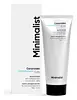
Minimalist Ceramides 0.3% + Madecassoside Versus Skinmade Antioxidants + Prebiotic Oats Barrier Repair Moisturiser
This barrier-repair moisturizer is formulated around Avena Sativa Kernel Extract and Madecassoside to strengthen the skin barrier and calm redness.
This barrier-repair moisturizer is formulated around Avena Sativa Kernel Flour and Panthenol to strengthen the skin barrier and calm redness.


What's inside
What's inside
 Key Ingredients
Benefits
Concerns
Ingredients Side-by-side
Water
Skin ConditioningAvena Sativa Kernel Extract
Abrasive





Dicaprylyl Carbonate
EmollientGlycerin
Humectant
Glyceryl Glucoside
Humectant
Butylene Glycol
Humectant
Trehalose
Humectant
Saccharide Isomerate
Humectant
Ursolic Acid
MaskingAminobutyric Acid
Pentylene Glycol
Skin Conditioning
Allantoin
Skin Conditioning
Cholesterol
Emollient
Hydrogenated Lecithin
Emulsifying
Madecassoside
Antioxidant
Polyacrylate-13
Polyisobutene
Polysorbate 20
Emulsifying

Glyceryl Stearate
Emollient
Sucrose Distearate
Emollient
Propylene Glycol
Humectant
Phenoxyethanol
Preservative
Ceramide NP
Skin Conditioning
Ceramide EOP
Skin Conditioning
Ceramide Ns
Skin Conditioning
Ceramide As
Skin Conditioning
Ceramide AP
Skin Conditioning
Triethanolamine
BufferingEthylhexylglycerin
Skin ConditioningCitric Acid
Buffering

Sodium Citrate
BufferingCarbomer
Emulsion StabilisingTrisodium Ethylenediamine Disuccinate
ChelatingWater, Avena Sativa Kernel Extract, Dicaprylyl Carbonate, Glycerin, Glyceryl Glucoside, Butylene Glycol, Trehalose, Saccharide Isomerate, Ursolic Acid, Aminobutyric Acid, Pentylene Glycol, Allantoin, Cholesterol, Hydrogenated Lecithin, Madecassoside, Polyacrylate-13, Polyisobutene, Polysorbate 20, Glyceryl Stearate, Sucrose Distearate, Propylene Glycol, Phenoxyethanol, Ceramide NP, Ceramide EOP, Ceramide Ns, Ceramide As, Ceramide AP, Triethanolamine, Ethylhexylglycerin, Citric Acid, Sodium Citrate, Carbomer, Trisodium Ethylenediamine Disuccinate
Oryza Sativa Bran Water
Masking
Glycerin
Humectant
Avena Sativa Kernel Flour
Abrasive
Cyclopentasiloxane
Emollient
Panthenol
Skin Conditioning
Saccharide Isomerate
Humectant
Xylitol
Humectant
Rhamnose
HumectantSodium PCA
Humectant
Glycyrrhiza Glabra Root Extract
Bleaching
Opuntia Ficus-Indica Seed Oil
Emollient
Oryza Sativa Bran Extract
Skin Conditioning
Curcuma Longa Root Extract
Antioxidant
Niacinamide
Smoothing



Sodium Hyaluronate
Humectant
Urea
Buffering
Avena Sativa Kernel Extract
Abrasive
Alpha-Glucan Oligosaccharide
Cleansing
Houttuynia Cordata Extract
Skin Conditioning
Centella Asiatica Extract
Cleansing
Bifida Ferment Lysate
Skin Conditioning
Lactobacillus/Algae Extract Ferment
Skin ProtectingSilybum Marianum Extract
Skin Conditioning
Bisabolol
Antioxidant
Polyglutamic Acid
Skin Conditioning
Ceramide EOP
Skin Conditioning
Ceramide NP
Skin Conditioning
Camellia Sinensis Leaf Extract
Antimicrobial
Chondrus Crispus Extract
Skin Conditioning
Spiraea Ulmaria Extract
AstringentLactobacillus/Coconut Fruit Juice Ferment Filtrate
Skin Conditioning
Ubiquinone
Antioxidant
4-T-Butylcyclohexanol
Masking
Linoleic Acid
Cleansing
Linolenic Acid
Cleansing
Cholesterol
Emollient
Acetyl Hexapeptide-8
Humectant
Palmitoyl Tetrapeptide-7
Skin Conditioning
Palmitoyl Tripeptide-1
Skin Conditioning
Palmitoyl Tripeptide-5
Skin Conditioning
Phenoxyethanol
Preservative
Ethylhexylglycerin
Skin ConditioningPotassium PCA
Humectant
Magnesium PCA
Humectant
Calcium PCA
Humectant
Laminaria Ochroleuca Extract
Skin Conditioning
Allantoin
Skin Conditioning
Sodium Acetylated Hyaluronate
Humectant
Madecassoside
Antioxidant
Oryza Sativa Bran Water, Glycerin, Avena Sativa Kernel Flour, Cyclopentasiloxane, Panthenol, Saccharide Isomerate, Xylitol, Rhamnose, Sodium PCA, Glycyrrhiza Glabra Root Extract, Opuntia Ficus-Indica Seed Oil, Oryza Sativa Bran Extract, Curcuma Longa Root Extract, Niacinamide, Sodium Hyaluronate, Urea, Avena Sativa Kernel Extract, Alpha-Glucan Oligosaccharide, Houttuynia Cordata Extract, Centella Asiatica Extract, Bifida Ferment Lysate, Lactobacillus/Algae Extract Ferment, Silybum Marianum Extract, Bisabolol, Polyglutamic Acid, Ceramide EOP, Ceramide NP, Camellia Sinensis Leaf Extract, Chondrus Crispus Extract, Spiraea Ulmaria Extract, Lactobacillus/Coconut Fruit Juice Ferment Filtrate, Ubiquinone, 4-T-Butylcyclohexanol, Linoleic Acid, Linolenic Acid, Cholesterol, Acetyl Hexapeptide-8, Palmitoyl Tetrapeptide-7, Palmitoyl Tripeptide-1, Palmitoyl Tripeptide-5, Phenoxyethanol, Ethylhexylglycerin, Potassium PCA, Magnesium PCA, Calcium PCA, Laminaria Ochroleuca Extract, Allantoin, Sodium Acetylated Hyaluronate, Madecassoside
Ingredients Explained
These ingredients are found in both products.
Ingredients higher up in an ingredient list are typically present in a larger amount.
Allantoin is a soothing ingredient known for its protective and moisturizing properties; it's basically a quiet workhorse ingredient you can find in a huge range of cosmetics.
Though it can be derived from the comfrey plant, allantoin is produced synthetically for cosmetic products to ensure purity.
Research shows it can encourage your skin cells to turn over and renew by stimulating keratinocyte and fibroblast proliferation.
It also has mild keratolytic properties to help loosen and shed dead skin cells without being harsh.
Studies also suggest allantoin can help calm inflammation by dialing down some of the chemical signals your skin sends out when it is irritated.
This ingredient is typically used in the 0.1-0.5% range, and the FDA recognizes it as a skin protectant in OTC products up to 2%.
Overall, allantoin is a wonderful addition to most routines; it is stable across a wide pH range (~4-8), works well with other ingredients, and is considered non-sensitizing/non-irritating.
Fun fact: Allantoin is naturally occurring in comfrey root, beets, chamomile, and wheat sprouts. Our bodies even produce it as a byproduct of uric acid metabolism.
Learn more about AllantoinAvena Sativa Kernel Extract is is derived from colloidal oatmeal. Besides being a healthy breakfast, oats have many benefits in skincare too.
This ingredient helps sooth, hydrate, and protect the skin. The starches in colloidal oatmeal are able to bind water, keeping the skin hydrated.
The cellulose and fiber in colloidal oatmeal help reduce inflammation. This can also help the skin feel softer.
Colloidal Oatmeal is also an antioxidant. Antioxidants protect our skin from free-radical damage.
Oatmeal also contains beneficial compounds:
This ingredient is created by mixing grounded oatmeal and a liquid base.
Learn more about Avena Sativa Kernel ExtractCeramide EOP is formally known as Ceramide 1.
It is naturally found in skin and part of the intercellular "mortar" holding everything together in your outermost layer.
EOP stands for a linked Ester fatty acid, a linked Omega hydroxy fatty acid, and the Phytosphingosine base.
What makes Ceramide EOP special is its ultra-long fatty acid chain; this unique structure allows it to bridge the lipid layers in your skin barrier to prevent water loss (something no other ceramide can do).
Low levels of Ceramide EOP have been found in people with eczema and psoriasis.
Using it together with other ceramides, cholesterol, and linoleic acid have been shown to meaningfully improve hydration and reduce water loss.
In one clinical study, a regimen using Ceramide EOP, NP, and AP led to significant symptom improvements in patients with eczema, psoriasis, and dry skin in just 4 weeks.
You'll usually see concentrations between 0.1-0.5% in formulations. Overall, this is a well-tolerated and safe ingredient for cosmetic use.
Learn more about Ceramide EOPCeramide NP (formerly known as Ceramide 3) is one of the skin's naturally occurring lipids.
Since ceramides are the major lipid components of the skin, they are crucial for maintaining skin barrier and hydration. Ceramide NP most closely mirrors the dominant kind in human skin amongst ceramide subtypes.
This ceramide works by slotting into gaps within the stratum corneum's lipid matrix to limit trans-epidermal water loss (TEWL) and shield the skin against external irritants.
A study with 312 patients found that using a ceramide-containing routine for 4 weeks reduced the severity of atopic dermatitis by over 61%.
Another clinical study in subjects aged 60 and older found that a ceramide body wash and moisturizer improved skin dryness and itchy skin in 15 days.
Overall, ceramides are considered non-irritating and safety tests have found little to no observable adverse effects from using this ingredient.
Ceramide NP is usually sourced from plants (like soybean or rice bran), or produced synthetically.
Learn more about Ceramide NPCholesterol is a lipid that is naturally found in human skin and is one of the three key components of your skin barrier. In skincare, it is an emollient and barrier-repairing ingredient.
It works by fitting directly into the lipid layers of skin to help restore structure and reduce transepidermal water loss (TEWL).
This is a great ingredient for dry, compromised, or aging skin; our skin starts to produce less cholesterol with age.
Research shows cholesterol works best in combination with ceramides and fatty acids, the other two major components in your skin barrier.
Cholesterol is also a well-establish penetration enhancer and can help other actives absorb more effectively.
Cosmetic-grade cholesterol is usually derived from lanolin but plant and synthetic options also exist. We recommend reaching out to the brand if you have questions about their source of cholesterol.
Learn more about CholesterolEthylhexylglycerin is created from glycerin. It is a multitasker ingredient that:
The CIR Expert Panel found minimal skin absorption or sensitization of any kind in a safety assessment. Though this ingredient is considered well-tolerated, a small number of cases of allergic dermatitis have been published since 2002. Just be sure to patch test if you are unsure.
Industry-reported use ranges from 8% in rinse-off products and 2% in leave-on formulations.
Learn more about EthylhexylglycerinGlycerin (or glycerol) is a compound naturally found in your skin. It's a powerhouse humectant that pulls water into the stratum corneum.
Topically, glycerin does several things at once:
Your skin makes glycerin on its own (mostly from sebaceous oil breakdown) and shuttles it to your outermost layer of skin, or your epidermis, via aquaporin-3.
Aquaporin-3 is a transporter that is essential for normal skin hydration, elasticity, and repair. Interestingly, mice lacking in AQP3 have dry and less elastic skin that can be fully corrected with glycerin.
This ingredient is non-irritating, plays well with almost every ingredient, and works across all skin types. Typical use is anywhere between 3-10% but can go up to 79% in some leave-on products.
Just know very high concentrations (>40%) can feel tacky in low humidity.
Glycerin is the name for this ingredient in American English. British English uses Glycerol/Glycerine.
Learn more about GlycerinMadecassoside is one of four active compounds found in Centella asiatica and is one of the main reasons Centella is so effective at calming irritated skin and supporting the moisture barrier.
There's a solid body of peer-reviewed research backing Madecassoside for several skin benefits. Studies have found:
Madecassoside pairs well with other hydrating or antioxidant ingredients like Ascorbic Acid or Hyaluronic Acid.
Learn more about MadecassosidePhenoxyethanol is one of the most widely used preservatives in skincare (and for good reason!).
It has a large spectrum of antimicrobial activity and especially effective bacteria, yeast, and mold while only having a weak effect on your skin's natural microbiome.
On a cellular level, it disrupts the cell membranes of microbes by poking holes that make the cell leak. This shuts down the chemical reactions the microbe needs to make energy so it can no longer survive.
Another perk of this ingredient is that it stays functional across a wide pH range (3-10).
You'll often see it paired with boosters like Ethylhexylglycerin; one study showed that a 1:9 ratio of Ethylhexylglycerin to Phenoxyethanol damages bacterial membranes as effectively as doubling the Phenoxyethanol concentration on its own.
Typical use concentrations range from 0.3-1% depending on the formula, and this ingredient is capped at 1% int the EU.
Safety-wise, the fear mongering does not hold up to the evidence. The EU's Scientific Committee on Consumer Safety and FDA consider it safe as a preservative at up to 1%, including for children of all ages.
Adverse systemic effects only showed up in animal studies at exposures roughly 200x higher than what people get from cosmetics. And despite its very widespread use, this ingredient is a rare sensitizer and allergic reactions are uncommon.
Learn more about PhenoxyethanolSaccharide Isomerate comes from sugars found in corn. It is a skin hydrator.
The structure of this ingredient can be altered to be more similar to the carbohydrates found in our skin. This ability to mimic our skin gives it hydrating properties.
Specifically, saccharide Isomerate is a humectant. Humectants draw moisture from the air to our skin.
Research shows Saccharide Isomerate to be an effective moisturizer.
Learn more about Saccharide Isomerate

