Milk Makeup Vegan Milk Moisturizer Versus Biologique Recherche Crème Biofixine Anti-Ageing Face Cream
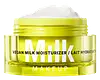
This barrier-repair moisturizer is formulated around Squalane and Vitis Vinifera Seed Oil to strengthen the skin barrier and hydrate skin.
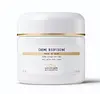
This anti-aging moisturizer is formulated around Vitis Vinifera Seed Oil and Acetyl Hexapeptide-8 to soften the look of wrinkles and hydrate skin.


What's inside
What's inside
 Key Ingredients
Benefits
Concerns
Ingredients Side-by-side
Water
Skin ConditioningCetyl Alcohol
Emollient



Squalane
Emollient


Caprylic/Capric Triglyceride
Masking
Stearic Acid
Cleansing
Butylene Glycol
Humectant
Stearyl Alcohol
Emollient
Polyglyceryl-2 Diisostearate
Emulsifying
Vitis Vinifera Seed Oil
Emollient

Butyrospermum Parkii Butter
Skin Conditioning

Glyceryl Stearate
Emollient
Glycerin
Humectant
Isocetyl Stearate
Emollient
Myristyl Myristate
Emollient
Pentylene Glycol
Skin Conditioning
Simmondsia Chinensis Seed Oil
Emollient
Helianthus Annuus Seed Oil
Emollient
Argania Spinosa Kernel Oil
Emollient


Adansonia Digitata Seed Oil
Emollient
Citrullus Lanatus Seed Oil
Emollient
Aloe Barbadensis Leaf Juice
Skin Conditioning
Avena Sativa Kernel Extract
Abrasive

Ficus Carica Fruit Extract
Humectant
Adansonia Digitata Fruit Extract
EmollientRosmarinus Officinalis Leaf Extract
AntimicrobialSodium Hyaluronate
Humectant
Phospholipids
Skin Conditioning
PEG-60 Hydrogenated Castor Oil
Emulsifying
Polyglyceryl-10 Dioleate
Emulsifying
Polyglyceryl-10 Oleate
Skin Conditioning
Ceteth-20
CleansingCapryloyl Glycerin/Sebacic Acid Copolymer
Skin ConditioningDiheptyl Succinate
EmollientEthylhexylglycerin
Skin ConditioningPotassium Stearate
CleansingTocopheryl Acetate
Antioxidant

Glyceryl Caprylate
EmollientGlyceryl Undecylenate
Emollient
Polysorbate 60
Emulsifying
Propylene Glycol Dicaprylate/Dicaprate
EmollientSorbitan Isostearate
Emulsifying
Xanthan Gum
EmulsifyingTrisodium Dicarboxymethyl Alaninate
ChelatingHydroxyethyl Acrylate/Sodium Acryloyldimethyl Taurate Copolymer
Emulsion StabilisingCarbomer
Emulsion StabilisingPropanediol
Solvent
Sodium Chloride
MaskingSodium Glycolate
BufferingCitric Acid
Buffering
Sodium Hydroxide
BufferingSodium Benzoate
Masking
Potassium Sorbate
Preservative
Phenoxyethanol
Preservative
Water, Cetyl Alcohol, Squalane, Caprylic/Capric Triglyceride, Stearic Acid, Butylene Glycol, Stearyl Alcohol, Polyglyceryl-2 Diisostearate, Vitis Vinifera Seed Oil, Butyrospermum Parkii Butter, Glyceryl Stearate, Glycerin, Isocetyl Stearate, Myristyl Myristate, Pentylene Glycol, Simmondsia Chinensis Seed Oil, Helianthus Annuus Seed Oil, Argania Spinosa Kernel Oil, Adansonia Digitata Seed Oil, Citrullus Lanatus Seed Oil, Aloe Barbadensis Leaf Juice, Avena Sativa Kernel Extract, Ficus Carica Fruit Extract, Adansonia Digitata Fruit Extract, Rosmarinus Officinalis Leaf Extract, Sodium Hyaluronate, Phospholipids, PEG-60 Hydrogenated Castor Oil, Polyglyceryl-10 Dioleate, Polyglyceryl-10 Oleate, Ceteth-20, Capryloyl Glycerin/Sebacic Acid Copolymer, Diheptyl Succinate, Ethylhexylglycerin, Potassium Stearate, Tocopheryl Acetate, Glyceryl Caprylate, Glyceryl Undecylenate, Polysorbate 60, Propylene Glycol Dicaprylate/Dicaprate, Sorbitan Isostearate, Xanthan Gum, Trisodium Dicarboxymethyl Alaninate, Hydroxyethyl Acrylate/Sodium Acryloyldimethyl Taurate Copolymer, Carbomer, Propanediol, Sodium Chloride, Sodium Glycolate, Citric Acid, Sodium Hydroxide, Sodium Benzoate, Potassium Sorbate, Phenoxyethanol
Water
Skin ConditioningStearic Acid
Cleansing
Propylene Glycol
Humectant
Glycerin
Humectant
Palmitic Acid
Emollient
Vitis Vinifera Seed Oil
Emollient
Polysorbate 40
Emulsifying
Pentylene Glycol
Skin Conditioning
Cetyl Alcohol
Emollient
Helianthus Annuus Seed Oil
Emollient
Butylene Glycol
Humectant
Tea-Stearate
Cleansing
PEG-2 Stearate
Emulsifying
Perfluorodecalin
Skin ConditioningAcetyl Hexapeptide-8
Humectant
Polyperfluoromethylisopropyl Ether
Skin ConditioningJuglans Regia Seed Extract
Skin ConditioningLeontopodium Alpinum Flower/Leaf Extract
Skin ConditioningNasturtium Officinale Extract
Perfuming
Pimpinella Anisum Fruit Extract
MaskingTocopherol
Antioxidant
Sodium Benzoate
Masking
Caprylyl Glycol
Emollient
P-Anisic Acid
MaskingPoloxamer 188
EmulsifyingPhenoxyethanol
Preservative
Sodium Metabisulfite
Antioxidant
Water, Stearic Acid, Propylene Glycol, Glycerin, Palmitic Acid, Vitis Vinifera Seed Oil, Polysorbate 40, Pentylene Glycol, Cetyl Alcohol, Helianthus Annuus Seed Oil, Butylene Glycol, Tea-Stearate, PEG-2 Stearate, Perfluorodecalin, Acetyl Hexapeptide-8, Polyperfluoromethylisopropyl Ether, Juglans Regia Seed Extract, Leontopodium Alpinum Flower/Leaf Extract, Nasturtium Officinale Extract, Pimpinella Anisum Fruit Extract, Tocopherol, Sodium Benzoate, Caprylyl Glycol, P-Anisic Acid, Poloxamer 188, Phenoxyethanol, Sodium Metabisulfite
Reviews
Ingredients Explained
These ingredients are found in both products.
Ingredients higher up in an ingredient list are typically present in a larger amount.
Butylene Glycol (or BG) is used within cosmetic products for a few different reasons:
Overall, Butylene Glycol is a safe and well-rounded ingredient that works well with other ingredients.
Though this ingredient works well with most skin types, some people with sensitive skin may experience a reaction such as allergic rashes, closed comedones, or itchiness.
Learn more about Butylene GlycolCetyl Alcohol is a fatty alcohol. Fatty Alcohols are most often used as an emollient or to thicken a product.
Its main roles are:
Though it has "alcohol" in the name, it is not related to denatured alcohol or ethyl alcohol.
The FDA allows products labeled "alcohol-free" to have fatty alcohols.
This ingredient may not be fungal acne safe. It is a primary fatty alcohol with a chain length above 12 carbons. A study from 2019 show Malassezia can feed on fatty alcohols in this range, so it may trigger fungal acne in those prone to it.
Learn more about Cetyl AlcoholGlycerin (or glycerol) is a compound naturally found in your skin. It's a powerhouse humectant that pulls water into the stratum corneum.
Topically, glycerin does several things at once:
Your skin makes glycerin on its own (mostly from sebaceous oil breakdown) and shuttles it to your outermost layer of skin, or your epidermis, via aquaporin-3.
Aquaporin-3 is a transporter that is essential for normal skin hydration, elasticity, and repair. Interestingly, mice lacking in AQP3 have dry and less elastic skin that can be fully corrected with glycerin.
This ingredient is non-irritating, plays well with almost every ingredient, and works across all skin types. Typical use is anywhere between 3-10% but can go up to 79% in some leave-on products.
Just know very high concentrations (>40%) can feel tacky in low humidity.
Glycerin is the name for this ingredient in American English. British English uses Glycerol/Glycerine.
Learn more about GlycerinHelianthus Annuus Seed Oil is a plant oil derived from the seeds of a sunflower.
It is rich in fatty acids, primarily linoleic acid and oleic acid. This gives it emollient and skin conditioning properties.
The reason this ingredient is so effective is because it forms a thin film on the skin that reduces transepidermal water loss (TEWL) while supplying linoleic acid to the stratum corneum to improve barrier strength.
The high linoleic acid content is particularly noteworthy for acne-prone skin.
Research suggests that acne-prone skin tends to be deficient in linoleic acid in sebum. Topical application may help replenish this to support a healthier follicular environment and less comedone-promoting sebum.
One randomized study found sunflower seed oil preserved skin barrier integrity in adult volunteers with and without atopic dermatitis (outperforming olive oil).
This ingredient is well-studied, gentle, and an effective emollient suitable for most skin types.
On fungal acne: This ingredient may not be Fungal acne (Malassezia folliculitis) safe. This is because it contains fatty acids with carbon chain lengths in the C11-C24 range.
Learn more about Helianthus Annuus Seed OilPentylene Glycol (1,2-pentanediol) is a multitasking little diol with three main roles in a formula:
Research on alkanediols (the family pentylene glycol belongs to) show they work by disrupting microbial cell membranes. This disruption helps the primary preservative system in a product work more effectively at lower doses.
On the safety side, the Cosmetic Ingredient Review Expert Panel has concluded this ingredient to be safe as used in current cosmetic practices + concentrations.
Typical use levels in a formula run about 1-5%.
Learn more about Pentylene GlycolPhenoxyethanol is one of the most widely used preservatives in skincare (and for good reason!).
It has a large spectrum of antimicrobial activity and especially effective bacteria, yeast, and mold while only having a weak effect on your skin's natural microbiome.
On a cellular level, it disrupts the cell membranes of microbes by poking holes that make the cell leak. This shuts down the chemical reactions the microbe needs to make energy so it can no longer survive.
Another perk of this ingredient is that it stays functional across a wide pH range (3-10).
You'll often see it paired with boosters like Ethylhexylglycerin; one study showed that a 1:9 ratio of Ethylhexylglycerin to Phenoxyethanol damages bacterial membranes as effectively as doubling the Phenoxyethanol concentration on its own.
Typical use concentrations range from 0.3-1% depending on the formula, and this ingredient is capped at 1% int the EU.
Safety-wise, the fear mongering does not hold up to the evidence. The EU's Scientific Committee on Consumer Safety and FDA consider it safe as a preservative at up to 1%, including for children of all ages.
Adverse systemic effects only showed up in animal studies at exposures roughly 200x higher than what people get from cosmetics. And despite its very widespread use, this ingredient is a rare sensitizer and allergic reactions are uncommon.
Learn more about PhenoxyethanolSodium Benzoate is a preservative. It's used in both cosmetic and food products to inhibit the growth of mold and bacteria. It is typically produced synthetically.
Both the US FDA and EU Health Committee have approved the use of sodium benzoate. In the US, levels of 0.1% (of the total product) are allowed.
Sodium benzoate works as a preservative by inhibiting the growth of bacteria inside of cells. It prevents the cell from fermenting a type of sugar using an enzyme called phosphofructokinase.
It is the salt of benzoic acid. Foods containing sodium benzoate include soda, salad dressings, condiments, fruit juices, wines, and snack foods.
Studies for using ascorbic acid and sodium benzoate in cosmetics are lacking, especially in skincare routines with multiple steps.
We always recommend speaking with a professional, such as a dermatologist, if you have any concerns.
Learn more about Sodium BenzoateStearic Acid is a fatty acid that is already found in your skin. It's one of the free fatty acids that works alongside ceramides and cholesterols to maintain your barrier.
In cosmetics, it is a multitasker:
Safety-wise, the CIR Expert Panel has concluded it to be safe in cosmetics when formulated to be non-irritating and non-sensitizing.
Free stearic acid is a C18 fatty acid that the Malassezia yeast can substrate, so this ingredient may not be fungal acne safe.
This ingredient does have a comedogenic rating of 2-3, but this doesn't mean a formula with this ingredient will clog pores.
Human testing has proved that any finished product with this ingredient won't automatically make you break out; it really comes down to concentration, formula, and your skin.
Learn more about Stearic AcidVitis Vinifera Seed Oil comes from the grape vine. Grape seeds are a byproduct of creating grape juice or wine.
The components of grape seeds have many skin benefits. Research has found it to be antimicrobial and anti-inflammatory. It also contains many potent antioxidants such as Vitamin E , Vitamin C, proanthocyanidins, polyphenols, flavonoids, and anthocyanins. Proanthocyanidin has been shown to help even out skin tone.
Antioxidants help fight free-radical molecules. Free-radical molecules are capable of damaging our cells and other genetic material. Antioxidants help stabilize free-radicals by donating extra electrons. Grape seed extract may help reduce the signs of aging.
The antimicrobial properties of grape seed may help treat acne. However, more research is needed to support this claim.
Grape seed has also been found to help absorb UV rays. Grape seed extract should not replace your sunscreen.
The fatty acids of grape seed oil give it emollient properties. Emollients help soothe and soften your skin by creating a film. This film traps moisture within, keeping your skin hydrated.
Learn more about Vitis Vinifera Seed OilWater. It's the most common cosmetic ingredient of all. You'll usually see it at the top of ingredient lists, meaning that it makes up the largest part of the product.
So why is it so popular? Water most often acts as a solvent - this means that it helps dissolve other ingredients into the formulation.
You'll also recognize water as that liquid we all need to stay alive. If you see this, drink a glass of water. Remember to stay hydrated!
Learn more about Water

