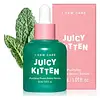
I Dew Care Juicy Kitten Purifying Power-Green Serum Versus Vintner's Daughter Active Treatment Essence
This acne serum is formulated around Niacinamide and Salix Alba Bark Extract to clear breakouts and balance excess oil.
This smoothing essence is formulated around Aloe Barbadensis Leaf Juice and Glycyrrhiza Glabra Root Extract to refine skin texture and brighten dull-looking skin.

What's inside
What's inside
 Key Ingredients
Benefits
Concerns
Ingredients Side-by-side
Water
Skin ConditioningButylene Glycol
Humectant

Propanediol
Solvent
Glycerin
Humectant
Niacinamide
Smoothing









Pentylene Glycol
Skin Conditioning
1,2-Hexanediol
Skin Conditioning
Diethoxyethyl Succinate
SolventSalix Alba Bark Extract
Astringent
Chondrus Crispus Extract
Skin Conditioning

Polyglyceryl-10 Laurate
Skin Conditioning

Saccharum Officinarum Extract
MoisturisingCentella Asiatica Extract
Cleansing
Chlorella Vulgaris Extract
Skin ConditioningMelia Azadirachta Leaf Extract
Skin ConditioningCarbomer
Emulsion StabilisingPolyquaternium-51
Skin Conditioning
Melia Azadirachta Flower Extract
Skin ConditioningTromethamine
BufferingBiosaccharide Gum-1
Humectant
Xanthan Gum
EmulsifyingEthylhexylglycerin
Skin ConditioningCoccinia Indica Fruit Extract
Skin Conditioning
Parfum
Masking


Aloe Barbadensis Flower Extract
EmollientSodium Phytate
ChelatingSolanum Melongena Fruit Extract
Skin ConditioningBrassica Oleracea Acephala Leaf Extract
HumectantSpirulina Platensis Extract
Skin ProtectingOcimum Sanctum Leaf Extract
Skin ConditioningCorallina Officinalis Extract
Skin Conditioning
Curcuma Longa Root Extract
Antioxidant
Houttuynia Cordata Extract
Skin Conditioning
Tocopherol
Antioxidant
Cannabis Sativa Seed Oil
Emollient
Zinc PCA
Humectant
Maltodextrin
Absorbent
Moringa Oleifera Seed Extract
Skin Conditioning
Water, Butylene Glycol, Propanediol, Glycerin, Niacinamide, Pentylene Glycol, 1,2-Hexanediol, Diethoxyethyl Succinate, Salix Alba Bark Extract, Chondrus Crispus Extract, Polyglyceryl-10 Laurate, Saccharum Officinarum Extract, Centella Asiatica Extract, Chlorella Vulgaris Extract, Melia Azadirachta Leaf Extract, Carbomer, Polyquaternium-51, Melia Azadirachta Flower Extract, Tromethamine, Biosaccharide Gum-1, Xanthan Gum, Ethylhexylglycerin, Coccinia Indica Fruit Extract, Parfum, Aloe Barbadensis Flower Extract, Sodium Phytate, Solanum Melongena Fruit Extract, Brassica Oleracea Acephala Leaf Extract, Spirulina Platensis Extract, Ocimum Sanctum Leaf Extract, Corallina Officinalis Extract, Curcuma Longa Root Extract, Houttuynia Cordata Extract, Tocopherol, Cannabis Sativa Seed Oil, Zinc PCA, Maltodextrin, Moringa Oleifera Seed Extract
Aloe Barbadensis Leaf Juice
Skin Conditioning
Malpighia Emarginata Fruit Extract
Skin ConditioningMoringa Oleifera Seed Extract
Skin Conditioning
Althaea Officinalis Root Extract
Skin Conditioning
Glycyrrhiza Glabra Root Extract
Bleaching
Centella Asiatica Extract
Cleansing
Urtica Dioica Leaf Extract
Skin ConditioningGinkgo Biloba Leaf Extract
Skin Conditioning
Taraxacum Officinale Root Extract
Skin ConditioningHelichrysum Italicum Extract
AntiseborrhoeicCamellia Sinensis Leaf Extract
Antimicrobial
Medicago Sativa Leaf Extract
Skin ConditioningAstragalus Membranaceus Root Extract
Emollient
Verbascum Thapsus
Skin ConditioningBacillus Ferment
Skin Conditioning
Lactic Acid
Buffering
Arginine
Masking
Acetum
Avena Sativa Bran Extract
Abrasive
Niacinamide
Smoothing
Glycerin
Humectant
Terminalia Ferdinandiana Fruit Extract
Antioxidant
Cocos Nucifera Fruit Extract
Emollient
Saccharide Isomerate
Humectant
Pyrus Malus Fruit Extract
Skin Conditioning
Chlorella Vulgaris Extract
Skin ConditioningMaltodextrin
Absorbent
Origanum Majorana Leaf Extract
AntiseborrhoeicGluconolactone
Chelating
Muriella Aurantiaca/Ruttnera Lamellosa Oil
Skin Conditioning
Lecithin
Emollient
Ruttnera Lamellosa Oil
Skin Conditioning
Watanabea Reniformis Oil
Skin Conditioning
Sodium Ascorbate
Antioxidant
Sodium Hyaluronate
Humectant
Papain
Skin Conditioning
Bromelain
Skin Conditioning
Argemone Mexicana Callus Extract
Antioxidant
Mirabilis Jalapa Callus Extract
Skin ProtectingPolianthes Tuberosa Callus Extract
Antioxidant
Sodium Phytate
ChelatingSodium Hydroxide
BufferingLevulinic Acid
Perfuming
Sodium Levulinate
Skin ConditioningSodium Benzoate
Masking
Potassium Sorbate
Preservative
Aloe Barbadensis Leaf Juice, Malpighia Emarginata Fruit Extract, Moringa Oleifera Seed Extract, Althaea Officinalis Root Extract, Glycyrrhiza Glabra Root Extract, Centella Asiatica Extract, Urtica Dioica Leaf Extract, Ginkgo Biloba Leaf Extract, Taraxacum Officinale Root Extract, Helichrysum Italicum Extract, Camellia Sinensis Leaf Extract, Medicago Sativa Leaf Extract, Astragalus Membranaceus Root Extract, Verbascum Thapsus, Bacillus Ferment, Lactic Acid, Arginine, Acetum, Avena Sativa Bran Extract, Niacinamide, Glycerin, Terminalia Ferdinandiana Fruit Extract, Cocos Nucifera Fruit Extract, Saccharide Isomerate, Pyrus Malus Fruit Extract, Chlorella Vulgaris Extract, Maltodextrin, Origanum Majorana Leaf Extract, Gluconolactone, Muriella Aurantiaca/Ruttnera Lamellosa Oil, Lecithin, Ruttnera Lamellosa Oil, Watanabea Reniformis Oil, Sodium Ascorbate, Sodium Hyaluronate, Papain, Bromelain, Argemone Mexicana Callus Extract, Mirabilis Jalapa Callus Extract, Polianthes Tuberosa Callus Extract, Sodium Phytate, Sodium Hydroxide, Levulinic Acid, Sodium Levulinate, Sodium Benzoate, Potassium Sorbate
Alternatives
Ingredients Explained
These ingredients are found in both products.
Ingredients higher up in an ingredient list are typically present in a larger amount.
Centella Asiatica Extract (Centella) is one of the most researched botanical extracts in skincare with decades of studies backing its effects on inflammation, collagen, and the skin barrier.
That research keeps pointing back to the same four triterpenoid saponins: Asiaticoside, Madecassoside, Asiatic Acid, and Madecassic Acid.
These compounds allow centella to dial back inflammation, encourage the skin to build and hold onto collagen, support the barrier and hydration, and bring solid antioxidant activity to protect against signs of aging.
Centella also carries a nice supporting cast of Vitamin A, vitamin C, several B vitamins, and amino acids. Put it all together and you get an ingredient that soothes, hydrates, and protects, all at once.
Most of centella's magic comes from the four big compounds (Asiaticoside, Madecassoside, Asiatic Acid, and Madecassic Acid). These are the actives doing the heavy lifting in almost every centella study.
Here is the short version of what they do in the skin:
So it is not just soothing for the sake of soothing. Centella calms the skin AND helps it rebuild.
Just FYI, not all centella on an ingredient list is the same. What you are getting actually depends on the extract:
Fun fact on the ratios: the leaves tend to be richest in Madecassoside and Asiaticoside, and lower in the two acids. The exact amounts shift with where the plant is grown and how it is processed. This means purity really does vary brand to brand.
Centella is one of the most easygoing actives out there.
It layers well with basically everything: niacinamide, hyaluronic acid, peptides, and vitamin C, and also pairs nicely with stronger actives like retinoids and exfoliating acids where it can help take the edge off irritation.
On the safety side, centella and its triterpenes are classified as weak sensitizers, meaning allergic reactions are possible but uncommon.
Patch tests at 1% and 5% came back negative in test panels, and creams at typical use levels did not cause allergic reactions across large groups of people.
But as with any new active, a patch test is still a smart move for very reactive skin.
Centella is widely used because it is effective at low percentages. For context, human safety testing found no meaningful irritation from creams containing centella extract at everyday use levels (the tested amounts were well under 1%).
The irritancy threshold in animal testing was also above 30% (so real-world formulas sit far below anything concerning).
In collagen lab studies, higher concentrations drove more collagen synthesis, so serums built around centella tend to feature it more prominently.
Bottom line: you will find centella working nicely anywhere from a fraction of a percent up to hero-ingredient levels depending on whether it is a supporting soother or the main event.
Fun fact: Centella has been used as a medicine and in food for many centuries. As a medicine, it is used to treat burns, scratches, and wounds.
Learn more about Centella Asiatica ExtractChlorella Vulgaris Extract comes from a single-celled green freshwater algae.
The version used in skincare is almost always a water or glycerin-based extract that is basically the algae's amino acids, peptides, sugars, and chlorophyll pigments.
It acts as a skin-conditioning agent and the research behind it at this time is mostly lab-dish rather than human trials.
Isolated Chlorella peptides inhibit collagenase and elastase (the enzymes that chew up collagen and elastin) and mop up free radicals in test-tube assays. Another study found a Chlorella gel sped up wound healing in mice. Many of the firming or dark-circle claims come from the ingredient supplier's own studies.
Suppliers suggest using 1-2% of the trade version (Water/Glycerin + Chlorella Vulgaris Extract) in a finished formula which means the actual algae solids are a fraction of a percent.
Allergy risk is low and topical reactions are rare; the 2020 anaphylaxis case came from eating Chlorella supplements and not from putting it on skin.
However, patch testing is sensible if you have reacted to algae before.
The "chlorella is high in iodine so it breaks you out" line borrows from marine seaweed. Freshwater Chlorella isn't a notable iodine source unless it's deliberately grown in iodine-enriched medium.
Just so you know, many lists give algae a comedogenic rating of 5 and that number doesn't come from anywhere; it's not in the original rabbit-ear studies that most comedogenic ratings trace back to.
The reasoning behind the reputation is that seaweed is high in iodine and iodine can trigger acne-like breakouts when eaten. This traces back to a 1976 letter in Archives of Dermatology describing two women whose breakouts cleared after they stopped taking high-dose kelp supplements orally.
And the reaction of these two women wasn't clogged pores at all: it was an iodine-triggered pustular rash. Later research found normal dietary iodine doesn't meaningfully affect acne either and nobody has shown topical algae delivers enough iodine to matter.
Learn more about Chlorella Vulgaris ExtractGlycerin (or glycerol) is a compound naturally found in your skin. It's a powerhouse humectant that pulls water into the stratum corneum.
Topically, glycerin does several things at once:
Your skin makes glycerin on its own (mostly from sebaceous oil breakdown) and shuttles it to your outermost layer of skin, or your epidermis, via aquaporin-3.
Aquaporin-3 is a transporter that is essential for normal skin hydration, elasticity, and repair. Interestingly, mice lacking in AQP3 have dry and less elastic skin that can be fully corrected with glycerin.
This ingredient is non-irritating, plays well with almost every ingredient, and works across all skin types. Typical use is anywhere between 3-10% but can go up to 79% in some leave-on products.
Just know very high concentrations (>40%) can feel tacky in low humidity.
Glycerin is the name for this ingredient in American English. British English uses Glycerol/Glycerine.
Learn more about GlycerinMaltodextrin is a plant-derived carbohydrate made by breaking down starch (usually from corn, potato, or rice). In cosmetic formulas, it's a multitasking absorbent, emulsion stabilizer, and skin conditioner.
This ingredient is mostly used to stabilize emulsions and improve the powdery, non-greasy feel of products (like dry shampoos).
Safety-wise, this ingredient is pretty solid; it's even recognized as a food additive. Both animal and clinical studies found no adverse effects at the levels used in cosmetics.
Industry data shows this ingredient is used up to 45.7% in spray products and up to 33% in powder products.
Learn more about MaltodextrinMoringa Oleifera Seed Extract comes from the seeds of the Moringa oleifera plant.
Moringa seeds have antioxidant, anti-inflammatory, and skin hydrating properties. These seeds are rich in oils, proteins, monounsaturated fats, and tocopherols.
As an emollient, moringa seed oil helps trap moisture in the skin by creating a film on top. This helps keep your skin hydrated and soft.
Many compounds in moringa seed oil are antioxidant and anti-inflammatory. These compounds include Vitamin E. , catechins, ferulic acid, and more.
Another compound found in Moringa seed oil is oleic acid.
Moringa trees are native to the Himalayan mountains.
Learn more about Moringa Oleifera Seed ExtractNiacinamide is a multitasking form of vitamin B3 that strengthens the skin barrier, reduces pores and dark spots, regulates oil, and improves signs of aging.
And the best part? It's gentle and well-tolerated by most skin types, including sensitive and reactive skin.
You might have heard of "niacin flush", or the reddening of skin that causes itchiness. Niacinamide has not been found to cause this.
In very rare cases, some individuals may not be able to tolerate niacinamide at all or experience an allergic reaction to it.
If you are experiencing flaking, irritation, and dryness with this ingredient, be sure to double check all your products as this ingredient can be found in all categories of skincare.
When incorporating niacinamide into your routine, look out for concentration amounts. Typically, 5% niacinamide provides benefits such as fading dark spots. However, if you have sensitive skin, it is better to begin with a smaller concentration.
When you apply niacinamide to your skin, your body converts it into nicotinamide adenine dinucleotide (NAD). NAD is an essential coenzyme that is already found in your cells as "fuel" and powers countless biological processes.
In your skin, NAD helps repair cell damage, produce new healthy cells, support collagen production, strengthen the skin barrier, and fight environmental stressors (like UV and pollution).
Our natural NAD levels start to decline with age, leading to slower skin repair, visible aging, and a weaker skin barrier. By providing your skin niacinamide, you're recharging your skin's NAD levels. This leads to stronger, healthier, and younger looking skin.
Another name for vitamin B3 is nicotinamide. This vitamin is water-soluble and our bodies don't store it. We obtain Vitamin B3 from either food or skincare. Meat, fish, wheat, yeast, and leafy greens contain vitamin B3.
The type of niacinamide used in skincare is synthetically created.
Learn more about NiacinamideSodium Phytate is the sodium salt of Phytic acid, a compound that plants store phosphorus in. It's the plant-derived alternative to ingredients like Disodium EDTA.
In skincare, this ingredient is a chelator that grabs onto trace metal ions like iron and copper that sneak into formulas through water/raw materials.
Those metals speed up oxidation so binding them keeps oils, fragrance, and actives from going off, stops color changes, and helps the preservative system work harder.
Survey data shows usage levels range from 0.0099%-0.5% in leave-on products, 0.025%-0.3% in rinse-off, and up to 0.05% in eye-area products. Suppliers typically recommend a range between 0.05-0.5%.
Learn more about Sodium Phytate

