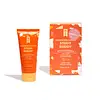
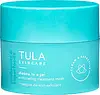
Higher Education Skincare Study Buddy Detoxifying Bentonite Clay Mask Versus Tula Skincare Detox in a Jar Exfoliating Treatment Mask
This wash off mask is formulated around Lactic Acid to exfoliate and smooth skin.

What's inside
What's inside
 Key Ingredients
Benefits
Concerns
Ingredients Side-by-side
Water
Skin ConditioningKaolin
Abrasive



Glycerin
Humectant


Bentonite
Absorbent
Caprylic/Capric Triglyceride
Masking
Zinc Oxide
Cosmetic Colorant

Sodium PCA
Humectant
Polyacrylamide
Phenoxyethanol
Preservative
Olea Europaea Fruit Oil
Masking





C13-14 Isoparaffin
Emollient
Caprylyl Glycol
Emollient
Decyl Glucoside
Cleansing
Ethylhexylglycerin
Skin ConditioningDisodium EDTA
ChelatingPolysorbate 20
Emulsifying
Tetrahexyldecyl Ascorbate
Antioxidant




Hexylene Glycol
EmulsifyingLactic Acid
Buffering



Laureth-7
EmulsifyingParfum
Masking
Glycolic Acid
Buffering
Mica
Cosmetic ColorantTitanium Dioxide
Cosmetic Colorant
Curcuma Longa Root Extract
Antioxidant
Benzyl Benzoate
Antimicrobial
Vanillyl Butyl Ether
Masking1,2-Hexanediol
Skin Conditioning
Linalool
Perfuming
Water, Kaolin, Glycerin, Bentonite, Caprylic/Capric Triglyceride, Zinc Oxide, Sodium PCA, Polyacrylamide, Phenoxyethanol, Olea Europaea Fruit Oil, C13-14 Isoparaffin, Caprylyl Glycol, Decyl Glucoside, Ethylhexylglycerin, Disodium EDTA, Polysorbate 20, Tetrahexyldecyl Ascorbate, Hexylene Glycol, Lactic Acid, Laureth-7, Parfum, Glycolic Acid, Mica, Titanium Dioxide, Curcuma Longa Root Extract, Benzyl Benzoate, Vanillyl Butyl Ether, 1,2-Hexanediol, Linalool
Water
Skin ConditioningGlycerin
Humectant
CI 77891
Cosmetic ColorantBentonite
Absorbent
Hydrogenated Soybean Oil
Emollient
Kaolin
Abrasive
Octyldodecyl Neopentanoate
EmollientSorbitan Stearate
Emulsifying
Bifida Ferment Lysate
Skin Conditioning
Lactic Acid
Buffering
Curcuma Longa Root Extract
Antioxidant
Citric Acid
Buffering
Butyrospermum Parkii Butter
Skin Conditioning
Olea Europaea Fruit Oil
Masking
Hydrolyzed Rice Protein
Skin ConditioningCichorium Intybus Root Extract
MaskingVaccinium Angustifolium Fruit Extract
Skin Protecting
Carthamus Tinctorius Seed Oil
Masking
Camellia Sinensis Leaf Extract
Antimicrobial
Camelina Sativa Seed Oil
Skin Conditioning
Volcanic Sand
Skin ConditioningLactis Proteinum
Skin ConditioningYogurt Powder
Ascorbyl Palmitate
Antioxidant
Microcrystalline Cellulose
AbsorbentOlus Oil
Emollient
Inulin
Skin Conditioning
Lactose
HumectantTocopheryl Acetate
Antioxidant
Butylene Glycol
Humectant
Xanthan Gum
EmulsifyingDecylene Glycol
Skin ConditioningCaprylyl Glycol
Emollient
Pentylene Glycol
Skin Conditioning
Ethylhexylglycerin
Skin ConditioningOctyldodecanol
Emollient
Bulnesia Sarmientoi Wood Oil
Masking
Cananga Odorata Flower Oil
Masking
Citrus Aurantium Dulcis Oil
Masking
Citrus Limon Fruit Oil
Astringent
Juniperus Mexicana Oil
Masking
Trisodium Dicarboxymethyl Alaninate
ChelatingSodium Chloride
MaskingSorbic Acid
Preservative
Sodium Glycolate
Buffering1,2-Hexanediol
Skin Conditioning
Phenethyl Alcohol
MaskingParfum
Masking
Phenoxyethanol
Preservative
CI 77289
Cosmetic ColorantCI 77007
Cosmetic ColorantWater, Glycerin, CI 77891, Bentonite, Hydrogenated Soybean Oil, Kaolin, Octyldodecyl Neopentanoate, Sorbitan Stearate, Bifida Ferment Lysate, Lactic Acid, Curcuma Longa Root Extract, Citric Acid, Butyrospermum Parkii Butter, Olea Europaea Fruit Oil, Hydrolyzed Rice Protein, Cichorium Intybus Root Extract, Vaccinium Angustifolium Fruit Extract, Carthamus Tinctorius Seed Oil, Camellia Sinensis Leaf Extract, Camelina Sativa Seed Oil, Volcanic Sand, Lactis Proteinum, Yogurt Powder, Ascorbyl Palmitate, Microcrystalline Cellulose, Olus Oil, Inulin, Lactose, Tocopheryl Acetate, Butylene Glycol, Xanthan Gum, Decylene Glycol, Caprylyl Glycol, Pentylene Glycol, Ethylhexylglycerin, Octyldodecanol, Bulnesia Sarmientoi Wood Oil, Cananga Odorata Flower Oil, Citrus Aurantium Dulcis Oil, Citrus Limon Fruit Oil, Juniperus Mexicana Oil, Trisodium Dicarboxymethyl Alaninate, Sodium Chloride, Sorbic Acid, Sodium Glycolate, 1,2-Hexanediol, Phenethyl Alcohol, Parfum, Phenoxyethanol, CI 77289, CI 77007
Ingredients Explained
These ingredients are found in both products.
Ingredients higher up in an ingredient list are typically present in a larger amount.
1,2-Hexanediol is a synthetic liquid and another multi-functional powerhouse.
It is a:
- Humectant, drawing moisture into the skin
- Emollient, helping to soften skin
- Solvent, dispersing and stabilizing formulas
- Preservative booster, enhancing the antimicrobial activity of other preservatives
Bentonite is an aluminium phyllosilicate clay with great absorbent properties. The name 'bentonite' comes from the area where the largest source is found: Fort Benton, Wyoming.
As a clay, bentonite is often used to absorb excess oil and provide exfoliation. It has also been shown to have some antibacterial and anti-inflammatory properties. Studies show bentonite was effective at calming dermatitis from poison ivy and in diaper dermatitis of infants. Bentonite has also been shown to act as a barrier against toxic compounds on your skin.
Sunscreens containing bentonite display higher water resistance and stay on the skin for much longer. The sunscreens containing bentonite also show higher potency and UV light absorbtion.
Bentonite is naturally created from volcanic ash and several natural weathering/hydrothermal processes.
A common usage of bentonite is removing excess protein from white wines. Bentonite contains a property of being able to absorb large amounts of protein from aqueous solutions.
Phyllosilicate clay has a structure formed by sheets.
Learn more about BentoniteCaprylyl Glycol is a humectant, skin conditioner, emollient, and preservative booster derived from either caprylic acid or synthetically created.
Typical use levels vary from 0.3-1% as a preservative booster and go up to 2% to condition skin.
Because it is not a free-fatty acid, this ingredient is fungal acne safe (there's nothing for Malassezia to feed on).
Learn more about Caprylyl GlycolCurcuma Longa Root Extract comes from the rhizome (underground stem) of the turmeric plant.
While the official EU Cosing Database lists this ingredient as a fragrance, it actually does more than give products a scent.
This ingredient contains a group of yellow pigments called curcuminoids (mostly curcumin) that give it genuine antioxidant and anti-inflammatory activity in skin.
Reviews of topical clinical studies have found turmeric/curcumin to be generally well-tolerated and useful across conditions like eczema and mild inflammation.
One thing working in its favor is that curcumin barely penetrates; in lab skin-permeation testing, the curcuminoids mostly stayed in the outermost layer of skin. This is a good thing because its soothing and antioxidant activity is a surface-level job anyway.
At this time, industry data shows there's no single "correct" cosmetic percentage. It's used across a wide range depending on the product and varies from tiny fractions of a percent up to a few percent.
Allergy-wise, curcumin is a documented (but uncommon) contact allergen. It can also cross react with related plants, so anyone with a turmeric/ginger/cinnamon allergy or reactive skin should patch test first.
Learn more about Curcuma Longa Root ExtractEthylhexylglycerin is created from glycerin. It is a multitasker ingredient that:
The CIR Expert Panel found minimal skin absorption or sensitization of any kind in a safety assessment. Though this ingredient is considered well-tolerated, a small number of cases of allergic dermatitis have been published since 2002. Just be sure to patch test if you are unsure.
Industry-reported use ranges from 8% in rinse-off products and 2% in leave-on formulations.
Learn more about EthylhexylglycerinGlycerin (or glycerol) is a compound naturally found in your skin. It's a powerhouse humectant that pulls water into the stratum corneum.
Topically, glycerin does several things at once:
Your skin makes glycerin on its own (mostly from sebaceous oil breakdown) and shuttles it to your outermost layer of skin, or your epidermis, via aquaporin-3.
Aquaporin-3 is a transporter that is essential for normal skin hydration, elasticity, and repair. Interestingly, mice lacking in AQP3 have dry and less elastic skin that can be fully corrected with glycerin.
This ingredient is non-irritating, plays well with almost every ingredient, and works across all skin types. Typical use is anywhere between 3-10% but can go up to 79% in some leave-on products.
Just know very high concentrations (>40%) can feel tacky in low humidity.
Glycerin is the name for this ingredient in American English. British English uses Glycerol/Glycerine.
Learn more about GlycerinKaolin is a clay. It is used for oil control and to help minimize pores. Like other clays, kaolin has the ability to absorb excess sebum or oil. This can help clean out pores and mattify the skin.
Some types of kaolin may have exfoliating properties. When water is added to kaolin, it becomes a paste with small abrasive particles.
Most kaolin is a white color, but may be pink/orange/red depending on where it comes from.
The name 'kaolin' comes from a Chinese village named 'Gaoling'. Kaolin clay comes from rocks rich in kaolinite. Kaolinite, the mineral, has a silicate layered structure. Kaolinite is formed from chemical weathering of aluminum siilicate minerals.
Besides skincare, kaolin is commonly used to make glossy paper, in ceramics, toothpaste, and as medicine to soothe stomach issues.
Learn more about KaolinLactic Acid is another well-loved alpha hydroxy acid (AHA). It is gentler than glycolic acid but still highly effective.
Its main role is to exfoliate the surface of the skin by loosening the “glue” that holds dead skin cells together. Shedding those old cells leads to smoother, softer, and more even-toned skin.
Because lactic acid molecules are larger than glycolic acid, they don’t penetrate as deeply. This means they’re less likely to sting or irritate, making it a great choice for beginners or those with sensitive skin.
Like glycolic acid, it can:
Lactic acid also acts as a humectant (like hyaluronic acid). It can draw water into the skin to improve hydration and also plays a role in the skin's natural moisturizing factor (NMF) in the form of sodium lactate.
Studies show it can boost ceramide production to strengthen the skin barrier and even help balance the skin’s microbiome.
To get results, choose products with a pH between 3-4.
Lower strengths (5-12%) focus on surface exfoliation; higher strengths (12% and up) can reach deeper in the dermis (deeper, supportive layer) to improve skin texture and firmness over time.
Though it was originally derived from milk, most modern lactic acid used in skincare is vegan. It is made through non-dairy fermentation to create a bio-identical and stable form suitable for all formulations.
When lactic acid shows up near the end of an ingredient list, it usually means the brand added just a tiny amount to adjust the product’s pH.
Legend has it that Cleopatra used to bathe in sour milk to help reduce wrinkles.
Lactic acid is truly a gentle multitasker: it exfoliates, hydrates, strengthens, and brightens. It's a great ingredient for giving your skin a smooth, glowing, and healthy look without the harshness of stronger acids.
Read more about some other popular AHA's here:
Learn more about Lactic AcidThis ingredient is also known as olive oil. It has been used in skincare for centuries and science largely backs up its reputation as a nourishing emollient.
The main components of olive oil are oleic acid (55-83%), linoleic acid (3.5-20%), and palmitic acid (7-20%). Oleic acid promotes skin regeneration and helps regulate inflammatory responses.
Squalene is also naturally present in olive oil and exhibits moisturizing and antioxidant properties.
The polyphenols in olive oil also show anti-aging promise; one clinical study found a measurable improvement in skin appearance after 30 days of topical serum use.
Just be aware that applying olive oil directly to skin can weaken the barrier and cause redness. One study with volunteers found even people without sensitive skin experienced a significant reduction in stratum corneum integrity and induced mild erythema.
It's best to use this ingredient as part of a carefully crafted formula (instead of putting it on skin directly from the bottle).
Because it has a 0-2 on the comedogenic scale, it is low risk for acne-prone skin. Just remember the overall formulation of a product matters more than a few ingredients with comedogenic ratings.
This ingredient may not be fungal acne safe because of the oleic and palmitic acid content. These fall within the C11-24 fatty acid range that the Malassezia yeast can metabolize to grow.
Overall, olive oil is a well-studied and nourishing skincare ingredient.
Learn more about Olea Europaea Fruit OilParfum is a catch-all term for an ingredient or more that is used to give a scent to products.
Also called "fragrance", this ingredient can be a blend of hundreds of chemicals or plant oils. This means every product with "fragrance" or "parfum" in the ingredients list is a different mixture.
For instance, Habanolide is a proprietary trade name for a specific aroma chemical. When used as a fragrance ingredient in cosmetics, most aroma chemicals fall under the broad labeling category of “FRAGRANCE” or “PARFUM” according to EU and US regulations.
The term 'parfum' or 'fragrance' is not regulated in many countries. In many cases, it is up to the brand to define this term.
For instance, many brands choose to label themselves as "fragrance-free" because they are not using synthetic fragrances. However, their products may still contain ingredients such as essential oils that are considered a fragrance by INCI standards.
One example is Calendula flower extract. Calendula is an essential oil that still imparts a scent or 'fragrance'.
Depending on the blend, the ingredients in the mixture can cause allergies and sensitivities on the skin. Some ingredients that are known EU allergens include linalool and citronellol.
Parfum can also be used to mask or cover an unpleasant scent.
The bottom line is: not all fragrances/parfum/ingredients are created equally. If you are worried about fragrances, we recommend taking a closer look at an ingredient. And of course, we always recommend speaking with a professional.
Learn more about ParfumPhenoxyethanol is one of the most widely used preservatives in skincare (and for good reason!).
It has a large spectrum of antimicrobial activity and especially effective bacteria, yeast, and mold while only having a weak effect on your skin's natural microbiome.
On a cellular level, it disrupts the cell membranes of microbes by poking holes that make the cell leak. This shuts down the chemical reactions the microbe needs to make energy so it can no longer survive.
Another perk of this ingredient is that it stays functional across a wide pH range (3-10).
You'll often see it paired with boosters like Ethylhexylglycerin; one study showed that a 1:9 ratio of Ethylhexylglycerin to Phenoxyethanol damages bacterial membranes as effectively as doubling the Phenoxyethanol concentration on its own.
Typical use concentrations range from 0.3-1% depending on the formula, and this ingredient is capped at 1% int the EU.
Safety-wise, the fear mongering does not hold up to the evidence. The EU's Scientific Committee on Consumer Safety and FDA consider it safe as a preservative at up to 1%, including for children of all ages.
Adverse systemic effects only showed up in animal studies at exposures roughly 200x higher than what people get from cosmetics. And despite its very widespread use, this ingredient is a rare sensitizer and allergic reactions are uncommon.
Learn more about PhenoxyethanolWater. It's the most common cosmetic ingredient of all. You'll usually see it at the top of ingredient lists, meaning that it makes up the largest part of the product.
So why is it so popular? Water most often acts as a solvent - this means that it helps dissolve other ingredients into the formulation.
You'll also recognize water as that liquid we all need to stay alive. If you see this, drink a glass of water. Remember to stay hydrated!
Learn more about Water

