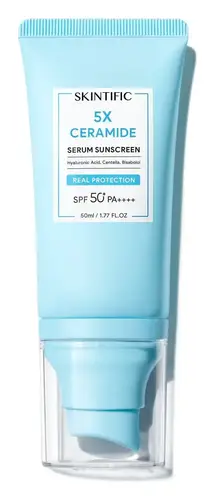
This hybrid sunscreen covers the full UV range and blocks ~98% of UVB at SPF 50.
This chemical sunscreen covers the full UV range and blocks ~98% of UVB at SPF 50.


What's inside
What's inside
 Key Ingredients
Benefits
Concerns
Ingredients Side-by-side
Zinc Oxide 12%
Cosmetic Colorant


Water
Skin ConditioningCaprylic/Capric Triglyceride
Masking


Isoamyl Laurate
Emollient

Squalane
Emollient
Butyloctyl Salicylate
Skin Conditioning
Jojoba Esters
Emollient
Glycerin
Humectant
Caprylyl Glycol
Emollient
Cetyl Alcohol
Emollient
Glyceryl Stearate
Emollient
Silica
Abrasive

Polyglyceryl-2 Dipolyhydroxystearate
Skin Conditioning
PEG-75 Stearate
Surfactant
Methylpropanediol
SolventAllantoin
Skin Conditioning

Pyrus Malus Fruit Extract
Skin Conditioning
Lysolecithin
EmulsifyingSclerotium Gum
Emulsion StabilisingLecithin
Emollient
Ceteth-20
CleansingPhenylpropanol
Masking

Steareth-20
CleansingPullulan
Xanthan Gum
EmulsifyingBisabolol
Antioxidant
Aloe Barbadensis Leaf Juice Powder
Skin Conditioning
Maltodextrin
Absorbent
Tetrasodium Glutamate Diacetate
ChelatingPhenoxyethanol
Preservative
Ethylhexylglycerin
Skin ConditioningHexylene Glycol
EmulsifyingTocopherol
Antioxidant


Sodium Hydroxide
BufferingZinc Oxide 12%, Water, Caprylic/Capric Triglyceride, Isoamyl Laurate, Squalane, Butyloctyl Salicylate, Jojoba Esters, Glycerin, Caprylyl Glycol, Cetyl Alcohol, Glyceryl Stearate, Silica, Polyglyceryl-2 Dipolyhydroxystearate, PEG-75 Stearate, Methylpropanediol, Allantoin, Pyrus Malus Fruit Extract, Lysolecithin, Sclerotium Gum, Lecithin, Ceteth-20, Phenylpropanol, Steareth-20, Pullulan, Xanthan Gum, Bisabolol, Aloe Barbadensis Leaf Juice Powder, Maltodextrin, Tetrasodium Glutamate Diacetate, Phenoxyethanol, Ethylhexylglycerin, Hexylene Glycol, Tocopherol, Sodium Hydroxide
Water
Skin ConditioningEthylhexyl Methoxycinnamate
UV Absorber
Aluminum Starch Octenylsuccinate
Absorbent
Pentylene Glycol
Skin Conditioning
Glycereth-26
Humectant
Caprylyl Methicone
Skin Conditioning
C12-15 Alkyl Benzoate
AntimicrobialButylene Glycol
Humectant
Ethylhexyl Triazone
UV Absorber
Bis-Ethylhexyloxyphenol Methoxyphenyl Triazine
UV Absorber
Methylene Bis-Benzotriazolyl Tetramethylbutylphenol
UV Filter
Glycerin
Humectant
C14-22 Alcohols
Emulsion Stabilising
Triacontanyl Pvp
HumectantDimethicone
Emollient
Sorbitan Caprylate
EmulsifyingCetearyl Olivate
Ceramide NP
Skin Conditioning
Ceramide Ns
Skin Conditioning
Ceramide As
Skin Conditioning
Ceramide EOP
Skin Conditioning
Ceramide AP
Skin Conditioning
Allantoin
Skin Conditioning
Squalane
Emollient
Bisabolol
Antioxidant
Portulaca Oleracea Extract
Skin Conditioning
Sorbitan Olivate
Emulsifying
Ammonium Acryloyldimethyltaurate/Vp Copolymer
Tocopheryl Acetate
Antioxidant
C12-20 Alkyl Glucoside
EmulsifyingDecyl Glucoside
Cleansing
Ectoin
Skin Conditioning
Disodium EDTA
ChelatingAcrylates/C10-30 Alkyl Acrylate Crosspolymer
Emulsion StabilisingPropylene Glycol
Humectant
Hydrogenated Lecithin
Emulsifying
Xanthan Gum
EmulsifyingBHT
Antioxidant
Water, Ethylhexyl Methoxycinnamate, Aluminum Starch Octenylsuccinate, Pentylene Glycol, Glycereth-26, Caprylyl Methicone, C12-15 Alkyl Benzoate, Butylene Glycol, Ethylhexyl Triazone, Bis-Ethylhexyloxyphenol Methoxyphenyl Triazine, Methylene Bis-Benzotriazolyl Tetramethylbutylphenol, Glycerin, C14-22 Alcohols, Triacontanyl Pvp, Dimethicone, Sorbitan Caprylate, Cetearyl Olivate, Ceramide NP, Ceramide Ns, Ceramide As, Ceramide EOP, Ceramide AP, Allantoin, Squalane, Bisabolol, Portulaca Oleracea Extract, Sorbitan Olivate, Ammonium Acryloyldimethyltaurate/Vp Copolymer, Tocopheryl Acetate, C12-20 Alkyl Glucoside, Decyl Glucoside, Ectoin, Disodium EDTA, Acrylates/C10-30 Alkyl Acrylate Crosspolymer, Propylene Glycol, Hydrogenated Lecithin, Xanthan Gum, BHT
Reviews
Ingredients Explained
These ingredients are found in both products.
Ingredients higher up in an ingredient list are typically present in a larger amount.
Allantoin is a soothing ingredient known for its protective and moisturizing properties; it's basically a quiet workhorse ingredient you can find in a huge range of cosmetics.
Though it can be derived from the comfrey plant, allantoin is produced synthetically for cosmetic products to ensure purity.
Research shows it can encourage your skin cells to turn over and renew by stimulating keratinocyte and fibroblast proliferation.
It also has mild keratolytic properties to help loosen and shed dead skin cells without being harsh.
Studies also suggest allantoin can help calm inflammation by dialing down some of the chemical signals your skin sends out when it is irritated.
This ingredient is typically used in the 0.1-0.5% range, and the FDA recognizes it as a skin protectant in OTC products up to 2%.
Overall, allantoin is a wonderful addition to most routines; it is stable across a wide pH range (~4-8), works well with other ingredients, and is considered non-sensitizing/non-irritating.
Fun fact: Allantoin is naturally occurring in comfrey root, beets, chamomile, and wheat sprouts. Our bodies even produce it as a byproduct of uric acid metabolism.
Learn more about AllantoinBisabolol is a gentle skin conditioner, antioxidant, and soothing ingredient.
It's primary claim to fame is soothing and research shows topically applied bisabolol can quiet the chemical messengers that cause your skin to become inflamed, helping to sooth any irritation.
A clinical study found that applying 0.5% bisabolol daily for 8 weeks produced an average 9% decrease in skin pigmentation. Researchers found it can also suppress the process that leads to excess melanin production in skin.
In vitro studies found that bisabolol combined with propylene glycol significantly increased skin permeability by increasing lipid fluidity in the stratum corneum.
You'll likely see use concentrations quite low, usually 0.1-0.2%.
Overall, this is a well-tolerated ingredient that works well in formulas designed for sensitive, reactive, or post-procedure skin.
Learn more about BisabololGlycerin (or glycerol) is a compound naturally found in your skin. It's a powerhouse humectant that pulls water into the stratum corneum.
Topically, glycerin does several things at once:
Your skin makes glycerin on its own (mostly from sebaceous oil breakdown) and shuttles it to your outermost layer of skin, or your epidermis, via aquaporin-3.
Aquaporin-3 is a transporter that is essential for normal skin hydration, elasticity, and repair. Interestingly, mice lacking in AQP3 have dry and less elastic skin that can be fully corrected with glycerin.
This ingredient is non-irritating, plays well with almost every ingredient, and works across all skin types. Typical use is anywhere between 3-10% but can go up to 79% in some leave-on products.
Just know very high concentrations (>40%) can feel tacky in low humidity.
Glycerin is the name for this ingredient in American English. British English uses Glycerol/Glycerine.
Learn more about GlycerinSqualane is the hydrogenated and shelf-stable form of squalene (a lipid that naturally occurs in human sebum).
It is an emollient and skin conditioning agent that is able to integrate seamlessly into the skin's lipid barrier without clogging pores.
This is due to how structurally similar it is to what your skin already produces.
Though it is mostly an emollient that helps soften and hydrate skin, it also has some humectant and occlusive action. Humectants help the skin retain moisture while occlusives seal it in, making squalane a triple-threat moisturizer.
Research shows it has antioxidant capabilities that help protect against stressors like UV exposure, specifically UVA induced oxidative stress. This study also found that it supports collagen biosynthesis in human dermal fibroblasts.
No clinical study has reported significant adverse effects and irritation reactions are very rare from this ingredient (even at 100% concentration).
Overall, it's a fantastic ingredient for hydration and is suitable for all skin types.
This depends on the source. Squalane can be derived from both plants and animals. Most squalane used in skincare comes from plants.
Please note: the source of squalane is only known if disclosed by the brand. We recommend reaching out to the brand if you have any questions about their squalane.
Read more about squalene with an "e".
Though squalane is often called an oil, it’s technically not one. It is a hydrocarbon, meaning it is only made of carbon and hydrogen. True oils are triglycerides and made of fatty acids and glycerol.
The term “oil-free” isn’t regulated so companies can define it however they want. Some exclude all oils, while others just avoid mineral oil or comedogenic oils.
Squalane has a comedogenic rating of 1 from the original 1972 study that tested raw ingredients under occlusion on rabbit ears. This system is not standardized or peer-reviewed, and using the raw ingredients is very different from how diluted cosmetic formulations are used on human skin.
A comedogenic rating of 1 means it is "unlikely to clog pores" according to the original rating system.
The overall formula of a product matters more than the individual ingredients on whether or not it will cause clogged pores.
Learn more about SqualaneWater. It's the most common cosmetic ingredient of all. You'll usually see it at the top of ingredient lists, meaning that it makes up the largest part of the product.
So why is it so popular? Water most often acts as a solvent - this means that it helps dissolve other ingredients into the formulation.
You'll also recognize water as that liquid we all need to stay alive. If you see this, drink a glass of water. Remember to stay hydrated!
Learn more about WaterXanthan gum is used as a stabilizer and thickener within cosmetic products. It helps give products a sticky, thick feeling - preventing them from being too runny.
On the technical side of things, xanthan gum is a polysaccharide - a combination consisting of multiple sugar molecules bonded together.
Xanthan gum is a pretty common and great ingredient. It is a natural, non-toxic, non-irritating ingredient that is also commonly used in food products.
Learn more about Xanthan Gum