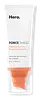
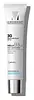
Hero Cosmetics Force Shield Superbeam Sunscreen Apricot SPF 30 Versus La Roche-Posay Mela B3 UV SPF 30
This hybrid sunscreen covers the full UV range and blocks ~97% of UVB at SPF 30.
This mineral sunscreen covers the full UV range and blocks ~97% of UVB at SPF 30.


What's inside
What's inside
 Key Ingredients
Benefits
Concerns
Ingredients Side-by-side
Zinc Oxide
Cosmetic Colorant


Water
Skin ConditioningCaprylic/Capric Triglyceride
Masking


Propanediol
Solvent
C13-15 Alkane
SolventC15-19 Alkane
SolventButyloctyl Salicylate
Skin Conditioning
Bis-Diglyceryl Polyacyladipate-2
Emollient

Octyldodecanol
Emollient
Cetearyl Alcohol
Emollient


Polyacrylate Crosspolymer-6
Emulsion StabilisingHippophae Rhamnoides Oil
Emollient

Betaine
Humectant
Mica
Cosmetic ColorantMusa Sapientum Leaf/Trunk Extract
Silica
Abrasive

Coco-Glucoside
Cleansing
Arachidyl Alcohol
Emollient
Xanthan Gum
EmulsifyingPolyhydroxystearic Acid
Emulsifying
Polyglyceryl-3 Polyricinoleate
Emulsifying
Isostearic Acid
Cleansing
Lecithin
Emollient
Polyglyceryl-3 Lactate/Laurate
CleansingPolyglycerin-3
Humectant
Bisabolol
Antioxidant

Tocopherol
Antioxidant



Behenyl Alcohol
Emollient
Caprylhydroxamic Acid
ChelatingSodium Dilauramidoglutamide Lysine
HumectantCitric Acid
Buffering
Arachidyl Glucoside
EmulsifyingEctoin
Skin Conditioning
Niacinamide
Smoothing


Maltodextrin
Absorbent
Sodium Citrate
BufferingSodium Phytate
ChelatingTerminalia Ferdinandiana Fruit Extract
Antioxidant
Lactobacillus Ferment
Skin Conditioning
Tin Oxide
Abrasive
Glucose
Humectant
Leuconostoc/Radish Root Ferment Filtrate
Antimicrobial
CI 77492
Cosmetic ColorantCI 77491
Cosmetic ColorantTitanium Dioxide
Cosmetic Colorant
Zinc Oxide, Water, Caprylic/Capric Triglyceride, Propanediol, C13-15 Alkane, C15-19 Alkane, Butyloctyl Salicylate, Bis-Diglyceryl Polyacyladipate-2, Octyldodecanol, Cetearyl Alcohol, Polyacrylate Crosspolymer-6, Hippophae Rhamnoides Oil, Betaine, Mica, Musa Sapientum Leaf/Trunk Extract, Silica, Coco-Glucoside, Arachidyl Alcohol, Xanthan Gum, Polyhydroxystearic Acid, Polyglyceryl-3 Polyricinoleate, Isostearic Acid, Lecithin, Polyglyceryl-3 Lactate/Laurate, Polyglycerin-3, Bisabolol, Tocopherol, Behenyl Alcohol, Caprylhydroxamic Acid, Sodium Dilauramidoglutamide Lysine, Citric Acid, Arachidyl Glucoside, Ectoin, Niacinamide, Maltodextrin, Sodium Citrate, Sodium Phytate, Terminalia Ferdinandiana Fruit Extract, Lactobacillus Ferment, Tin Oxide, Glucose, Leuconostoc/Radish Root Ferment Filtrate, CI 77492, CI 77491, Titanium Dioxide
Water
Skin ConditioningC15-19 Alkane
SolventNiacinamide
Smoothing
Glycerin
Humectant
Butylene Glycol
Humectant
Silica
Abrasive
Titanium Dioxide
Cosmetic Colorant
Butyrospermum Parkii Butter
Skin Conditioning
Tin Oxide
Abrasive
Potassium Hydroxide
BufferingCarbomer
Emulsion StabilisingArachidyl Alcohol
Emollient
Arachidyl Glucoside
EmulsifyingBehenyl Alcohol
Emollient
2-Mercaptonicotinoyl Glycine
Skin Conditioning
Sodium Dilauramidoglutamide Lysine
HumectantSodium Thiosulfate
Ammonium Acryloyldimethyltaurate/Vp Copolymer
Hydroxyacetophenone
Antioxidant
Capryloyl Salicylic Acid
Exfoliating
Caprylyl Glycol
Emollient
Citric Acid
Buffering
Trisodium Ethylenediamine Disuccinate
ChelatingXanthan Gum
EmulsifyingPentylene Glycol
Skin Conditioning
Poly C10-30 Alkyl Acrylate
Emulsion StabilisingPolyglyceryl-4 Caprate
EmulsifyingPentaerythrityl Tetra-Di-T-Butyl Hydroxyhydrocinnamate
Antioxidant
Phenoxyethanol
Preservative
CI 14700
Cosmetic ColorantMica
Cosmetic ColorantParfum
Masking


Water, C15-19 Alkane, Niacinamide, Glycerin, Butylene Glycol, Silica, Titanium Dioxide, Butyrospermum Parkii Butter, Tin Oxide, Potassium Hydroxide, Carbomer, Arachidyl Alcohol, Arachidyl Glucoside, Behenyl Alcohol, 2-Mercaptonicotinoyl Glycine, Sodium Dilauramidoglutamide Lysine, Sodium Thiosulfate, Ammonium Acryloyldimethyltaurate/Vp Copolymer, Hydroxyacetophenone, Capryloyl Salicylic Acid, Caprylyl Glycol, Citric Acid, Trisodium Ethylenediamine Disuccinate, Xanthan Gum, Pentylene Glycol, Poly C10-30 Alkyl Acrylate, Polyglyceryl-4 Caprate, Pentaerythrityl Tetra-Di-T-Butyl Hydroxyhydrocinnamate, Phenoxyethanol, CI 14700, Mica, Parfum
Reviews
Ingredients Explained
These ingredients are found in both products.
Ingredients higher up in an ingredient list are typically present in a larger amount.
Arachidyl Alcohol is a fatty alcohol made from the the arachidic acid found in peanut oil.
Despite having "alcohol" in the name, it is not related to denatured alcohol or ethanol.
This ingredient is a multitasker:
Just be sure to patch this ingredient if you have a peanut allergy (though this ingredient is highly processed and the allergenic proteins are typically removed).
Learn more about Arachidyl AlcoholThis ingredient is a plant-based surfactant and emulsifier. It helps oil and water based ingredients mix evenly to improve formula stability without adding a "greasy" feel.
Behenyl Alcohol is a type of fatty alcohol (these are different from the drying, solvent alcohols).
Fatty Alcohols have hydrating properties and are most often used as an emollient or to thicken a product. They are usually derived from natural fats and oils; behenyl alcohol is derived from the fats of vegetable oils.
Emollients help keep your skin soft and hydrated by creating a film that traps moisture in.
In 2000, Behenyl Alcohol was approved by the US as medicine to reduce the duration of cold sores.
Learn more about Behenyl AlcoholC15-19 alkane is a mixture of alkanes. Alkanes are hydrocarbons with carbon atoms held together by single bonds.
It is a synthetically created solvent and emollient often used to replace silicones or mineral oil. As an emollient, C15-19 Alkane helps soften and soothe the skin. Emollients create a barrier to trap moisture inside.
You'll often see this ingredient used with mineral UV filters such as titanium dioxidide and zinc oxide. It helps these UV filter ingredients be more spreadable.
This ingredient is biodegradable. According to a manufacturer, it is also known as Hydrogenated Polyfarnesene.
Learn more about C15-19 AlkaneCitric Acid is an alpha hydroxy acid (AHA) naturally found in citrus fruits like oranges, lemons, and limes.
Like other AHAs, citric acid can exfoliate skin by breaking down the bonds that hold dead skin cells together. This helps reveal smoother and brighter skin underneath.
However, this exfoliating effect only happens at high concentrations (20%) which can be hard to find in cosmetic products.
Due to this, citric acid is usually included in small amounts as a pH adjuster. This helps keep products slightly more acidic and compatible with skin's natural pH.
In skincare formulas, citric acid can:
While it can provide some skin benefits, research shows lactic acid and glycolic acid are generally more effective and less irritating exfoliants.
Most citric acid used in skincare today is made by fermenting sugars (usually from molasses). This synthetic version is identical to the natural citrus form but easier to stabilize and use in formulations.
Rosacea skin has a lower threshold for acids generally, with 62.5% of rosacea subjects in one study reacting to lactic acid in a sting test. This is why we mark citric acid as a potential rosacea trigger.
However, this ingredient shows up as a pH adjuster or chelator at roughly 0.1-1% in many products. These low levels are unlikely to be an issue for rosacea skin and becomes a potential trigger at exfoliating concentrations (20%). Because everybody's skin is unique, we recommend a patch test if you are unsure.
Learn more about Citric AcidMica is a naturally occurring mineral used to add shimmer and color in cosmetics. It can also help improve the texture of a product or give it an opaque, white/silver color.
Serecite is the name for very fine but ragged grains of mica.
This ingredient is often coated with metal oxides like titanium dioxide. Trace amounts of heavy metals may be found in mica, but these metals are not harmful in our personal products.
Mica has been used since prehistoric times throughout the world. Ancient Egyptian, Indian, Greek, Roman, Aztec, and Chinese civilizations have used mica.
Learn more about MicaNiacinamide is a multitasking form of vitamin B3 that strengthens the skin barrier, reduces pores and dark spots, regulates oil, and improves signs of aging.
And the best part? It's gentle and well-tolerated by most skin types, including sensitive and reactive skin.
You might have heard of "niacin flush", or the reddening of skin that causes itchiness. Niacinamide has not been found to cause this.
In very rare cases, some individuals may not be able to tolerate niacinamide at all or experience an allergic reaction to it.
If you are experiencing flaking, irritation, and dryness with this ingredient, be sure to double check all your products as this ingredient can be found in all categories of skincare.
When incorporating niacinamide into your routine, look out for concentration amounts. Typically, 5% niacinamide provides benefits such as fading dark spots. However, if you have sensitive skin, it is better to begin with a smaller concentration.
When you apply niacinamide to your skin, your body converts it into nicotinamide adenine dinucleotide (NAD). NAD is an essential coenzyme that is already found in your cells as "fuel" and powers countless biological processes.
In your skin, NAD helps repair cell damage, produce new healthy cells, support collagen production, strengthen the skin barrier, and fight environmental stressors (like UV and pollution).
Our natural NAD levels start to decline with age, leading to slower skin repair, visible aging, and a weaker skin barrier. By providing your skin niacinamide, you're recharging your skin's NAD levels. This leads to stronger, healthier, and younger looking skin.
Another name for vitamin B3 is nicotinamide. This vitamin is water-soluble and our bodies don't store it. We obtain Vitamin B3 from either food or skincare. Meat, fish, wheat, yeast, and leafy greens contain vitamin B3.
The type of niacinamide used in skincare is synthetically created.
Learn more about NiacinamideSilica, also known as silicon dioxide, is a naturally occurring mineral. It is used as a fine, spherical, and porous powder in cosmetics.
Though it has exfoliant properties, the function of silica varies depending on the product.
The unique structure of silica enhances the spreadability and adds smoothness, making it a great texture enhancer.
It is also used as an active carrier, emulsifier, and mattifier due to its ability to absorb excess oil.
In some products, tiny microneedles called spicules are made from silica or hydrolyzed sponge. When you rub them in, they lightly polish away dead skin layers and enhance the penetration of active ingredients.
Learn more about SilicaSodium Dilauramidoglutamide Lysine (aka DLGL) is an amino-acid based surfactant. Because it has two fatty tails and two water-loving ends, it's really great at mixing oils and water into stable textures.
It is also a humectant; like hyaluronic acid, it can draw moisture to your skin.
DLGL has been studied as a skin delivery helper. In lab skin models, it increased accumulation/penetration of hydrophilic actives (like vitamin C).
An Australian NICNAS report states DLGL to be non-irritating to skin at less than 10% and non-irritating to eyes at less than 1%. There's no evidence of skin sensitization in animal tests, but be sure to patch test if you are sensitive to surfactants.
Learn more about Sodium Dilauramidoglutamide LysineTin Oxide is an inorganic oxide used to add opacity and volume to a product. In nature, it is already found in mineral form. The main ore of tin is an opaque and shiny mineral called casseterite.
Tin Oxide helps remove translucency in a product, or make it more opaque. Besides adding opacity, tin oxide is used for bulking to add volume.
Titanium Dioxide (TD) is a mineral UV filter widely used in sunscreens and cosmetics.
It's one of only two UV filters officially classified as "mineral" by regulatory agencies (the other being Zinc Oxide).
A really common myth is that mineral filters work by reflecting UV light off your skin like tiny mirrors.
They don't only do that; modern research shows TD protects mostly by absorbing UV radiation, the same way chemical filters do.
When researchers measured this, reflection accounted for only about 4-5% of the protection (and less than SPF 2 on its own). The other ~95% comes from absorption: the UV photons hit the particle and their energy gets soaked up by its semiconductor band gap rather than bouncing off.
So "reflects vs. absorbs" was never really the right way to split mineral from chemical filters.
TD gives broad-spectrum protection that's strongest in the UVB and UVA-2 range and weaker in the UVA-1 range. Its UVA protection isn't quite as strong as Zinc Oxide's which is why you'll often see the two paired together.
Together, they make a solid broad-spectrum system.
TD is a great pick for sensitive, acne-prone, or redness-prone skin because it's non-irritating and chemically inert. Regulatory reviews classify it as a non-sensitizer and mild-to-non-irritant.
It's also unlikely to cause the "eye sting" some chemical filters are known for.
The main trade-off is cosmetic; TD can leave a white cast and has a thicker texture. This is why mineral sunscreens are often less cosmetically elegant than chemical or hybrid formulas (and harder to shade-match on deeper skin tones).
Formulators often use micronized or nano-sized TD to cut down on white case and improve spreadability. Smaller particles scatter less visible light so the formula looks less chalky while still filtering UV.
TD is almost always bundled with coatings like Alumina, Silica, Stearic Acid, or Dimethicone. These coatings do two important jobs:
TD can be used at up to 25% in a finished sunscreen; this is the regulatory ceiling in both the US and the EU.
In practice, the amount in any given product varies a lot depending on the target SPF and whether it's paired with other UV filters.
TD is one of the most heavily vetted sunscreen ingredients out there. It is approved as a UV filter in all major markets worldwide, including the US, EU, UK, Japan, Korea, China, Australia, and Canada.
The safety evidence is solid. There was an old worry that nano particles might absorb through skin into the body but multiple studies (including on damaged, sunburned, and UV-irradiated skin) have shown that TD stays on the surface and the layer of dead skin cells on top of everything else.
There's also no evidence of carcinogenicity, mutagenicity, or reproductive toxicity from dermal exposure of this ingredient.
For those who have seen the headline about a 2022 EU ban on TD, that was on TD as a food additive (a complete separate use from topical sunscreen).
There are ongoing questions about how nano-TD might affect marine ecosystems. As of now, there has been no conclusive evidence that any form of TD (or any other sunscreen filter) harms coral reefs or marine life.
The science is still developing and it's a space worth watching rather than packing over.
However, several destinations have reef-safety sunscreen rules that restrict certain chemical filters and steer visitors toward mineral, non-nano options. If you're traveling somewhere with these rules, a non-nano mineral sunscreen is the safe bet.
Learn more about Titanium DioxideWater. It's the most common cosmetic ingredient of all. You'll usually see it at the top of ingredient lists, meaning that it makes up the largest part of the product.
So why is it so popular? Water most often acts as a solvent - this means that it helps dissolve other ingredients into the formulation.
You'll also recognize water as that liquid we all need to stay alive. If you see this, drink a glass of water. Remember to stay hydrated!
Learn more about WaterXanthan gum is used as a stabilizer and thickener within cosmetic products. It helps give products a sticky, thick feeling - preventing them from being too runny.
On the technical side of things, xanthan gum is a polysaccharide - a combination consisting of multiple sugar molecules bonded together.
Xanthan gum is a pretty common and great ingredient. It is a natural, non-toxic, non-irritating ingredient that is also commonly used in food products.
Learn more about Xanthan Gum

