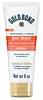
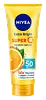
Gold Bond Body Bright Daily Body & Face Lotion with Vitamin C Versus Nivea Extra Bright Super C+ Vitamin Serum SPF 50
This chemical sunscreen covers most of the UV range, lighter on the deep UVA that drives aging.


What's inside
What's inside
 Key Ingredients
Benefits
Concerns
Ingredients Side-by-side
Water
Skin ConditioningCocos Nucifera Oil
Masking








Gluconolactone
Chelating







Dimethicone
Emollient
Niacinamide
Smoothing




Cetyl Alcohol
Emollient
Potassium Hydroxide
BufferingCetearyl Alcohol
Emollient
Butyrospermum Parkii Butter Extract
Skin Conditioning
Caprylic/Capric Triglyceride
Masking
Glycerin
Humectant
Glyceryl Stearate
Emollient
3-O-Ethyl Ascorbic Acid
Skin Conditioning
Citrus Aurantium Dulcis Oil
Masking
Carthamus Tinctorius Seed Oil
Masking
Citrus Grandis Peel Oil
Masking


Saccharum Officinarum Extract
MoisturisingCitrus Limon Fruit Extract
Masking
Citrus Aurantium Dulcis Fruit Extract
MaskingPyrus Malus Fruit Extract
Skin Conditioning
Camellia Sinensis Leaf Extract
Antimicrobial
Tocopheryl Acetate
Antioxidant
Hydroxyacetophenone
Antioxidant
Polysorbate 60
Emulsifying
Steareth-21
Cleansing4-T-Butylcyclohexanol
Masking
Bis-Stearyl Dimethicone
Emollient
Bisabolol
Antioxidant
Ethylhexylglycerin
Skin ConditioningPentylene Glycol
Skin Conditioning
Polyacrylate Crosspolymer-6
Emulsion StabilisingXanthan Gum
EmulsifyingEDTA
ChelatingZingiber Officinale Root Extract
Masking
Water, Cocos Nucifera Oil, Gluconolactone, Dimethicone, Niacinamide, Cetyl Alcohol, Potassium Hydroxide, Cetearyl Alcohol, Butyrospermum Parkii Butter Extract, Caprylic/Capric Triglyceride, Glycerin, Glyceryl Stearate, 3-O-Ethyl Ascorbic Acid, Citrus Aurantium Dulcis Oil, Carthamus Tinctorius Seed Oil, Citrus Grandis Peel Oil, Saccharum Officinarum Extract, Citrus Limon Fruit Extract, Citrus Aurantium Dulcis Fruit Extract, Pyrus Malus Fruit Extract, Camellia Sinensis Leaf Extract, Tocopheryl Acetate, Hydroxyacetophenone, Polysorbate 60, Steareth-21, 4-T-Butylcyclohexanol, Bis-Stearyl Dimethicone, Bisabolol, Ethylhexylglycerin, Pentylene Glycol, Polyacrylate Crosspolymer-6, Xanthan Gum, EDTA, Zingiber Officinale Root Extract
Water
Skin ConditioningC12-15 Alkyl Benzoate
AntimicrobialAlcohol Denat.
Antimicrobial
Distarch Phosphate
AbsorbentOctocrylene
UV Absorber

Phenylbenzimidazole Sulfonic Acid
UV Absorber
Butyl Methoxydibenzoylmethane
UV Absorber
Glycerin
Humectant
Polyglyceryl-3 Methylglucose Distearate
Emulsifying
Dimethicone
Emollient
Phenoxyethanol
Preservative
Sodium Hydroxide
BufferingBehenyl Alcohol
Emollient
Cetyl Alcohol
Emollient
Silica
Abrasive
Silica Dimethyl Silylate
EmollientVp/Hexadecene Copolymer
Methylparaben
Preservative
Trisodium EDTA
ChelatingAcrylates/C10-30 Alkyl Acrylate Crosspolymer
Emulsion StabilisingXanthan Gum
EmulsifyingCarbomer
Emulsion StabilisingPropylene Glycol
Humectant
Creatine
Skin ConditioningPersea Gratissima Oil
Skin Conditioning
Vitis Vinifera Seed Oil
Emollient
Sodium Ascorbyl Phosphate
Antioxidant
Maltodextrin
Absorbent
Citric Acid
Buffering
Citrus Limon Juice
Skin Conditioning
Trideceth-9
EmulsifyingMalpighia Glabra Fruit Juice
Skin ConditioningMangifera Indica Juice
Skin ConditioningFragaria Ananassa Fruit Juice
Skin ConditioningRubus Fruticosus Juice
AstringentRubus Idaeus Juice
AstringentVaccinium Myrtillus Fruit Juice
Skin ConditioningBisabolol
Antioxidant
Sodium Benzoate
Masking
Camellia Sinensis Leaf Extract
Antimicrobial
Citrus Sinensis Fruit Extract
Antioxidant
Glycyrrhiza Glabra Root Extract
Bleaching
Myrciaria Dubia Fruit Juice
Antioxidant
Potassium Sorbate
Preservative
Ascorbic Acid
Antioxidant
Parfum
Masking
Water, C12-15 Alkyl Benzoate, Alcohol Denat., Distarch Phosphate, Octocrylene, Phenylbenzimidazole Sulfonic Acid, Butyl Methoxydibenzoylmethane, Glycerin, Polyglyceryl-3 Methylglucose Distearate, Dimethicone, Phenoxyethanol, Sodium Hydroxide, Behenyl Alcohol, Cetyl Alcohol, Silica, Silica Dimethyl Silylate, Vp/Hexadecene Copolymer, Methylparaben, Trisodium EDTA, Acrylates/C10-30 Alkyl Acrylate Crosspolymer, Xanthan Gum, Carbomer, Propylene Glycol, Creatine, Persea Gratissima Oil, Vitis Vinifera Seed Oil, Sodium Ascorbyl Phosphate, Maltodextrin, Citric Acid, Citrus Limon Juice, Trideceth-9, Malpighia Glabra Fruit Juice, Mangifera Indica Juice, Fragaria Ananassa Fruit Juice, Rubus Fruticosus Juice, Rubus Idaeus Juice, Vaccinium Myrtillus Fruit Juice, Bisabolol, Sodium Benzoate, Camellia Sinensis Leaf Extract, Citrus Sinensis Fruit Extract, Glycyrrhiza Glabra Root Extract, Myrciaria Dubia Fruit Juice, Potassium Sorbate, Ascorbic Acid, Parfum
Reviews
Ingredients Explained
These ingredients are found in both products.
Ingredients higher up in an ingredient list are typically present in a larger amount.
Bisabolol is a gentle skin conditioner, antioxidant, and soothing ingredient.
It's primary claim to fame is soothing and research shows topically applied bisabolol can quiet the chemical messengers that cause your skin to become inflamed, helping to sooth any irritation.
A clinical study found that applying 0.5% bisabolol daily for 8 weeks produced an average 9% decrease in skin pigmentation. Researchers found it can also suppress the process that leads to excess melanin production in skin.
In vitro studies found that bisabolol combined with propylene glycol significantly increased skin permeability by increasing lipid fluidity in the stratum corneum.
You'll likely see use concentrations quite low, usually 0.1-0.2%.
Overall, this is a well-tolerated ingredient that works well in formulas designed for sensitive, reactive, or post-procedure skin.
Learn more about BisabololCamellia Sinensis Leaf Extract (tea extract) is one of the most well-researched plant extracts in skincare with an impressive resume.
Black tea, green tea, and oolong tea are all harvested from the Camellia Sinensis plant.
Studies show green tea extract and its catechins (like epigallocatechin gallate (EGCG)) help your skin cells product energy more efficiently and reducing the number of free-radicals that can damage your skin from the inside.
In lab-grown skin models, this translated to younger, healthier, and stronger skin.
There's also good sun protection data; researchers saw less DNA damage and redness on human skin when green tea was applied before UVB exposure. And the more they applied, the better the protection.
Needless to say, this ingredient shouldn't replace your sunscreen. But it is a great supportive ingredient that you can already find in many sunscreens and antioxidant serums.
A 2009 study found a 2% green tea lotion was effective for mild-to-moderate acne thanks to its anti-inflammatory and mild antimicrobial activity.
The quality of the extract matters a lot here:
Good extracts contain 50-90% catechins while lower quality ones are mostly there for marketing. We recommend reaching out to the brand if you have questions about the quality or source of their ingredients.
Human Repeated Insult Patch Testing showed no irritation or sensitization at use concentrations (0.86% in leave-on products and up to 30% as leaf water).
Learn more about Camellia Sinensis Leaf ExtractCetyl Alcohol is a fatty alcohol. Fatty Alcohols are most often used as an emollient or to thicken a product.
Its main roles are:
Though it has "alcohol" in the name, it is not related to denatured alcohol or ethyl alcohol.
The FDA allows products labeled "alcohol-free" to have fatty alcohols.
This ingredient may not be fungal acne safe. It is a primary fatty alcohol with a chain length above 12 carbons. A study from 2019 show Malassezia can feed on fatty alcohols in this range, so it may trigger fungal acne in those prone to it.
Learn more about Cetyl AlcoholDimethicone is a type of synthetic silicone created from natural materials such as quartz. It is also known as polydimethylsiloxane.
What it does:
Dimethicone comes in different viscosities:
Depending on the viscosity, dimethicone has different properties.
Ingredients lists don't always show which type is used, so we recommend reaching out to the brand if you have questions about the viscosity.
This ingredient is unlikely to cause irritation because it does not get absorbed into skin. However, people with silicone allergies should be careful about using this ingredient.
Note: Dimethicone may contribute to pilling. This is because it is not oil or water soluble, so pilling may occur when layered with products. When mixed with heavy oils in a formula, the outcome is also quite greasy.
Learn more about DimethiconeGlycerin (or glycerol) is a compound naturally found in your skin. It's a powerhouse humectant that pulls water into the stratum corneum.
Topically, glycerin does several things at once:
Your skin makes glycerin on its own (mostly from sebaceous oil breakdown) and shuttles it to your outermost layer of skin, or your epidermis, via aquaporin-3.
Aquaporin-3 is a transporter that is essential for normal skin hydration, elasticity, and repair. Interestingly, mice lacking in AQP3 have dry and less elastic skin that can be fully corrected with glycerin.
This ingredient is non-irritating, plays well with almost every ingredient, and works across all skin types. Typical use is anywhere between 3-10% but can go up to 79% in some leave-on products.
Just know very high concentrations (>40%) can feel tacky in low humidity.
Glycerin is the name for this ingredient in American English. British English uses Glycerol/Glycerine.
Learn more about GlycerinWater. It's the most common cosmetic ingredient of all. You'll usually see it at the top of ingredient lists, meaning that it makes up the largest part of the product.
So why is it so popular? Water most often acts as a solvent - this means that it helps dissolve other ingredients into the formulation.
You'll also recognize water as that liquid we all need to stay alive. If you see this, drink a glass of water. Remember to stay hydrated!
Learn more about WaterXanthan gum is used as a stabilizer and thickener within cosmetic products. It helps give products a sticky, thick feeling - preventing them from being too runny.
On the technical side of things, xanthan gum is a polysaccharide - a combination consisting of multiple sugar molecules bonded together.
Xanthan gum is a pretty common and great ingredient. It is a natural, non-toxic, non-irritating ingredient that is also commonly used in food products.
Learn more about Xanthan Gum

