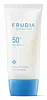
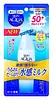
Frudia Ultra UV Shield Sun Essence SPF50+ PA++++ Versus Skin Aqua UV Super Moisture Gel Pump SPF 50+ PA++++
This hybrid sunscreen covers the full UV range and blocks ~98% of UVB at SPF 50.
This chemical sunscreen covers the full UV range and blocks ~98% of UVB at SPF 50.


What's inside
What's inside
 Key Ingredients
Benefits
Concerns
Ingredients Side-by-side
Water
Skin ConditioningPropanediol
Solvent

Ethylhexyl Methoxycinnamate
UV Absorber


Dibutyl Adipate
EmollientDiethylamino Hydroxybenzoyl Hexyl Benzoate
UV Filter
C12-15 Alkyl Benzoate
AntimicrobialNiacinamide
Smoothing










Titanium Dioxide
Cosmetic Colorant
Polyglyceryl-2 Stearate
Emulsifying

Cetyl Alcohol
Emollient

Ethylhexyl Triazone
UV Absorber
Cyclopentasiloxane
Emollient
Stearyl Alcohol
Emollient
Silica
Abrasive
Glyceryl Stearate
Emollient
Cetearyl Olivate
Polysorbate 60
Emulsifying
Glyceryl Caprylate
EmollientAluminum Hydroxide
EmollientHydroxyethyl Acrylate/Sodium Acryloyldimethyl Taurate Copolymer
Emulsion StabilisingSorbitan Olivate
Emulsifying
Polyhydroxystearic Acid
Emulsifying
Methicone
Emollient
Myristyl Alcohol
Emollient


Adenosine
Skin Conditioning
Sorbitan Isostearate
Emulsifying
Lauryl Alcohol
Emollient
Sodium Hyaluronate
Humectant
Vaccinium Angustifolium Fruit Extract
Skin Protecting
Butylene Glycol
Humectant
Malpighia Emarginata Fruit Extract
Skin ConditioningCoco-Caprylate/Caprate
Emollient
Vitis Vinifera Seed Oil
Emollient
Prunus Armeniaca Kernel Oil
Masking
Propylene Glycol
Humectant
Biosaccharide Gum-4
Skin Conditioning
Salix Alba Bark Extract
Astringent
Origanum Vulgare Leaf Extract
Skin ConditioningMangifera Indica Fruit Extract
Skin ConditioningHyaluronic Acid
Humectant
Garcinia Mangostana Peel Extract
Skin ConditioningChamaecyparis Obtusa Leaf Extract
Skin ConditioningSolanum Lycopersicum Seed Oil
Emollient
Scutellaria Baicalensis Root Extract
Astringent
Punica Granatum Seed Oil
Emollient
Portulaca Oleracea Extract
Skin Conditioning
Mangifera Indica Seed Oil
Emollient
Lactobacillus/Soybean Ferment Extract
Skin ConditioningCitrus Paradisi Seed Oil
Perfuming
Cinnamomum Cassia Bark Extract
Masking
Tocopherol
Antioxidant

Tocopheryl Acetate
Antioxidant
Disodium EDTA
Ethylhexylglycerin
Skin Conditioning1,2-Hexanediol
Skin Conditioning
Phenoxyethanol
Preservative
Chlorphenesin
Antimicrobial
Parfum
Masking
Water, Propanediol, Ethylhexyl Methoxycinnamate, Dibutyl Adipate, Diethylamino Hydroxybenzoyl Hexyl Benzoate, C12-15 Alkyl Benzoate, Niacinamide, Titanium Dioxide, Polyglyceryl-2 Stearate, Cetyl Alcohol, Ethylhexyl Triazone, Cyclopentasiloxane, Stearyl Alcohol, Silica, Glyceryl Stearate, Cetearyl Olivate, Polysorbate 60, Glyceryl Caprylate, Aluminum Hydroxide, Hydroxyethyl Acrylate/Sodium Acryloyldimethyl Taurate Copolymer, Sorbitan Olivate, Polyhydroxystearic Acid, Methicone, Myristyl Alcohol, Adenosine, Sorbitan Isostearate, Lauryl Alcohol, Sodium Hyaluronate, Vaccinium Angustifolium Fruit Extract, Butylene Glycol, Malpighia Emarginata Fruit Extract, Coco-Caprylate/Caprate, Vitis Vinifera Seed Oil, Prunus Armeniaca Kernel Oil, Propylene Glycol, Biosaccharide Gum-4, Salix Alba Bark Extract, Origanum Vulgare Leaf Extract, Mangifera Indica Fruit Extract, Hyaluronic Acid, Garcinia Mangostana Peel Extract, Chamaecyparis Obtusa Leaf Extract, Solanum Lycopersicum Seed Oil, Scutellaria Baicalensis Root Extract, Punica Granatum Seed Oil, Portulaca Oleracea Extract, Mangifera Indica Seed Oil, Lactobacillus/Soybean Ferment Extract, Citrus Paradisi Seed Oil, Cinnamomum Cassia Bark Extract, Tocopherol, Tocopheryl Acetate, Disodium EDTA, Ethylhexylglycerin, 1,2-Hexanediol, Phenoxyethanol, Chlorphenesin, Parfum
Water
Skin ConditioningAlcohol Denat.
Antimicrobial

Ethylhexyl Methoxycinnamate
UV Absorber
Dipropylene Glycol
HumectantGlycerin
Humectant
Glycol Dimethacrylate Crosspolymer
Butylene Glycol
Humectant
Sodium Hyaluronate
Humectant
Hydrolyzed Collagen
Emollient
Arginine
Masking
Bis-Ethylhexyloxyphenol Methoxyphenyl Triazine
UV Absorber
Ethylhexyl Triazone
UV Absorber
Acrylates/C10-30 Alkyl Acrylate Crosspolymer
Emulsion StabilisingMelaleuca Alternifolia Leaf Oil
Antioxidant
Bis-PEG-18 Methyl Ether Dimethyl Silane
EmollientPolystyrene
Disodium EDTA
Xanthan Gum
EmulsifyingPolyvinyl Alcohol
Methylparaben
Preservative
Water, Alcohol Denat., Ethylhexyl Methoxycinnamate, Dipropylene Glycol, Glycerin, Glycol Dimethacrylate Crosspolymer, Butylene Glycol, Sodium Hyaluronate, Hydrolyzed Collagen, Arginine, Bis-Ethylhexyloxyphenol Methoxyphenyl Triazine, Ethylhexyl Triazone, Acrylates/C10-30 Alkyl Acrylate Crosspolymer, Melaleuca Alternifolia Leaf Oil, Bis-PEG-18 Methyl Ether Dimethyl Silane, Polystyrene, Disodium EDTA, Xanthan Gum, Polyvinyl Alcohol, Methylparaben
Reviews
Ingredients Explained
These ingredients are found in both products.
Ingredients higher up in an ingredient list are typically present in a larger amount.
Butylene Glycol (or BG) is used within cosmetic products for a few different reasons:
Overall, Butylene Glycol is a safe and well-rounded ingredient that works well with other ingredients.
Though this ingredient works well with most skin types, some people with sensitive skin may experience a reaction such as allergic rashes, closed comedones, or itchiness.
Learn more about Butylene GlycolDisodium EDTA is a chelating agent. It grabs onto and deactivates metal ions that sneak into your products from water, packaging, or air.
This ingredient mainly works behind the scenes and helps with:
On top of that, this ingredient can counteract the effects of hard water by binding to the minerals in it.
One thing worth knowing is that Disodium EDTA has been shown to be a mild penetration enhancer. It can help other ingredients absorb into skin more effectively which can be a double-edged sword (great for actives, but can also make the active too strong if you have sensitive skin).
Clinical patch testing showed no significant skin irritation at typical use concentrations and minimal dermal absorption.
You'll most likely see this ingredient near the end of an ingredient list. It's typically found in concentrations less than 1%.
Learn more about Disodium EDTAThis ingredient is also known as Octinoxate and is one of the oldest and most widely used chemical UV filters in skincare.
It has a simple job: soap up UVB radiation (290-320 nm), the wavelengths responsible for sunburn and a big chunk of long-term sun damage.
In formulas, it's always paired with a separate UVA filter because octinoxate solely protects skin from UVB.
Because it's an oil-soluble liquid, it's easy to blend into the oil phase of lotions/creams and gives a cosmetically elegant feel.
The one quirk about formulating this ingredient is photostability; the molecule slowly changes shape into a less effective version when sunlight hits it. So the longer you're in the sun, the weaker its protection gets. The drop can be more than 30% in some formulas.
It also doesn't play nice with Avobenzone (the common UVA filter) since avobenzone destabilizes octinoxate and the two degrade each other. But don't worry: brands have solved this issue by adding photostabilizers like Tinosorb S to prevent degradation and keep SPF stable under heavy UV exposure.
The maximum allowed level is 10% in the EU and Australia, 7.5% in the US and Canada, and 20% in Japan.
The Cosmetic Ingredient Review Panel has concluded this ingredient to be safe in cosmetics up to 10%.
One last thing worth knowing for context:
Octinoxate has been the subject of ongoing review in Europe where the Scientific Committee on Consumer Safety's (SCCS) 2025 final opinion is that this ingredient is an endocrine-active substance.
Lab and animal studies suggest it can act a bit like a hormone in the body (mildly mimicking estrogen and slightly blocking male hormones). It's important to know this hasn't really been shown to happen in everyday human use.
This ingredient is also banned in Hawaii over coral reef concerns.
Learn more about Ethylhexyl MethoxycinnamateEthylhexyl Triazone (aka Octyl Triazone) is an oil-soluble organic UVB filter. It has peak absorption around 314 nm, right in the middle of the UVB range.
This ingredient is described as one of the most effective UVB filters available and small concentrations are enough to deliver a high SPF thanks to its strong UV absorbing power.
Formulators love it for its stability; its ability to filter UV stays practically unchanged even under intense radiation and it can also help boost the photostability of less stable filters like avobenzone.
It's also a great pick for water resistant products because it's insoluble in water and has a good affinity for keratin.
Because it's a big, heavy molecule, the European Scientific Committee has found to to have very low dermal penetration and negative results for allergenicity.
In vitro testing also showed a low absorption rate and clean results on irritation.
Typical use levels are 1-5% with 5% being the maximum in the EU, Japan, and other markets that allow it. However, this ingredient is not approved yet in the US or Canada.
Learn more about Ethylhexyl TriazoneSodium Hyaluronate is the salt form of hyaluronic acid. It is a long sugar chain that is naturally found in your skin, joints, and connective tissue that maintains hydration and elasticity.
In skincare, it works as a humectant. It pulls water from the environment and deeper layers of skin and binds it to the surface.
Interestingly, the size of the molecule affects its behavior:
Some clinical evidence links low molecular weight versions to improved wrinkle depth, elasticity, anti-inflammatory effects, and barrier repair.
Many serums use a blend of both weights so you can get surface hydration plus longer-lasting and deeper effects.
You'll typically see concentrations between 0.1-2% for this ingredient.
Learn more about Sodium HyaluronateWater. It's the most common cosmetic ingredient of all. You'll usually see it at the top of ingredient lists, meaning that it makes up the largest part of the product.
So why is it so popular? Water most often acts as a solvent - this means that it helps dissolve other ingredients into the formulation.
You'll also recognize water as that liquid we all need to stay alive. If you see this, drink a glass of water. Remember to stay hydrated!
Learn more about Water

