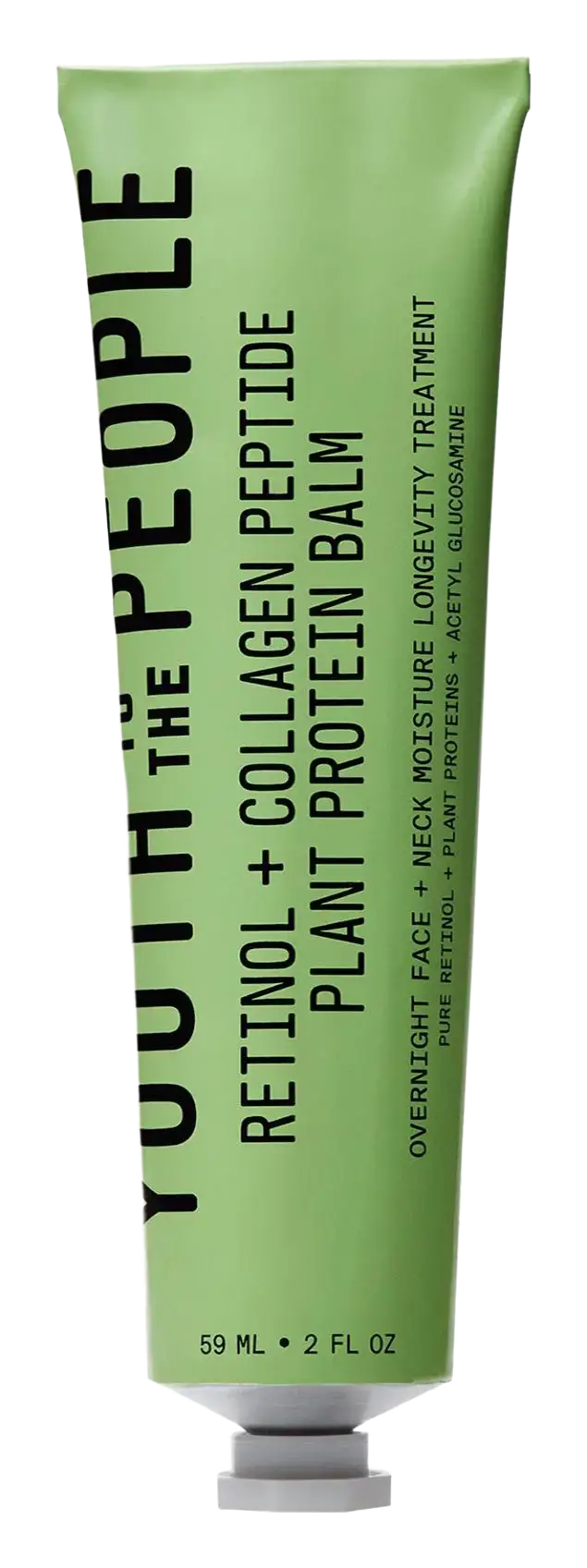
Youth To The People Retinol + Collagen Peptide Plant Balm
A night moisturizer with 51 ingredients, including retinoid, niacinamide, and exfoliants.
This anti-aging night moisturizer is formulated around Niacinamide and Butyrospermum Parkii Butter to soften the look of wrinkles and refine skin texture.
Worth noting
Contains a retinoid, which is best introduced gradually.
We independently verify ingredients, backed by peer-reviewed research. Suggest an update.
What's inside
Ingredients List
Water
Skin ConditioningGlycerin
Humectant


Butylene Glycol
Humectant
Niacinamide
Smoothing









Pentaerythrityl Tetraisostearate
Emollient

Diisopropyl Sebacate
EmollientC15-19 Alkane
SolventButyrospermum Parkii Butter
Skin Conditioning


Taurine
BufferingCetyl Alcohol
Emollient

Taraxacum Officinale Rhizome/Root Extract
Skin ConditioningGlycine Soja Oil
Emollient
Camellia Sinensis Leaf Extract
Antimicrobial
Medicago Sativa Extract
TonicChamomilla Recutita Flower Extract
Masking
Chamomilla Recutita Extract
Skin Conditioning
Brassica Oleracea Acephala Leaf Extract
HumectantPisum Sativum Extract
Skin ConditioningSteareth-100
Gel FormingCarbomer
Emulsion StabilisingCetearyl Alcohol
Emollient
Cetearyl Glucoside
Emulsifying
Sodium Hydroxide
BufferingSilica
Abrasive
Retinol
Skin Conditioning

Cyclodextrin
AbsorbentKaolin
Abrasive
Aluminum Hydroxide
EmollientSpinacia Oleracea
Skin ConditioningSpinacia Oleracea Leaf Extract
Skin ConditioningMannitol
Humectant
Disodium Stearoyl Glutamate
CleansingPropylene Glycol
Humectant
Sh-Polypeptide-16
Skin Protecting
Hydrolyzed Rice Protein
Skin ConditioningCitric Acid
Buffering
Lauroyl Lysine
Skin Conditioning
Trisodium Ethylenediamine Disuccinate
Acetyl Glucosamine
Skin Conditioning
Pentylene Glycol
Skin Conditioning
Dextrin
AbsorbentEthylhexylglycerin
Skin ConditioningTocopherol
Antioxidant
Tocopheryl Acetate
Antioxidant
Pentaerythrityl Tetra-Di-T-Butyl Hydroxyhydrocinnamate
Antioxidant
Potassium Sorbate
Preservative
Sodium Benzoate
Masking
Phenoxyethanol
Preservative
Chlorphenesin
Antimicrobial
CI 77007
Cosmetic ColorantCI 77288
Cosmetic ColorantWater, Glycerin, Butylene Glycol, Niacinamide, Pentaerythrityl Tetraisostearate, Diisopropyl Sebacate, C15-19 Alkane, Butyrospermum Parkii Butter, Taurine, Cetyl Alcohol, Taraxacum Officinale Rhizome/Root Extract, Glycine Soja Oil, Camellia Sinensis Leaf Extract, Medicago Sativa Extract, Chamomilla Recutita Flower Extract, Chamomilla Recutita Extract, Brassica Oleracea Acephala Leaf Extract, Pisum Sativum Extract, Steareth-100, Carbomer, Cetearyl Alcohol, Cetearyl Glucoside, Sodium Hydroxide, Silica, Retinol, Cyclodextrin, Kaolin, Aluminum Hydroxide, Spinacia Oleracea, Spinacia Oleracea Leaf Extract, Mannitol, Disodium Stearoyl Glutamate, Propylene Glycol, Sh-Polypeptide-16, Hydrolyzed Rice Protein, Citric Acid, Lauroyl Lysine, Trisodium Ethylenediamine Disuccinate, Acetyl Glucosamine, Pentylene Glycol, Dextrin, Ethylhexylglycerin, Tocopherol, Tocopheryl Acetate, Pentaerythrityl Tetra-Di-T-Butyl Hydroxyhydrocinnamate, Potassium Sorbate, Sodium Benzoate, Phenoxyethanol, Chlorphenesin, CI 77007, CI 77288
Key Ingredients
Benefits
Concerns
Ingredients Explained
Water. It's the most common cosmetic ingredient of all. You'll usually see it at the top of ingredient lists, meaning that it makes up the largest part of the product.
So why is it so popular? Water most often acts as a solvent - this means that it helps dissolve other ingredients into the formulation.
You'll also recognize water as that liquid we all need to stay alive. If you see this, drink a glass of water. Remember to stay hydrated!
Learn more about WaterGlycerin (or glycerol) is a compound naturally found in your skin. It's a powerhouse humectant that pulls water into the stratum corneum.
Topically, glycerin does several things at once:
Your skin makes glycerin on its own (mostly from sebaceous oil breakdown) and shuttles it to your outermost layer of skin, or your epidermis, via aquaporin-3.
Aquaporin-3 is a transporter that is essential for normal skin hydration, elasticity, and repair. Interestingly, mice lacking in AQP3 have dry and less elastic skin that can be fully corrected with glycerin.
This ingredient is non-irritating, plays well with almost every ingredient, and works across all skin types. Typical use is anywhere between 3-10% but can go up to 79% in some leave-on products.
Just know very high concentrations (>40%) can feel tacky in low humidity.
Glycerin is the name for this ingredient in American English. British English uses Glycerol/Glycerine.
Learn more about GlycerinButylene Glycol (or BG) is used within cosmetic products for a few different reasons:
Overall, Butylene Glycol is a safe and well-rounded ingredient that works well with other ingredients.
Though this ingredient works well with most skin types, some people with sensitive skin may experience a reaction such as allergic rashes, closed comedones, or itchiness.
Learn more about Butylene GlycolNiacinamide is a multitasking form of vitamin B3 that strengthens the skin barrier, reduces pores and dark spots, regulates oil, and improves signs of aging.
And the best part? It's gentle and well-tolerated by most skin types, including sensitive and reactive skin.
You might have heard of "niacin flush", or the reddening of skin that causes itchiness. Niacinamide has not been found to cause this.
In very rare cases, some individuals may not be able to tolerate niacinamide at all or experience an allergic reaction to it.
If you are experiencing flaking, irritation, and dryness with this ingredient, be sure to double check all your products as this ingredient can be found in all categories of skincare.
When incorporating niacinamide into your routine, look out for concentration amounts. Typically, 5% niacinamide provides benefits such as fading dark spots. However, if you have sensitive skin, it is better to begin with a smaller concentration.
When you apply niacinamide to your skin, your body converts it into nicotinamide adenine dinucleotide (NAD). NAD is an essential coenzyme that is already found in your cells as "fuel" and powers countless biological processes.
In your skin, NAD helps repair cell damage, produce new healthy cells, support collagen production, strengthen the skin barrier, and fight environmental stressors (like UV and pollution).
Our natural NAD levels start to decline with age, leading to slower skin repair, visible aging, and a weaker skin barrier. By providing your skin niacinamide, you're recharging your skin's NAD levels. This leads to stronger, healthier, and younger looking skin.
Another name for vitamin B3 is nicotinamide. This vitamin is water-soluble and our bodies don't store it. We obtain Vitamin B3 from either food or skincare. Meat, fish, wheat, yeast, and leafy greens contain vitamin B3.
The type of niacinamide used in skincare is synthetically created.
Learn more about NiacinamidePentaerythrityl Tetraisostearate is a synthetic emollient and "skin-feel" ingredient that spreads well and leaves a non-sticky finish with high gloss.
In makeup, it also doubles as a pigment-wetting agent for better color payoff.
It's a well-vetted ingredient for safety and does not penetrate into skin due to its large molecule size.
Because it's a long-chain fatty acid ester, this ingredient may not be fungal acne or Malassezia safe.
Learn more about Pentaerythrityl TetraisostearateWe don't have a description for Diisopropyl Sebacate yet.
C15-19 alkane is a mixture of alkanes. Alkanes are hydrocarbons with carbon atoms held together by single bonds.
It is a synthetically created solvent and emollient often used to replace silicones or mineral oil. As an emollient, C15-19 Alkane helps soften and soothe the skin. Emollients create a barrier to trap moisture inside.
You'll often see this ingredient used with mineral UV filters such as titanium dioxidide and zinc oxide. It helps these UV filter ingredients be more spreadable.
This ingredient is biodegradable. According to a manufacturer, it is also known as Hydrogenated Polyfarnesene.
Learn more about C15-19 AlkaneThis ingredient is also known as shea butter. It is a plant-derived extract from the nuts of the Africa shea tree and one of the most well-studied emollients.
Because it has a high concentration of fatty acids (primarily oleic, stearic, and linoleic) it is able to form a protective barrier on the skin's surface. This helps seal in moisture and prevents transepidermal water loss (TEWL).
In vitro research found an increase in skin hydration by 58% and a decrease in TEWL by 37.8% after 24 hours of applying this ingredient (pretty impressive for a single ingredient!).
Besides hydration, shea butter also contains triterpenes that have anti-inflammatory potential. In particule, lupeol cinnamate has shown the highest anti-inflammatory activity in vivo.
Shea butter also contains vitamins A and E which may contribute to antioxidant activity.
While Shea Butter has an SPF rating of about 3-4, it is not a sunscreen replacement.
This ingredient may not be fungal acne safe because its fatty acids fall within the C11-C24 range that the Malassezia yeast can metabolize.
This ingredient shows up on a lot of "pore-clogging" lists but there's no real evidence behind that. It doesn't even have a comedogenic rating from an actual study; the numbers you'll find online come from blogs citing other blogs.
Ratings for other ingredients mostly come from a 1980s rabbit ear test. This test doesn't translate well to human skin or to real products because the ingredient sits at a much lower percentage.
Some people still find it breaks them out. So if that's you, definitely trust your skin. Just know this one's based on experience and not evidence.
Learn more about Butyrospermum Parkii ButterTaurine is an amino acid that is found in human skin as an osmolyte. An osmolyte is a small molecule that cells use to hold onto water and stay comfortable under stressful conditions.
In skin cell studies, taurine accumulation helps cells maintain hydration in low-humidity environments. Some dermatology research on osmolytes also link taurine to barrier support. Research also suggests that osomolyte systems can be disrupted in photoaged skin.
One animal study reported tropical taurine improved barrier function and collagen signaling, while another one found oral taurine can lessen UVB-related damage. It is important to note that evidence for taurine in skincare is mostly preclinical, meaning further studies are needed.
Learn more about TaurineCetyl Alcohol is a fatty alcohol. Fatty Alcohols are most often used as an emollient or to thicken a product.
Its main roles are:
Though it has "alcohol" in the name, it is not related to denatured alcohol or ethyl alcohol.
The FDA allows products labeled "alcohol-free" to have fatty alcohols.
This ingredient may not be fungal acne safe. It is a primary fatty alcohol with a chain length above 12 carbons. A study from 2019 show Malassezia can feed on fatty alcohols in this range, so it may trigger fungal acne in those prone to it.
Learn more about Cetyl AlcoholThis ingredient comes from the rhizome/root of the dandelion plant.
Studies show the leaf, stem, and roots of this plant are rich in antioxidants such as caffeic acid and polysaccharides, which act as humectants to help hydrate the skin.
Glycine Soja Oil is a plant-derived oil from soybean seeds. Like other oils, it is rich in essential fatty acids (mostly linoleic and oleic) that support skin hydration and barrier function.
The fatty acids are able to integrate into the lipid matrix of the stratum corneum to help soften skin and reduce water loss.
On top of that, soybean oil is rich in vitamins like vitamin E, a potent antioxidant.
Research on soybean's active components also point to anti-inflammatory, collagen-stimulating, antioxidant activity, and protection against UV-induced oxidative damage.
Most of this research applies to the broader soybean plant and not just the oil fraction alone.
This ingredient may not be fungal acne safe due to the oleic acid content.
Learn more about Glycine Soja OilCamellia Sinensis Leaf Extract (tea extract) is one of the most well-researched plant extracts in skincare with an impressive resume.
Black tea, green tea, and oolong tea are all harvested from the Camellia Sinensis plant.
Studies show green tea extract and its catechins (like epigallocatechin gallate (EGCG)) help your skin cells product energy more efficiently and reducing the number of free-radicals that can damage your skin from the inside.
In lab-grown skin models, this translated to younger, healthier, and stronger skin.
There's also good sun protection data; researchers saw less DNA damage and redness on human skin when green tea was applied before UVB exposure. And the more they applied, the better the protection.
Needless to say, this ingredient shouldn't replace your sunscreen. But it is a great supportive ingredient that you can already find in many sunscreens and antioxidant serums.
A 2009 study found a 2% green tea lotion was effective for mild-to-moderate acne thanks to its anti-inflammatory and mild antimicrobial activity.
The quality of the extract matters a lot here:
Good extracts contain 50-90% catechins while lower quality ones are mostly there for marketing. We recommend reaching out to the brand if you have questions about the quality or source of their ingredients.
Human Repeated Insult Patch Testing showed no irritation or sensitization at use concentrations (0.86% in leave-on products and up to 30% as leaf water).
Learn more about Camellia Sinensis Leaf ExtractMedicago Sativa Extract is derived from Alfalfa. It contains antioxidants. Antioxidants help fight free-radicals. Free-radicals are molecules that may damage your skin cells, such as pollution.
Alfalfa is also known as lucerne in the UK, South Africa, and the oceania countries. Ancient Greece and Rome used this plant to feed livestock.
Chamomilla Recutita Flower Extract comes from the Chamomile flower.
Chamomile is rich in antioxidants and has anti-inflammatory properties. Several compounds found in chamomile help with soothing, such as bisbolol.
Antioxidant components in chamomile make it an effective ingredient to help slow the signs of aging. Antioxidants help fight free-radical molecules, or molecules that may damage your skin.
Essential oils from chamomile have been found to improve wound healing due to its antimicrobial properties.
Ancient Greeks and Egyptians used Chamomile to treat skin redness and dryness. Chamomile has also been used to help treat stomach issues.
Learn more about Chamomilla Recutita Flower ExtractThis ingredient comes from the Chamomile flower.
Chamomile is rich in antioxidants and has anti-inflammatory properties. Several compounds found in chamomile help with soothing, such as bisbolol.
Antioxidant components in chamomile help fight free-radical molecules. These unstable molecules may damage your skin cells. By stabilizing them, antioxidants may help reduce the signs of aging.
Ancient Greeks, Romans, and Egyptians used Chamomile to treat skin redness and dryness. Chamomile has also been used to help with stomach issues.
Learn more about Chamomilla Recutita ExtractYou might know this ingredient as Kale. Besides being a superfood, kale has many benefits in skincare.
Kale is rich in antioxidants. Antioxidants help fight free-radical molecules. These unstable molecules may damage your skin cells. By helping to stabilize them, antioxidants may help with anti-aging. Beta-carotene and vitamin C are two types of antioxidants found in kale.
Kale leaf extract also helps hydrate the skin as a humectant. Kale is rich in omega-3 and omega-6 fatty acids that help soothe and hydrate skin. Studies show Brassica Oleracea Acephala Leaf Extract is effective at calming inflammation and treating inflammatory skin diseases.
Besides Vitamin C, Kale is also rich in vitamin A and vitamin K.
Learn more about Brassica Oleracea Acephala Leaf ExtractWe don't have a description for Pisum Sativum Extract yet.
Steareth-100 is an ether of stearyl alcohol . It is a waxy compound used to emulsify ingredients.
The 100 stands for the average number of ethylene oxide units.
Carbomer is a synthetic thickening and gelling agent. It's basically the ingredient that gives a lot of serums, gels, creams, and sunscreens their smooth, non-sticky texture.
Although legally permitted at very high levels, carbomers are normally used at concentrations below 1%.
It also needs to be neutralized to actually thicken, and because it is a large molecule, it doesn't really penetrate the skin barrier.
Allergy-wise, the risk is very low. Clinical studies show carbomers have low potential for skin irritation/sensitization even at concentrations up to 100%.
A 2024 UK study patch-tested 1,302 patients and found true allergy to the parent group of carbomer to be rare with no confirmed relevant reactions.
Learn more about CarbomerCetearyl alcohol is a waxy mixture of two fatty alcohols: cetyl alcohol and stearyl alcohol. It is an emollient and emulsifier.
Despite having "alcohol" in its name, it has nothing to do with drying solvent alcohols; the FDA also allows "alcohol-free" products to contain fatty alcohols like this ingredient.
It plays several roles in a formula:
Typical use levels for this ingredient sit around 1-10% and the Cosmetic Ingredient Review Expert Panel has affirmed safety at concentrations up to 25% in leave-on products.
Multiple assessments have found it to be non-irritating and non-sensitizing to most people.
However, there have been some cases of allergic contact dermatitis in patients with chronically compromised skin barriers.
Cetearyl alcohol has a comedogenic rating of 2 and irritancy rating of 1. Both of these numbers come from the 1989 study that used rabbit ears; a "2" means mildly comedogenic and a "1" means low irritancy.
Here's the catch: rabbit skin is more sensitive than human skin and throws a lot of false positives. A 1996 reappraisal found that ingredients rated 1-2 in the rabbit ear tests are generally safe for humans.
Remember comedogenic ratings are unable to assess the entire formula of a product or how it will react on your skin. Just be sure to patch test if you are unsure about certain ingredients.
This ingredient is not fungal acne safe. Cetearyl alcohol is a fatty alcohol with chain lengths that fall within the range that Malassezia can metabolize.
A 2019 study has also observed Malassezia growth in the presence of this ingredient, confirming it to be not-fungal acne safe.
Learn more about Cetearyl AlcoholCetearyl Glucoside is a sugar-based emulsifier. It is usually made by combining cetearyl alcohol and glucose.
Belonging to the aklyl polyglucoside (APG) family, Cetearyl Glucoside has a sugar "head" that loves water and a fatty "tail" that loves oil. This means it can shuffle oil and water into a stable and smooth emulsion.
Typical use levels are between 1-5% and this ingredient is considered to be non-irritating by the CIR Expert Panel Review.
Once applied, your skin's glucoside hydrolases breaks it down to the parent fatty alcohol and glucose. This is why this ingredient may not be fungal acne safe.
Learn more about Cetearyl GlucosideSodium Hydroxide is also known as lye or caustic soda. It is used to adjust the pH of products; many ingredients require a specific pH to be effective.
In small amounts, sodium hydroxide is considered safe to use. However, large amounts may cause chemical burns due to its high alkaline.
Your skin has a natural pH and acid mantle. This acid mantle helps prevent harmful bacteria from breaking through. The acid mantle also helps keep your skin hydrated.
"Alkaline" refers to a high pH level. A low pH level would be considered acidic.
Learn more about Sodium HydroxideSilica, also known as silicon dioxide, is a naturally occurring mineral. It is used as a fine, spherical, and porous powder in cosmetics.
Though it has exfoliant properties, the function of silica varies depending on the product.
The unique structure of silica enhances the spreadability and adds smoothness, making it a great texture enhancer.
It is also used as an active carrier, emulsifier, and mattifier due to its ability to absorb excess oil.
In some products, tiny microneedles called spicules are made from silica or hydrolyzed sponge. When you rub them in, they lightly polish away dead skin layers and enhance the penetration of active ingredients.
Learn more about SilicaRetinol is one of the most studied anti-aging ingredients in skincare (and for good reason!).
It's a form of vitamin A that your skin converts into Retinoic Acid, the active molecule that actually does the work in your cells.
That conversion happens in two steps: your skin first turns Retinol into Retinaldehyde (also called Retinal), then turns Retinaldehyde into Retinoic Acid.
Retinol is converted to biologically active retinoic acid via retinaldehyde by dehydrogenases in a two-step oxidation process.
Each step is a little "upgrade" toward the active form which is part of why Retinol is gentler than prescription Retinoic Acid; your skin does the work gradually. This also explains where Retinol sits in the retinoid family.
Here is the retinoid family ranked roughly by strength: Retinyl Esters (like Retinyl Palmitate) < Retinol < Retinaldehyde < Retinoic Acid.
Retinoid activity increases in that order, while tolerance runs in reverse; retinyl esters are the gentlest and retinoic acid the most irritating.
The more conversion steps an ingredient needs, the gentler (and slower) it tends to be, so Retinol lands in a nice middle spot. It's more effective than the esters, gentler than prescription options.
Once it becomes Retinoic Acid, it binds to receptors inside your cells' nuclei (called RARs and RXRs). These receptor pairs bind to specific DNA motifs called retinoic acid response elements and act like switches that turn certain genes on or off.
In practice, this means a few things happen in a formula. It:
That last two are worth a closer look.
A study that tested Retinol directly (not just prescription Retinoic Acid) found that four weeks of retinol thickened the epidermis and switched on the genes for Collagen I and Collagen III, with more procollagen I and III showing up in the skin. And after twelve weeks, facial wrinkles were visibly reduced.
Retinoids more broadly stimulate the skin's synthesis of hyaluronan and other glycosaminoglycans, part of what gives skin a plumper, more hydrated look over time.
So even the gentler OTC form is doing real structural work (not just sitting on the surface).
It's also worth knowing Retinol isn't only a wrinkle ingredient; it can help with uneven tone, dark spots, rough texture, and the look of pores as well because it speeds up turnover and influences pigment.
The research backs this up as well.
A pooled analysis of six clinical studies found that 0.1% stabilized retinol improved all signs of photoaging versus vehicle as early as week 4 and through 12 weeks, with only a few mild cases of irritation.
Another study comparing concentrations found that 0.3% and 1% Retinol were similarly effective at remodeling photodamaged skin, but 0.3% caused fewer adverse reactions when used daily (a useful reminder that more isn't always better).
Retinol is about tenfold less potent than Retinoic Acid. This is why it works as a gentler, non-prescription option that builds results over time.
Typical concentrations range from 0.1-1%, with 0.1% to 0.3% being a well-supported sweet spot for visible benefits with good tolerability.
One quirk worth mentioning: Retinol is famously unstable.
It's highly sensitive to light and oxygen, and UV exposure breaks it down into a range of degradation products.
Real-world testing bears this out, with retinoid content in some products dropping anywhere from 0% to 80% after six months at room temperature, and even more at higher temperatures.
This is why good formulations lean on opaque, air-tight packaging (think tubes and pumps, not clear jars) and often "encapsulate" the Retinol to shield it.
Signs of oxidation include your product turning yellow or smelling "off". Keeping it somewhere cool and dark, and using it up within a few months of opening helps it stay effective.
The most common side effects are mild and temporary: usually some dryness, redness, or light peeling as your skin adjusts. These tend to settle with consistent and lower-frequency use.
Like all retinoids, Retinol works best with nightly use, a good moisturizer, and daytime sunscreen.
The "ramp up" method works well: start with Retinol once a week to give your skin time to adjust, which keeps irritation low. Slowly add more nights until you reach your goal frequency once your skin feels comfortable.
Retinoids also make your skin more sensitive to the sun in the first few weeks, so wear sunscreen every morning and protect your skin from direct sun while you build up tolerance.
One safety note: topical Retinoids aren't recommended during pregnancy or breastfeeding. Systemic absorption from creams is low but because high oral vitamin A is a known teratogen and topical safety data are limited, most clinicians recommend stopping retinoids when pregnant or trying to conceive.
Learn more about RetinolCyclodextrins are ring-shaped sugar molecules made from starch. It is used to stabilize, protect, and slowly release active ingredients.
This ingredient can help prevent oxidation, reduce irritation from strong actives, and make certain ingredients absorb better once applied.
Once applied to your skin, enzymes gradually break down the cyclodextrin "ring"; this releases the active ingredient in a controlled way.
Learn more about CyclodextrinKaolin is a clay. It is used for oil control and to help minimize pores. Like other clays, kaolin has the ability to absorb excess sebum or oil. This can help clean out pores and mattify the skin.
Some types of kaolin may have exfoliating properties. When water is added to kaolin, it becomes a paste with small abrasive particles.
Most kaolin is a white color, but may be pink/orange/red depending on where it comes from.
The name 'kaolin' comes from a Chinese village named 'Gaoling'. Kaolin clay comes from rocks rich in kaolinite. Kaolinite, the mineral, has a silicate layered structure. Kaolinite is formed from chemical weathering of aluminum siilicate minerals.
Besides skincare, kaolin is commonly used to make glossy paper, in ceramics, toothpaste, and as medicine to soothe stomach issues.
Learn more about KaolinAluminum Hydroxide is a form of aluminum. It can be naturally found in nature as the mineral gibbsite. In cosmetics, Aluminum Hydroxide is used as a colorant, pH adjuster, and absorbent.
As a colorant, Aluminum Hydroxide may add opacity, or reduce the transparency. Aluminum hydroxide is contains both basic and acidic properties.
According to manufacturers, this ingredient is an emollient and humectant. This means it helps hydrate the skin.
In medicine, this ingredient is used to help relieve heartburn and help heal ulcers.
There is currently no credible scientific evidence linking aluminum hydroxide in cosmetics to increased cancer risk.
Major health organizations allow the use of aluminum hydroxide in personal care products and have not flagged it as a carcinogenic risk at typical usage levels.
Learn more about Aluminum HydroxideMannitol is a sugar alcohol. It is a humectant and moisturizes the skin. In vitro (not tested on a living organism), mannitol displays antioxidant properties.
When found in aqueous solutions, mannitol tends to become acidic. This is because it loses a hydrogen ion. This is why mannitol can often be found with pH adjusting ingredients, such as sodium bicarbonate.
Fun fact: Mannitol can be found in foods as a sweetener. It can be naturally found in mushrooms, algae, fruits, and veggies.
Learn more about MannitolDSG is used as a surfactant.
Surfactants are cleansing ingredients that help remove oil, dirt, and other impurities from the skin. They work by reducing surface tension between water and oils/dirt to allow them to be easily rinsed away.
Propylene Glycol is a synthetic, colorless, odorless liquid that has been a staple in cosmetics for decades. It is a skin conditioning agent, humectant, and solvent.
As a humectant, it draw water to the skin to reduce flaking and restore suppleness. It's also a solvent that helps dissolve other actives and keeps formulas stable across temperature changes.
The CIR Expert Panel has confirmed this ingredient to be nontoxic and clinical studies show no sensitization at cosmetic use concentrations.
True allergic reactions are quite rare: a 15-year retrospective study of 6,751 patients found only 0.31% had a positive reaction (and less than half were considered clinically relevant).
It seemed that when sensitization does occur, it's most commonly linked to topical medication (like corticosteroids) and not cosmetics. Allergic contact dermatitis also appears largely limited to individuals with underlying skin conditions.
Overall, propylene glycol is a well-studied ingredient that most people can tolerate without issue.
Learn more about Propylene GlycolSh-Polypeptide-16 is a peptide.
Hydrolyzed Rice Protein is protein extracted from rice. This ingredient is rich in antioxidants and peptides.
Studies show this ingredient may help with blocking the melanin creation process when skin is exposed to UV.
Citric Acid is an alpha hydroxy acid (AHA) naturally found in citrus fruits like oranges, lemons, and limes.
Like other AHAs, citric acid can exfoliate skin by breaking down the bonds that hold dead skin cells together. This helps reveal smoother and brighter skin underneath.
However, this exfoliating effect only happens at high concentrations (20%) which can be hard to find in cosmetic products.
Due to this, citric acid is usually included in small amounts as a pH adjuster. This helps keep products slightly more acidic and compatible with skin's natural pH.
In skincare formulas, citric acid can:
While it can provide some skin benefits, research shows lactic acid and glycolic acid are generally more effective and less irritating exfoliants.
Most citric acid used in skincare today is made by fermenting sugars (usually from molasses). This synthetic version is identical to the natural citrus form but easier to stabilize and use in formulations.
Rosacea skin has a lower threshold for acids generally, with 62.5% of rosacea subjects in one study reacting to lactic acid in a sting test. This is why we mark citric acid as a potential rosacea trigger.
However, this ingredient shows up as a pH adjuster or chelator at roughly 0.1-1% in many products. These low levels are unlikely to be an issue for rosacea skin and becomes a potential trigger at exfoliating concentrations (20%). Because everybody's skin is unique, we recommend a patch test if you are unsure.
Learn more about Citric AcidThis ingredient comes from a fatty acid (lauric acid) and amino acid (lysine). It is used to add a silky feel to cosmetics.
According to a manufacturer, its fatty acid base leaves a silky feeling on the skin. It also has emollient properties because of this. Emollients help soften skin by preventing water from evaporating.
Lauroyl lysine is barely soluble in water.
Learn more about Lauroyl LysineTrisodium Ethylenediamine Disuccinate is used to help stabilize a product.
It is a chelating agent, meaning it helps prevent metal ions from binding to other ingredients. This prevents unwanted reactions in products. Metal ions can come into a product via the water ingredient. They are found in trace amounts and are not known to be harmful.
Acetyl Glucosamine is an antioxidant and humectant. It is an amino acid sugar and is naturally found in our skin.
The cool thing about this ingredient? It helps the skin produce hyaluronic acid and boost hydration. It also has antioxidant benefits to protect skin cells.
When paired with niacinamide, Acetyl Glucosamine has been shown to be effective at reducing discoloration.
Learn more about Acetyl GlucosaminePentylene Glycol (1,2-pentanediol) is a multitasking little diol with three main roles in a formula:
Research on alkanediols (the family pentylene glycol belongs to) show they work by disrupting microbial cell membranes. This disruption helps the primary preservative system in a product work more effectively at lower doses.
On the safety side, the Cosmetic Ingredient Review Expert Panel has concluded this ingredient to be safe as used in current cosmetic practices + concentrations.
Typical use levels in a formula run about 1-5%.
Learn more about Pentylene GlycolDextrin is a starch-derived polysaccharide. It's made by partially breaking down corn, potato, or other plant starches.
Think of it as "half-processed" starch; it's less complex than the original but not fully broken down into sugar like maltodextrin.
In cosmetics, it mainly functions as a bulking agent, viscosity controller, binder, and absorbent. It helps thicken products, stabilize powders, and get certain textures a less "wet" feel.
This ingredient has a pretty solid safety profile; it's recognized as a safe food additive and its large molecular size means it doesn't meaningfully penetrate skin.
Human repeat insult patch tests using a rinse-off facial product containing 42.69% dextrin found no skin irritation or sensitization in 54 subjects.
Typical real-world usage is much lower: usually under 1% as a texture modifier and up to 40% in masks (rinse off products use less).
Learn more about DextrinEthylhexylglycerin is created from glycerin. It is a multitasker ingredient that:
The CIR Expert Panel found minimal skin absorption or sensitization of any kind in a safety assessment. Though this ingredient is considered well-tolerated, a small number of cases of allergic dermatitis have been published since 2002. Just be sure to patch test if you are unsure.
Industry-reported use ranges from 8% in rinse-off products and 2% in leave-on formulations.
Learn more about EthylhexylglycerinTocopherol is a fat-soluble antioxidant known as Vitamin E.
You'll find this ingredient in the vast majority of skincare (for good reason). It works to neutralize free radicals, or unstable molecules generated by UV exposure, pollution, and other environmental stressors, before they can cause oxidative damage to your skin cells.
Topically applied tocopherol has been shown to protect against UV damage by ramping up the skin's own natural defense enzymes.
It also acts as a skin conditioning agent; some studies show that regular topical use can improve the skin's water-binding capacity over 2-4 weeks.
This ingredient is especially loved for being a team player. When combined with Vitamin C, the photoprotective effect of both ingredients roughly doubles and the combo also helps reduce UV-induced DNA damage.
This ingredient has some brightening potential but it's more of a prevention ingredient than spot-fader. Cell studies show it can slow down melanin production but it's worth noting that it's not the most powerful brightener out there.
In formulations, it also serves as a stabilizer that helps protect other oxidation-prone ingredients from degrading.
Concentrations usually range from 0.1-1% in most leave-on products.
Learn more about TocopherolTocopheryl Acetate is a stable, shelf-friendly form of vitamin E.
Formulators love it because plain vitamin E oxidizes quickly once it hits air. This acetate version stays stable and resists going off, helping to extend a product's shelf life.
It's actually inactive on its own and works like a slow-release "storage" form; the enzymes in your skin called esterases gradually convert it into active vitamin E over time.
One in vivo study showed 5% of the acetate in the living layer of the epidermis converted to vitamin E after 5 days of application. This study also found the skin gained protection against UV damage even though the conversion was slow and small.
Once converted, vitamin E acts as a skin's main fat-soluble antioxidant that fights free radicals to protect skin from damage.
Topical vitamin E generally boosts the skin's photoprotection, and it reduced UV-damage in animal models.
This ingredient has some brightening potential but it's more of a prevention ingredient than spot-fader. Cell studies show it can slow down melanin production but it's worth noting that it's not the most powerful brightener out there.
Overall, it has a pretty solid safety profile and has been found to be non-irritating and non-comedogenic. Allergic reactions may happen but stay rare due to how widely the ingredient gets used.
The concentration will vary depending on the formula; industry data shows 0.1% in baby lotions, 3% in lipsticks, and 5% in foot powders. You can also find this ingredient at 100% in a pure vitamin E oil.
Most leave-on skincare keeps it at the lower end, often between 0.5-1%.
Learn more about Tocopheryl AcetatePentaerythrityl Tetra-Di-T-Butyl Hydroxyhydrocinnamate (long name, huh?) is a synthetic antioxidant.
It is used to help stabilize other antioxidants or prevent the color from changing in a product.
As an antioxidant, it helps fight free-radical molecules. Free-radical molecules are capable of damaging our cells and other genetic material. Thus, antioxidants may reduce the signs of aging.
This ingredient is oil-soluble.
Learn more about Pentaerythrityl Tetra-Di-T-Butyl HydroxyhydrocinnamatePotassium Sorbate is a preservative used to prevent yeast and mold in products. It is commonly found in both cosmetic and food products.
This ingredient comes from potassium salt derived from sorbic acid. Sorbic acid is a natural antibiotic and effective against fungus.
Both potassium sorbate and sorbic acid can be found in baked goods, cheeses, dried meats, dried fruit, ice cream, pickles, wine, yogurt, and more.
You'll often find this ingredient used with other preservatives.
Learn more about Potassium SorbateSodium Benzoate is a preservative. It's used in both cosmetic and food products to inhibit the growth of mold and bacteria. It is typically produced synthetically.
Both the US FDA and EU Health Committee have approved the use of sodium benzoate. In the US, levels of 0.1% (of the total product) are allowed.
Sodium benzoate works as a preservative by inhibiting the growth of bacteria inside of cells. It prevents the cell from fermenting a type of sugar using an enzyme called phosphofructokinase.
It is the salt of benzoic acid. Foods containing sodium benzoate include soda, salad dressings, condiments, fruit juices, wines, and snack foods.
Studies for using ascorbic acid and sodium benzoate in cosmetics are lacking, especially in skincare routines with multiple steps.
We always recommend speaking with a professional, such as a dermatologist, if you have any concerns.
Learn more about Sodium BenzoatePhenoxyethanol is one of the most widely used preservatives in skincare (and for good reason!).
It has a large spectrum of antimicrobial activity and especially effective bacteria, yeast, and mold while only having a weak effect on your skin's natural microbiome.
On a cellular level, it disrupts the cell membranes of microbes by poking holes that make the cell leak. This shuts down the chemical reactions the microbe needs to make energy so it can no longer survive.
Another perk of this ingredient is that it stays functional across a wide pH range (3-10).
You'll often see it paired with boosters like Ethylhexylglycerin; one study showed that a 1:9 ratio of Ethylhexylglycerin to Phenoxyethanol damages bacterial membranes as effectively as doubling the Phenoxyethanol concentration on its own.
Typical use concentrations range from 0.3-1% depending on the formula, and this ingredient is capped at 1% int the EU.
Safety-wise, the fear mongering does not hold up to the evidence. The EU's Scientific Committee on Consumer Safety and FDA consider it safe as a preservative at up to 1%, including for children of all ages.
Adverse systemic effects only showed up in animal studies at exposures roughly 200x higher than what people get from cosmetics. And despite its very widespread use, this ingredient is a rare sensitizer and allergic reactions are uncommon.
Learn more about PhenoxyethanolChlorphenesin is a synthetic preservative. It helps protect a product against bacteria in order to extend shelf life. In most cases, Chlorphenesin is paired with other preservatives such as phenoxyethanol and caprylyl glycol.
Chlorphenesin is a biocide. This means it is able to help fight the microorganisms on our skin. It is also able to fight odor-releasing bacteria.
Chlorphenesin is soluble in both water and glycerin.
Studies show Chlorphenesin is easily absorbed by our skin. You should speak with a skincare professional if you have concerns about using Chlorphenesin.
Learn more about ChlorphenesinThis pigment is called Ultramarine blue lazurite. It gives a saturated blue color, but can be used to create other colors as well.
According to the manufacturer, it is usually made from kaolin, sodium sulfate, sodium carbonate, sulfur, and charcoal.
Ci 77288 is used to add green pigment to products.
Reviews
No written reviews yet. Be the first to review this product.
Recent searches
Search reviews by skin type, ingredient, or keyword.
Where it's from
Youth To The People is a American brand


We're dedicated to providing you with the most up-to-date and science-backed ingredient info out there.
The data we've presented on this page has been verified by a member of the SkinSort Team.
Read more about us· Updated August 21, 2026 • Added by dorapejic


