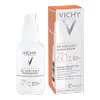
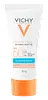
Vichy Capital Soleil UV-Age Daily Sunscreen SPF 60 Versus Vichy Capital Soleil Hydra-Matte Facial Sunscreen SPF 50
This chemical sunscreen covers most of the UV range, lighter on the deep UVA that drives aging.
This hybrid sunscreen covers the full UV range and blocks ~98% of UVB at SPF 50.

What's inside
What's inside
 Key Ingredients
Benefits
Concerns
Ingredients Side-by-side
Water
Skin ConditioningGlycerin
Humectant


Homosalate
Skin Conditioning

Octocrylene
UV Absorber

Ethylhexyl Salicylate
UV Absorber
C15-19 Alkane
SolventPropanediol
Solvent
Butyl Methoxydibenzoylmethane
UV Absorber
C12-22 Alkyl Acrylate/Hydroxyethylacrylate Copolymer
StabilisingTocopherol
Antioxidant





Acetyl Hexapeptide-8
Humectant
Ascorbyl Glucoside
Antioxidant
Butylene Glycol
Humectant
Capryloyl Salicylic Acid
Exfoliating



Caprylyl Glycol
Emollient
Cetearyl Alcohol
Emollient




Citric Acid
Buffering
Glyceryl Stearate
Emollient
Helianthus Annuus Seed Cera
Emollient
Hydroxyacetophenone
Antioxidant
Hydroxypropyl Starch Phosphate
Jojoba Esters
Emollient
Polyglycerin-3
Humectant
Sclerotium Gum
Emulsion StabilisingSodium Benzoate
Masking
Sodium Hyaluronate
Humectant
Sodium Hydroxide
BufferingSodium Starch Octenylsuccinate
AbsorbentSodium Stearoyl Glutamate
CleansingTrisodium Ethylenediamine Disuccinate
ChelatingWater, Glycerin, Homosalate, Octocrylene, Ethylhexyl Salicylate, C15-19 Alkane, Propanediol, Butyl Methoxydibenzoylmethane, C12-22 Alkyl Acrylate/Hydroxyethylacrylate Copolymer, Tocopherol, Acetyl Hexapeptide-8, Ascorbyl Glucoside, Butylene Glycol, Capryloyl Salicylic Acid, Caprylyl Glycol, Cetearyl Alcohol, Citric Acid, Glyceryl Stearate, Helianthus Annuus Seed Cera, Hydroxyacetophenone, Hydroxypropyl Starch Phosphate, Jojoba Esters, Polyglycerin-3, Sclerotium Gum, Sodium Benzoate, Sodium Hyaluronate, Sodium Hydroxide, Sodium Starch Octenylsuccinate, Sodium Stearoyl Glutamate, Trisodium Ethylenediamine Disuccinate
Water
Skin ConditioningTitanium Dioxide
Cosmetic Colorant
C12-15 Alkyl Benzoate
AntimicrobialSilicon
Abrasive
Bis-Ethylhexyloxyphenol Methoxyphenyl Triazine
UV Absorber
Diisopropyl Sebacate
EmollientEthylhexyl Triazone
UV Absorber
Butyl Methoxydibenzoylmethane
UV Absorber
Isopropyl Myristate
Emollient
Sodium Glycogen Octenylsuccinate
HumectantAluminum Starch Octenylsuccinate
Absorbent
Caprylyl Methicone
Skin Conditioning
Pentylene Glycol
Skin Conditioning
Potassium Cetyl Phosphate
EmulsifyingTriethanolamine
BufferingDicaprylyl Ether
Emollient
Propylene Glycol Propyl Ether
SolventPolyamide-5
Skin ConditioningPhenethyl Benzoate
Emollient

Stearic Acid
Cleansing
Glyceryl Stearate
Emollient
PEG-40 Stearate
Emulsifying
Sodium Stearoyl Glutamate
CleansingHydroxyacetophenone
Antioxidant
Palmitic Acid
Emollient
Poloxamer 407
EmulsifyingAmmonium Acryloyldimethyltaurate/Vp Copolymer
Caprylyl Glycol
Emollient
Diethylamino Hydroxybenzoyl Hexyl Benzoate
UV Filter
Cetyl Alcohol
Emollient
CI 77492
Cosmetic ColorantTocopherol
Antioxidant
Silica
Abrasive
Acrylates/C10-30 Alkyl Acrylate Crosspolymer
Emulsion StabilisingDisodium EDTA
ChelatingCI 77491
Cosmetic ColorantMyristic Acid
Cleansing
Butylene Glycol
Humectant
CI 77499
Cosmetic ColorantBenzoic Acid
Masking
Methyl Di-T-Butyl Hydroxyhydrocinnamate
Antioxidant
Citric Acid
Buffering
Benzyl Benzoate
Antimicrobial
Parfum
Masking
Water, Titanium Dioxide, C12-15 Alkyl Benzoate, Silicon, Bis-Ethylhexyloxyphenol Methoxyphenyl Triazine, Diisopropyl Sebacate, Ethylhexyl Triazone, Butyl Methoxydibenzoylmethane, Isopropyl Myristate, Sodium Glycogen Octenylsuccinate, Aluminum Starch Octenylsuccinate, Caprylyl Methicone, Pentylene Glycol, Potassium Cetyl Phosphate, Triethanolamine, Dicaprylyl Ether, Propylene Glycol Propyl Ether, Polyamide-5, Phenethyl Benzoate, Stearic Acid, Glyceryl Stearate, PEG-40 Stearate, Sodium Stearoyl Glutamate, Hydroxyacetophenone, Palmitic Acid, Poloxamer 407, Ammonium Acryloyldimethyltaurate/Vp Copolymer, Caprylyl Glycol, Diethylamino Hydroxybenzoyl Hexyl Benzoate, Cetyl Alcohol, CI 77492, Tocopherol, Silica, Acrylates/C10-30 Alkyl Acrylate Crosspolymer, Disodium EDTA, CI 77491, Myristic Acid, Butylene Glycol, CI 77499, Benzoic Acid, Methyl Di-T-Butyl Hydroxyhydrocinnamate, Citric Acid, Benzyl Benzoate, Parfum
Ingredients Explained
These ingredients are found in both products.
Ingredients higher up in an ingredient list are typically present in a larger amount.
Also known as Avobenzone, this ingredient is an oil-soluble used to absorb the full spectrum of UVA rays (peak 357 nm).
It's one of the most effective UVA filters available but has a major caveat of photostability: avobenzone is susceptible to photodegradation.
This means it can lose efficacy when exposed to sunlight without the help of a stabilizing agent.
Studies show antioxidants (like vitamin E or vitamin C) and some UV filters (like octocrylene and Tinosorb S) can meaningfully improve its stability in a formulation.
The maximum allowable concentration according to regulation is 3% in the US + Canada, and 5% in the EU, Australia, China, Korea, and ASEAN countries.
It has a well-support safety profile: a comprehensive 2025 review found minimal toxicity with no evidence of carcinogenicity.
Overall, avobenzone is a safe and regulated ingredient used in sunscreen for over 40 years.
Learn more about Butyl MethoxydibenzoylmethaneButylene Glycol (or BG) is used within cosmetic products for a few different reasons:
Overall, Butylene Glycol is a safe and well-rounded ingredient that works well with other ingredients.
Though this ingredient works well with most skin types, some people with sensitive skin may experience a reaction such as allergic rashes, closed comedones, or itchiness.
Learn more about Butylene GlycolCaprylyl Glycol is a humectant, skin conditioner, emollient, and preservative booster derived from either caprylic acid or synthetically created.
Typical use levels vary from 0.3-1% as a preservative booster and go up to 2% to condition skin.
Because it is not a free-fatty acid, this ingredient is fungal acne safe (there's nothing for Malassezia to feed on).
Learn more about Caprylyl GlycolCitric Acid is an alpha hydroxy acid (AHA) naturally found in citrus fruits like oranges, lemons, and limes.
Like other AHAs, citric acid can exfoliate skin by breaking down the bonds that hold dead skin cells together. This helps reveal smoother and brighter skin underneath.
However, this exfoliating effect only happens at high concentrations (20%) which can be hard to find in cosmetic products.
Due to this, citric acid is usually included in small amounts as a pH adjuster. This helps keep products slightly more acidic and compatible with skin's natural pH.
In skincare formulas, citric acid can:
While it can provide some skin benefits, research shows lactic acid and glycolic acid are generally more effective and less irritating exfoliants.
Most citric acid used in skincare today is made by fermenting sugars (usually from molasses). This synthetic version is identical to the natural citrus form but easier to stabilize and use in formulations.
Rosacea skin has a lower threshold for acids generally, with 62.5% of rosacea subjects in one study reacting to lactic acid in a sting test. This is why we mark citric acid as a potential rosacea trigger.
However, this ingredient shows up as a pH adjuster or chelator at roughly 0.1-1% in many products. These low levels are unlikely to be an issue for rosacea skin and becomes a potential trigger at exfoliating concentrations (20%). Because everybody's skin is unique, we recommend a patch test if you are unsure.
Learn more about Citric AcidGlyceryl Stearate is made by reacting glycerin with stearic acid (typically sourced from plant oils like palm or coconut). It's an emulsifier, emollient, and mild occlusive.
Emulsifiers help ingredients like oil and water stay mixed so your formula stays nicely blended and uniform in texture.
This ingredient is typically used in concentrations between 1-10%. Studies have found it to be non-sensitizing, non-phototoxic, and non-photoallergenic.
A close cousin of this ingredient is Glyceryl Stearate SE ("self-emulsifying"). This just has a small amount of sodium or potassium stearate added so it can emulsify without a co-emulsifier.
Since this ingredient is an ester of a C18 fatty acid, it may not be fungal acne safe. The Malassezia yeast can potentially metabolize within the C11-C24 range.
Fun fact: The human body also creates Glyceryl Stearate naturally.
Learn more about Glyceryl StearateHydroxyacetophenone is a small phenolic molecule that earns its place in a formulas as an antioxidant and preservative booster.
As a phenol, it is able to neutralize free radicals to protect both the product and the skin from oxidative stress.
Though it can't kill microbes on its own, it works as a good supporting agent when combined with other preservatives like Phenoxyethanol or 1,2-Hexanediol.
This ingredient naturally occurs as piceol in Norwegian spruce needles (~0.4-1.1% dry weight and in cloudberries). Though the cosmetic-grade material is synthesized for purity and consistency.
You'll usually see it used at low levels and suppliers recommend up to 1% added to a water phase.
Safety testing was done at concentrations like 0.05% in SPF products and 0.5% in a Human Repeated Insult Patch Test. The safety evidence is assuring; this ingredient is safe for cosmetics in current use and also holds safety status as a food flavoring as well.
An honest caveat: the "soothing" and "anti-inflammatory" claims come mostly from supplier marketing rather than published clinical trials. The Cosmetic Ingredient Review's own literature search found no useful efficacy studies on this ingredient.
So the antioxidant and preservative-boosting roles are the well supported ones while the calming benefit is plausible but thinly evidenced.
Overall, this is a well-tolerated, low-irritation multitasker that quietly helps a formula stay fresh and stable.
Learn more about HydroxyacetophenoneSodium Stearoyl Glutamate is an amino-acid based emulsifier. It is made by combining stearic acid with L-glutamic acid and neutralizing it to a sodium salt.
As an emulsifier, it works mainly as an oil-in-water one and helps keep the oil and water in your formulas blended. It also contributes to a smooth, non-greasy skin feel.
This ingredient is biodegradable and commonly available in natural/COSMOS-certified grades.
Learn more about Sodium Stearoyl GlutamateTocopherol is a fat-soluble antioxidant known as Vitamin E.
You'll find this ingredient in the vast majority of skincare (for good reason). It works to neutralize free radicals, or unstable molecules generated by UV exposure, pollution, and other environmental stressors, before they can cause oxidative damage to your skin cells.
Topically applied tocopherol has been shown to protect against UV damage by ramping up the skin's own natural defense enzymes.
It also acts as a skin conditioning agent; some studies show that regular topical use can improve the skin's water-binding capacity over 2-4 weeks.
This ingredient is especially loved for being a team player. When combined with Vitamin C, the photoprotective effect of both ingredients roughly doubles and the combo also helps reduce UV-induced DNA damage.
This ingredient has some brightening potential but it's more of a prevention ingredient than spot-fader. Cell studies show it can slow down melanin production but it's worth noting that it's not the most powerful brightener out there.
In formulations, it also serves as a stabilizer that helps protect other oxidation-prone ingredients from degrading.
Concentrations usually range from 0.1-1% in most leave-on products.
Learn more about TocopherolWater. It's the most common cosmetic ingredient of all. You'll usually see it at the top of ingredient lists, meaning that it makes up the largest part of the product.
So why is it so popular? Water most often acts as a solvent - this means that it helps dissolve other ingredients into the formulation.
You'll also recognize water as that liquid we all need to stay alive. If you see this, drink a glass of water. Remember to stay hydrated!
Learn more about Water

