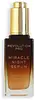
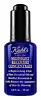
Revolution Beauty Pro Miracle Night Rescue Serum Advanced Complex Versus Kiehl's Midnight Recovery Concentrate
This barrier-repair serum is formulated around Lactobacillus Ferment Lysate and Bifida Ferment Lysate to strengthen the skin barrier and calm redness.
This barrier-repair oil is formulated around Squalane and Rosa Canina Fruit Oil to strengthen the skin barrier and hydrate skin.


What's inside
What's inside
 Key Ingredients
Benefits
Concerns
Ingredients Side-by-side
Water
Skin ConditioningBis-PEG-18 Methyl Ether Dimethyl Silane
EmollientLactobacillus Ferment Lysate
Skin Conditioning
Bifida Ferment Lysate
Skin Conditioning


Propanediol
Solvent
PEG-8 Caprylic/Capric Glycerides
EmulsifyingBetaine
Humectant
Glycereth-26
Humectant
Methyl Gluceth-10
EmulsifyingPhenoxyethanol
Preservative
Glycerin
Humectant
Carbomer
Emulsion StabilisingCaffeine
Skin Conditioning
Propylene Glycol
Humectant

Yeast Extract
Skin ConditioningSodium Hydroxide
BufferingEthylhexylglycerin
Skin ConditioningDisodium EDTA
ChelatingSimmondsia Chinensis Seed Oil
Emollient

Squalane
Emollient
Lavandula Angustifolia Oil
Masking



Bisabolol
Antioxidant
Sodium Hyaluronate
Humectant
Adansonia Digitata Fruit Extract
EmollientChamomilla Recutita Flower Extract
Masking
Lactic Acid
Buffering





Centella Asiatica Leaf Extract
Skin Conditioning
Leuconostoc/Radish Root Ferment Filtrate
Antimicrobial
Sodium Benzoate
Masking
Sodium Chloride
MaskingPotassium Sorbate
Preservative
Acetic Acid
BufferingRosa Centifolia Flower Extract
Astringent
Ceramide NP
Skin Conditioning
2,3-Butanediol
HumectantCaprylyl Glycol
Emollient
Bis(Tripeptide-1) Copper Acetate
Skin Conditioning
Hydrogenated Lecithin
Emulsifying
Sorbic Acid
Preservative
Glyceryl Stearate
Emollient
Ceramide AP
Skin Conditioning
Ceramide As
Skin Conditioning
Ceramide Ns
Skin Conditioning
Cholesterol
Emollient
Sodium Metabisulfite
Antioxidant
Ceramide EOP
Skin Conditioning
Farnesol
Perfuming
Citronellol
Perfuming
Geraniol
Perfuming
Linalool
Perfuming
CI 15985
Cosmetic ColorantCI 19140
Cosmetic ColorantCI 17200
Cosmetic ColorantWater, Bis-PEG-18 Methyl Ether Dimethyl Silane, Lactobacillus Ferment Lysate, Bifida Ferment Lysate, Propanediol, PEG-8 Caprylic/Capric Glycerides, Betaine, Glycereth-26, Methyl Gluceth-10, Phenoxyethanol, Glycerin, Carbomer, Caffeine, Propylene Glycol, Yeast Extract, Sodium Hydroxide, Ethylhexylglycerin, Disodium EDTA, Simmondsia Chinensis Seed Oil, Squalane, Lavandula Angustifolia Oil, Bisabolol, Sodium Hyaluronate, Adansonia Digitata Fruit Extract, Chamomilla Recutita Flower Extract, Lactic Acid, Centella Asiatica Leaf Extract, Leuconostoc/Radish Root Ferment Filtrate, Sodium Benzoate, Sodium Chloride, Potassium Sorbate, Acetic Acid, Rosa Centifolia Flower Extract, Ceramide NP, 2,3-Butanediol, Caprylyl Glycol, Bis(Tripeptide-1) Copper Acetate, Hydrogenated Lecithin, Sorbic Acid, Glyceryl Stearate, Ceramide AP, Ceramide As, Ceramide Ns, Cholesterol, Sodium Metabisulfite, Ceramide EOP, Farnesol, Citronellol, Geraniol, Linalool, CI 15985, CI 19140, CI 17200
Caprylic/Capric Triglyceride
Masking
Dicaprylyl Carbonate
EmollientSqualane
Emollient
Rosa Canina Fruit Oil
Emollient
Oenothera Biennis Oil
Emollient
Simmondsia Chinensis Seed Oil
Emollient
Coriandrum Sativum Seed Oil
Emollient
Tocopherol
Antioxidant
Lavandula Angustifolia Oil
Masking
Pelargonium Graveolens Flower Oil
Masking
Linalool
Perfuming
Rosmarinus Officinalis Leaf Oil
Masking
Citronellol
Perfuming
Geraniol
Perfuming
Lavandula Hybrida Oil
Emollient
Cucumis Sativus Extract
Skin Conditioning
Cucumis Sativus Fruit Extract
Emollient
Curcuma Longa Root Extract
Antioxidant
Limonene
Perfuming
Citral
Perfuming
Sclareolide
Masking
Rosa Damascena Flower Oil
Masking
Jasminum Officinale Extract
Masking
Jasminum Sambac Flower Extract
Masking
Helianthus Annuus Seed Oil
Emollient
Caprylic/Capric Triglyceride, Dicaprylyl Carbonate, Squalane, Rosa Canina Fruit Oil, Oenothera Biennis Oil, Simmondsia Chinensis Seed Oil, Coriandrum Sativum Seed Oil, Tocopherol, Lavandula Angustifolia Oil, Pelargonium Graveolens Flower Oil, Linalool, Rosmarinus Officinalis Leaf Oil, Citronellol, Geraniol, Lavandula Hybrida Oil, Cucumis Sativus Extract, Cucumis Sativus Fruit Extract, Curcuma Longa Root Extract, Limonene, Citral, Sclareolide, Rosa Damascena Flower Oil, Jasminum Officinale Extract, Jasminum Sambac Flower Extract, Helianthus Annuus Seed Oil
Reviews
Ingredients Explained
These ingredients are found in both products.
Ingredients higher up in an ingredient list are typically present in a larger amount.
Citronellol is used to add fragrance/parfum to a product. It is often derived from plants such as roses. In fact, it can be found in many essential oils including geranium, lavender, neroli, and more. The scent of Citronellol is often described as "fresh, grassy, and citrus-like".
Since the Citronellol molecule is already unstable, Citronellol becomes irritating on the skin when exposed to air.
Citronellol is a modified terpene. Terpenes are unsaturated hydrocarbons found in plants. They make up the primary part of essential oils.
Citronellol is not able to be absorbed into deeper layers of the skin. It has low permeability,
Citronellol is also a natural insect repellent.
Learn more about CitronellolGeraniol is used to add fragrance/parfum to a product. It is the main component of citronellol. It is a monoterpenoid and an alcohol.
Monoterpenes are naturally found in many parts of different plants.
Geraniol can be found in many essential oils including Rose Oil and Citronella Oil. The scent of Geraniol is often described as "rose-like". Many foods also contain Geraniol for fruit flavoring.
Geraniol can irritate the skin when exposed to air. However, irritation depends on the ability of geraniol to penetrate into the skin. In general, geraniol is not able to penetrate skin easily.
Geraniol is colorless and has low water-solubility. However, it is soluble in common organic solvents.
Like citronellol, it is a natural insect repellent.
2,6-Octadien-1-ol, 3,7-dimethyl-, (2E)-
Learn more about GeraniolLavandula Angustifolia Oil is more commonly known as lavender essential oil. It is considered a fragrancing ingredient.
Lavender imparts a famous scent. While the smell is lovely, this ingredient and may sensitize skin in topical products. This is because about 85% of the oil is made up of linalool and linalyl acetate.
When exposed to air, these two compounds become strong allergens. This ingredient exhibits cytotoxicity at low concentrations; amounts of 0.25% have been shown to damage skin cells.
A study from Japan found this ingredient caused lavender sensitivity after widespread exposure.
Lavender essential oil has some antimicrobial, antibacterial, and anti-inflammatory properties. However, the cons of this ingredient may outweight the pros.
More research is needed to confirm lavender essential oil's effects when used in aromatherapy.
Lavandula Angustifolia is known as the English Lavender and famous for creating purple fields in Provence, France.
Learn more about Lavandula Angustifolia OilLinalool is a small, naturally occurring scent molecule found in plants like lavender, coriander, bergamot, and more.
It is one of the two most-used fragrance ingredients in cosmetics and added purely for smell. Since it's not used for a skin benefit, there's no "effective dose". Concentration depends on the fragrance load of the product.
The EU requires it to be named on the label above 0.001% in leave-on and 0.01% in rinse-off products.
Fresh linalool is a weak sensitizer but air exposure turns some of it into hydroperoxides, which are strong sensitizers. Those oxidation products are the actual allergy concern.
Patch-test clinics see positive reactions to linalool hydroperoxides in about 4% to 12% of dermatitis patients depending on country and test concentration.
Resassuringly, one analytical study found hydroperoxide levels in real fragranced products to be orders of magnitude below what induced sensitization in animal studies with no evidence of oxidation building up during normal storage.
The practical takeaway is that linalool is fine for most people but worth avoiding if you have a confirmed fragrance contact allergy or a badly compromised barrier.
Products stored a long time after opening are also the high-risk scenario since that is when oxidation happens.
The scent of linalool is described as floral, spicy tropical, and citrus-like.
Learn more about LinaloolJojoba oil is one of the most well-studied plant-derived ingredients in cosmetics. It is an emollient with a special structure.
Because it is made up of 97-98% wax esters, it closely mirrors the linear monoesters found in human sebum. This makes it skin compatible, non-greasy, and lightweight.
Unlike other plant oils, jojoba wax doesn't easily penetrate skin. It mostly works in the uppermost layers as an emollient. This just means it forms a light barrier on the skin to help retain moisture.
Formulations with jojoba esters up to 90% reduced transepidermal water loss (TEWL) and increased barrier recovery by 81% (outperforming bisabolol at 47%).
Besides barrier support, the science also suggests jojoba to have anti-inflammatory effects and potential applications for skin infections, aging, and wound healing.
Fun fact: Indigenous cultures have used jojoba as a moisturizer and to help treat burns for centuries.
Fungal acne: The Malassezia yeast is known to metabolize fatty acids in the C11-24 range and jojoba's dominant fatty acid components fall into this range. This ingredient may not be fungal acne safe.
Learn more about Simmondsia Chinensis Seed OilSqualane is the hydrogenated and shelf-stable form of squalene (a lipid that naturally occurs in human sebum).
It is an emollient and skin conditioning agent that is able to integrate seamlessly into the skin's lipid barrier without clogging pores.
This is due to how structurally similar it is to what your skin already produces.
Though it is mostly an emollient that helps soften and hydrate skin, it also has some humectant and occlusive action. Humectants help the skin retain moisture while occlusives seal it in, making squalane a triple-threat moisturizer.
Research shows it has antioxidant capabilities that help protect against stressors like UV exposure, specifically UVA induced oxidative stress. This study also found that it supports collagen biosynthesis in human dermal fibroblasts.
No clinical study has reported significant adverse effects and irritation reactions are very rare from this ingredient (even at 100% concentration).
Overall, it's a fantastic ingredient for hydration and is suitable for all skin types.
This depends on the source. Squalane can be derived from both plants and animals. Most squalane used in skincare comes from plants.
Please note: the source of squalane is only known if disclosed by the brand. We recommend reaching out to the brand if you have any questions about their squalane.
Read more about squalene with an "e".
Though squalane is often called an oil, it’s technically not one. It is a hydrocarbon, meaning it is only made of carbon and hydrogen. True oils are triglycerides and made of fatty acids and glycerol.
The term “oil-free” isn’t regulated so companies can define it however they want. Some exclude all oils, while others just avoid mineral oil or comedogenic oils.
Squalane has a comedogenic rating of 1 from the original 1972 study that tested raw ingredients under occlusion on rabbit ears. This system is not standardized or peer-reviewed, and using the raw ingredients is very different from how diluted cosmetic formulations are used on human skin.
A comedogenic rating of 1 means it is "unlikely to clog pores" according to the original rating system.
The overall formula of a product matters more than the individual ingredients on whether or not it will cause clogged pores.
Learn more about Squalane

