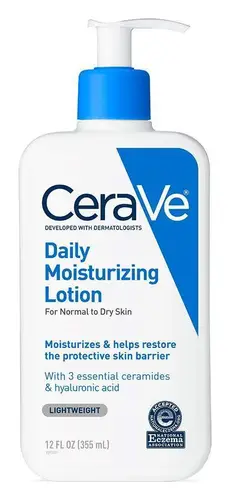
This barrier-repair moisturizer is formulated around Petrolatum and Cholesterol to strengthen the skin barrier and hydrate skin.
This barrier-repair moisturizer is formulated around Borago Officinalis Extract and Centella Asiatica Extract to strengthen the skin barrier and calm redness.


What's inside
What's inside
 Key Ingredients
Benefits
Concerns
Ingredients Side-by-side

Water
Skin ConditioningDecyl Oleate
Emollient




Propylene Glycol
Humectant
Ethylhexyl Methoxycinnamate
UV Absorber


C12-16 Alcohols
EmollientGlycerin
Humectant

Borago Officinalis Extract
Emollient
Biosaccharide Gum-2
Skin ConditioningButyrospermum Parkii Butter
Skin Conditioning
Tocopheryl Acetate
Antioxidant


Butylene Glycol Dicaprylate/Dicaprate
EmollientCyclomethicone
Emollient
Lanolin
Emollient
Butyl Methoxydibenzoylmethane
UV Absorber
Ascorbyl Glucoside
Antioxidant

Glyceryl Stearate Citrate
Emollient
Sodium Hyaluronate
Humectant

Hydrolyzed Collagen
Emollient
Hydrogenated Lecithin
Emulsifying
Centella Asiatica Extract
Cleansing
Glycyrrhiza Glabra Root Extract
Bleaching
Rosmarinus Officinalis Leaf Extract
AntimicrobialHelianthus Annuus Seed Oil
Emollient
Hydrolyzed Soy Protein
Humectant
Hydrolyzed Wheat Protein
Skin ConditioningPhospholipids
Skin Conditioning
Ubiquinone
Antioxidant
Hydroxydecyl Ubiquinone
Antioxidant
Palmitic Acid
Emollient
Thioctic Acid
Antioxidant
Phytic Acid
Chelating
Retinyl Palmitate
Skin Conditioning
Sodium Carboxymethyl Betaglucan
Lactic Acid
Buffering

Serine
Masking
Sodium Lactate
Buffering
Sorbitol
Humectant
Urea
Buffering
Tocopherol
Antioxidant
Tripeptide-1
Skin Conditioning
Allantoin
Skin Conditioning
Dimethicone
Emollient
Hydrogenated Polyisobutene
EmollientPolyglyceryl-10 Stearate
Skin Conditioning
Sodium Chloride
MaskingXanthan Gum
EmulsifyingSodium Acrylates Copolymer
Alcohol Denat.
Antimicrobial

Pentylene Glycol
Skin Conditioning
Butylene Glycol
Humectant
Caprylyl Glycol
Emollient
Benzoic Acid
Masking
Imidazolidinyl Urea
Preservative
Phenoxyethanol
Preservative
Methylparaben
Preservative
Propylparaben
Preservative
Ethylparaben
Preservative
Parfum
Masking

Water, Decyl Oleate, Propylene Glycol, Ethylhexyl Methoxycinnamate, C12-16 Alcohols, Glycerin, Borago Officinalis Extract, Biosaccharide Gum-2, Butyrospermum Parkii Butter, Tocopheryl Acetate, Butylene Glycol Dicaprylate/Dicaprate, Cyclomethicone, Lanolin, Butyl Methoxydibenzoylmethane, Ascorbyl Glucoside, Glyceryl Stearate Citrate, Sodium Hyaluronate, Hydrolyzed Collagen, Hydrogenated Lecithin, Centella Asiatica Extract, Glycyrrhiza Glabra Root Extract, Rosmarinus Officinalis Leaf Extract, Helianthus Annuus Seed Oil, Hydrolyzed Soy Protein, Hydrolyzed Wheat Protein, Phospholipids, Ubiquinone, Hydroxydecyl Ubiquinone, Palmitic Acid, Thioctic Acid, Phytic Acid, Retinyl Palmitate, Sodium Carboxymethyl Betaglucan, Lactic Acid, Serine, Sodium Lactate, Sorbitol, Urea, Tocopherol, Tripeptide-1, Allantoin, Dimethicone, Hydrogenated Polyisobutene, Polyglyceryl-10 Stearate, Sodium Chloride, Xanthan Gum, Sodium Acrylates Copolymer, Alcohol Denat., Pentylene Glycol, Butylene Glycol, Caprylyl Glycol, Benzoic Acid, Imidazolidinyl Urea, Phenoxyethanol, Methylparaben, Propylparaben, Ethylparaben, Parfum
Reviews
Ingredients Explained
These ingredients are found in both products.
Ingredients higher up in an ingredient list are typically present in a larger amount.
Glycerin (or glycerol) is a compound naturally found in your skin. It's a powerhouse humectant that pulls water into the stratum corneum.
Topically, glycerin does several things at once:
Your skin makes glycerin on its own (mostly from sebaceous oil breakdown) and shuttles it to your outermost layer of skin, or your epidermis, via aquaporin-3.
Aquaporin-3 is a transporter that is essential for normal skin hydration, elasticity, and repair. Interestingly, mice lacking in AQP3 have dry and less elastic skin that can be fully corrected with glycerin.
This ingredient is non-irritating, plays well with almost every ingredient, and works across all skin types. Typical use is anywhere between 3-10% but can go up to 79% in some leave-on products.
Just know very high concentrations (>40%) can feel tacky in low humidity.
Glycerin is the name for this ingredient in American English. British English uses Glycerol/Glycerine.
Learn more about GlycerinPalmitic Acid is a fatty acid naturally found in our skin and in many plant and animal sources.
In cosmetics, it is usually derived from palm oil. It serves many purposes in skincare, acting as a cleanser, emollient, and emulsifier.
Interestingly, topically applied Palmitic Acid can be elongated into longer chain fatty acids and ceramides. A 2019 study found low levels of Palmitic Acid lead to slower development of cells, suggesting it plays a role in keeping your skin's renewal process on track.
The CIR (Cosmetic Ingredient Review) panel determined it safe as used in cosmetics at concentrations up to 13%. It is non-irritating and non-sensitizing in clinical studies.
The culprit behind fungal acne, the Malassezia yeast, feeds on fatty acids with carbon chain lengths between C11-C24. Palmitic Acid, at C16, falls right into that sweet spot.
In vitro studies have shown that Palmitic Acid is one of the fatty acids that induce rapid Malassezia growth in lab settings.
It's worth noting that what feeds yeast in a lab doesn't necessarily feed it on your face since formulation and your skin's chemistry play a bigger role.
This ingredient does have a comedogenic rating of 2, but this doesn't mean a formula with this ingredient will clog pores.
Human testing has proved that any finished product with a comedogenic ingredient won't automatically make you break out; it really comes down to concentration, formula, and your skin.
Learn more about Palmitic AcidWater. It's the most common cosmetic ingredient of all. You'll usually see it at the top of ingredient lists, meaning that it makes up the largest part of the product.
So why is it so popular? Water most often acts as a solvent - this means that it helps dissolve other ingredients into the formulation.
You'll also recognize water as that liquid we all need to stay alive. If you see this, drink a glass of water. Remember to stay hydrated!
Learn more about Water