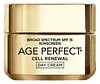
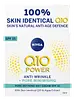
L'Oreal Age Perfect Cell Renewal Day SPF 15 Cream Versus Nivea Q10 Power Anti-Wrinkle + Pore Minimising Day Cream SPF15
This anti-aging day moisturizer is formulated around Adenosine and Capryloyl Salicylic Acid to soften the look of wrinkles.
This anti-aging day moisturizer is formulated around Ubiquinone and Fucus Vesiculosus Extract to soften the look of wrinkles and hydrate skin.


What's inside
What's inside
 Key Ingredients
Benefits
Concerns
Ingredients Side-by-side
Water
Skin ConditioningGlycerin
Humectant


Alcohol Denat.
Antimicrobial




Hydrogenated Polyisobutene
EmollientBis-PEG-18 Methyl Ether Dimethyl Silane
EmollientDimethicone
Emollient
Cetearyl Alcohol
Emollient




PEG-100 Stearate
Surfactant
PEG-20
HumectantPetrolatum
Emollient
Butyrospermum Parkii Butter
Skin Conditioning
C13-14 Isoparaffin
Emollient
Glyceryl Stearate
Emollient
Dimethiconol
Emollient
Dimethyl Isosorbide
SolventCetearyl Glucoside
Emulsifying
Neohesperidin Dihydrochalcone
Masking

Sodium Cocoyl Glutamate
Cleansing
Sodium Hyaluronate
Humectant


Sodium Hydroxide
BufferingCyclodextrin
AbsorbentAdenosine
Skin Conditioning
Vigna Aconitifolia Seed Extract
Skin ConditioningMannitol
Humectant
Disodium EDTA
Disodium Succinate
MaskingHydrolyzed Cicer Seed Extract
Skin ProtectingCapryloyl Salicylic Acid
Exfoliating




Laureth-7
EmulsifyingYeast Extract
Skin ConditioningXanthan Gum
EmulsifyingPolyacrylamide
Acrylates/C10-30 Alkyl Acrylate Crosspolymer
Emulsion StabilisingCetyl Alcohol
Emollient
Octyldodecanol
Emollient
Tocopheryl Acetate
Antioxidant


Sodium Dehydroacetate
Preservative
Phenoxyethanol
Preservative
CI 14700
Cosmetic ColorantCI 19140
Cosmetic ColorantLinalool
Perfuming
Geraniol
Perfuming
Alpha-Isomethyl Ionone
Perfuming
Limonene
Perfuming
Hydroxycitronellal
Perfuming
Citronellol
Perfuming
Hexyl Cinnamal
Perfuming
Benzyl Alcohol
Perfuming
Benzyl Salicylate
Perfuming
Parfum
Masking
Water, Glycerin, Alcohol Denat., Hydrogenated Polyisobutene, Bis-PEG-18 Methyl Ether Dimethyl Silane, Dimethicone, Cetearyl Alcohol, PEG-100 Stearate, PEG-20, Petrolatum, Butyrospermum Parkii Butter, C13-14 Isoparaffin, Glyceryl Stearate, Dimethiconol, Dimethyl Isosorbide, Cetearyl Glucoside, Neohesperidin Dihydrochalcone, Sodium Cocoyl Glutamate, Sodium Hyaluronate, Sodium Hydroxide, Cyclodextrin, Adenosine, Vigna Aconitifolia Seed Extract, Mannitol, Disodium EDTA, Disodium Succinate, Hydrolyzed Cicer Seed Extract, Capryloyl Salicylic Acid, Laureth-7, Yeast Extract, Xanthan Gum, Polyacrylamide, Acrylates/C10-30 Alkyl Acrylate Crosspolymer, Cetyl Alcohol, Octyldodecanol, Tocopheryl Acetate, Sodium Dehydroacetate, Phenoxyethanol, CI 14700, CI 19140, Linalool, Geraniol, Alpha-Isomethyl Ionone, Limonene, Hydroxycitronellal, Citronellol, Hexyl Cinnamal, Benzyl Alcohol, Benzyl Salicylate, Parfum
Water
Skin ConditioningCyclomethicone
Emollient
Dicaprylyl Carbonate
EmollientGlycerin
Humectant
Ethylhexyl Salicylate
UV Absorber

Alcohol Denat.
Antimicrobial
Sucrose Polystearate
EmollientButyl Methoxydibenzoylmethane
UV Absorber
Dimethicone
Emollient
Methylpropanediol
SolventOctocrylene
UV Absorber
Phenylbenzimidazole Sulfonic Acid
UV Absorber
Ubiquinone
Antioxidant
Creatine
Skin Conditioning1-Methylhydantoin-2-Imide
Skin ConditioningFucus Vesiculosus Extract
Emollient
Sodium Stearoyl Glutamate
CleansingCaprylic/Capric Triglyceride
Masking
Dimethiconol
Emollient
Hydrogenated Polyisobutene
EmollientDistarch Phosphate
AbsorbentChondrus Crispus Extract
Skin Conditioning
Carbomer
Emulsion StabilisingAcrylates/C10-30 Alkyl Acrylate Crosspolymer
Emulsion StabilisingAmmonium Acryloyldimethyltaurate/Vp Copolymer
Sodium Chloride
MaskingTrisodium EDTA
Sodium Hydroxide
BufferingPhenoxyethanol
Preservative
Limonene
Perfuming
Linalool
Perfuming
Benzyl Alcohol
Perfuming
Alpha-Isomethyl Ionone
Perfuming
Geraniol
Perfuming
Parfum
Masking
CI 42090
Cosmetic ColorantWater, Cyclomethicone, Dicaprylyl Carbonate, Glycerin, Ethylhexyl Salicylate, Alcohol Denat., Sucrose Polystearate, Butyl Methoxydibenzoylmethane, Dimethicone, Methylpropanediol, Octocrylene, Phenylbenzimidazole Sulfonic Acid, Ubiquinone, Creatine, 1-Methylhydantoin-2-Imide, Fucus Vesiculosus Extract, Sodium Stearoyl Glutamate, Caprylic/Capric Triglyceride, Dimethiconol, Hydrogenated Polyisobutene, Distarch Phosphate, Chondrus Crispus Extract, Carbomer, Acrylates/C10-30 Alkyl Acrylate Crosspolymer, Ammonium Acryloyldimethyltaurate/Vp Copolymer, Sodium Chloride, Trisodium EDTA, Sodium Hydroxide, Phenoxyethanol, Limonene, Linalool, Benzyl Alcohol, Alpha-Isomethyl Ionone, Geraniol, Parfum, CI 42090
Ingredients Explained
These ingredients are found in both products.
Ingredients higher up in an ingredient list are typically present in a larger amount.
Acrylates/C10-30 Alkyl Acrylate Crosspolymer is a synthetic polymer. It is used to thicken, emulsify, and improve the texture of products.
As an emulsifier, it helps stabilize oil-in-water emulsions to give products an elegant feel when applied.
It can also form a thin protective film on skin. One study found that a formula using this polymer helped slow down how quickly other ingredients (like DEET) were absorbed through skin.
A 2024 study of over 1,300 patients confirmed that sensitization to this ingredient is rare. It is also non-mutagenic and has a clean track record.
Learn more about Acrylates/C10-30 Alkyl Acrylate CrosspolymerAlcohol Denat. is an alcohol with a denaturant property. It is created by mixing ethanol with other additives.
The "denat" part just means "denatured"; common denaturants include Denatonium Benzoate, t-butyl alcohol, and Diethyl Phthalate. This step makes the alcohol undrinkable (and lets brand skip taxes related to beverage alcohol).
This ingredient gets a bad rep because it is irritating and drying due to its astringent property. Astringents draw out natural oils in tissue to constrict pores and dry out your skin.
However, alcohol denat. is not all that bad.
Due to its low molecular weight, alcohol denat. tends to evaporate quickly. One study on pig skin found half of applied alcohol evaporated in 10 seconds and less than 3% stayed on skin.
This also helps other ingredients become better absorbed upon application.
Studies are conflicted about whether this ingredient causes skin dehydration. One study from 2005 found adding emollients to propanol-based sanitizer decreased skin dryness and irritation. Another study found irritation only occurs if your skin is already damaged.
Small amounts of alcohol are generally tolerated by oily skin or people who live in humid environments.
The rule of thumb is this ingredient will probably not affect your skin much if it is near the end of an ingredients list.
One thing to note:
People with ALDH2 (aldehyde dehydrogenase 2) deficiency may experience skin irritation from continued alcohol use. About 8% of the world's population have this deficiency.
The Cosmetic Ingredient Review Expert Panel has determined denatured alcohols to be safe for use in concentrations between 0.05% and 12% (depending on which denaturant is used).
Also...
This ingredient has antimicrobial and solvent properties.
The antimicrobial property helps preserve products and increase their shelf life. As a solvent, it helps dissolve other ingredients.
Look for formulas that contain glycerin, hyaluronic acid, or panthenol if you want to offset any drying effect.
This ingredient will trip away your skin's natural oils/lipids that help it lock in moisture. This can worsen dryness, trigger eczema flare-ups, and aggravate rosacea.
Be sure to patch test any product with this ingredient if you have dry or sensitive skin, eczema, or rosacea.
Learn more about Alcohol Denat.Alpha-Isomethyl Ionone is a fragrance. It can be synthetically created or naturally occurring.
The scent of Alpha-Isomethyl Ionone is described as "flowery" but can also be "woody".
Naturally occurring Alpha-Isomethyl Ionone may be found in Saccharomyces cerevisiae, or the yeast used to make wine and bread.
The term 'fragrance' is not regulated in many countries. In many cases, it is up to the brand to define this term. For instance, many brands choose to label themselves as "fragrance-free" because they are not using synthetic fragrances. However, their products may still contain ingredients such as essential oils that are considered a fragrance.
Learn more about Alpha-Isomethyl IononeBenzyl Alcohol is an aromatic alcohol with several roles: it's a preservative, solvent, and mild fragrance component with a floral scent.
This ingredient has been deemed safe for use in cosmetic formulations at concentrations up to 5%, and up to 10% in hair dyes. You'll typically see 0.5-2% in most rinse-off or leave-on products.
As a preservative, it works by disrupting the membrane of microbial proteins. This helps keep bacteria and fungi from growing in your products.
The sensitization picture is actually quite assuring as well:of nearly 71,000 patients patch tested with benzyl alcohol, only 0.21% showed a positive reaction with most of them being weakly positive.
This led researchers to conclude that benzyl alcohol cannot be regarded as a significant contact allergen.
It is worth noting this ingredient is classified as one of the EU's regulated fragrance allergens and restricted to 1% in finished products.
Labels must also declare it in concentrations above 0.001% in leave-on products and 0.01% in rinse-off products.
At concentrations around 5%, localized redness and itching can appear as a direct irritant response and not as a true allergic reaction.
Learn more about Benzyl AlcoholDimethicone is a type of synthetic silicone created from natural materials such as quartz. It is also known as polydimethylsiloxane.
What it does:
Dimethicone comes in different viscosities:
Depending on the viscosity, dimethicone has different properties.
Ingredients lists don't always show which type is used, so we recommend reaching out to the brand if you have questions about the viscosity.
This ingredient is unlikely to cause irritation because it does not get absorbed into skin. However, people with silicone allergies should be careful about using this ingredient.
Note: Dimethicone may contribute to pilling. This is because it is not oil or water soluble, so pilling may occur when layered with products. When mixed with heavy oils in a formula, the outcome is also quite greasy.
Learn more about DimethiconeDimethiconol is a silicone that resembles the popular dimethicone. Like other silicones, it is an emollient. Emollients create a thin film on skin to prevent moisture from escaping.
This ingredient helps to create a silky texture and improve spreadability. Due to its high molecular weight and thickness, it is often combined with cyclopentasiloxane.
Geraniol is used to add fragrance/parfum to a product. It is the main component of citronellol. It is a monoterpenoid and an alcohol.
Monoterpenes are naturally found in many parts of different plants.
Geraniol can be found in many essential oils including Rose Oil and Citronella Oil. The scent of Geraniol is often described as "rose-like". Many foods also contain Geraniol for fruit flavoring.
Geraniol can irritate the skin when exposed to air. However, irritation depends on the ability of geraniol to penetrate into the skin. In general, geraniol is not able to penetrate skin easily.
Geraniol is colorless and has low water-solubility. However, it is soluble in common organic solvents.
Like citronellol, it is a natural insect repellent.
2,6-Octadien-1-ol, 3,7-dimethyl-, (2E)-
Learn more about GeraniolGlycerin (or glycerol) is a compound naturally found in your skin. It's a powerhouse humectant that pulls water into the stratum corneum.
Topically, glycerin does several things at once:
Your skin makes glycerin on its own (mostly from sebaceous oil breakdown) and shuttles it to your outermost layer of skin, or your epidermis, via aquaporin-3.
Aquaporin-3 is a transporter that is essential for normal skin hydration, elasticity, and repair. Interestingly, mice lacking in AQP3 have dry and less elastic skin that can be fully corrected with glycerin.
This ingredient is non-irritating, plays well with almost every ingredient, and works across all skin types. Typical use is anywhere between 3-10% but can go up to 79% in some leave-on products.
Just know very high concentrations (>40%) can feel tacky in low humidity.
Glycerin is the name for this ingredient in American English. British English uses Glycerol/Glycerine.
Learn more about GlycerinHydrogenated Polyisobutene is a synthetic polymer. Polymers are compounds with high molecular weight. Hydrogenated Polyisobutene is an emollient and texture enhancer.
In one study, Hydrogenated Polyisobutene showed better skin hydration levels than Caprylic/Capric Triglyceride. As an emollient, it helps keep your skin soft and hydrated by trapping moisture in.
Hydrogenated Polyisobutene is often used as a mineral oil replacement.
Learn more about Hydrogenated PolyisobuteneLimonene is a fragrance that adds scent and taste to a formulation.
It's found in the peel oil of citrus fruits and other plants such as lavender and eucalyptus. The scent of limonene is generally described as "sweet citrus".
Limonene acts as an antioxidant, meaning it helps neutralize free radicals.
When exposed to air, oxidized limonene may sensitize the skin. Because of this, limonene is often avoided by people with sensitive skin.
The term 'fragrance' is not regulated in many countries. In many cases, it is up to the brand to define this term. For instance, many brands choose to label themselves as "fragrance-free" because they are not using synthetic fragrances. However, their products may still contain ingredients such as essential oils that are considered a fragrance.
Learn more about LimoneneLinalool is a fragrance and helps add scent to products. It's derived from common plants such as cinnamon, mint, citrus, and lavender.
Like Limonene, this ingredient oxidizes when exposed to air. Oxidized linalool can cause allergies and skin sensitivity.
This ingredient has a scent that is floral, spicy tropical, and citrus-like.
Learn more about LinaloolParfum is a catch-all term for an ingredient or more that is used to give a scent to products.
Also called "fragrance", this ingredient can be a blend of hundreds of chemicals or plant oils. This means every product with "fragrance" or "parfum" in the ingredients list is a different mixture.
For instance, Habanolide is a proprietary trade name for a specific aroma chemical. When used as a fragrance ingredient in cosmetics, most aroma chemicals fall under the broad labeling category of “FRAGRANCE” or “PARFUM” according to EU and US regulations.
The term 'parfum' or 'fragrance' is not regulated in many countries. In many cases, it is up to the brand to define this term.
For instance, many brands choose to label themselves as "fragrance-free" because they are not using synthetic fragrances. However, their products may still contain ingredients such as essential oils that are considered a fragrance by INCI standards.
One example is Calendula flower extract. Calendula is an essential oil that still imparts a scent or 'fragrance'.
Depending on the blend, the ingredients in the mixture can cause allergies and sensitivities on the skin. Some ingredients that are known EU allergens include linalool and citronellol.
Parfum can also be used to mask or cover an unpleasant scent.
The bottom line is: not all fragrances/parfum/ingredients are created equally. If you are worried about fragrances, we recommend taking a closer look at an ingredient. And of course, we always recommend speaking with a professional.
Learn more about ParfumPhenoxyethanol is one of the most widely used preservatives in skincare (and for good reason!).
It has a large spectrum of antimicrobial activity and especially effective bacteria, yeast, and mold while only having a weak effect on your skin's natural microbiome.
On a cellular level, it disrupts the cell membranes of microbes by poking holes that make the cell leak. This shuts down the chemical reactions the microbe needs to make energy so it can no longer survive.
Another perk of this ingredient is that it stays functional across a wide pH range (3-10).
You'll often see it paired with boosters like Ethylhexylglycerin; one study showed that a 1:9 ratio of Ethylhexylglycerin to Phenoxyethanol damages bacterial membranes as effectively as doubling the Phenoxyethanol concentration on its own.
Typical use concentrations range from 0.3-1% depending on the formula, and this ingredient is capped at 1% int the EU.
Safety-wise, the fear mongering does not hold up to the evidence. The EU's Scientific Committee on Consumer Safety and FDA consider it safe as a preservative at up to 1%, including for children of all ages.
Adverse systemic effects only showed up in animal studies at exposures roughly 200x higher than what people get from cosmetics. And despite its very widespread use, this ingredient is a rare sensitizer and allergic reactions are uncommon.
Learn more about PhenoxyethanolSodium Hydroxide is also known as lye or caustic soda. It is used to adjust the pH of products; many ingredients require a specific pH to be effective.
In small amounts, sodium hydroxide is considered safe to use. However, large amounts may cause chemical burns due to its high alkaline.
Your skin has a natural pH and acid mantle. This acid mantle helps prevent harmful bacteria from breaking through. The acid mantle also helps keep your skin hydrated.
"Alkaline" refers to a high pH level. A low pH level would be considered acidic.
Learn more about Sodium HydroxideWater. It's the most common cosmetic ingredient of all. You'll usually see it at the top of ingredient lists, meaning that it makes up the largest part of the product.
So why is it so popular? Water most often acts as a solvent - this means that it helps dissolve other ingredients into the formulation.
You'll also recognize water as that liquid we all need to stay alive. If you see this, drink a glass of water. Remember to stay hydrated!
Learn more about Water

