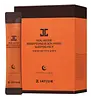
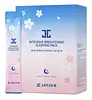
Jayjun Cosmetic Real Water Brightening Black Hydro Sleeping Mask Versus Jayjun Cosmetic Intensive Brightening Sleeping Pack
This hydrating overnight mask is formulated around Panthenol and Sodium Hyaluronate to hydrate skin and soften the look of wrinkles.
This brightening overnight mask is formulated around Rosa Damascena Flower Water and Ascorbyl Glucoside to brighten dull-looking skin and fade the look of dark spots.

What's inside
What's inside
 Key Ingredients
Benefits
Concerns
Ingredients Side-by-side
Water
Skin ConditioningGlycerin
Humectant


Butylene Glycol
Humectant
1,2-Hexanediol
Skin Conditioning
Propanediol
Solvent
Sodium Acrylate/Sodium Acryloyldimethyl Taurate Copolymer
Emulsion StabilisingDimethicone
Emollient
PEG-40 Stearate
Emulsifying

Isohexadecane
EmollientButylene Glycol Dicaprylate/Dicaprate
EmollientHydroxyethyl Urea
Humectant
Panthenol
Skin Conditioning

Sea Water
HumectantHexyl Laurate
Emollient
Polymethylsilsesquioxane
Stearyl Dimethicone
Emollient
Steareth-21
CleansingCaprylyl Glycol
Emollient
Glyceryl Caprylate
EmollientSodium Hyaluronate
Humectant

Hydroxypropyltrimonium Hyaluronate
Hydrolyzed Hyaluronic Acid
Humectant
Sodium Acetylated Hyaluronate
Humectant
Hyaluronic Acid
Humectant
Hydrolyzed Sodium Hyaluronate
Skin Conditioning
Sodium Hyaluronate Crosspolymer
Humectant
Potassium Hyaluronate
Skin ConditioningDipeptide Diaminobutyroyl Benzylamide Diacetate
Skin Conditioning
Palmitoyl Tripeptide-5
Skin Conditioning
Copper Tripeptide-1
Skin Conditioning
Acetyl Hexapeptide-8
Humectant
Palmitoyl Pentapeptide-4
Skin Conditioning
Palmitoyl Tripeptide-1
Skin Conditioning
Palmitoyl Tetrapeptide-7
Skin Conditioning
Oligopeptide-32
Antiseborrhoeic
Oligopeptide-29
Antioxidant
Sodium Polyacrylate
Absorbent
Glutathione


Polyglutamic Acid
Skin Conditioning
Macadamia Ternifolia Seed Oil
Emollient
Sorbitan Oleate
Emulsifying

Caprylic/Capric Triglyceride
Masking
Ceramide NP
Skin Conditioning
Hydrogenated Lecithin
Emulsifying
Ethylhexylglycerin
Skin ConditioningPolysorbate 80
Emulsifying
Adenosine
Skin Conditioning
Disodium EDTA
ChelatingParfum
Masking


Water, Glycerin, Butylene Glycol, 1,2-Hexanediol, Propanediol, Sodium Acrylate/Sodium Acryloyldimethyl Taurate Copolymer, Dimethicone, PEG-40 Stearate, Isohexadecane, Butylene Glycol Dicaprylate/Dicaprate, Hydroxyethyl Urea, Panthenol, Sea Water, Hexyl Laurate, Polymethylsilsesquioxane, Stearyl Dimethicone, Steareth-21, Caprylyl Glycol, Glyceryl Caprylate, Sodium Hyaluronate, Hydroxypropyltrimonium Hyaluronate, Hydrolyzed Hyaluronic Acid, Sodium Acetylated Hyaluronate, Hyaluronic Acid, Hydrolyzed Sodium Hyaluronate, Sodium Hyaluronate Crosspolymer, Potassium Hyaluronate, Dipeptide Diaminobutyroyl Benzylamide Diacetate, Palmitoyl Tripeptide-5, Copper Tripeptide-1, Acetyl Hexapeptide-8, Palmitoyl Pentapeptide-4, Palmitoyl Tripeptide-1, Palmitoyl Tetrapeptide-7, Oligopeptide-32, Oligopeptide-29, Sodium Polyacrylate, Glutathione, Polyglutamic Acid, Macadamia Ternifolia Seed Oil, Sorbitan Oleate, Caprylic/Capric Triglyceride, Ceramide NP, Hydrogenated Lecithin, Ethylhexylglycerin, Polysorbate 80, Adenosine, Disodium EDTA, Parfum
Water
Skin ConditioningDipropylene Glycol
HumectantGlycerin
Humectant
Butylene Glycol
Humectant
Propylene Glycol
Humectant
Erythritol
Humectant
1,2-Hexanediol
Skin Conditioning
Glycereth-26
Humectant
PEG/PPG-17/6 Copolymer
SolventPEG-240
HumectantPotassium Laurate
EmulsifyingTocopherol
Antioxidant
Rosa Damascena Flower Water
Masking
Prunus Serrulata Flower Extract
Skin ConditioningChamomilla Recutita Extract
Skin Conditioning
Lavandula Angustifolia Flower Extract
Cleansing
Hibiscus Sabdariffa Flower Extract
Skin ConditioningRosa Centifolia Flower Extract
Astringent
Nelumbo Nucifera Flower Extract
Skin ConditioningArnica Montana Flower Extract
Masking
Camellia Sinensis Flower Extract
Perfuming
Bellis Perennis Flower Extract
Skin ConditioningPunica Granatum Extract
AstringentPyridoxine Hcl
Skin ConditioningFolic Acid
Skin ConditioningPanthenol
Skin Conditioning
Thiamine Hcl
MaskingAscorbyl Glucoside
Antioxidant
Sodium Ascorbyl Phosphate
Antioxidant
Cyanocobalamin
Skin ConditioningBiotin
AntiseborrhoeicArginine
Masking
Carbomer
Emulsion StabilisingAcrylates/C10-30 Alkyl Acrylate Crosspolymer
Emulsion StabilisingAdenosine
Skin Conditioning
Xanthan Gum
EmulsifyingLactose
HumectantCellulose
Absorbent
Hydroxypropyl Methylcellulose
Emulsion StabilisingJojoba Esters
Emollient
Tocopheryl Acetate
Antioxidant
Ascorbyl Palmitate
Antioxidant
CI 73360
Cosmetic ColorantDisodium EDTA
ChelatingParfum
Masking
Water, Dipropylene Glycol, Glycerin, Butylene Glycol, Propylene Glycol, Erythritol, 1,2-Hexanediol, Glycereth-26, PEG/PPG-17/6 Copolymer, PEG-240, Potassium Laurate, Tocopherol, Rosa Damascena Flower Water, Prunus Serrulata Flower Extract, Chamomilla Recutita Extract, Lavandula Angustifolia Flower Extract, Hibiscus Sabdariffa Flower Extract, Rosa Centifolia Flower Extract, Nelumbo Nucifera Flower Extract, Arnica Montana Flower Extract, Camellia Sinensis Flower Extract, Bellis Perennis Flower Extract, Punica Granatum Extract, Pyridoxine Hcl, Folic Acid, Panthenol, Thiamine Hcl, Ascorbyl Glucoside, Sodium Ascorbyl Phosphate, Cyanocobalamin, Biotin, Arginine, Carbomer, Acrylates/C10-30 Alkyl Acrylate Crosspolymer, Adenosine, Xanthan Gum, Lactose, Cellulose, Hydroxypropyl Methylcellulose, Jojoba Esters, Tocopheryl Acetate, Ascorbyl Palmitate, CI 73360, Disodium EDTA, Parfum
Reviews
Ingredients Explained
These ingredients are found in both products.
Ingredients higher up in an ingredient list are typically present in a larger amount.
1,2-Hexanediol is a synthetic liquid and another multi-functional powerhouse.
It is a:
- Humectant, drawing moisture into the skin
- Emollient, helping to soften skin
- Solvent, dispersing and stabilizing formulas
- Preservative booster, enhancing the antimicrobial activity of other preservatives
Adenosine is a purine nucleoside that your body already makes in every cell. In skincare, it acts mainly as a skin conditioning and anti-aging agent.
The way it works is fairly well mapped out:
Your skin has cells called fibroblasts that build collagen (the stuff that keeps skin firm and smooth). Adenosine basically flips a switch on these cells that tells them to get to work making more collagen and other proteins. These cells slow down on their own as skin ages, so Adenosine helps give them a little nudge to keep going.
The clinical backing is pretty solid too.
A blind, randomized, placebo-controlled trial of 126 women aged 45-65 tested a 0.1% cream twice daily and found real improvements in crow's feet and frown lines using a precise 3D skin-mapping technique; these changes showed up by week 3 and held at 2 months.
A later study using Adenosine-loaded dissolving microneedle patches reported gains in wrinkle depth, dermal density, elasticity, and hydration.
On concentrations, South Korea's Ministry of Food and Drug Safety has set 0.04% as the approved functional anti-wrinkle level. You'll typically see this ingredient used somewhere in the 0.04-0.1% range since it works at low doses.
This ingredient has been found safe for cosmetics with the data showing no irritation or sensitization.
Overall, this is a great ingredient for any anti-aging routine and has no photosensitizing effect, so it suits both AM and PM use.
Learn more about AdenosineButylene Glycol (or BG) is used within cosmetic products for a few different reasons:
Overall, Butylene Glycol is a safe and well-rounded ingredient that works well with other ingredients.
Though this ingredient works well with most skin types, some people with sensitive skin may experience a reaction such as allergic rashes, closed comedones, or itchiness.
Learn more about Butylene GlycolDisodium EDTA is a chelating agent. It grabs onto and deactivates metal ions that sneak into your products from water, packaging, or air.
This ingredient mainly works behind the scenes and helps with:
On top of that, this ingredient can counteract the effects of hard water by binding to the minerals in it.
One thing worth knowing is that Disodium EDTA has been shown to be a mild penetration enhancer. It can help other ingredients absorb into skin more effectively which can be a double-edged sword (great for actives, but can also make the active too strong if you have sensitive skin).
Clinical patch testing showed no significant skin irritation at typical use concentrations and minimal dermal absorption.
You'll most likely see this ingredient near the end of an ingredient list. It's typically found in concentrations less than 1%.
Learn more about Disodium EDTAGlycerin (or glycerol) is a compound naturally found in your skin. It's a powerhouse humectant that pulls water into the stratum corneum.
Topically, glycerin does several things at once:
Your skin makes glycerin on its own (mostly from sebaceous oil breakdown) and shuttles it to your outermost layer of skin, or your epidermis, via aquaporin-3.
Aquaporin-3 is a transporter that is essential for normal skin hydration, elasticity, and repair. Interestingly, mice lacking in AQP3 have dry and less elastic skin that can be fully corrected with glycerin.
This ingredient is non-irritating, plays well with almost every ingredient, and works across all skin types. Typical use is anywhere between 3-10% but can go up to 79% in some leave-on products.
Just know very high concentrations (>40%) can feel tacky in low humidity.
Glycerin is the name for this ingredient in American English. British English uses Glycerol/Glycerine.
Learn more about GlycerinPanthenol is a common ingredient that helps hydrate and soothe the skin. It is found naturally in our skin and hair.
There are two forms of panthenol: D and L.
D-panthenol is also known as dexpanthenol. Most cosmetics use dexpanthenol or a mixture of D and L-panthenol.
Panthenol is famous due to its ability to go deeper into the skin's layers. Using this ingredient has numerous pros (and no cons):
Like hyaluronic acid, panthenol is a humectant. Humectants are able to bind and hold large amounts of water to keep skin hydrated.
This ingredient works well for wound healing. It works by increasing tissue in the wound and helps close open wounds.
Once oxidized, panthenol converts to pantothenic acid. Panthothenic acid is found in all living cells.
This ingredient is also referred to as pro-vitamin B5.
Learn more about PanthenolParfum is a catch-all term for an ingredient or more that is used to give a scent to products.
Also called "fragrance", this ingredient can be a blend of hundreds of chemicals or plant oils. This means every product with "fragrance" or "parfum" in the ingredients list is a different mixture.
For instance, Habanolide is a proprietary trade name for a specific aroma chemical. When used as a fragrance ingredient in cosmetics, most aroma chemicals fall under the broad labeling category of “FRAGRANCE” or “PARFUM” according to EU and US regulations.
The term 'parfum' or 'fragrance' is not regulated in many countries. In many cases, it is up to the brand to define this term.
For instance, many brands choose to label themselves as "fragrance-free" because they are not using synthetic fragrances. However, their products may still contain ingredients such as essential oils that are considered a fragrance by INCI standards.
One example is Calendula flower extract. Calendula is an essential oil that still imparts a scent or 'fragrance'.
Depending on the blend, the ingredients in the mixture can cause allergies and sensitivities on the skin. Some ingredients that are known EU allergens include linalool and citronellol.
Parfum can also be used to mask or cover an unpleasant scent.
The bottom line is: not all fragrances/parfum/ingredients are created equally. If you are worried about fragrances, we recommend taking a closer look at an ingredient. And of course, we always recommend speaking with a professional.
Learn more about ParfumWater. It's the most common cosmetic ingredient of all. You'll usually see it at the top of ingredient lists, meaning that it makes up the largest part of the product.
So why is it so popular? Water most often acts as a solvent - this means that it helps dissolve other ingredients into the formulation.
You'll also recognize water as that liquid we all need to stay alive. If you see this, drink a glass of water. Remember to stay hydrated!
Learn more about Water

