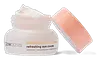
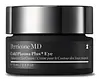
Glow Oasis Probiotics + Triple Peptide Refreshing Eye Cream Versus Perricone MD Cold Plasma Plus + Advanced Eye Cream
This anti-aging eye moisturizer is formulated around Lactobacillus Ferment and Niacinamide to soften the look of wrinkles.
This anti-aging eye moisturizer is formulated around Tetrahexyldecyl Ascorbate and Palmitoyl Tripeptide-1 to soften the look of wrinkles and fade the look of dark spots.

What's inside
What's inside
 Key Ingredients
Benefits
Concerns
Ingredients Side-by-side
Water
Skin ConditioningButylene Glycol
Humectant

Dicaprylyl Carbonate
EmollientLactobacillus Ferment
Skin Conditioning
Cetyl Ethylhexanoate
Emollient1,2-Hexanediol
Skin Conditioning
Limnanthes Alba Seed Oil
Skin Conditioning


Niacinamide
Smoothing









Xylitol
Humectant
Cetearyl Alcohol
Emollient




Cetearyl Olivate
Palmitoyl Tripeptide-5
Skin Conditioning
Acetyl Octapeptide-3
Humectant
Palmitoyl Tripeptide-1
Skin Conditioning
Adenosine
Skin Conditioning
Hyaluronic Acid
Humectant
Hydrolyzed Hyaluronic Acid
Humectant
Sodium Hyaluronate
Humectant
Hydrolyzed Collagen
Emollient
Ascorbic Acid
Antioxidant

Moringa Oleifera Seed Oil
Emollient
Hydrolyzed Gardenia Florida Extract
Antioxidant
Hydrolyzed Malt Extract
Skin ConditioningHydrolyzed Viola Tricolor Extract
Skin ProtectingMelia Azadirachta Leaf Extract
Skin ConditioningCoptis Japonica Root Extract
Skin ConditioningEclipta Prostrata Extract
Skin Conditioning
Sorbitan Olivate
Emulsifying
Propanediol
Solvent
Glycerin
Humectant
Glyceryl Stearate
Emollient
Ammonium Acryloyldimethyltaurate/Vp Copolymer
Carbomer
Emulsion StabilisingTromethamine
BufferingBiosaccharide Gum-1
Humectant
Ethylhexylglycerin
Skin ConditioningHydroxyethylcellulose
Emulsion StabilisingTrisodium Ethylenediamine Disuccinate
ChelatingPentaerythrityl Tetraisostearate
Emollient
Tocopherol
Antioxidant
Caprylic/Capric Triglyceride
Masking
Caprylyl Glycol
Emollient
Propylene Carbonate
SolventStearalkonium Hectorite
Gel FormingHydrogenated Lecithin
Emulsifying
Polyglyceryl-4 Caprate
EmulsifyingPolyglyceryl-6 Caprylate
EmulsifyingWater, Butylene Glycol, Dicaprylyl Carbonate, Lactobacillus Ferment, Cetyl Ethylhexanoate, 1,2-Hexanediol, Limnanthes Alba Seed Oil, Niacinamide, Xylitol, Cetearyl Alcohol, Cetearyl Olivate, Palmitoyl Tripeptide-5, Acetyl Octapeptide-3, Palmitoyl Tripeptide-1, Adenosine, Hyaluronic Acid, Hydrolyzed Hyaluronic Acid, Sodium Hyaluronate, Hydrolyzed Collagen, Ascorbic Acid, Moringa Oleifera Seed Oil, Hydrolyzed Gardenia Florida Extract, Hydrolyzed Malt Extract, Hydrolyzed Viola Tricolor Extract, Melia Azadirachta Leaf Extract, Coptis Japonica Root Extract, Eclipta Prostrata Extract, Sorbitan Olivate, Propanediol, Glycerin, Glyceryl Stearate, Ammonium Acryloyldimethyltaurate/Vp Copolymer, Carbomer, Tromethamine, Biosaccharide Gum-1, Ethylhexylglycerin, Hydroxyethylcellulose, Trisodium Ethylenediamine Disuccinate, Pentaerythrityl Tetraisostearate, Tocopherol, Caprylic/Capric Triglyceride, Caprylyl Glycol, Propylene Carbonate, Stearalkonium Hectorite, Hydrogenated Lecithin, Polyglyceryl-4 Caprate, Polyglyceryl-6 Caprylate
Water
Skin ConditioningIsopropyl Palmitate
Emollient
Cetearyl Alcohol
Emollient
Glyceryl Stearate
Emollient
Jojoba Esters
Emollient
PEG-100 Stearate
Surfactant
Ceteareth-20
Cleansing
Benzyl Alcohol
Perfuming





Hydrogenated Olive Oil
Skin Conditioning
Olea Europaea Fruit Oil
Masking
Tetrahexyldecyl Ascorbate
Antioxidant
Phosphatidylcholine
EmulsifyingAcetyl Tetrapeptide-5
Humectant
Palmitoyl Tripeptide-1
Skin Conditioning
Palmitoyl Tetrapeptide-7
Skin Conditioning
Echium Plantagineum Seed Oil
Skin Conditioning
Helianthus Annuus Seed Oil
Emollient
Copper Tripeptide-1
Skin Conditioning
Magnesium Aspartate
Skin ConditioningZinc Gluconate
Skin Conditioning
Sodium Hyaluronate
Humectant
Rosmarinus Officinalis Leaf Extract
AntimicrobialCopper Gluconate
Skin Conditioning
N-Hydroxysuccinimide
Skin ConditioningChrysin
Skin ConditioningDisodium EDTA
ChelatingDimethicone
Emollient
Glycerin
Humectant
Butylene Glycol
Humectant
Steareth-20
CleansingDimethicone Crosspolymer
Emulsion Stabilising
Silica
Abrasive
CI 77891
Cosmetic ColorantCI 77491
Cosmetic ColorantWater, Isopropyl Palmitate, Cetearyl Alcohol, Glyceryl Stearate, Jojoba Esters, PEG-100 Stearate, Ceteareth-20, Benzyl Alcohol, Hydrogenated Olive Oil, Olea Europaea Fruit Oil, Tetrahexyldecyl Ascorbate, Phosphatidylcholine, Acetyl Tetrapeptide-5, Palmitoyl Tripeptide-1, Palmitoyl Tetrapeptide-7, Echium Plantagineum Seed Oil, Helianthus Annuus Seed Oil, Copper Tripeptide-1, Magnesium Aspartate, Zinc Gluconate, Sodium Hyaluronate, Rosmarinus Officinalis Leaf Extract, Copper Gluconate, N-Hydroxysuccinimide, Chrysin, Disodium EDTA, Dimethicone, Glycerin, Butylene Glycol, Steareth-20, Dimethicone Crosspolymer, Silica, CI 77891, CI 77491
Reviews
Ingredients Explained
These ingredients are found in both products.
Ingredients higher up in an ingredient list are typically present in a larger amount.
Butylene Glycol (or BG) is used within cosmetic products for a few different reasons:
Overall, Butylene Glycol is a safe and well-rounded ingredient that works well with other ingredients.
Though this ingredient works well with most skin types, some people with sensitive skin may experience a reaction such as allergic rashes, closed comedones, or itchiness.
Learn more about Butylene GlycolCetearyl alcohol is a waxy mixture of two fatty alcohols: cetyl alcohol and stearyl alcohol. It is an emollient and emulsifier.
Despite having "alcohol" in its name, it has nothing to do with drying solvent alcohols; the FDA also allows "alcohol-free" products to contain fatty alcohols like this ingredient.
It plays several roles in a formula:
Typical use levels for this ingredient sit around 1-10% and the Cosmetic Ingredient Review Expert Panel has affirmed safety at concentrations up to 25% in leave-on products.
Multiple assessments have found it to be non-irritating and non-sensitizing to most people.
However, there have been some cases of allergic contact dermatitis in patients with chronically compromised skin barriers.
Cetearyl alcohol has a comedogenic rating of 2 and irritancy rating of 1. Both of these numbers come from the 1989 study that used rabbit ears; a "2" means mildly comedogenic and a "1" means low irritancy.
Here's the catch: rabbit skin is more sensitive than human skin and throws a lot of false positives. A 1996 reappraisal found that ingredients rated 1-2 in the rabbit ear tests are generally safe for humans.
Remember comedogenic ratings are unable to assess the entire formula of a product or how it will react on your skin. Just be sure to patch test if you are unsure about certain ingredients.
This ingredient is not fungal acne safe. Cetearyl alcohol is a fatty alcohol with chain lengths that fall within the range that Malassezia can metabolize.
A 2019 study has also observed Malassezia growth in the presence of this ingredient, confirming it to be not-fungal acne safe.
Learn more about Cetearyl AlcoholGlycerin (or glycerol) is a compound naturally found in your skin. It's a powerhouse humectant that pulls water into the stratum corneum.
Topically, glycerin does several things at once:
Your skin makes glycerin on its own (mostly from sebaceous oil breakdown) and shuttles it to your outermost layer of skin, or your epidermis, via aquaporin-3.
Aquaporin-3 is a transporter that is essential for normal skin hydration, elasticity, and repair. Interestingly, mice lacking in AQP3 have dry and less elastic skin that can be fully corrected with glycerin.
This ingredient is non-irritating, plays well with almost every ingredient, and works across all skin types. Typical use is anywhere between 3-10% but can go up to 79% in some leave-on products.
Just know very high concentrations (>40%) can feel tacky in low humidity.
Glycerin is the name for this ingredient in American English. British English uses Glycerol/Glycerine.
Learn more about GlycerinGlyceryl Stearate is made by reacting glycerin with stearic acid (typically sourced from plant oils like palm or coconut). It's an emulsifier, emollient, and mild occlusive.
Emulsifiers help ingredients like oil and water stay mixed so your formula stays nicely blended and uniform in texture.
This ingredient is typically used in concentrations between 1-10%. Studies have found it to be non-sensitizing, non-phototoxic, and non-photoallergenic.
A close cousin of this ingredient is Glyceryl Stearate SE ("self-emulsifying"). This just has a small amount of sodium or potassium stearate added so it can emulsify without a co-emulsifier.
Since this ingredient is an ester of a C18 fatty acid, it may not be fungal acne safe. The Malassezia yeast can potentially metabolize within the C11-C24 range.
Fun fact: The human body also creates Glyceryl Stearate naturally.
Learn more about Glyceryl StearatePalmitoyl Tripeptide-1 (aka Pal-GHK) is a synthetic signal peptide made of three amino acids attached to palmitic acid.
That fatty acid attachment is the key: it boosts the peptide's ability to penetrate the skin barrier. This puts it closer to the dermal cells where it can actually make a difference.
Once there, it acts as a matrikine, a signaling peptide that prompts fibroblasts to produce more collagen, fibronectin, and hyaluronic acid.
In vitro studies show it can boost collagen production in skin cells even when UV-damaged skin samples were treated with it at a tiny concentration (it almost fully restored dermal collagen at 5ppm). It achieved this at 100x lower concentration than retinoic acid, which needed 500 ppm to do the same thing.
Human clinical data is promising, but modest:
A study of 23 female volunteers found a small but statistically significant increase (~4%) in skin thickness after treatment at 4 ppm.
A separate small trial of 15 women showed statistically significant reductions in wrinkle length, depth, and skin roughness after applying it twice daily for four weeks.
You'll likely see Pal-GHK paired with Palmitoyl Tetrapeptide-7 as part of the Matrixyl 3000 complex.
Fungal acne note:
Usually a palmitic acid component can feed Malassezia in unbound form, but here is is covalently bonded to the peptide. This means it is very difficult for Malassezia to access, and therefore very unlikely to cause fungal acne.
Sodium Hyaluronate is the salt form of hyaluronic acid. It is a long sugar chain that is naturally found in your skin, joints, and connective tissue that maintains hydration and elasticity.
In skincare, it works as a humectant. It pulls water from the environment and deeper layers of skin and binds it to the surface.
Interestingly, the size of the molecule affects its behavior:
Some clinical evidence links low molecular weight versions to improved wrinkle depth, elasticity, anti-inflammatory effects, and barrier repair.
Many serums use a blend of both weights so you can get surface hydration plus longer-lasting and deeper effects.
You'll typically see concentrations between 0.1-2% for this ingredient.
Learn more about Sodium HyaluronateWater. It's the most common cosmetic ingredient of all. You'll usually see it at the top of ingredient lists, meaning that it makes up the largest part of the product.
So why is it so popular? Water most often acts as a solvent - this means that it helps dissolve other ingredients into the formulation.
You'll also recognize water as that liquid we all need to stay alive. If you see this, drink a glass of water. Remember to stay hydrated!
Learn more about Water

