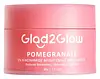
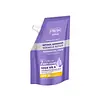
Glad2Glow Pomegranate 5% Niacinamide Brightening Moisturizer Versus Fresh Skinlab Blueberry Acai Retinol Advanced Wrinkle Repair Soothing Gel Lotion SPF 30
This brightening moisturizer is formulated around Niacinamide and Punica Granatum Fruit Extract to brighten dull-looking skin and fade the look of dark spots.
This anti-aging day moisturizer is formulated around Palmitoyl Tetrapeptide-7 and Ceramide NP to soften the look of wrinkles and strengthen the skin barrier.


What's inside
What's inside
 Key Ingredients
Benefits
Concerns
Ingredients Side-by-side
Water
Skin ConditioningGlycerin
Humectant


Niacinamide
Smoothing









Butylene Glycol
Humectant
Caprylic/Capric Triglyceride
Masking
Punica Granatum Fruit Extract
Antioxidant
Propylene Glycol
Humectant

Ammonium Acryloyldimethyltaurate/Vp Copolymer
Dimethicone
Emollient
Betaine
Humectant
Glycereth-26
Humectant
Isopropyl Palmitate
Emollient


1,2-Hexanediol
Skin Conditioning
Hydroxyacetophenone
Antioxidant
Cetearyl Alcohol
Emollient
Polyacrylate-13
Allantoin
Skin Conditioning
Butyrospermum Parkii Butter
Skin Conditioning
Centella Asiatica Extract
Cleansing
Dimethyl Isosorbide
SolventPolyisobutene
Parfum
Masking


Sodium Hyaluronate
Humectant
Xanthan Gum
EmulsifyingHydroxypinacolone Retinoate
Skin Conditioning
Pentylene Glycol
Skin Conditioning
Polysorbate 20
Emulsifying
Sorbitan Isostearate
Emulsifying
Rosa Hybrid Flower Extract
Skin ConditioningNonapeptide-1
Skin Conditioning
Tetrapeptide-1
Skin Conditioning
Gardenia Florida Fruit Extract
Skin ConditioningCI 16185
Cosmetic ColorantWater, Glycerin, Niacinamide, Butylene Glycol, Caprylic/Capric Triglyceride, Punica Granatum Fruit Extract, Propylene Glycol, Ammonium Acryloyldimethyltaurate/Vp Copolymer, Dimethicone, Betaine, Glycereth-26, Isopropyl Palmitate, 1,2-Hexanediol, Hydroxyacetophenone, Cetearyl Alcohol, Polyacrylate-13, Allantoin, Butyrospermum Parkii Butter, Centella Asiatica Extract, Dimethyl Isosorbide, Polyisobutene, Parfum, Sodium Hyaluronate, Xanthan Gum, Hydroxypinacolone Retinoate, Pentylene Glycol, Polysorbate 20, Sorbitan Isostearate, Rosa Hybrid Flower Extract, Nonapeptide-1, Tetrapeptide-1, Gardenia Florida Fruit Extract, CI 16185
Water
Skin ConditioningOctocrylene
UV Absorber

Glycerin
Humectant
C12-15 Alkyl Benzoate
AntimicrobialMethylene Bis-Benzotriazolyl Tetramethylbutylphenol
UV Filter
Caprylic/Capric Triglyceride
Masking
Polysorbate 20
Emulsifying
Bis-Ethylhexyloxyphenol Methoxyphenyl Triazine
UV Absorber
Sodium Polyacryloyldimethyl Taurate
Emulsion StabilisingHydrogenated Polydecene
EmollientSqualane
Emollient
Butylene Glycol
Humectant
Euterpe Oleracea Fruit Extract
Bisabolol
Antioxidant
Tocopheryl Acetate
Antioxidant
Hydrolyzed Collagen
Emollient
Ethylhexylglycerin
Skin ConditioningDecyl Glucoside
Cleansing
Parfum
Masking
Xanthan Gum
EmulsifyingCarbomer
Emulsion StabilisingAcrylates/C10-30 Alkyl Acrylate Crosspolymer
Emulsion StabilisingTrideceth-10
CleansingPalmitoyl Tetrapeptide-7
Skin Conditioning
Palmitoyl Tripeptide-1
Skin Conditioning
Dipeptide Diaminobutyroyl Benzylamide Diacetate
Skin Conditioning
Ceramide NP
Skin Conditioning
Ceramide AP
Skin Conditioning
Ceramide EOP
Skin Conditioning
Chlorphenesin
Antimicrobial
Retinol
Skin Conditioning
Phytosphingosine
Skin Conditioning
Sodium Hyaluronate
Humectant
Cholesterol
Emollient
Sodium Lauroyl Lactylate
EmulsifyingPhenoxyethanol
Preservative
Ubiquinone
Antioxidant
Hydroxypropyl Cyclodextrin
MaskingWater, Octocrylene, Glycerin, C12-15 Alkyl Benzoate, Methylene Bis-Benzotriazolyl Tetramethylbutylphenol, Caprylic/Capric Triglyceride, Polysorbate 20, Bis-Ethylhexyloxyphenol Methoxyphenyl Triazine, Sodium Polyacryloyldimethyl Taurate, Hydrogenated Polydecene, Squalane, Butylene Glycol, Euterpe Oleracea Fruit Extract, Bisabolol, Tocopheryl Acetate, Hydrolyzed Collagen, Ethylhexylglycerin, Decyl Glucoside, Parfum, Xanthan Gum, Carbomer, Acrylates/C10-30 Alkyl Acrylate Crosspolymer, Trideceth-10, Palmitoyl Tetrapeptide-7, Palmitoyl Tripeptide-1, Dipeptide Diaminobutyroyl Benzylamide Diacetate, Ceramide NP, Ceramide AP, Ceramide EOP, Chlorphenesin, Retinol, Phytosphingosine, Sodium Hyaluronate, Cholesterol, Sodium Lauroyl Lactylate, Phenoxyethanol, Ubiquinone, Hydroxypropyl Cyclodextrin
Reviews
Ingredients Explained
These ingredients are found in both products.
Ingredients higher up in an ingredient list are typically present in a larger amount.
Butylene Glycol (or BG) is used within cosmetic products for a few different reasons:
Overall, Butylene Glycol is a safe and well-rounded ingredient that works well with other ingredients.
Though this ingredient works well with most skin types, some people with sensitive skin may experience a reaction such as allergic rashes, closed comedones, or itchiness.
Learn more about Butylene GlycolCaprylic/Capric Triglyceride (aka MCT Oil) is a lightweight emollient, solvent, and texture enhancer. It is considered a skin-softener by helping to prevent moisture loss.
Though it behaves like an oil, it is not technically one due to its chemical composition. One perk of this ingredient is that it is very stable, resistant to oxidation, and unlikely to go rancid.
In practice, that translates to a long shelf life and a consistently elegant skin feel.
While there is an assumption Caprylic Triglyceride can clog pores due to it being derived from coconut oil, there is no research supporting this. Just patch test if you have concerns.
Fractionated coconut oil and MCT Oil are both listed as Caprylic/Capric Triglyceride according to INCI. This is because INCI names are based on the ingredient’s final chemical composition and not its marketing name or source.
This ingredient is treated as the gold standard fungal acne safe oil. Even though it is coconut derived, the problematic lauric acid is stripped out.
This leaves just caprylic (C8) and capric (C10) acid. These chain lengths actually trend antifungal; a 2020 study found caprylic acid was enough to disrupt Malassezia furfur cell membrane, with a caprylic acid derivative damaging membrane structures at concentrations as low as 0.2%.
Learn more about Caprylic/Capric TriglycerideGlycerin (or glycerol) is a compound naturally found in your skin. It's a powerhouse humectant that pulls water into the stratum corneum.
Topically, glycerin does several things at once:
Your skin makes glycerin on its own (mostly from sebaceous oil breakdown) and shuttles it to your outermost layer of skin, or your epidermis, via aquaporin-3.
Aquaporin-3 is a transporter that is essential for normal skin hydration, elasticity, and repair. Interestingly, mice lacking in AQP3 have dry and less elastic skin that can be fully corrected with glycerin.
This ingredient is non-irritating, plays well with almost every ingredient, and works across all skin types. Typical use is anywhere between 3-10% but can go up to 79% in some leave-on products.
Just know very high concentrations (>40%) can feel tacky in low humidity.
Glycerin is the name for this ingredient in American English. British English uses Glycerol/Glycerine.
Learn more about GlycerinParfum is a catch-all term for an ingredient or more that is used to give a scent to products.
Also called "fragrance", this ingredient can be a blend of hundreds of chemicals or plant oils. This means every product with "fragrance" or "parfum" in the ingredients list is a different mixture.
For instance, Habanolide is a proprietary trade name for a specific aroma chemical. When used as a fragrance ingredient in cosmetics, most aroma chemicals fall under the broad labeling category of “FRAGRANCE” or “PARFUM” according to EU and US regulations.
The term 'parfum' or 'fragrance' is not regulated in many countries. In many cases, it is up to the brand to define this term.
For instance, many brands choose to label themselves as "fragrance-free" because they are not using synthetic fragrances. However, their products may still contain ingredients such as essential oils that are considered a fragrance by INCI standards.
One example is Calendula flower extract. Calendula is an essential oil that still imparts a scent or 'fragrance'.
Depending on the blend, the ingredients in the mixture can cause allergies and sensitivities on the skin. Some ingredients that are known EU allergens include linalool and citronellol.
Parfum can also be used to mask or cover an unpleasant scent.
The bottom line is: not all fragrances/parfum/ingredients are created equally. If you are worried about fragrances, we recommend taking a closer look at an ingredient. And of course, we always recommend speaking with a professional.
Learn more about ParfumPolysorbate 20 is a gentle, water-soluble emulsifier and mild surfactant. It stops oil and water from separating to keep your formulas blended and stable.
It also acts as a mild penetration enhancer by helping active ingredients absorb slightly better.
The common safety discussion around this ingredient involves a manufacturing byproduct called 1,4-dioxane.
Trace amounts can form during production but the EU's Scientific Committee on Consumer Safety has concluded that levels at/below 10 ppm in finished products are safe (commercial products consistently fall within acceptable margins).
True allergic reactions are uncommon and the CIR Expert Panel has confirmed this ingredient to be safe as used in cosmetics.
Because it is derived from lauric acid, it may not be fungal acne safe.
Learn more about Polysorbate 20Sodium Hyaluronate is the salt form of hyaluronic acid. It is a long sugar chain that is naturally found in your skin, joints, and connective tissue that maintains hydration and elasticity.
In skincare, it works as a humectant. It pulls water from the environment and deeper layers of skin and binds it to the surface.
Interestingly, the size of the molecule affects its behavior:
Some clinical evidence links low molecular weight versions to improved wrinkle depth, elasticity, anti-inflammatory effects, and barrier repair.
Many serums use a blend of both weights so you can get surface hydration plus longer-lasting and deeper effects.
You'll typically see concentrations between 0.1-2% for this ingredient.
Learn more about Sodium HyaluronateWater. It's the most common cosmetic ingredient of all. You'll usually see it at the top of ingredient lists, meaning that it makes up the largest part of the product.
So why is it so popular? Water most often acts as a solvent - this means that it helps dissolve other ingredients into the formulation.
You'll also recognize water as that liquid we all need to stay alive. If you see this, drink a glass of water. Remember to stay hydrated!
Learn more about WaterXanthan gum is used as a stabilizer and thickener within cosmetic products. It helps give products a sticky, thick feeling - preventing them from being too runny.
On the technical side of things, xanthan gum is a polysaccharide - a combination consisting of multiple sugar molecules bonded together.
Xanthan gum is a pretty common and great ingredient. It is a natural, non-toxic, non-irritating ingredient that is also commonly used in food products.
Learn more about Xanthan Gum

