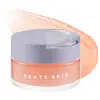
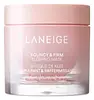
Fenty Beauty Dew N Plump Intense Hydration Slushie Face Mask Versus Laneige Bouncy + Firm Sleeping Mask
This hydrating overnight mask is formulated around Sodium Hyaluronate and Bisabolol to hydrate skin and strengthen the skin barrier.


What's inside
What's inside
 Key Ingredients
Benefits
Concerns
Ingredients Side-by-side
Water
Skin ConditioningGlycerin
Humectant


Isononyl Isononanoate
EmollientDiglycerin
Humectant
Phenyl Trimethicone
Skin Conditioning
Caprylic/Capric Triglyceride
Masking
Dipentaerythrityl Hexacaprylate/Hexacaprate
EmulsifyingPentaerythrityl Tetraisostearate
Emollient

Malpighia Glabra Fruit Juice
Skin ConditioningCitrullus Lanatus Fruit Juice
HumectantAverrhoa Carambola Fruit Juice
Skin ConditioningSodium Hyaluronate
Humectant


Sodium Polyglutamate
HumectantCitrullus Lanatus Seed Oil
Emollient

Adansonia Digitata Seed Oil
Emollient
Bisabolol
Antioxidant
Zingiber Officinale Root Extract
Masking
Lactobacillus Ferment
Skin Conditioning
Propanediol
Solvent
Carrageenan



Caprylyl Glycol
Emollient
Rhus Verniciflua Peel Wax
Carbomer
Emulsion Stabilising1,2-Hexanediol
Skin Conditioning
Caprylyl Methicone
Skin Conditioning
Hydrogenated Poly(C6-20 Olefin)
Abrasive
Hdi/Trimethylol Hexyllactone Crosspolymer
Hydroxyacetophenone
Antioxidant
Acrylates/C10-30 Alkyl Acrylate Crosspolymer
Emulsion StabilisingTromethamine
BufferingLeuconostoc/Radish Root Ferment Filtrate
Antimicrobial
Parfum
Masking


Benzyl Salicylate
Perfuming
CI 19140
Cosmetic ColorantCI 17200
Cosmetic ColorantWater, Glycerin, Isononyl Isononanoate, Diglycerin, Phenyl Trimethicone, Caprylic/Capric Triglyceride, Dipentaerythrityl Hexacaprylate/Hexacaprate, Pentaerythrityl Tetraisostearate, Malpighia Glabra Fruit Juice, Citrullus Lanatus Fruit Juice, Averrhoa Carambola Fruit Juice, Sodium Hyaluronate, Sodium Polyglutamate, Citrullus Lanatus Seed Oil, Adansonia Digitata Seed Oil, Bisabolol, Zingiber Officinale Root Extract, Lactobacillus Ferment, Propanediol, Carrageenan, Caprylyl Glycol, Rhus Verniciflua Peel Wax, Carbomer, 1,2-Hexanediol, Caprylyl Methicone, Hydrogenated Poly(C6-20 Olefin), Hdi/Trimethylol Hexyllactone Crosspolymer, Hydroxyacetophenone, Acrylates/C10-30 Alkyl Acrylate Crosspolymer, Tromethamine, Leuconostoc/Radish Root Ferment Filtrate, Parfum, Benzyl Salicylate, CI 19140, CI 17200
Water
Skin ConditioningButylene Glycol
Humectant
Glycerin
Humectant
Dimethicone
Emollient
1,2-Hexanediol
Skin Conditioning
Squalane
Emollient
Diisostearyl Malate
EmollientC12-16 Alcohols
EmollientAmmonium Acryloyldimethyltaurate/Beheneth-25 Methacrylate Crosspolymer
Emulsion StabilisingCetearyl Alcohol
Emollient
Palmitic Acid
Emollient
Hydrogenated Lecithin
Emulsifying
Dimethicone/Vinyl Dimethicone Crosspolymer
Skin Conditioning
Sodium Polyacrylate Starch
AbsorbentStearic Acid
Cleansing
Hydroxypropyl Bispalmitamide Mea
Emollient
Mannitol
Humectant
Lactobacillus Ferment Lysate
Skin Conditioning
Propanediol
Solvent
Ammonium Acryloyldimethyltaurate/Vp Copolymer
Cetearyl Glucoside
Emulsifying
Xanthan Gum
EmulsifyingGlyceryl Caprylate
EmollientDisodium EDTA
ChelatingEthylhexylglycerin
Skin ConditioningAllantoin
Skin Conditioning
Adenosine
Skin Conditioning
Parfum
Masking
Acrylates/Ammonium Methacrylate Copolymer
Caprylyl Glycol
Emollient
Carbomer
Emulsion StabilisingCholesterol
Emollient
Linalool
Perfuming
Silica
Abrasive

Malachite Extract
Antioxidant
Citronellol
Perfuming
Geraniol
Perfuming
Hydroxycitronellal
Perfuming
Carthamus Tinctorius Flower Extract
Skin ConditioningDextrin
AbsorbentBenzyl Salicylate
Perfuming
Cyanocobalamin
Skin ConditioningHydrolyzed Collagen
Emollient
Sodium Hyaluronate
Humectant
Paeonia Albiflora Root Extract
Skin ConditioningTocopherol
Antioxidant


Hydrolyzed Hyaluronic Acid
Humectant
Acetyl Tetrapeptide-2
Skin Conditioning
Sodium Hyaluronate Crosspolymer
Humectant
Hyaluronic Acid
Humectant
Paeonia Albiflora Flower Extract
TonicSodium Acetylated Hyaluronate
Humectant
Water, Butylene Glycol, Glycerin, Dimethicone, 1,2-Hexanediol, Squalane, Diisostearyl Malate, C12-16 Alcohols, Ammonium Acryloyldimethyltaurate/Beheneth-25 Methacrylate Crosspolymer, Cetearyl Alcohol, Palmitic Acid, Hydrogenated Lecithin, Dimethicone/Vinyl Dimethicone Crosspolymer, Sodium Polyacrylate Starch, Stearic Acid, Hydroxypropyl Bispalmitamide Mea, Mannitol, Lactobacillus Ferment Lysate, Propanediol, Ammonium Acryloyldimethyltaurate/Vp Copolymer, Cetearyl Glucoside, Xanthan Gum, Glyceryl Caprylate, Disodium EDTA, Ethylhexylglycerin, Allantoin, Adenosine, Parfum, Acrylates/Ammonium Methacrylate Copolymer, Caprylyl Glycol, Carbomer, Cholesterol, Linalool, Silica, Malachite Extract, Citronellol, Geraniol, Hydroxycitronellal, Carthamus Tinctorius Flower Extract, Dextrin, Benzyl Salicylate, Cyanocobalamin, Hydrolyzed Collagen, Sodium Hyaluronate, Paeonia Albiflora Root Extract, Tocopherol, Hydrolyzed Hyaluronic Acid, Acetyl Tetrapeptide-2, Sodium Hyaluronate Crosspolymer, Hyaluronic Acid, Paeonia Albiflora Flower Extract, Sodium Acetylated Hyaluronate
Reviews
Alternatives
Ingredients Explained
These ingredients are found in both products.
Ingredients higher up in an ingredient list are typically present in a larger amount.
1,2-Hexanediol is a synthetic liquid and another multi-functional powerhouse.
It is a:
- Humectant, drawing moisture into the skin
- Emollient, helping to soften skin
- Solvent, dispersing and stabilizing formulas
- Preservative booster, enhancing the antimicrobial activity of other preservatives
Benzyl Salicylate is a solvent and fragrance additive. It is an ester of benzyl alcohol and salicylic acid. This ingredient can be naturally found in some plants and plant extracts.
In fragrances, Benzyl Salicylate may be a solvent or a fragrance component. In synthetic musk scents, it is used as a solvent. For floral fragrances such as lilac and jasmine, it is used as a fragrance component. The natural scent of Benzyl Salicylate is described as "lightly-sweet, slightly balsamic".
While Benzyl Salicylate has been associated with contact dermatitis and allergies, emerging studies show it may not be caused by this ingredient alone.
However, this ingredient is often used with fragrances and other components that may cause allergies. It is still listed as a known allergen in the EU. We recommend speaking with a professional if you have concerns.
Another study from 2021 shows Benzyl Salicylate may have anti-inflammatory properties.
Learn more about Benzyl SalicylateCaprylyl Glycol is a humectant, skin conditioner, emollient, and preservative booster derived from either caprylic acid or synthetically created.
Typical use levels vary from 0.3-1% as a preservative booster and go up to 2% to condition skin.
Because it is not a free-fatty acid, this ingredient is fungal acne safe (there's nothing for Malassezia to feed on).
Learn more about Caprylyl GlycolCarbomer is a synthetic thickening and gelling agent. It's basically the ingredient that gives a lot of serums, gels, creams, and sunscreens their smooth, non-sticky texture.
Although legally permitted at very high levels, carbomers are normally used at concentrations below 1%.
It also needs to be neutralized to actually thicken, and because it is a large molecule, it doesn't really penetrate the skin barrier.
Allergy-wise, the risk is very low. Clinical studies show carbomers have low potential for skin irritation/sensitization even at concentrations up to 100%.
A 2024 UK study patch-tested 1,302 patients and found true allergy to the parent group of carbomer to be rare with no confirmed relevant reactions.
Learn more about CarbomerGlycerin (or glycerol) is a compound naturally found in your skin. It's a powerhouse humectant that pulls water into the stratum corneum.
Topically, glycerin does several things at once:
Your skin makes glycerin on its own (mostly from sebaceous oil breakdown) and shuttles it to your outermost layer of skin, or your epidermis, via aquaporin-3.
Aquaporin-3 is a transporter that is essential for normal skin hydration, elasticity, and repair. Interestingly, mice lacking in AQP3 have dry and less elastic skin that can be fully corrected with glycerin.
This ingredient is non-irritating, plays well with almost every ingredient, and works across all skin types. Typical use is anywhere between 3-10% but can go up to 79% in some leave-on products.
Just know very high concentrations (>40%) can feel tacky in low humidity.
Glycerin is the name for this ingredient in American English. British English uses Glycerol/Glycerine.
Learn more about GlycerinParfum is a catch-all term for an ingredient or more that is used to give a scent to products.
Also called "fragrance", this ingredient can be a blend of hundreds of chemicals or plant oils. This means every product with "fragrance" or "parfum" in the ingredients list is a different mixture.
For instance, Habanolide is a proprietary trade name for a specific aroma chemical. When used as a fragrance ingredient in cosmetics, most aroma chemicals fall under the broad labeling category of “FRAGRANCE” or “PARFUM” according to EU and US regulations.
The term 'parfum' or 'fragrance' is not regulated in many countries. In many cases, it is up to the brand to define this term.
For instance, many brands choose to label themselves as "fragrance-free" because they are not using synthetic fragrances. However, their products may still contain ingredients such as essential oils that are considered a fragrance by INCI standards.
One example is Calendula flower extract. Calendula is an essential oil that still imparts a scent or 'fragrance'.
Depending on the blend, the ingredients in the mixture can cause allergies and sensitivities on the skin. Some ingredients that are known EU allergens include linalool and citronellol.
Parfum can also be used to mask or cover an unpleasant scent.
The bottom line is: not all fragrances/parfum/ingredients are created equally. If you are worried about fragrances, we recommend taking a closer look at an ingredient. And of course, we always recommend speaking with a professional.
Learn more about ParfumPropanediol is an all-star ingredient. It softens, hydrates, and smooths the skin.
It’s often used to:
Propanediol is not likely to cause sensitivity and considered safe to use. It is derived from corn or petroleum with a clear color and no scent.
Learn more about PropanediolSodium Hyaluronate is the salt form of hyaluronic acid. It is a long sugar chain that is naturally found in your skin, joints, and connective tissue that maintains hydration and elasticity.
In skincare, it works as a humectant. It pulls water from the environment and deeper layers of skin and binds it to the surface.
Interestingly, the size of the molecule affects its behavior:
Some clinical evidence links low molecular weight versions to improved wrinkle depth, elasticity, anti-inflammatory effects, and barrier repair.
Many serums use a blend of both weights so you can get surface hydration plus longer-lasting and deeper effects.
You'll typically see concentrations between 0.1-2% for this ingredient.
Learn more about Sodium HyaluronateWater. It's the most common cosmetic ingredient of all. You'll usually see it at the top of ingredient lists, meaning that it makes up the largest part of the product.
So why is it so popular? Water most often acts as a solvent - this means that it helps dissolve other ingredients into the formulation.
You'll also recognize water as that liquid we all need to stay alive. If you see this, drink a glass of water. Remember to stay hydrated!
Learn more about Water


